
Warming and cooling foods for dogs: TCVM food energetics with Indian kitchen examples
Heaty and cooling foods are not just a grandmother's idea. Here is how Chinese veterinary tradition classes common, dog-safe Indian kitchen foods, why the lists disagree, and how to use them sensibly through the year.

Your grandmother probably had firm views on heaty and cooling foods. Mangoes and too much jaggery were heaty; curd, buttermilk and tender coconut water cooled you down in April. Chinese veterinary tradition has a strikingly similar idea, and it applies it to dogs.
In this part of our Five Elements series (start with the beginner's guide if you are new), we look at food energetics: what warming, neutral and cooling mean in traditional Chinese veterinary medicine (TCVM), how common Indian kitchen foods are usually classed, and how to use the idea through Bangalore's seasons.
The honest bit: food energetics is a traditional framework, not an established science. Classifications differ between sources, research in dogs is limited, and it never replaces a complete and balanced diet or your vet's advice. Treat it as a gentle way of thinking about the bowl.
Your grandmother already knew mangoes were heaty. Chinese vets say the same logic reaches the dog bowl.
What warming, neutral and cooling mean
In TCVM every food has a thermal nature: the effect it is believed to have on the body, which has nothing to do with whether it is served hot or cold, or how many calories it has. A chilled piece of mutton is still warming; a warm cucumber is still cooling.
- Warming foods are said to boost energy and circulation. They are traditionally chosen for dogs who feel the cold, hunt for sunny spots, tire easily or are older and stiff.
- Neutral foods are balancing and make a sensible base for most dogs most of the time.
- Cooling foods are said to clear heat. They are traditionally chosen for dogs who run hot: panting easily, lying on cold tiles, restless at night, with red, itchy skin.
This ties back to the elements. A Fire dog who overheats might be steered towards cooler foods, an Earth dog towards neutral, easy-to-digest meals, and a Metal dog towards moistening ones. The Wood post covers the bold, driven type.
Indian kitchen foods by energetic tendency
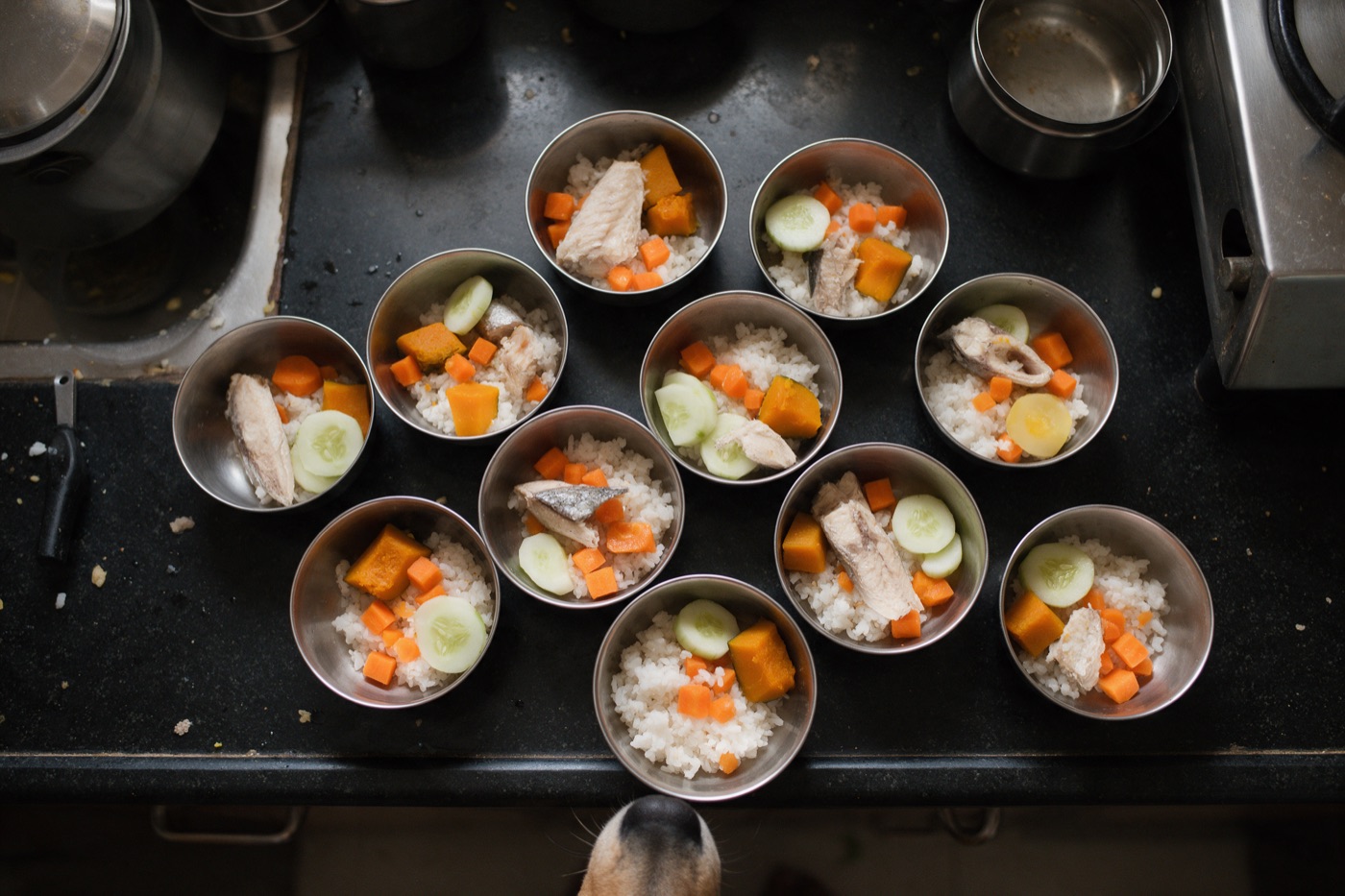
These are dog-safe foods you probably already have, grouped the way TCVM food lists commonly place them. Everything should be plain, cooked where needed, and free of salt, onion, garlic and chilli.
Tendency Proteins Grains and pulses Vegetables and fruit Warming Mutton (goat or lamb), chicken Oats, quinoa Pumpkin; a pinch of turmeric, jeera or saunf in cooking Neutral Eggs; beef and pork, for families who cook them White rice, brown rice Carrot, sweet potato, cooked potato, green peas, beans Cooling Most fish, duck, rabbit; plain curd Barley (jau), moong dal Cucumber, lauki (bottle gourd), zucchini, spinach, broccoli, banana, apple, pear, watermelonA few safety notes on the table:
- Curd: plain and unsweetened, in small amounts, and only for dogs who digest dairy. Our curd rice guide has more.
- Fruit: remove apple and pear cores and seeds; give watermelon seedless and without the rind; keep banana to a few slices.
- Potato: always cooked, never green or sprouting.
- Spinach: fine in small amounts mixed into meals, not as a daily heap.
- Spices: a pinch, never curry masala, chilli, onion or garlic. When in doubt, check our list of foods dogs should never eat.
Why the lists disagree
If you read three TCVM food charts, you will find three slightly different answers. Chicken is warming in most and neutral in some. Eggs appear as neutral in one list and mildly cooling in another. Fish is usually neutral to cooling, though some put salmon on the warmer side. Schools of practice differ, translations differ, and the tradition also says cooking changes things: roasting and long baking are thought to warm a food, while steaming and boiling keep it closer to its nature. Ayurveda overlaps in places (mutton is heaty in both, moong dal is gentle in both) but is not the same system.
So use the general direction rather than treating any chart as fixed, and watch how your own dog responds.
Complete and balanced comes first
The biggest risk with food energetics is letting it unbalance a diet. Switching a dog to fish and cucumber all summer, or to mutton alone all winter, can leave gaps in calcium, vitamins and essential fats within weeks.
- Build on a complete and balanced diet: a fresh food made to a balanced recipe, a good commercial food, or a home-cooked plan written with a vet or veterinary nutritionist.
- Use energetics through toppers, treats and protein rotation. Keep extras to about 10 percent of daily calories; our calorie guide shows how to work that out.
- Medical needs come before energetics. Mutton is warming but rich, so it may not suit a dog prone to pancreatitis. Dogs with kidney disease, diabetes or food allergies need their vet's diet, whatever the chart says.
- Watch the waistline: warming proteins and festive treats add up fast. Our body condition score guide helps.
- Change food gradually over about a week.
Use the general direction, not a fixed chart, and watch your own dog.
Bangalore's seasons, the TCVM way
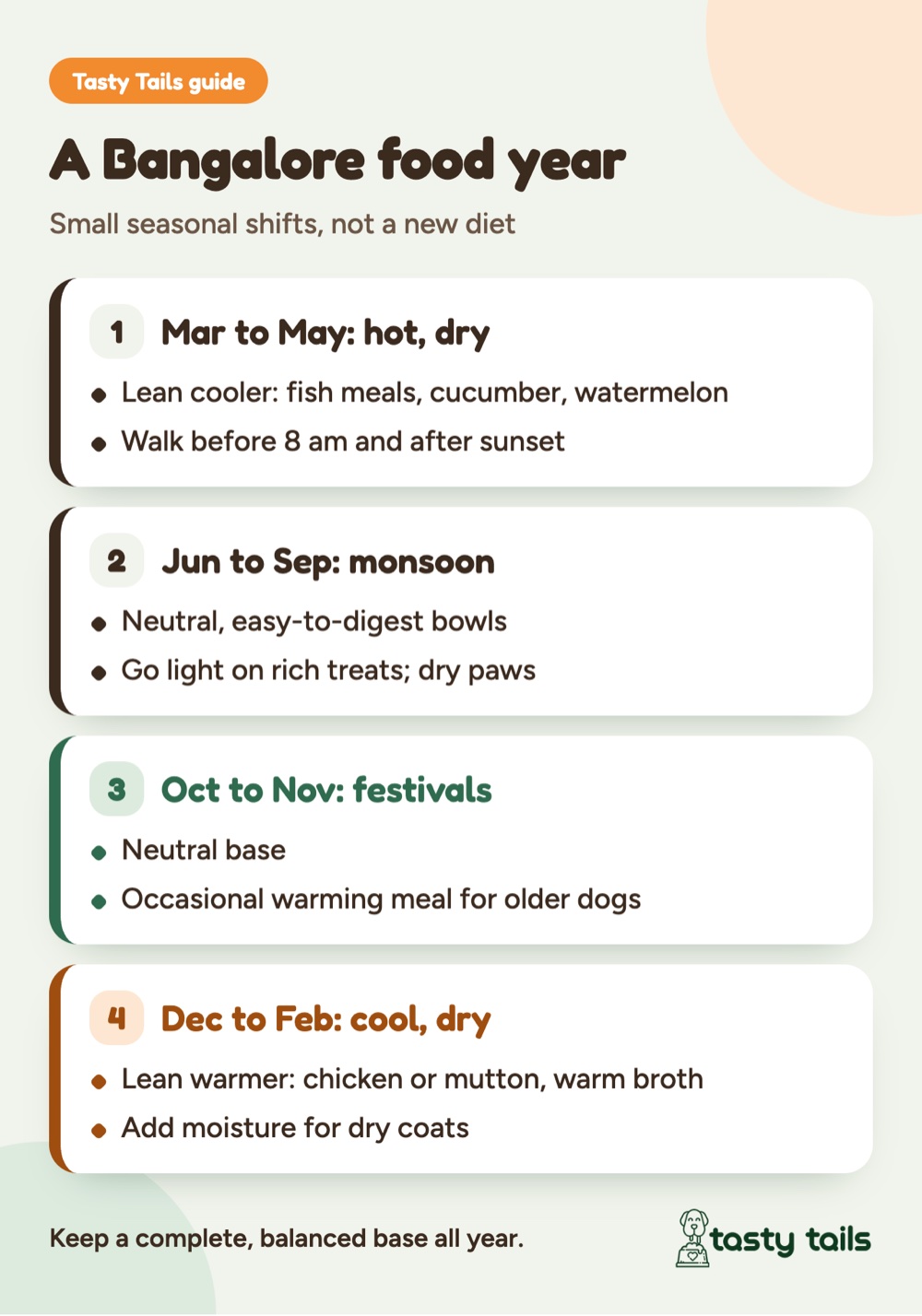
Bangalore never gets truly hot or truly cold by Indian standards, so for most healthy adult dogs the seasonal shift is small: a different topper or one meal a week, not a new diet.
- March to May (hot and dry): lean cooler. More fish meals, cucumber or watermelon as treats, and walks before 8 am and after sunset.
- June to September (southwest monsoon, damp and mild): TCVM worries about damp, which it links to sluggish digestion. Keep bowls neutral and easy to digest, go light on rich treats and dry paws after walks.
- October and November (retreating rains, festivals, cool evenings): a neutral base with an occasional warming meal for older dogs on cool nights. Festival mithai is not a warming food; it is a hazard, as our Diwali safety guide explains.
- December to February (cool, dry mornings around 15°C): lean warmer for dogs who feel the cold: chicken or mutton bowls, warm (not hot) broth, pumpkin. Add moisture for dry coats.
Read your dog, not just the calendar
In the tradition, the dog matters more than the date. A dog who runs hot in December may still do better on cooler foods. But many "hot" and "cold" signs are also signs of illness. Heavy thirst can mean diabetes or kidney disease; constant panting can mean pain or heart trouble; stiffness on cool mornings can be arthritis; red, itchy skin is often allergy. Ask your vet about any of these before you try to fix them with food.
Go to the vet now if your dog collapses, pants heavily and cannot settle in the heat, has bright red or pale gums, vomits repeatedly or seems confused. Heatstroke is an emergency, and a cooling food will not treat it.
From our kitchen
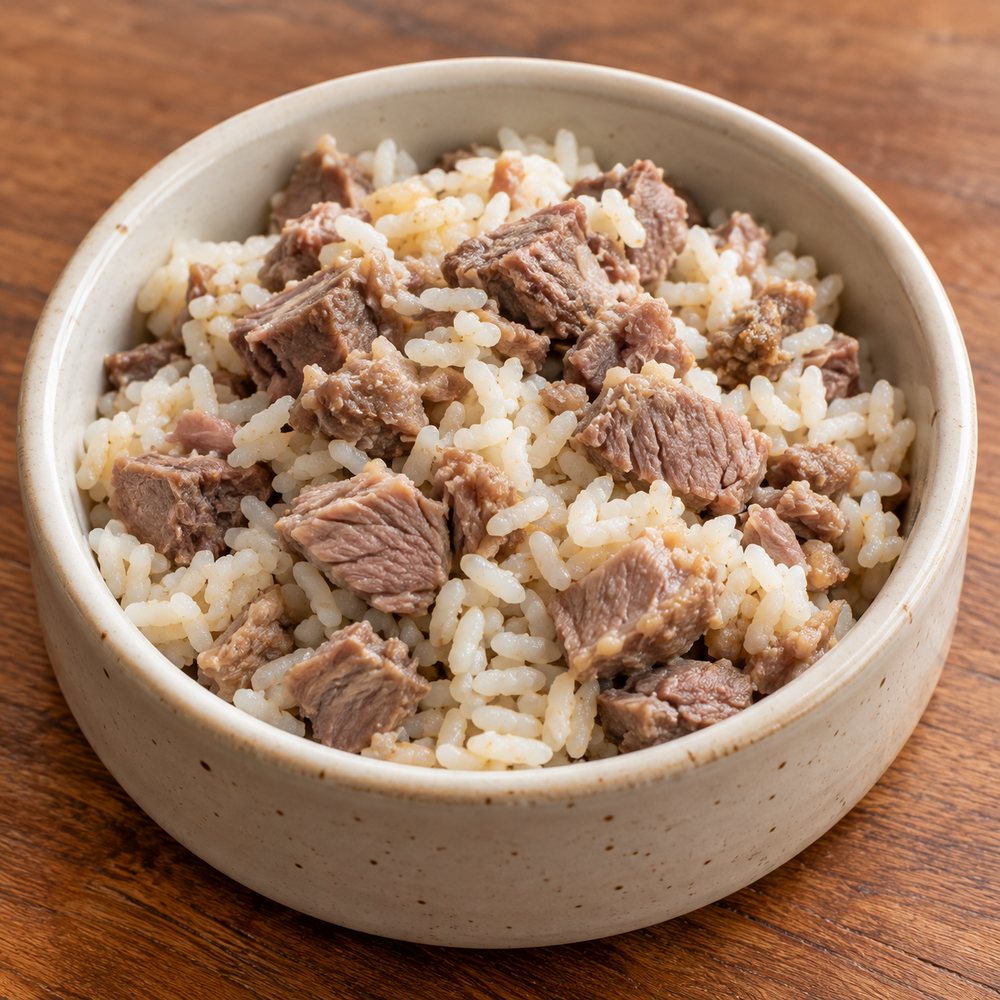
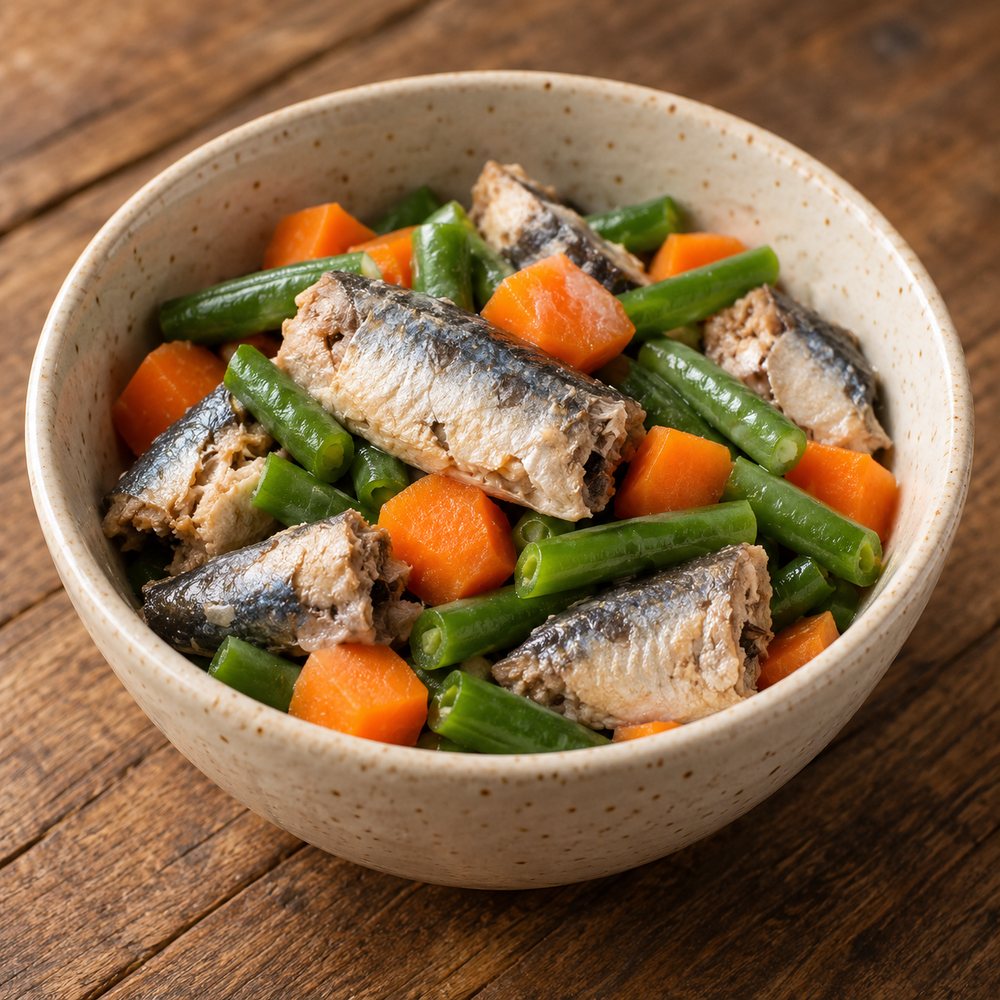
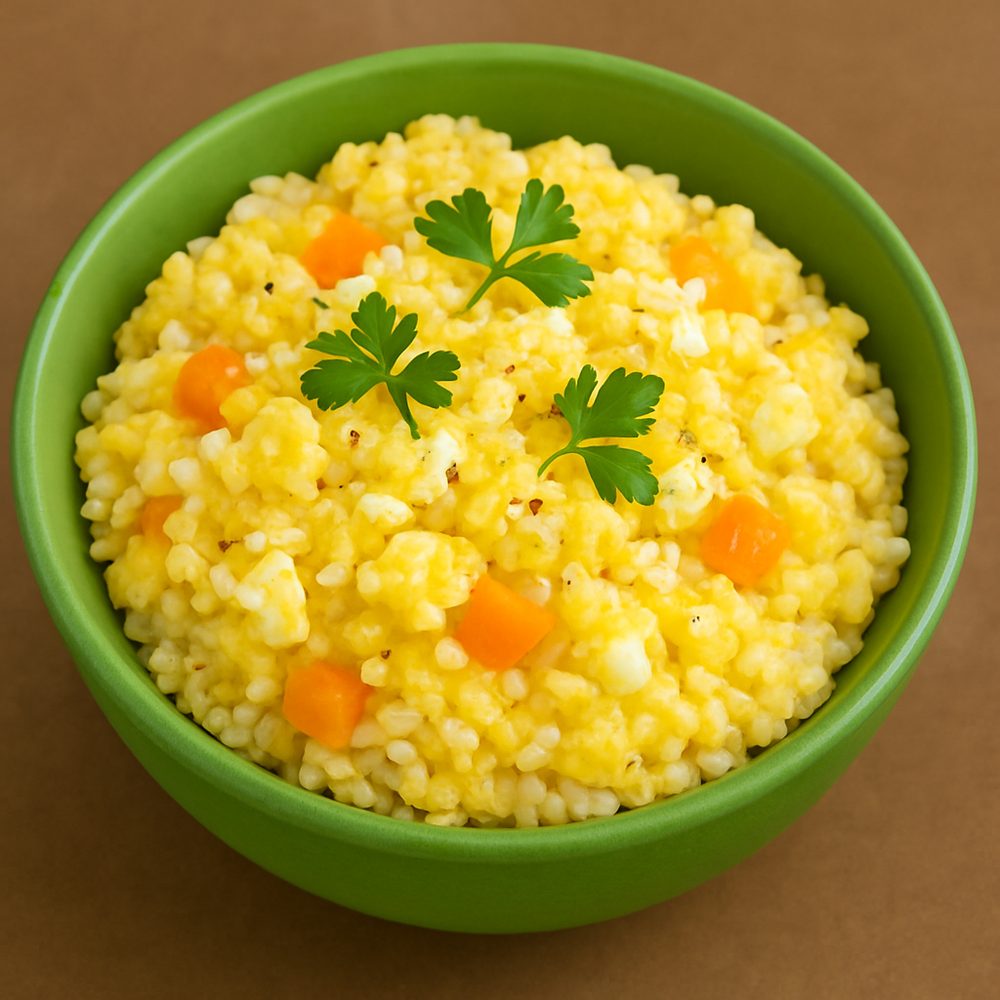
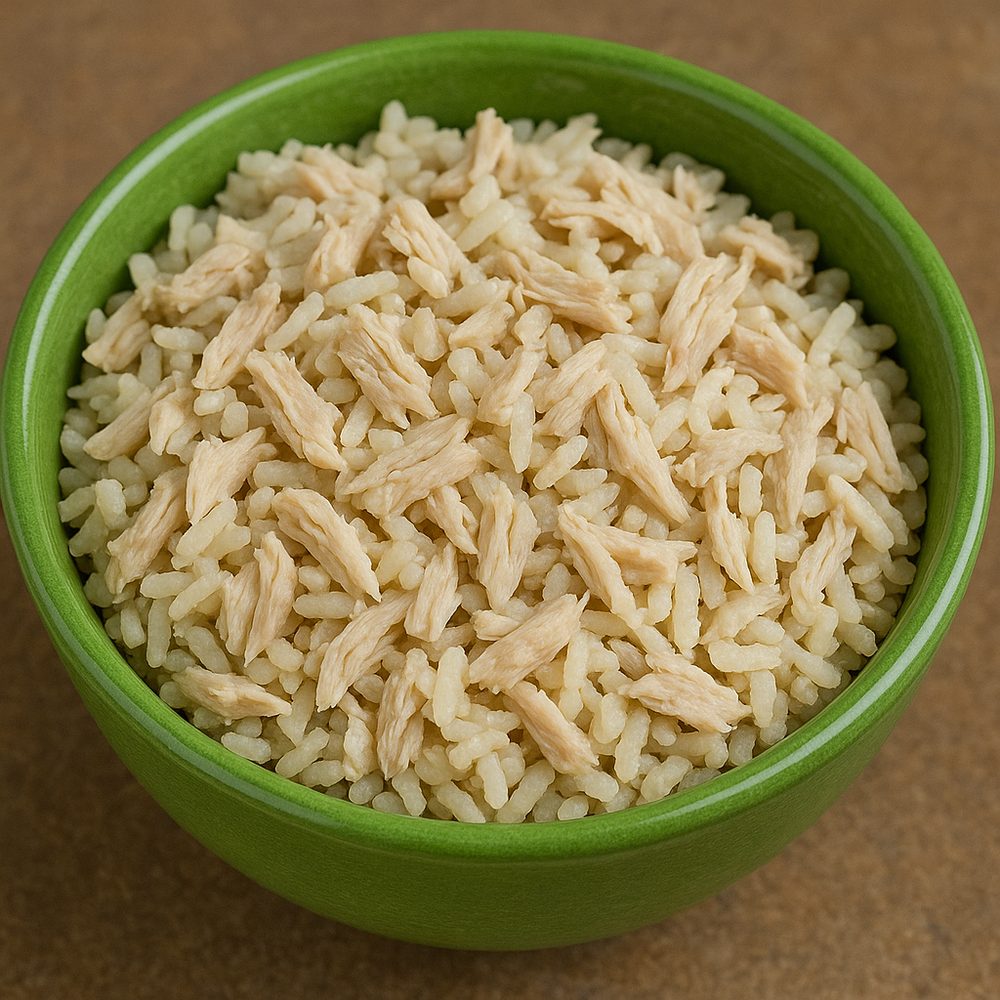
Our menu covers all three tendencies. Mutton Nom Nom is just mutton and rice, a simple warming bowl for cooler months. The Fish & veggie bowl is gently boiled fish with steamed green beans and carrots, with no salt, oil or spices, a light option for warm days. For neutral everyday meals, the Egg Roster pairs soft mashed egg with sweet potato and rice, and the Classic Combo is boiled chicken with white or brown rice.
Questions about warming and cooling foods for dogs
Is chicken warming or neutral for dogs?
Most TCVM food lists call chicken warming, and a few call it neutral. Either way, it is a good everyday protein for most dogs who are not allergic to it.
Can I give my dog curd to cool down in summer?
A small amount of plain curd is fine for dogs who digest dairy well. It is not a treatment for overheating; heavy panting or collapse in the heat needs a vet immediately.
Should I change my dog's food every season?
Not wholesale. Keep a complete and balanced base all year and make small seasonal changes through toppers, treats and protein rotation, introduced gradually.
Is food energetics scientifically proven?
No. It is a traditional framework with limited research behind it. Used on top of a balanced diet, it can be a harmless and thoughtful way to vary your dog's food.
Sources
- dvm360: Chinese medicine food energy therapy explained
- Cheryl Schwartz, Four Paws, Five Directions: A Guide to Chinese Medicine for Cats and Dogs (Celestial Arts)
- WSAVA Global Nutrition Guidelines
- Merck Veterinary Manual: Nutritional requirements of small animals
- ASPCA: People foods to avoid feeding your pets
- AKC: Human foods dogs can and can't eat
Warming, neutral and cooling bowls
A mutton bowl on the warm side, a light fish bowl on the cool side and two neutral everyday meals, all complete enough to build a week around.
Main Meals For dogs & cats
Mutton Nom Nom


- Protein
- Healthy fats
- Vitamins
- Slow-release energy
₹525 Medium · 350 g
Main Meals For dogs & cats
Fish & veggie bowl
-

-

-

-

-

- +2
- Protein
- Healthy fats
- Fibre
- Vitamins
₹495 Small · 250 g
Main Meals For dogs & cats
Egg Roster

- Protein
- Healthy fats
- Fibre
- Vitamins
₹250 Small · 250 g 3 sizes
Main Meals For dogs & cats
Classic Combo

- Protein
- Healthy fats
- Slow-release energy
₹350 Medium · 350 g 2 sizes
See the full menu or ask our nutritionist what suits your pet.
Was this helpful?
Share with a pet parent