Diwali and your pet: firecrackers, sweets and a calm, safe festival
Firecrackers, diyas, guests and plates of mithai: how to keep dogs and cats calm and safe this Diwali, what to prepare a week ahead, and which festive foods never to share.
For us, Diwali means lights, sweets, family and firecrackers. For many dogs and cats, it means several nights of booming, crackling noise they can't understand and can't escape. Add a house full of guests, open doors, lit diyas and plates of mithai within reach, and it's one of the riskiest weeks of the year for pets. A little planning makes it much calmer for everyone.
Why firecrackers frighten pets so much
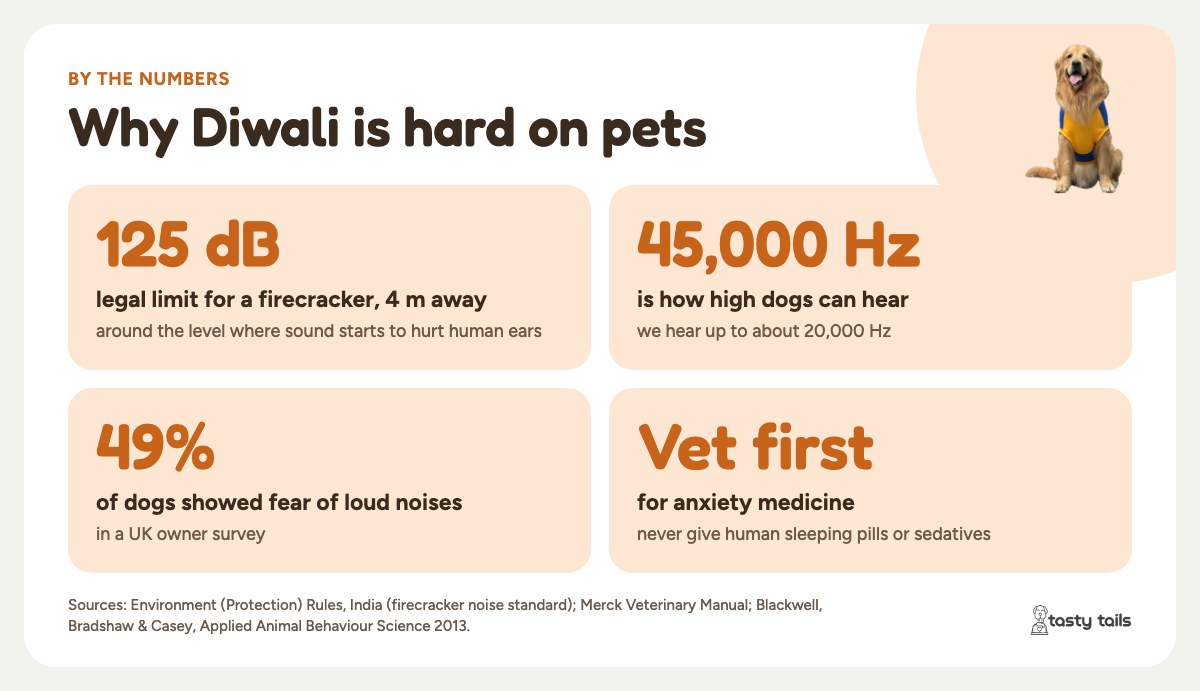
Dogs hear higher pitches than we do, and many hear quieter sounds at a greater distance. A cracker that makes us flinch can be overwhelming for them, and they have no idea it will stop. Fear of loud noises is common: in one UK survey, almost half of dog owners said their dog showed fear of noises such as fireworks. Cats are just as affected, but they usually hide, so it's easy to miss.
Signs your pet is scared
- Trembling, panting or drooling when it isn't hot
- Hiding under beds or in bathrooms, or trying to dig or escape
- Pacing, whining, barking or clinging to you
- Refusing food, or accidents indoors
- Cats: disappearing for hours, flattened ears, dilated pupils
Before Diwali: prepare a week ahead
- Check the ID tag and microchip details. Frightened pets bolt through open doors and gates. Make sure the tag has your current phone number.
- Set up a safe room. Pick a quiet inner room, away from the street. Add their bed, water, a few toys, and a covered crate or box they can hide in. Let them use it before the noise starts.
- Talk to your vet if your pet is very fearful. There are medicines for noise anxiety, but they work best when started before the bad nights. Never give human sleeping pills or sedatives: some are dangerous for pets.
- Try sound practice. For milder fear, play firework sounds very quietly while your pet eats or plays, and slowly raise the volume over days. Stop if they look worried.
On the night: keep them calm and safe
- Walk dogs early, before dusk, on a lead. Many dogs slip their collar when a cracker goes off nearby.
- Close windows and curtains, and play music or the TV to soften the bangs.
- Feed dinner early, before the noise. A full, relaxed pet copes better. A long-lasting chew or a lick mat can help too.
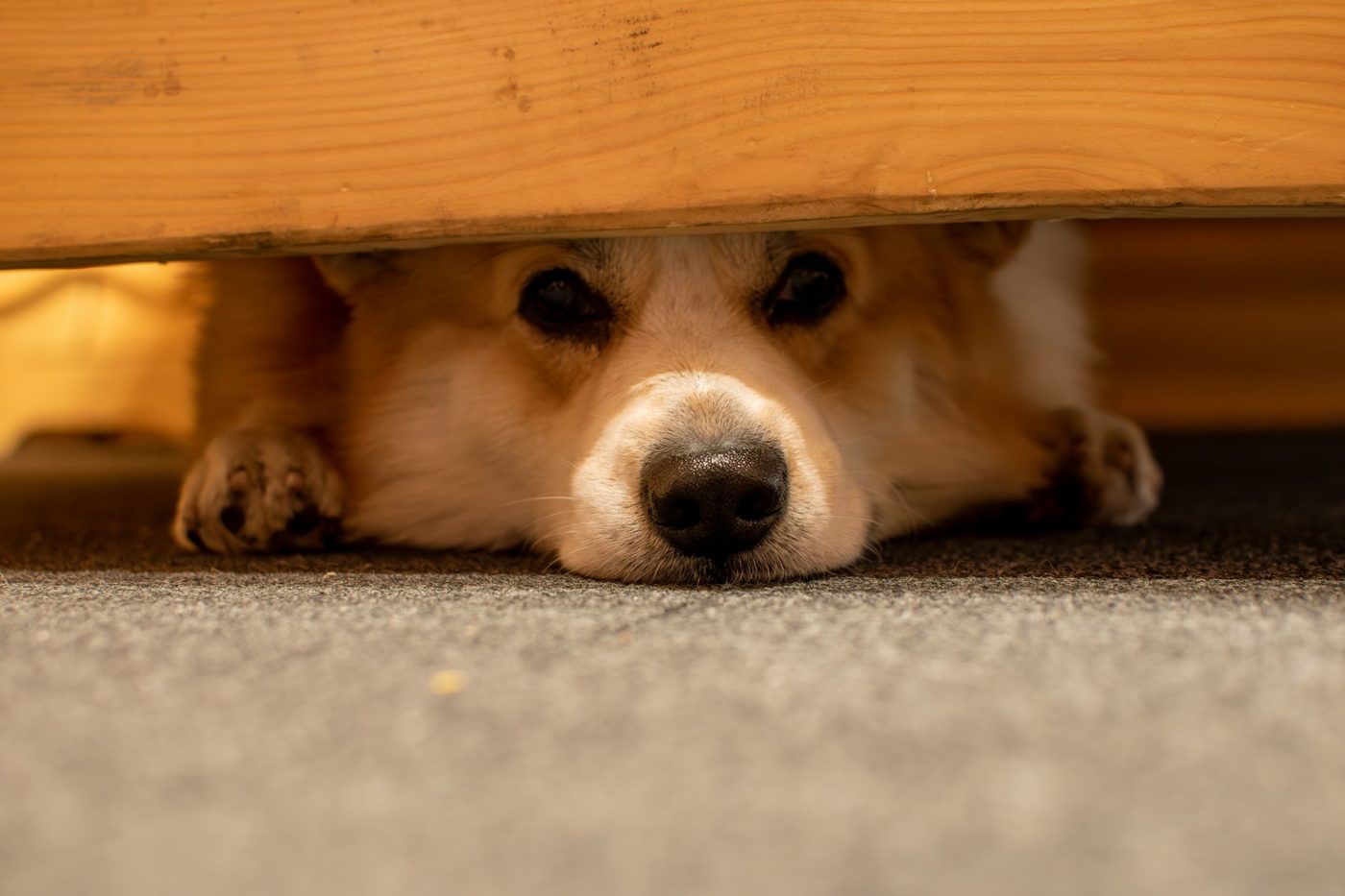
- Let them hide. Don't pull a scared pet out from under the bed. Sit nearby and stay calm. Comforting your pet is fine: you won't "reward" the fear.
- Keep doors shut while guests come and go, and keep cats indoors all evening.
- Never take pets to watch firecrackers, and never leave them tied up outside.
Diyas, candles and rangoli
- Keep diyas and candles out of reach of tails, paws and curious noses. Cats are the most likely to knock them over.
- Keep pets away from rangoli powders and colours. Some contain chemicals that irritate skin and eyes, and pets may lick them off their paws.
- Clear away used crackers and sparkler wires the next morning before walks. Dogs sometimes chew them, and they contain toxic chemicals.
- Watch electrical lights and wires with puppies and kittens, who like to chew.
Sweets and festive food: what not to share
Diwali tables are full of foods that are dangerous for pets. The common ones:
- Chocolate in boxes and gifts: toxic to dogs and cats.
- Raisins in kheer, halwa and dry-fruit boxes: can cause kidney failure in dogs.
- Sugar-free sweets made with xylitol: very toxic to dogs, even in small amounts.
- Rich mithai, ghee and fried snacks: lots of fat at once can trigger pancreatitis, which is very painful.
- Onion and garlic in festive dishes and namkeen: damage red blood cells.
- Nuts like macadamias, and salty namkeen.
Our full list is in foods dogs and cats should never eat (Indian kitchen edition). Want your pet to join the celebration? Give them treats made for pets, and keep them under 10% of the day's calories. Our guide to safe homemade treats has ideas.
If something goes wrong
If your pet eats something on the list above, call your vet straight away with what they ate, roughly how much, and your pet's weight. Don't wait for symptoms, and don't try to make them vomit unless your vet tells you to. If your pet goes missing, check nearby hiding places first, then post in local and RWA groups with a clear photo.
Questions pet parents ask
Can I give my dog a sedative for Diwali?
Only one your vet prescribes. Ask a week or two ahead so it can be tested before the noisy nights. Never use human sleeping pills or anxiety medicines.
Should I comfort my scared dog?
Yes. Staying close and calm helps. Comforting a frightened pet does not make the fear worse.
Are earmuffs or anxiety wraps useful?
Some dogs settle better with a snug anxiety wrap or dog earmuffs, if they are used to them before Diwali. They help some pets and not others, so try them early on a quiet day.
Is it safe to give my dog a little mithai?
It's best not to. Mithai is high in sugar and fat, and some contain raisins, chocolate, xylitol or nuts that are toxic. Treats made for pets are a safer way to share the festival.
Sources
- ASPCA Animal Poison Control Center: people foods to avoid feeding your pets
- Merck Veterinary Manual: fears, phobias and anxieties in dogs
- Blackwell, Bradshaw & Casey. Fear responses to noises in domestic dogs. Applied Animal Behaviour Science, 2013.
- Central Pollution Control Board: noise standards for firecrackers (Environment (Protection) Rules)
- RSPCA: fireworks and pets
Festive treats made for pets
Share the festival without sharing your mithai: laddus and halwa made for pets, with no added sugar or salt and every ingredient listed.









See the full menu or ask our nutritionist what suits your pet.
Was this helpful?
Share with a pet parent