
Treats: the 10% rule
Keep treats to 10% of daily calories or less, so the rest comes from their main food. For a 10 kg neutered dog that's about 63 kcal. Weigh treats rather than guessing, and trim the meal a little on heavy treat days.
How we cook
How much should your dog eat? Which foods are a hard no? Is that tummy just a bit round, or time for a diet? Here's what we've learned cooking for dogs every day, built on vet nutrition guidelines (WSAVA, FEDIAF, AAFCO and the NRC). Cats need different nutrients, so ask us about a plan for your cat.


Calorie calculator inside
Built on vet guidelines
Vets start from resting energy, 70 × (weight in kg)0.75, then multiply by a factor for life stage and activity. Treat the result as a starting point and adjust to keep a healthy body shape.
630 kcal a day
Individual dogs can need up to 50% more or less. Weigh your dog every few weeks and adjust. Ask us to turn this into portions of a dish.
Six groups of nutrients do the work. See which of our ingredients provide each one.
Supplies the 10 amino acids dogs can't make themselves, used to build muscle, skin, coat, enzymes and hormones.
The most concentrated energy source. Linoleic acid (omega-6) keeps skin and coat healthy; omega-3s matter most for growing puppies.
Not strictly essential, but a useful energy source. Fermentable fibre feeds the gut's friendly bacteria.
Needed in small amounts for bones, vision, blood and immunity. More isn't better: vitamins A and D have safe upper limits.
Build bones and teeth, and need to be in balance: at least as much calcium as phosphorus, up to twice as much for adults.
The most critical nutrient of all. Keep fresh water available at all times.
A food is "complete and balanced" when it meets the full nutrient profile for a life stage (AAFCO in the US, FEDIAF in Europe). That takes a recipe formulated by a nutritionist, usually with added vitamins and minerals.
Home-style cooking rarely gets there on its own. In a 2019 study that lab-tested 75 home-made dog recipes, 69% fell below the minimum for calcium and none met every requirement. Meat, rice, dal and vegetables are naturally low in calcium and high in phosphorus.
Our meals are fresh, home-style food. If they're your pet's main diet, talk to your vet about a calcium and vitamin supplement, or ask us about recipes with added calcium.
Every product page shows the facts. Where we've confirmed a recipe, you'll see estimated nutrition per 100 g, calculated from USDA and Indian food composition data, and how it compares with AAFCO's adult minimums, calcium included.
Vets use a 9-point body condition score. The ideal is 4 to 5.
Check muscle too: loss usually shows first along the spine, even in overweight dogs.
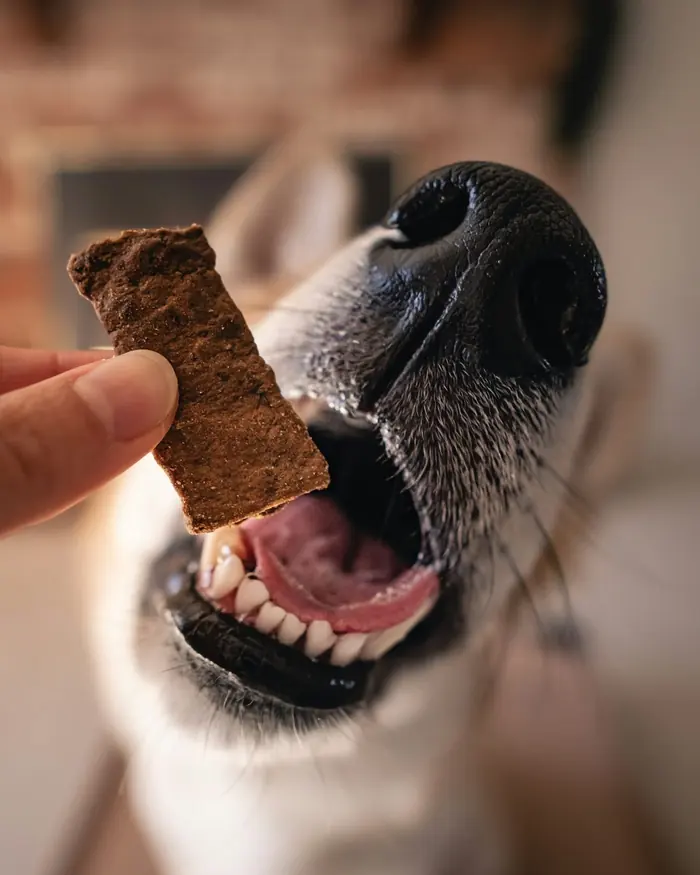
A word about treats
We know. But treats and table scraps add up fast, and they're the most common reason dogs slowly gain weight. The simple rule vets use: treats should be no more than 10% of your dog's daily calories.
Keep treats to 10% of daily calories or less, so the rest comes from their main food. For a 10 kg neutered dog that's about 63 kcal. Weigh treats rather than guessing, and trim the meal a little on heavy treat days.
Refrigerate within 2 hours (1 hour on hot days) at 4°C or below, and use cooked food within 3 to 4 days. Frozen portions stay safe, and taste best within 3 to 4 months. Thaw in the fridge, never on the counter.
Mix the new food in gradually. Go slower if stools soften, and call your vet if vomiting or diarrhoea continues. Sensitive dogs can take 4 to 6 weeks.
If your pet eats any of these, call your vet straight away. We never cook with them.
Not automatically. In published studies, 95% of home-made dog recipes were short on at least one nutrient, most often calcium, zinc, vitamin D, vitamin E or choline. Home-style food works best as part of a diet your vet has checked.
Calcium builds bones, and it needs to be in balance with phosphorus. Meat, grains and dal are low in calcium, so home diets often fall short. Adult dogs need at least as much calcium as phosphorus.
Yes, but puppies need more protein, calcium and phosphorus than adults, and large-breed puppies need both calcium and calories carefully controlled. Use recipes formulated for growth and check with your vet.
Both are good protein sources, and oily fish adds omega-3 fats. Always serve them cooked and boneless, and trim fatty mutton, because rich scraps can trigger pancreatitis.
No vet body has set safe amounts for turmeric or cumin, so we only use a pinch and never add salt. We never use onion, garlic or chives, which damage red blood cells even when cooked.
A little honey is generally fine for healthy dogs (a teaspoon is about 17 kcal). Peanut butter must be xylitol-free; ours is plain and unsalted.
Yes, in small portions as treats. Coconut can loosen stools if overdone. Grapes and raisins are never safe.
Older dogs often need about 20% fewer calories and tend to gain weight, while slowly losing muscle. Softer, moist food can also be easier to eat.
Use cooked food within 3 to 4 days in the fridge at 4°C or below. Frozen portions are best within 3 to 4 months. Thaw in the fridge.
This guide is general information, not veterinary advice. Every pet is different, so check with your vet.
Choose a size

Get the Tasty Tails app
Order fresh meals in two taps, straight from your home screen. Free, no app store needed.
Tap then Add to Home Screen.