Healthy homemade treats: what's safe and how much
Treats are love you can hold in your hand. Here are simple homemade ones that are safe for pets, two easy recipes, and the 10% rule for how many to give.
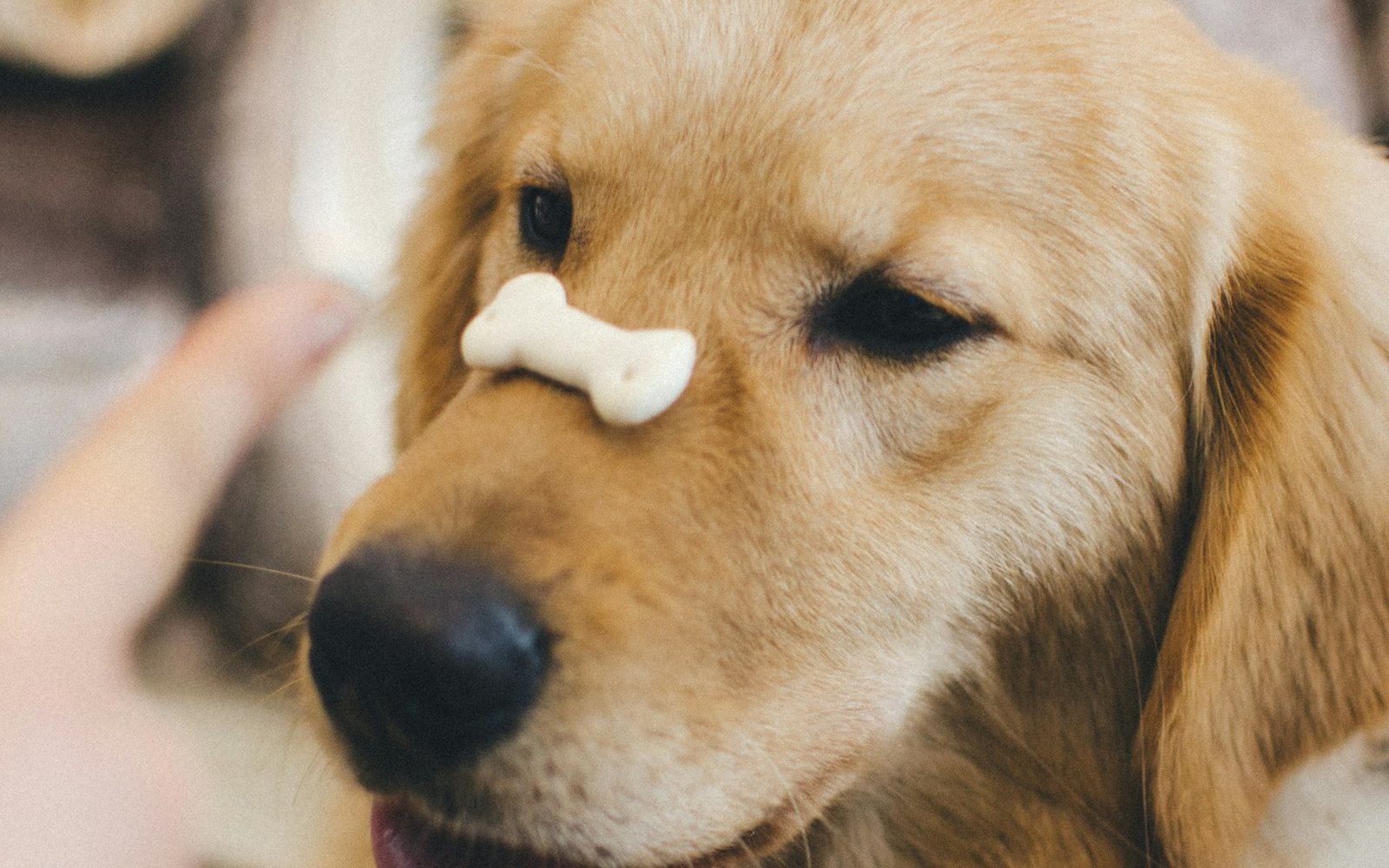
Treats are how we say "good dog" (or, for cats, "fine, you win"). They are also the part of the diet that most often goes wrong: too many, too rich, or made with something unsafe. The good news is that the best treats are simple, cheap and probably already in your kitchen.
The 10% rule
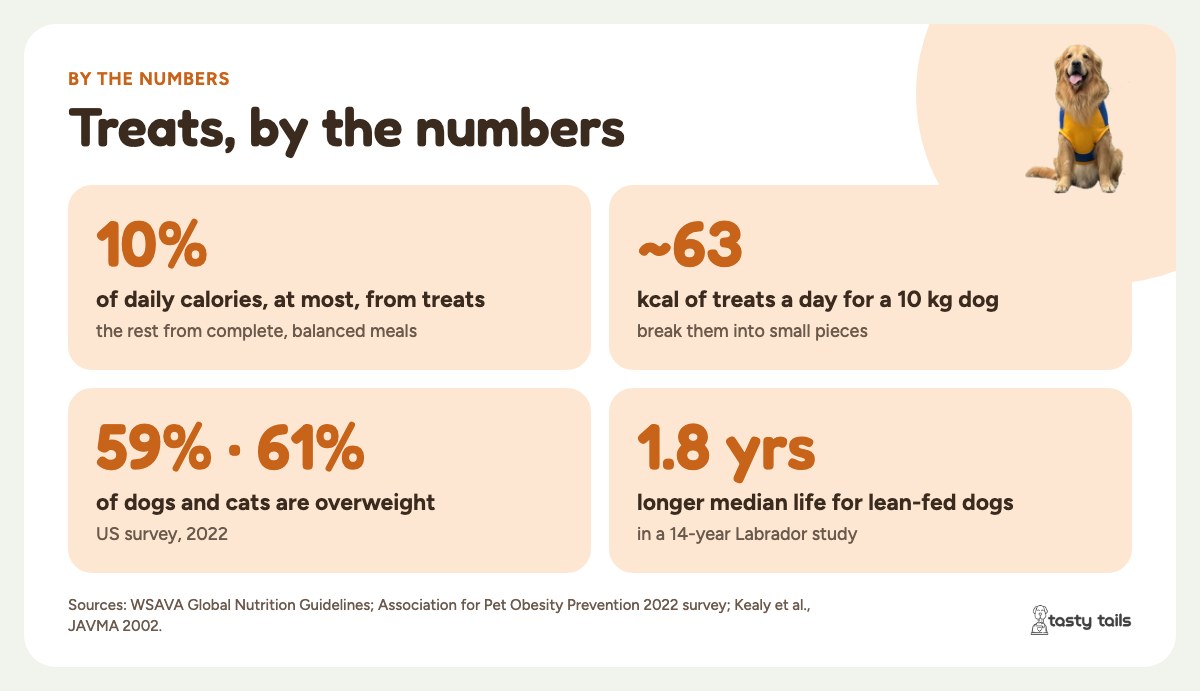
Vets recommend that treats, chews and table food make up no more than 10% of your pet's daily calories. The other 90% should come from their complete, balanced meals. Some everyday numbers for a 10 kg dog, whose treat budget is about 60 kcal a day:
- 1 boiled egg: about 70 to 80 kcal
- 30 g plain boiled chicken breast: about 50 kcal
- 1 medium carrot: about 25 kcal
- 5 slices of cucumber: under 5 kcal
- 1 small banana: about 90 kcal (so a few slices, not the whole thing)
- 1 chapati: 70 to 100 kcal
For an average 4 kg cat the budget is only about 20 to 25 kcal a day: a few small pieces of plain chicken or fish.
The best treats are small enough to swallow in one go and too small to matter for the waistline.
Safe, simple treats from your kitchen
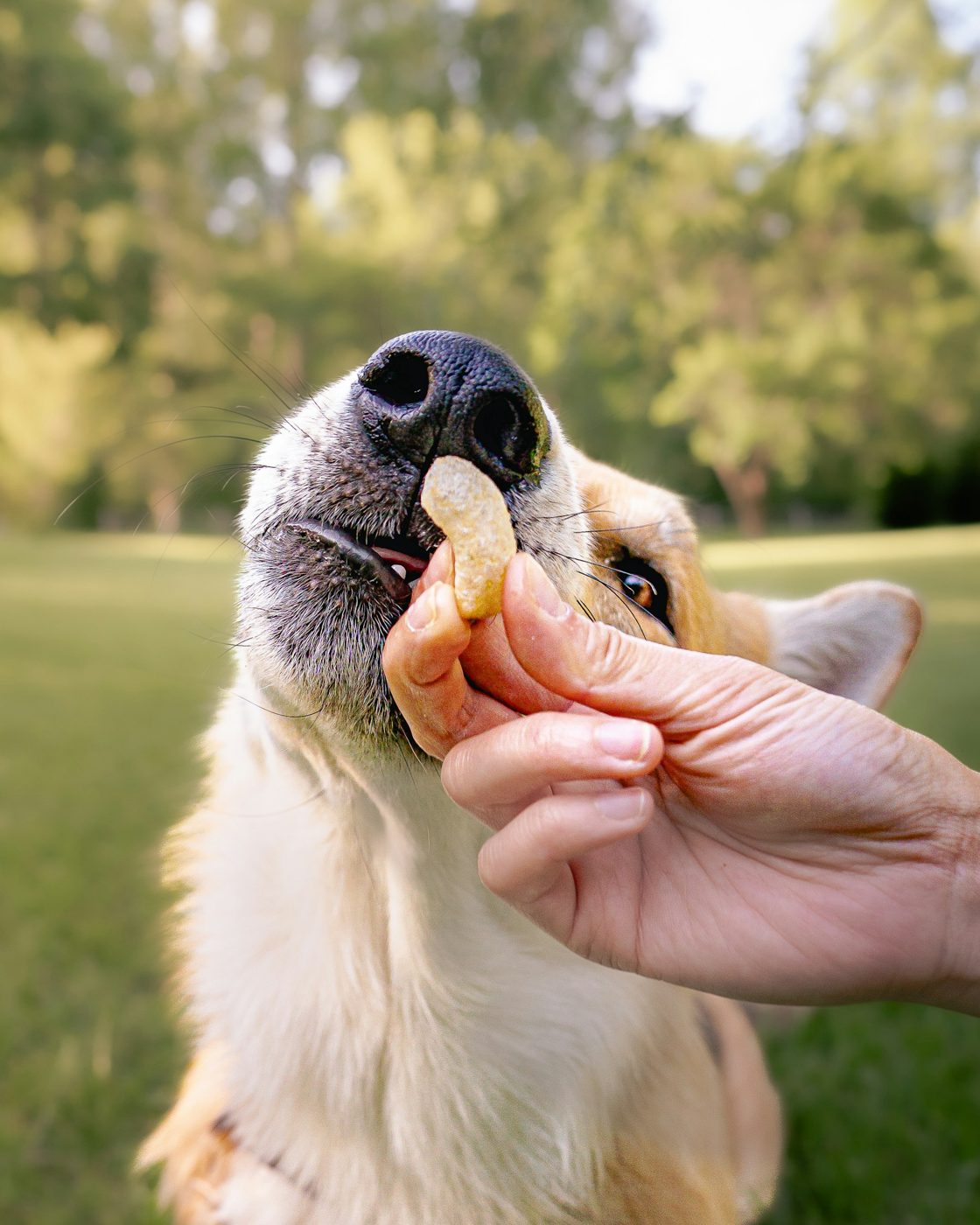
For healthy dogs, all of these are fine in small amounts, with no salt, sugar, oil, onion, garlic or masala:
- Carrot sticks: crunchy and low in calories. Frozen carrot is soothing for teething puppies (supervise, and size it so it can't be swallowed whole).
- Cucumber rounds: almost no calories, great for dogs watching their weight.
- Apple slices: without the core or seeds.
- Seedless watermelon: a hydrating summer treat, without the rind.
- Plain boiled chicken or fish, boneless, in pea-sized pieces: the classic high-value training reward.
- Boiled egg, chopped, as part of the day's budget.
- Pumpkin (kaddu), steamed and mashed: good for digestion too.
For cats, keep it to tiny pieces of plain cooked chicken or fish. Cats don't need biscuits or fruit.
Never use anything containing onion, garlic, grapes or raisins, chocolate, xylitol or cooked bones. Our Indian kitchen guide to unsafe foods has the full list.
Recipe: pumpkin and oat cookies (for dogs)
Makes about 40 small cookies.
- 1 cup steamed, mashed pumpkin (cooled)
- 1 egg
- About 1½ cups rolled oats, ground into a coarse flour in a mixie
- Heat the oven to 170°C and line a tray with baking paper.
- Mix the pumpkin and egg, then stir in the oat flour until you have a soft dough. Add a little more oat flour if it is sticky.
- Roll it out about 5 mm thick on a floured surface and cut small shapes, or roll into marble-sized balls and flatten them with a fork.
- Bake for 20 to 25 minutes, until firm and dry. Cool completely.
- Keep in an airtight box in the fridge for up to a week, or freeze.
Each small cookie is roughly 10 kcal, so a 10 kg dog's budget is a few cookies a day, not a handful.
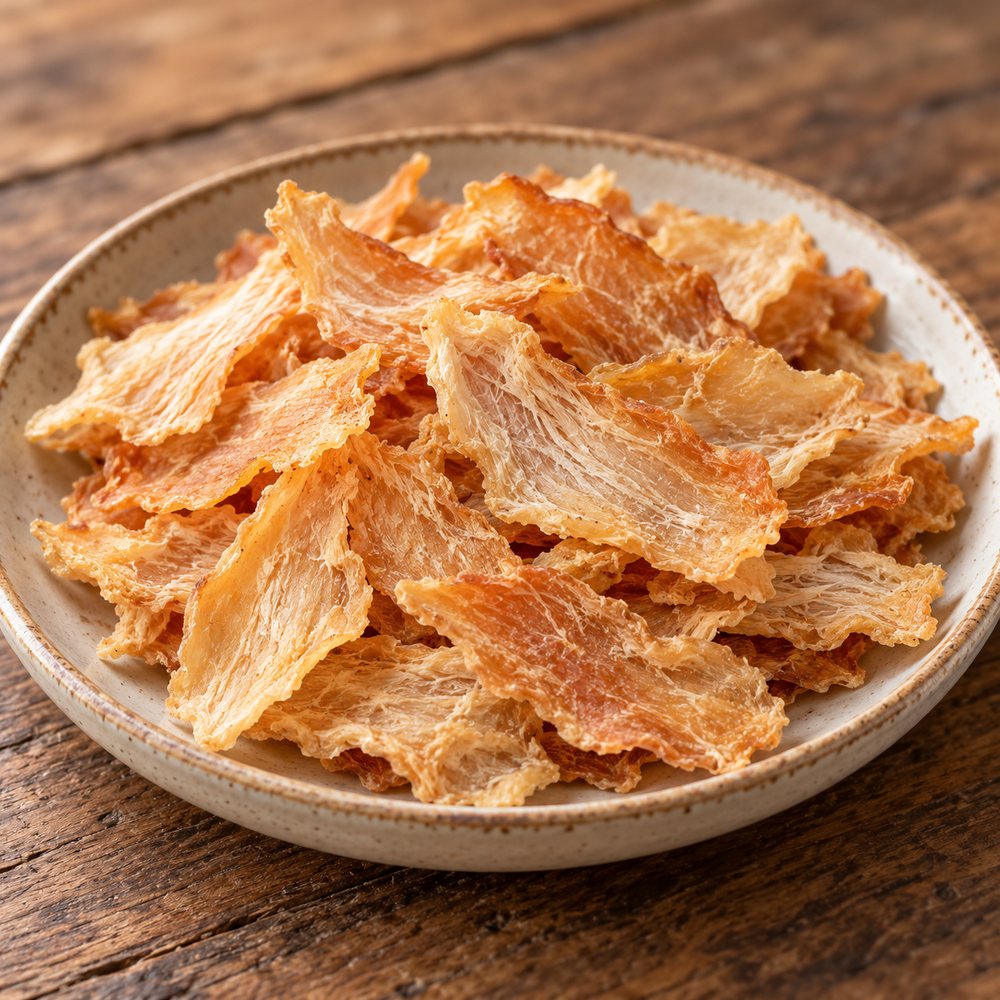
Recipe: chicken training bites (for dogs and cats)
- Cut boneless chicken breast into thin strips.
- Simmer in plain water until cooked through (74°C in the middle, with no pink), then drain and pat dry.
- Dry on a rack in the oven at its lowest setting (around 100 to 120°C) for 1½ to 2 hours, until firm and leathery.
- Cut into tiny pieces. Store in the fridge and use within a week.
Cooking the chicken first, before drying, is the step that keeps homemade jerky safe from bacteria.
Treats for training
- Go tiny. A reward the size of a pea works as well as a whole biscuit, and lets you reward more often.
- Use part of the meal. For long training sessions, set aside some of the day's food as rewards.
- Save the best for the hardest jobs. Chicken for recall at the park; carrot for sitting nicely at home.
- Supervise chews, and choose sizes your pet can't swallow whole.
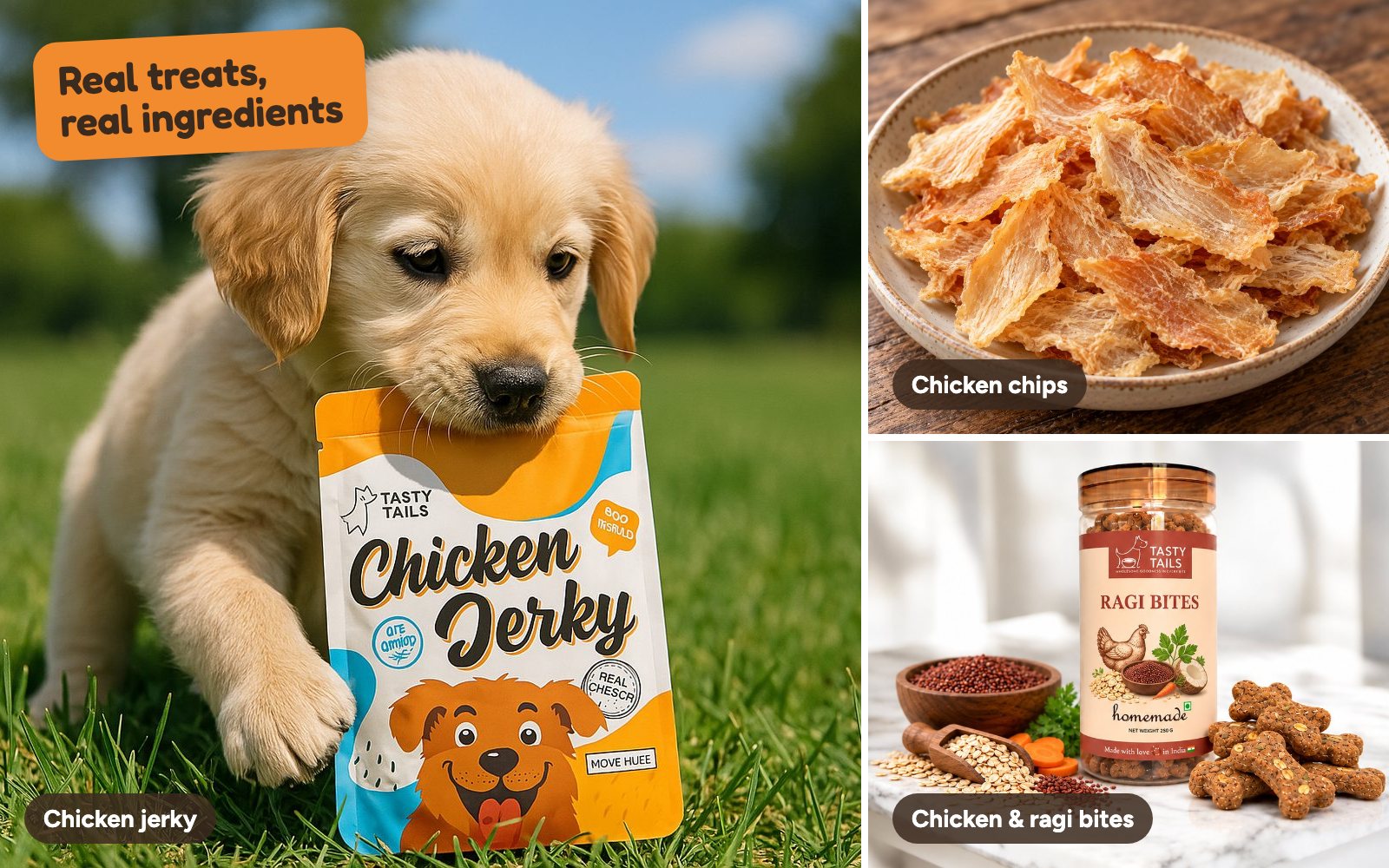
If you'd rather not bake, our treats page lists what goes into each of our training bites, cookies and broths.
Rather buy than bake? See our healthy dog treat alternatives: jerky, beetroot bars and chicken cookies.
Questions pet parents ask
How many treats can I give my dog a day?
Keep treats under 10% of your dog's daily calories. For a 10 kg adult dog, that is roughly 60 kcal a day. Break treats into small pieces so they last longer.
Is peanut butter safe for dogs?
Yes, in small amounts, if it is unsalted and does not contain xylitol (sometimes listed as birch sugar), which is very toxic to dogs.
Are rawhide chews safe?
They can be a choking or blockage risk if a dog swallows large pieces. Always supervise chewing and take the chew away once it is small enough to swallow.
Sources
- WSAVA Global Nutrition Guidelines (treats under 10% of calories)
- Tufts Petfoodology, on treats and calories
- ASPCA Animal Poison Control Center: People foods to avoid feeding your pets
- USDA FSIS: Jerky and food safety
- USDA FoodData Central, for calorie values
Treats we bake and dry in our kitchen
Short ingredient lists and no added sugar or salt. Break them small for training, and count them in the 10%.
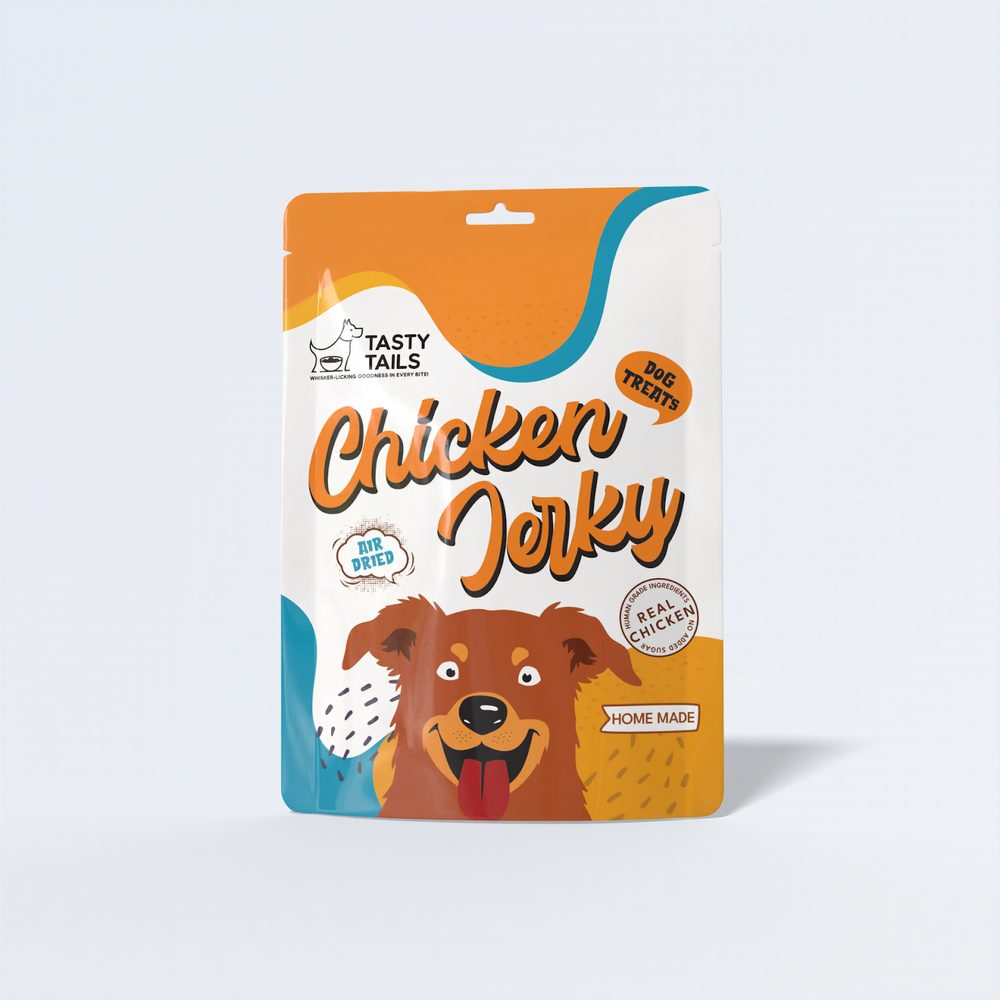


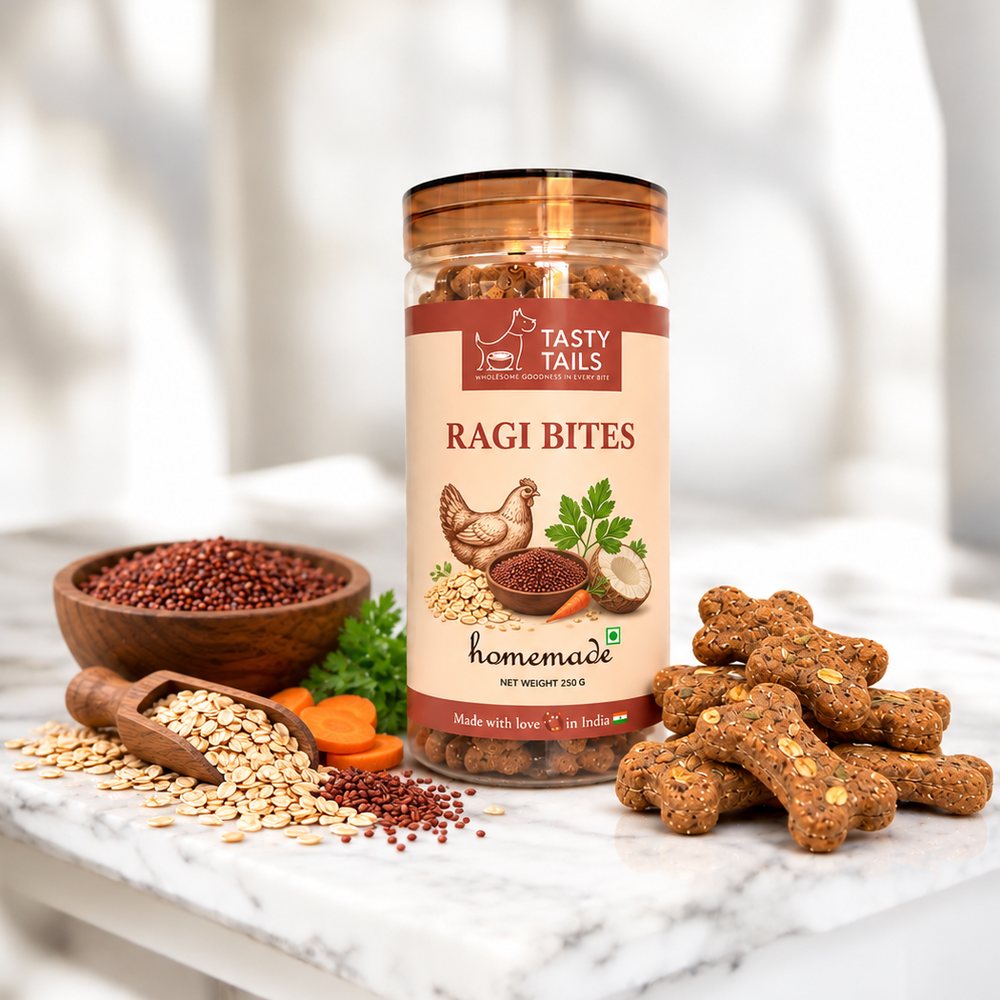


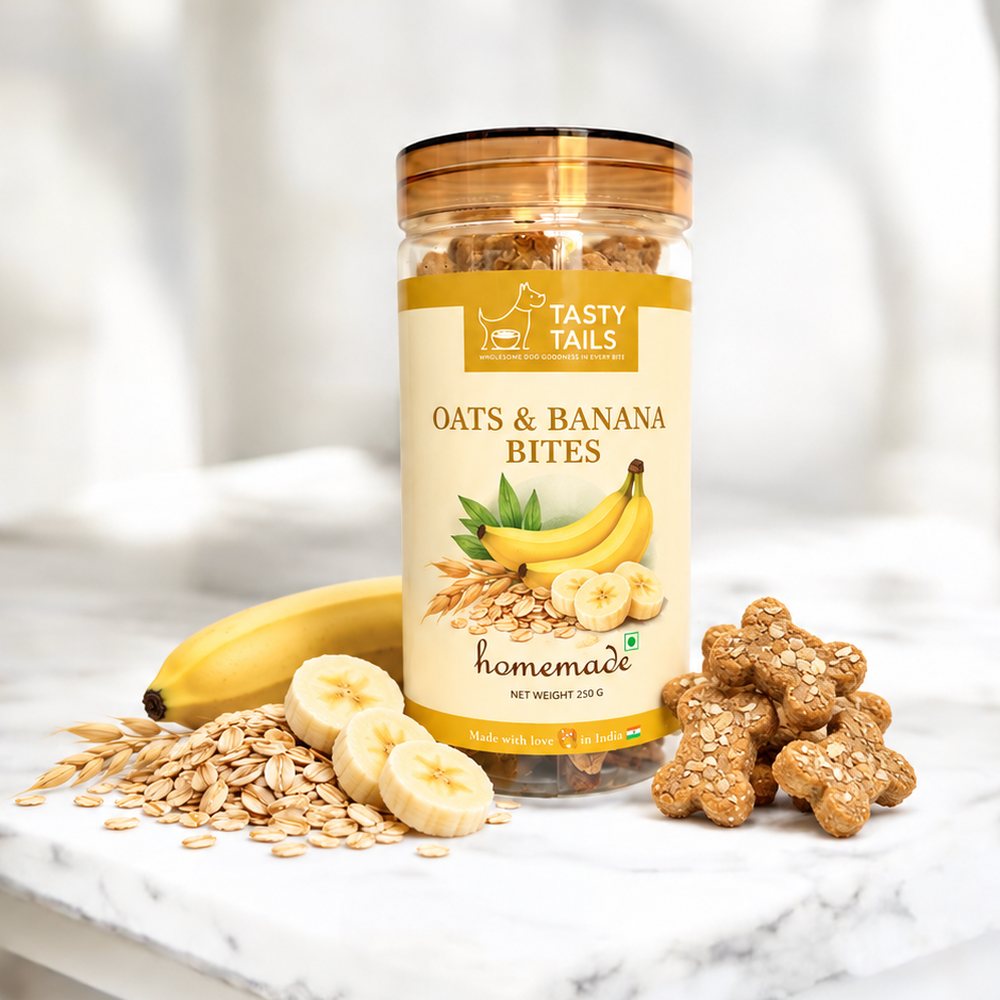

See the full menu or ask our nutritionist what suits your pet.
Was this helpful?
Share with a pet parent