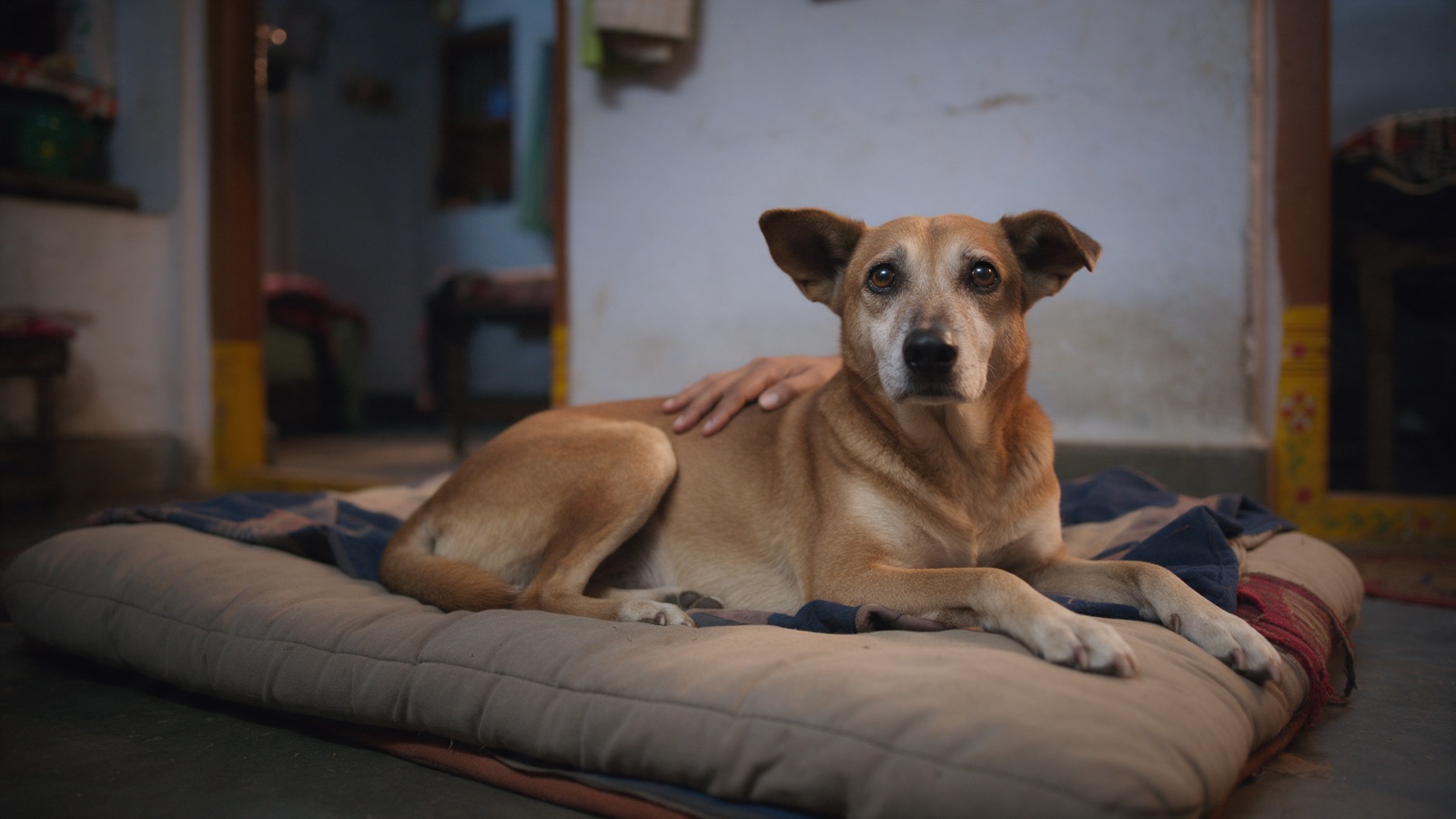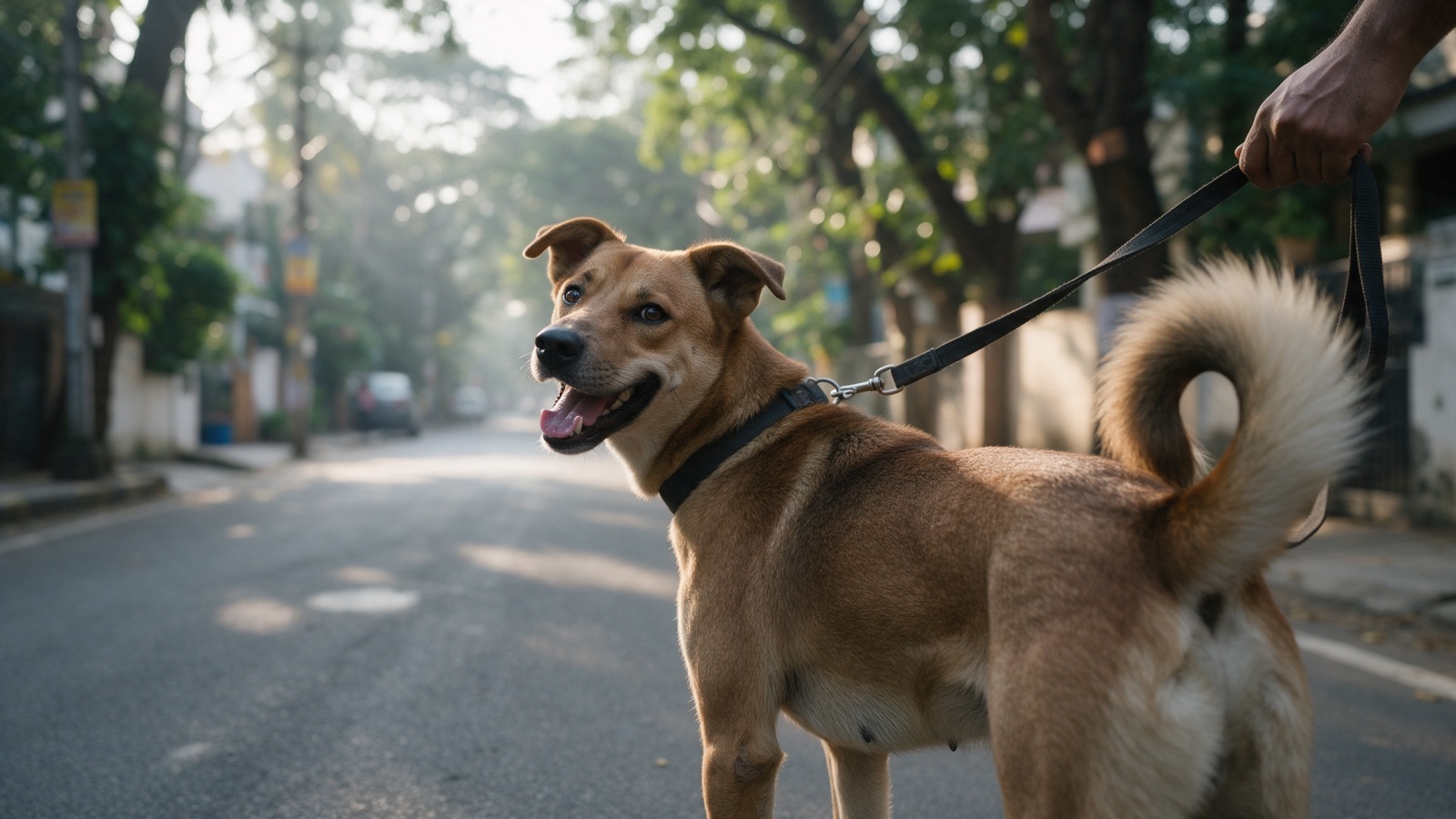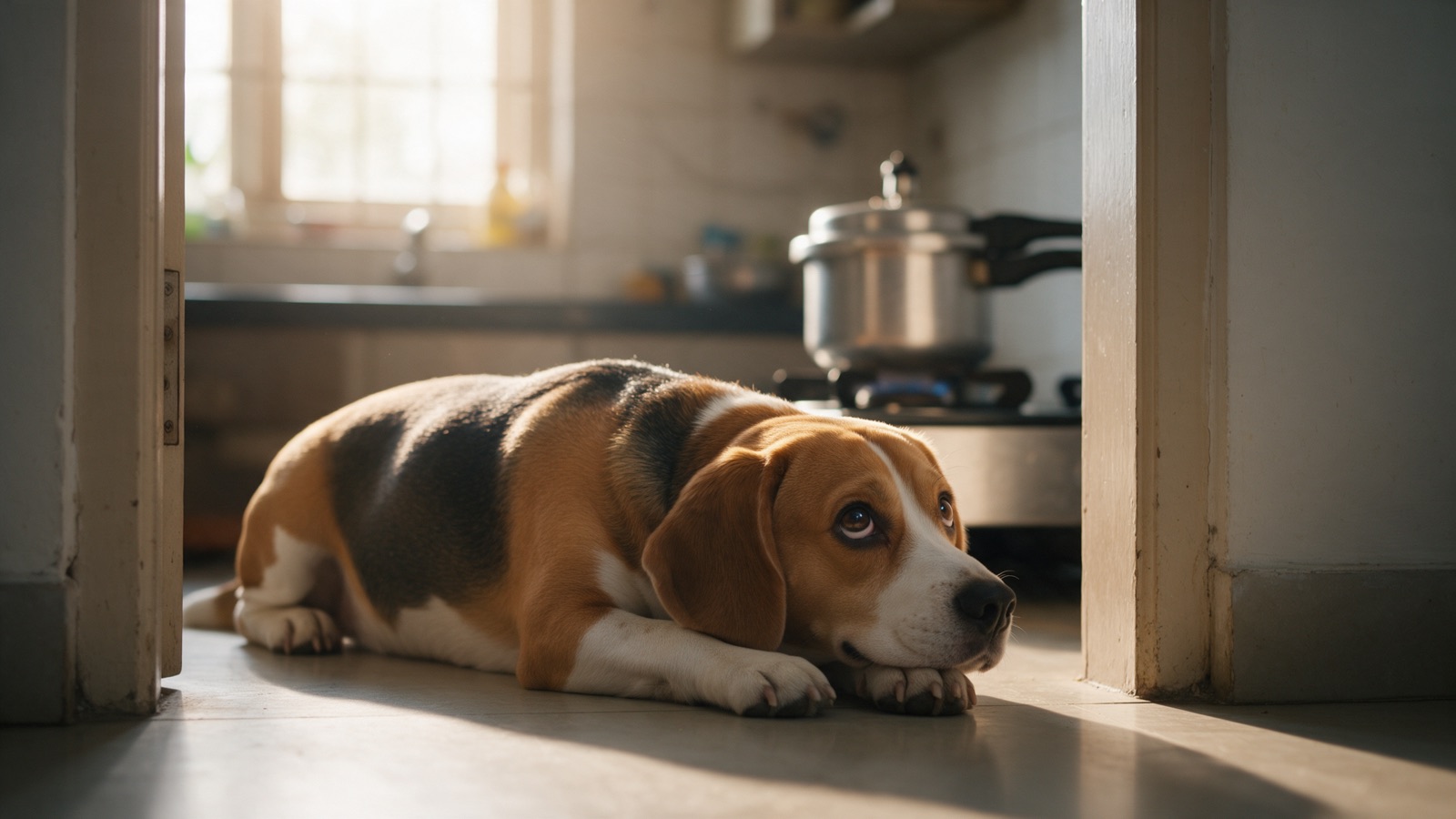
Is my dog overweight? Body condition score explained with a hands-on check
The scale tells you what your dog weighs, not whether it suits them. Learn the 1 to 9 body condition score, a simple rib, waist and tuck check, and safe ways to trim down.
Most overweight dogs in India are not overweight because of one big mistake. It is the extra roti at dinner, the biscuit with evening chai, the ghee on the rice, the mithai pieces through the festival season. Each is small, and the dog is so happy that it never feels like a problem until the vet says "she's carrying a few extra kilos".
The scale tells you what your dog weighs, but not whether that weight is right for their frame. For that, vets use a body condition score (BCS), a hands-on check you can learn at home in a few minutes.
Your dog's weight on the scale is a number. Your hands on those ribs are the truth.
Why a few extra kilos matter
Extra fat is not just padding. It strains joints, makes breathing and heat harder to cope with (a real issue in a Bangalore summer, and for flat-faced breeds year round), and is linked to arthritis, diabetes, some skin problems and higher anaesthetic risk. A long-term study of Labrador Retrievers found that dogs kept lean throughout life had a median lifespan almost two years longer than their littermates who were fed more, and developed chronic problems such as arthritis later. Losing weight later is possible, but it is much easier never to gain it.
The 9-point body condition score
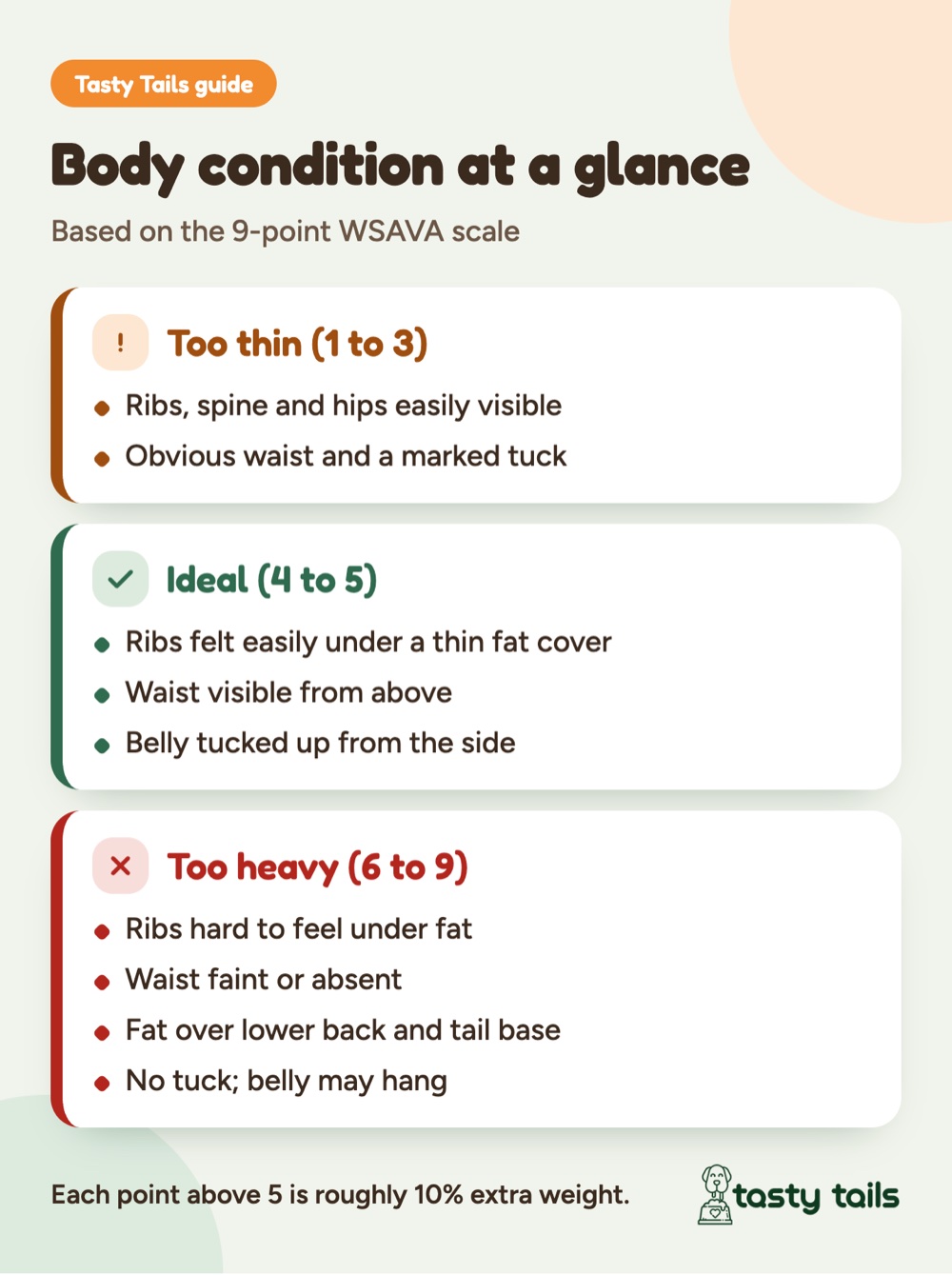
The scale most vets use runs from 1 (emaciated) to 9 (severely obese), and is published by WSAVA, the World Small Animal Veterinary Association. A score of 4 or 5 out of 9 is ideal. As a rough guide, each point above 5 means about 10% more body weight than ideal, so a 7/9 dog is carrying roughly 20% extra.
Score Ribs From above From the side 1 to 2: very thin Ribs, spine and hip bones easily visible, no fat to feel Severe waist, bones prominent Severe tuck, obvious muscle loss 3: thin Easily felt and may be visible, no fat to feel Obvious waist, tops of spine visible Marked tuck 4: ideal (lean end) Easily felt with a thin fat covering Waist easily seen Belly clearly tucked up 5: ideal Felt without excess fat Waist visible behind the ribs Belly tucked up 6: overweight Felt, with slight excess fat Waist visible but not prominent Tuck still apparent 7: heavy Hard to feel under heavy fat Waist absent or barely visible; fat over lower back and tail base Tuck may be present 8 to 9: obese Not felt, or only with firm pressure No waist, heavy fat over back, tail base, neck and legs No tuck, belly may hang or look swollen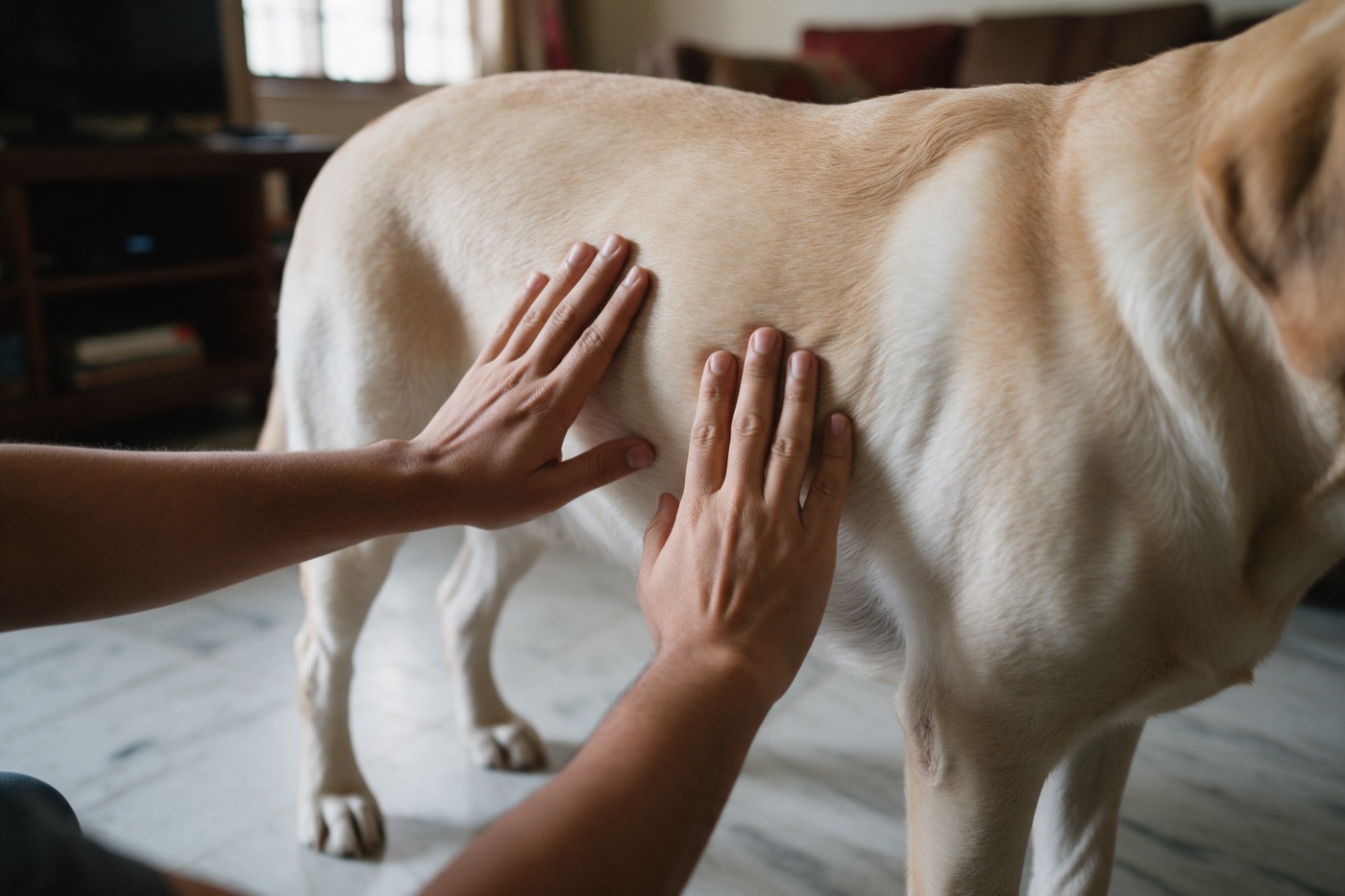
The hands-on check, step by step
Do this with your dog standing on all four legs, relaxed. Long or thick coats, like a Spitz, Golden Retriever or German Shepherd, can make a dog look heavier or slimmer than they are, so trust your hands over your eyes.
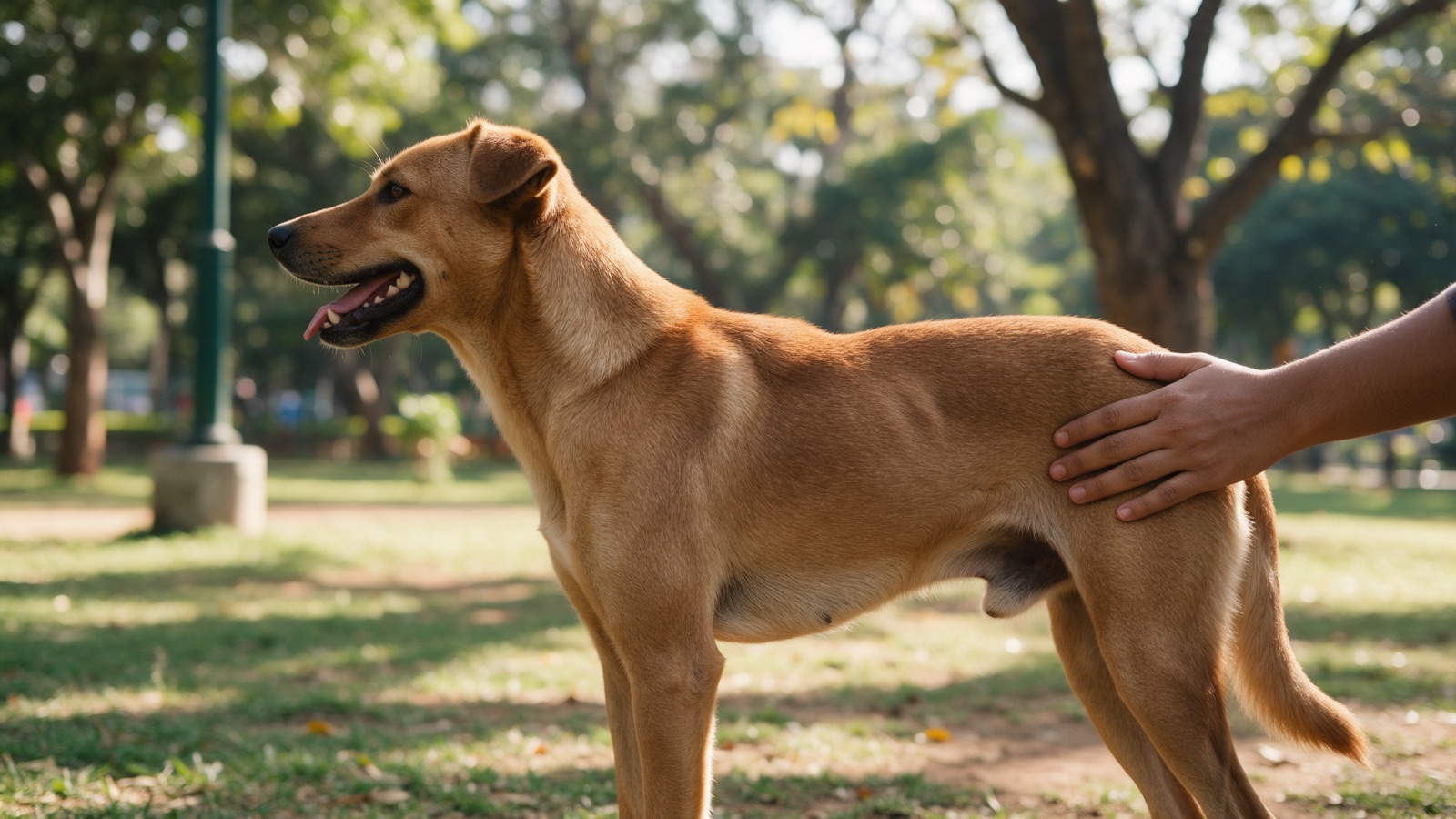
- Ribs. Place both hands flat on either side of the chest, thumbs along the spine, and glide gently. Now compare with your own hand. Make a loose fist and feel your knuckles: ribs that feel like that are too thin. Hold your hand flat, palm down, and feel the back of it: ribs that feel like the bones under the back of your hand are about right. Turn your hand over and feel your palm: if you have to press that hard to find the ribs, there is too much fat.
- Waist from above. Stand over your dog and look down. There should be a visible inward curve behind the ribs, like an hourglass. A straight line or an outward bulge means extra fat.
- Tuck from the side. Crouch to your dog's level. The belly line should rise from the bottom of the chest up towards the back legs. A flat or sagging line suggests overweight.
- Back and tail base. Feel along the spine and where the tail joins the body. Soft, squashy pads of fat here are a typical sign of a 7 or above.
- Write down your score. Repeat monthly, along with a weight. Hold your dog on a bathroom scale and subtract your own weight, or use the scale at your vet's clinic on a quick visit.
Trust your hands over your eyes, especially with a fluffy coat.
Things that can fool you
- Breed build. Indian pariah dogs (Indies), Greyhounds and some hounds are naturally lean, and a 4/9 is perfectly healthy for them. Labradors, Beagles, Pugs and Cocker Spaniels tend to gain weight easily, so watch them closely.
- Muscle loss. Older dogs can lose muscle over the spine, hips and head while keeping fat on the belly. A bony back with a round tummy is not a "thin" dog. Vets assess muscle separately with a muscle condition score.
- A pot belly that is not fat. A swollen belly with a thin back can come from fluid, an enlarged organ or a hormone problem such as Cushing's disease. If the belly is round but the ribs and spine feel bony, see your vet.
- Puppies. Growing puppies should be lean, with ribs easy to feel. Ask your vet to score your puppy at vaccinations.
When weight change needs a vet
- Your dog is losing weight without a diet change, especially with a good or increased appetite (possible diabetes, worms, digestive or thyroid problems)
- Weight is climbing despite sensible portions, or your dog seems slow, cold-seeking and has a thinning coat (possible hypothyroidism)
- Your dog is drinking and peeing much more than usual
- Your dog's belly is swelling while the back gets bony
- Your dog scores 7 or more, before you start a weight-loss plan, so your vet can rule out medical causes and set a safe target
Helping an overweight dog slim down
Safe weight loss in dogs is slow, usually around 1 to 2% of body weight a week, guided by your vet. Crash diets cost muscle and leave a hungry, unhappy dog.
- Measure every meal. Use a kitchen scale, not a cup or a guess. Our calorie guide explains how to work out daily needs.
- Count every extra. Treats, chews and table scraps should stay under about 10% of daily calories. Get the whole household on the same plan, including grandparents who share their roti.
- Swap, don't stop. Keep training rewards but make them smaller and leaner. A single treat broken into several tiny pieces works just as well for your dog.
- Walk a little more. Add five to ten minutes to walks, or a sniffing game in the cooler evening. Build up gradually, especially for heavy or older dogs.
- Plan for festivals. Diwali and wedding season bring sweets everywhere; our Diwali safety guide covers why mithai is a bad idea for dogs anyway.
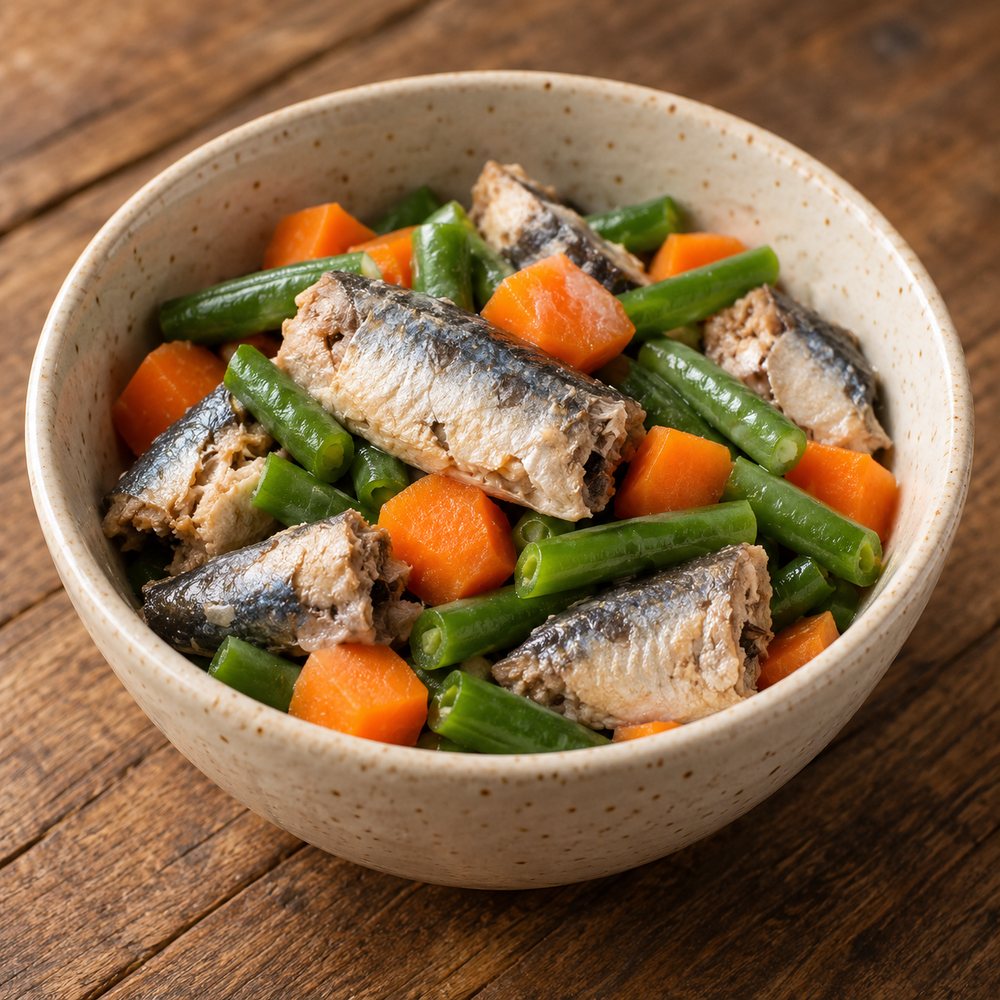
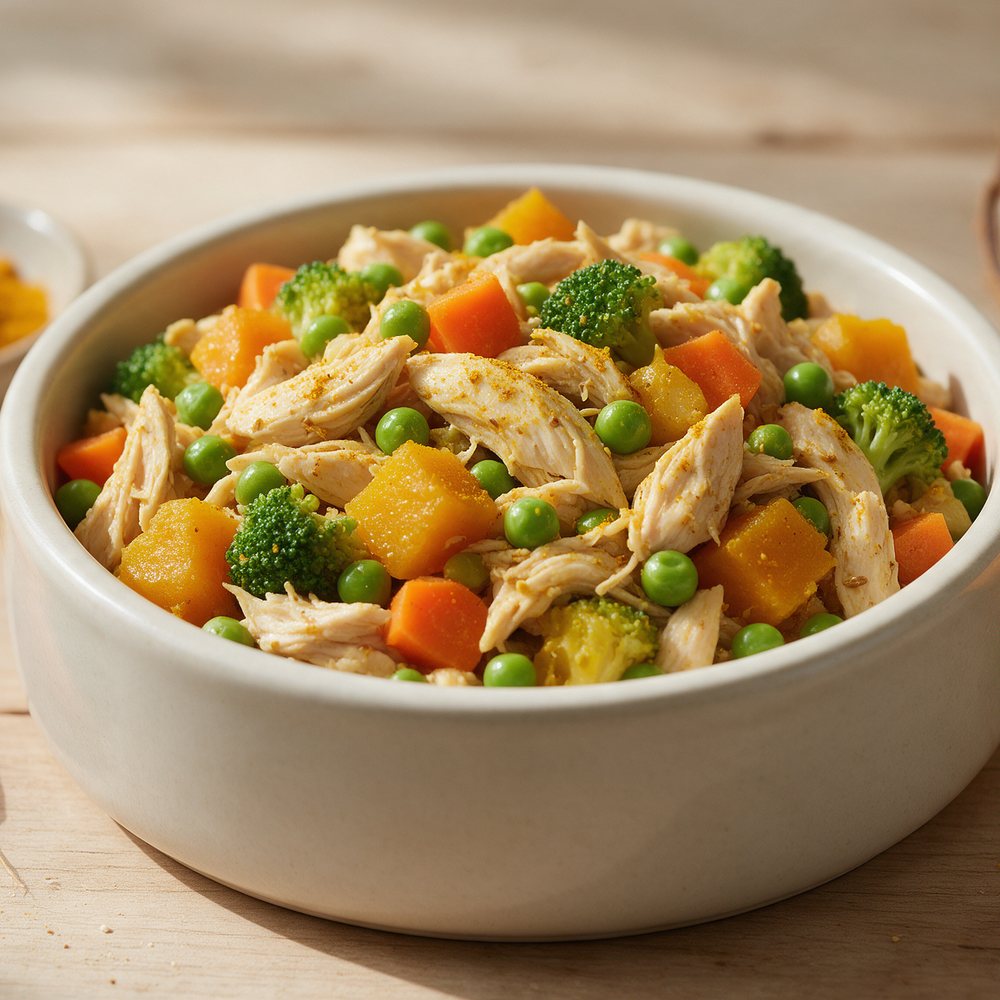
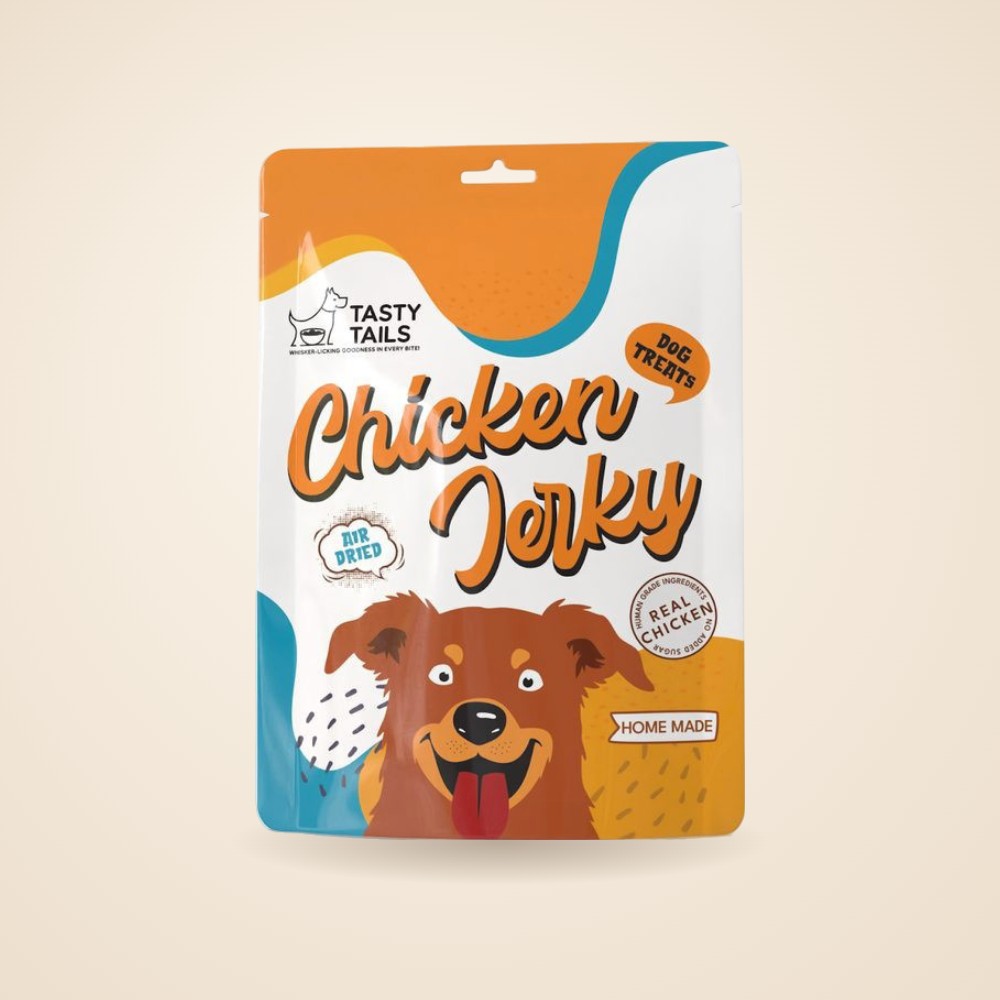
Fresh, measured meals make portion control easier because each bowl is a known amount. The Fish & veggie bowl is 100 g of gently boiled fish with 50 g of steamed green beans and carrots, with no salt, oil or spices. Chicken & Veggies Blast is boiled chicken with carrots, broccoli, pumpkin and peas. For rewards, our Homemade Chicken Jerky is made from fat-trimmed chicken breast and tears easily into small training pieces. Ask your vet to set the daily calorie target, then build portions around it. For more swaps, see healthy homemade treats and how much.
A fortnight after you start, redo the hands-on check. You are looking for the waist to reappear slowly and the ribs to feel a little easier each month. That steady change is the goal.
Questions about your dog's weight
What is the ideal body condition score for a dog?
On the 9-point scale, 4 or 5 out of 9 is ideal. You should feel the ribs easily under a thin layer of fat, see a waist from above and a tucked belly from the side.
Can I tell if my dog is overweight just from the scale?
Not on its own. Dogs of the same breed vary a lot in frame size. Weight tells you whether your dog is changing; body condition score tells you whether that weight suits them. Use both.
How fast should an overweight dog lose weight?
Slowly, usually around 1 to 2% of body weight per week, under your vet's guidance. Faster loss tends to cost muscle and is hard to keep up.
My Indie dog looks skinny compared to my neighbour's Labrador. Is she underweight?
Probably not. Indies are built lean and athletic, and a 4/9 is healthy for them. If you can see her hip bones and spine clearly, or she is losing weight, ask your vet.
Sources
Measured meals and lean rewards
Simple, measured bowls and a lean treat that tears into tiny pieces, to fit around the calorie target your vet sets.
Main Meals For dogs & cats
Fish & veggie bowl
-

-

-

-

-

- +2
- Protein
- Healthy fats
- Fibre
- Vitamins
₹495 Small · 250 g
Main Meals For dogs & cats
Chicken & Veggies Blast
-

-

-
-
-

- +5
- Protein
- Healthy fats
- Fibre
- Vitamins
₹325 Small · 250 g 3 sizes


See the full menu or ask our nutritionist what suits your pet.
Was this helpful?
Share with a pet parent