Dog poop chart: what colour, shape and frequency say about your dog's health
Your dog's poop is a free daily health report. Learn the 1 to 7 consistency score, what black, red, yellow, green or grey stool can mean, and when a soft stool needs a vet today.
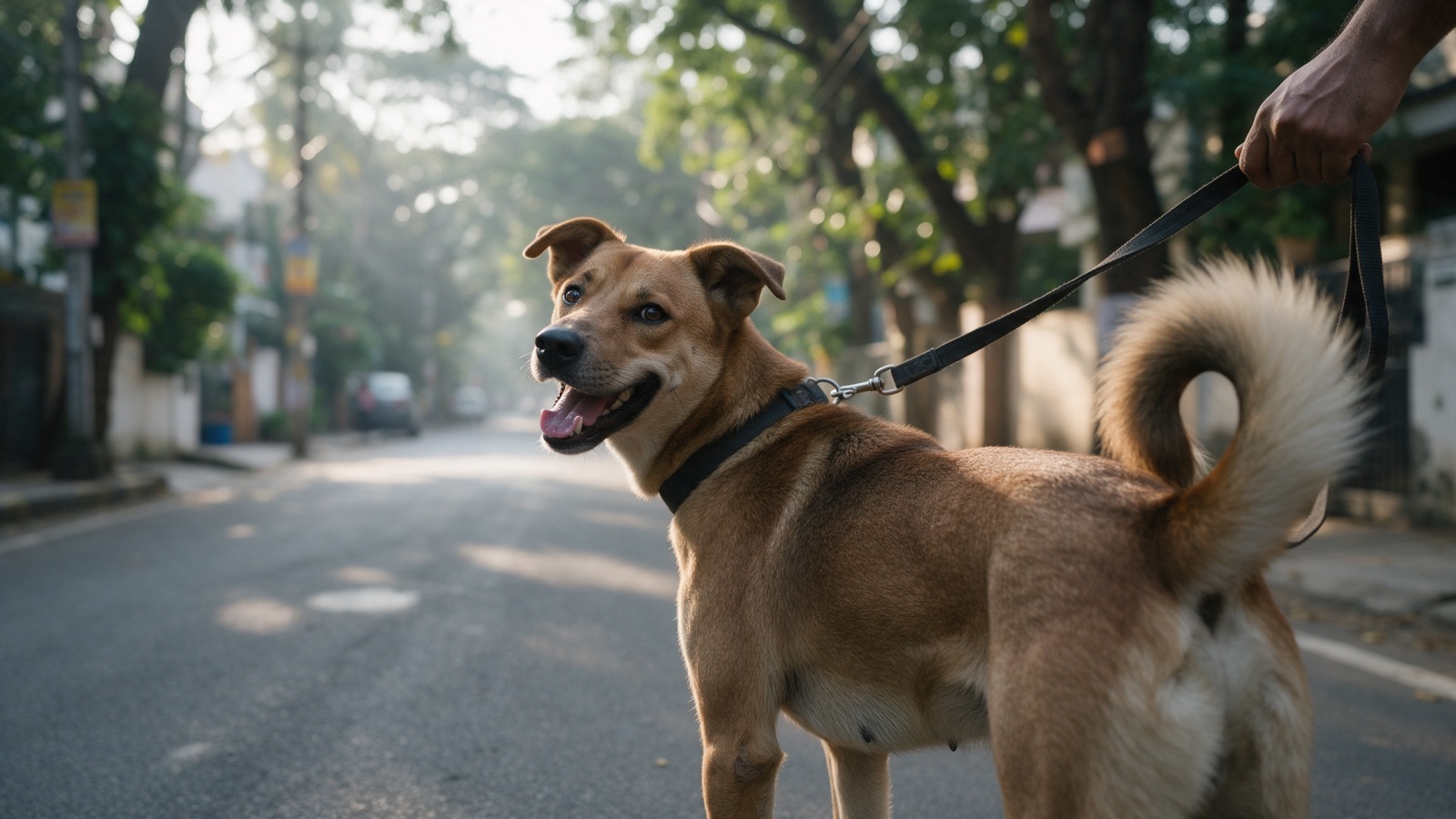
Nobody enjoys this part of dog ownership, but the morning walk gives you a free daily health report. Colour, shape, how often and how hard your dog strains all say something about what is happening in the gut, and a change is often the first sign that something is off.
Here is how vets read poop, what is normal, what can wait a day, and what needs a vet today. Keep this page handy next time you are standing on the pavement with a bag in hand, frowning.
Your dog files a daily health report on the pavement. This is how to read it before breakfast.
What healthy dog poop looks like
- Colour: chocolate brown, from bile pigments made in the liver.
- Shape: log-shaped and segmented, firm but not hard.
- Feel: holds its shape when picked up and leaves little or no residue on the grass.
- Frequency: most adult dogs go once to three times a day. Puppies go more often. What matters most is your own dog's normal pattern.
- Effort: passed easily, without long straining or crying.
The consistency chart
Many vets use a 1 to 7 faecal score, popularised by Purina, to describe consistency in the same language. Score 2 is ideal.
Score What it looks like What it can mean 1 Very hard, dry pellets; your dog strains Constipation, not enough water, too much bone, or swallowed fur or grass 2 (ideal) Firm but not hard, segmented, easy to pick up Healthy digestion 3 Log-shaped, moist surface, holds its form Usually fine; watch if it is a change for your dog 4 Very moist and soggy, loses shape when picked up Mild upset: a new food, a stolen snack, stress 5 Moist piles rather than logs Diarrhoea starting; monitor closely 6 Texture but no shape, spots or puddles Diarrhoea; call your vet if it lasts more than a day or your dog is unwell 7 Watery, no texture, flat puddles Significant diarrhoea; dehydration risk, especially in puppies and seniorsOne soft stool after a party or a scavenged samosa is common. A pattern of scores 5 to 7, or any change with vomiting, lethargy or poor appetite, is a reason to call your vet.
Score 2 is the goal: firm, segmented and easy to pick up.
What the colour tells you
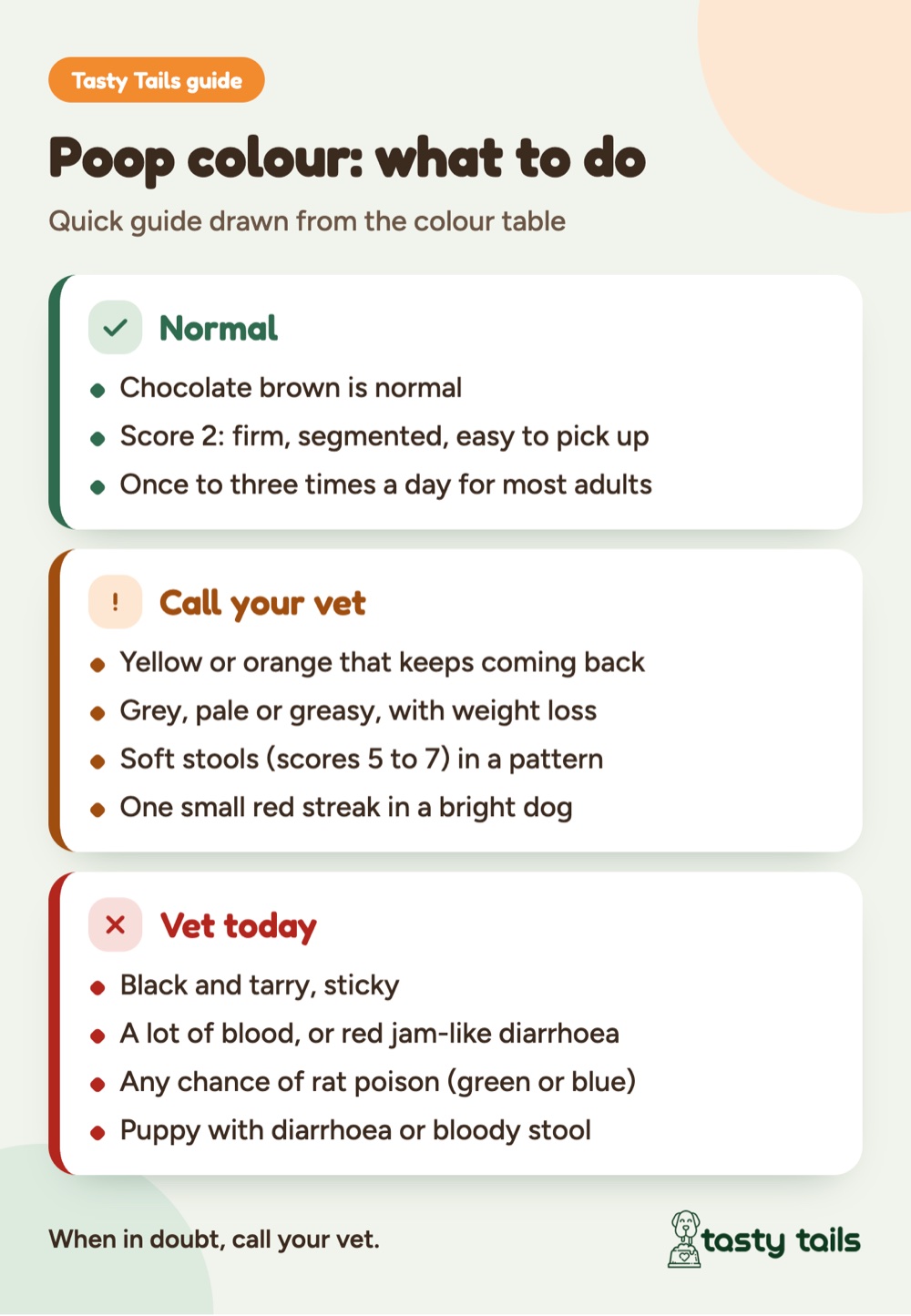
Colour Possible causes What to do Chocolate brown Normal Nothing Black and tarry, sticky Digested blood from the stomach or small intestine, for example an ulcer, a swallowed object or certain medicines Vet today Red streaks or fresh blood Irritation of the large bowel or rectum, straining, sometimes parasites One small streak in a bright dog: call your vet and monitor. A lot of blood: vet today Red, jam-like, watery Haemorrhagic diarrhoea, which can dehydrate a dog fast Vet now Yellow or orange Food moving through too fast, or a liver, gallbladder or pancreas problem; carrot, pumpkin and turmeric can tint it a little Call your vet if it persists or your dog is unwell, or gums or eyes look yellow Green Eating lots of grass, or fast transit. Some rat poisons are dyed green or blue If there is any chance of rat poison, vet now Grey, pale or greasy Fat not being digested properly, sometimes a pancreas problem Call your vet, especially with weight loss White and chalky Too much bone or calcium Review the diet with your vet Pink or purple tinge Beetroot in food or treats, harmless; but true raspberry-coloured, watery stool needs a vet Think back to what your dog ateOther things worth a second look
- Mucus: a thin shiny coat now and then is normal. Lots of jelly-like mucus, often with small frequent stools and urgency, points to colitis.
- Worms: small white rice-like segments around the bottom or in stool suggest tapeworm; spaghetti-like strands are roundworms. Many worms are invisible, which is why routine stool tests and deworming on your vet's schedule matter.
- Foreign material: plastic, thread, rubber band pieces, bits of toy. If your dog is eating things they shouldn't, watch closely for vomiting, belly pain or straining with nothing coming out.
- Grass: lots of undigested grass is common and usually harmless, but a dog suddenly eating grass frantically may have an upset stomach.
- Undigested food: whole peas or corn are usually not a concern. Large amounts of undigested food in every stool, with weight loss, needs a vet.
Frequency, volume and straining
Highly digestible food generally means smaller, firmer stools, which is one reason many owners notice less to pick up after a gradual switch to fresh food (see our 7-day transition plan). Sudden large volumes of soft stool many times a day usually means the small intestine is involved. Many small, urgent stools with mucus or a little fresh blood usually means the large bowel.
Straining needs a careful look. A dog straining with diarrhoea feels like they still need to go even when empty. A dog straining with no result may be constipated, or may have swallowed something. And a dog, especially a male, squatting and straining to pee with little coming out is an emergency, not a poop problem. Watch which one it is before you call.
See a vet today if
- Stool is black and tarry, or there is a lot of blood
- Diarrhoea comes with repeated vomiting, a sore or swollen belly, weakness or pale gums
- A puppy, especially one not fully vaccinated, has diarrhoea or bloody stool (parvovirus is a real risk)
- A senior dog or a dog with an existing illness has diarrhoea for more than a few hours
- Diarrhoea lasts more than 24 to 48 hours in an otherwise healthy adult
- Your dog strains with nothing coming out, or has not passed stool for two days and seems uncomfortable
- You suspect they ate something toxic, such as chocolate, raisins or rat poison: call your nearest 24-hour vet or the ASPCA Animal Poison Control Center
Please do not give human anti-diarrhoea or stomach medicines unless your vet tells you to. Some are unsafe for dogs and can hide important signs.
What you can do at home for a mild upset
For a bright, adult dog who is eating and drinking, has had one or two soft stools and nothing else, keep fresh water available, skip treats and rich food, and offer smaller meals. Your vet may suggest a short spell on a bland diet such as plain boiled chicken and rice, then a gradual return to normal food over a few days. Don't fast puppies or small breeds without your vet's advice, as their blood sugar can drop.
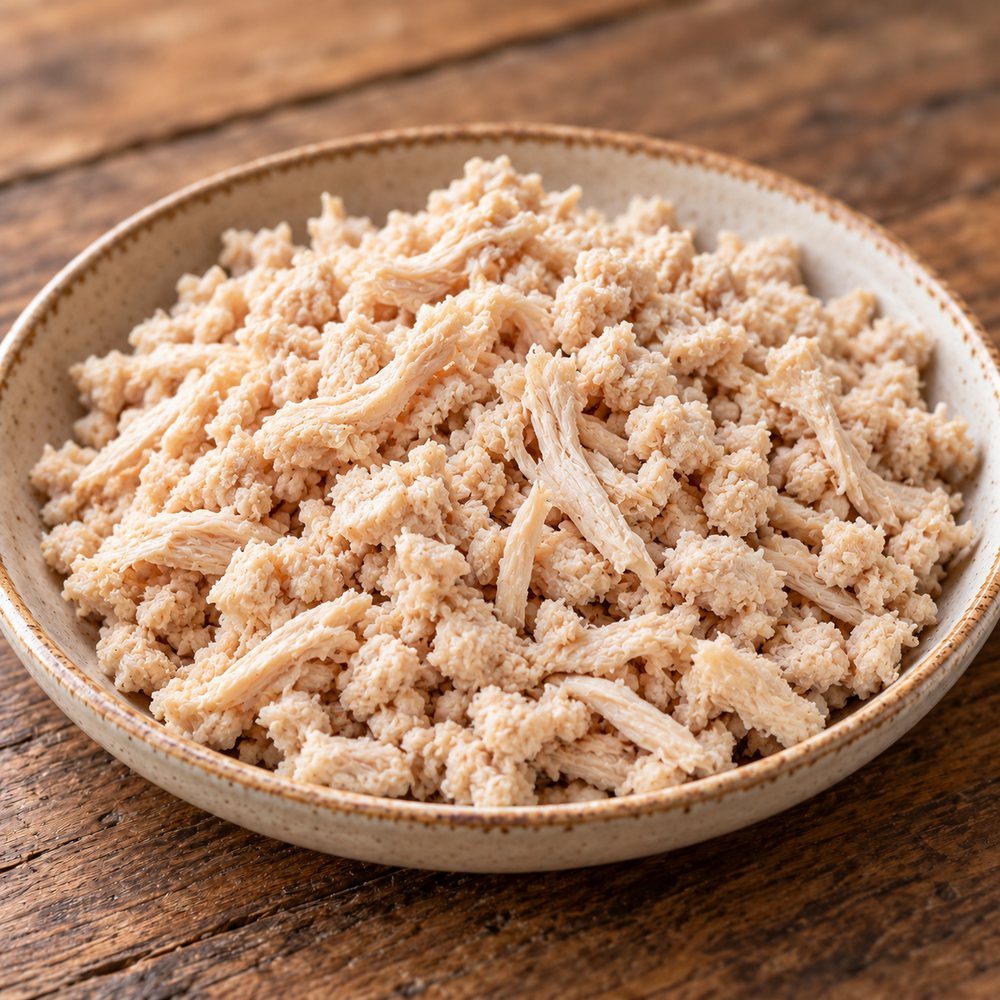
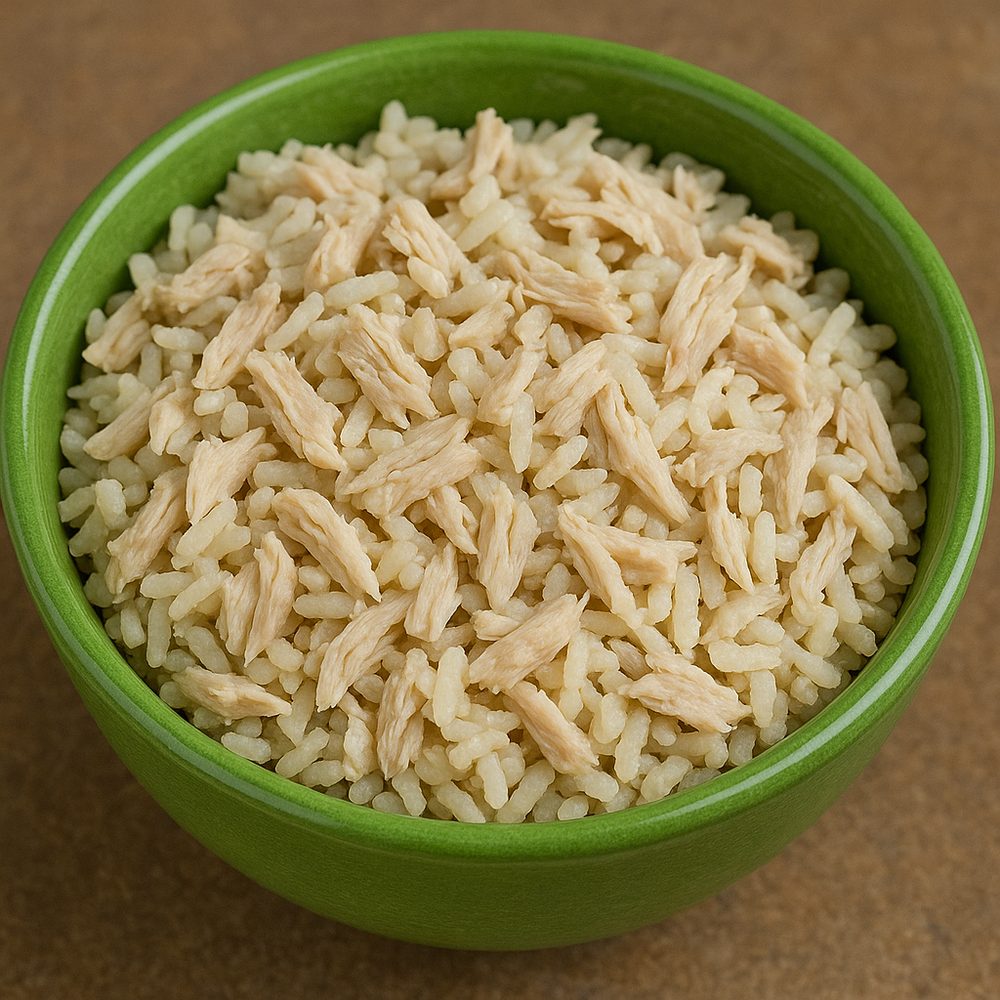
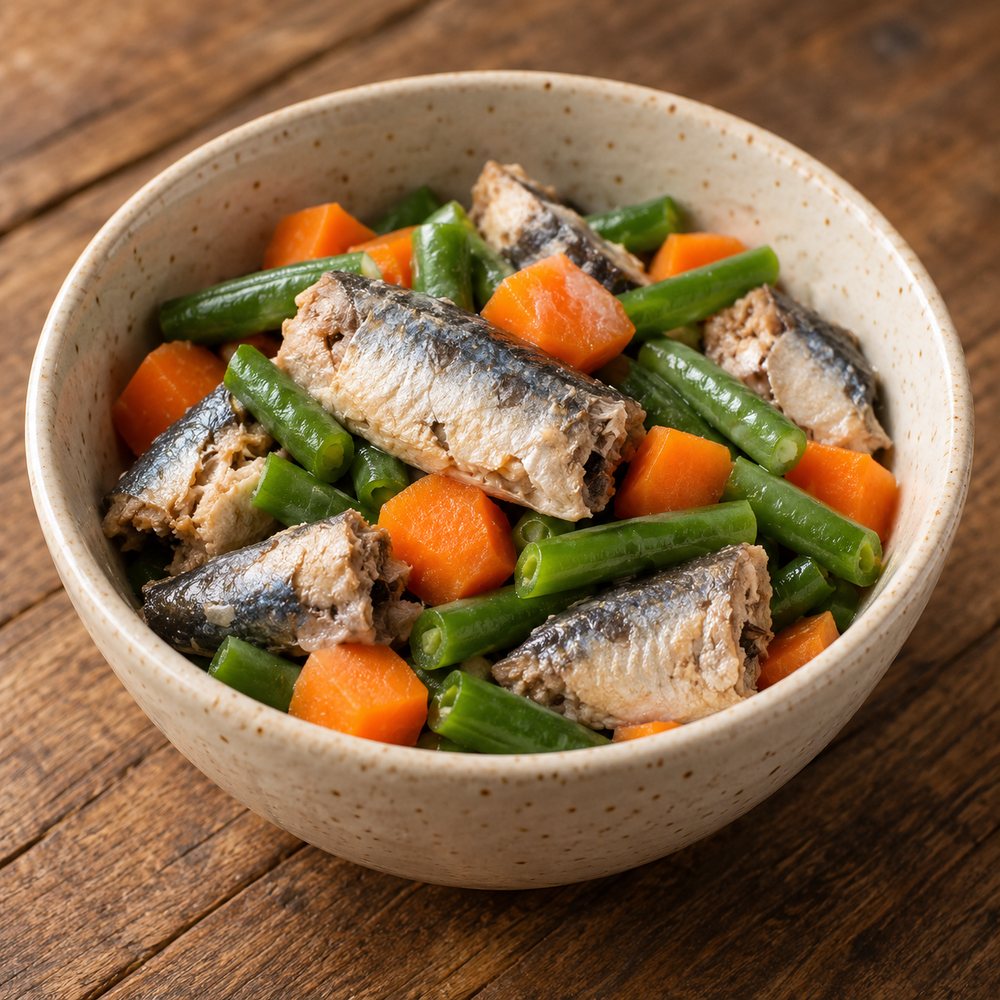
When your vet does recommend a bland diet, our Boiled Chicken Keema is plain boiled chicken mince with nothing else added, and Classic Combo is boiled chicken with white or brown rice. For dogs who can't have chicken, the Fish & veggie bowl is gently boiled fish with steamed green beans and carrots, with no salt, oil or spices. Ask your vet how long to stay on bland food before going back to the usual bowl.
If loose stools keep coming back alongside itchy skin or ears, read our guide to food allergies in dogs, and check that nothing from our list of foods dogs should never eat is reaching the bowl.
Taking a stool sample to the vet
Collect a fresh sample, ideally within a few hours of your vet visit, in a clean container or sealed bag. A teaspoon-sized amount is usually enough. Keep it cool but don't freeze it. A photo on your phone and notes on frequency and colour help too.
Questions about dog poop
How many times a day should a dog poop?
Most healthy adult dogs go once to three times a day, often soon after meals. Puppies go more often. A clear change from your dog's own normal pattern matters more than the exact number.
Why is my dog's poop soft after changing food?
A sudden switch is the most common cause. Changing gradually over about a week usually prevents it. If stools stay soft after the transition, or your dog seems unwell, speak to your vet.
Is mucus in dog poop dangerous?
A small amount now and then is normal. Lots of mucus, frequent urgent stools or blood suggest large bowel irritation and are worth a call to your vet.
My dog's poop turned red after a beetroot treat. Should I worry?
Beetroot can tint stool pink or red, which is harmless. If your dog is bright, the stool is formed and the colour fades within a day or two, it is likely the food. If you are unsure, or the stool is watery or looks like jam, see your vet.
Sources
Plain bowls for when your vet says bland
Simple, plain meals from our kitchen to use when your vet recommends a bland diet for a mild tummy upset.

Main Meals For dogs & cats
Classic Combo

- Protein
- Healthy fats
- Slow-release energy
₹350 Medium · 350 g 2 sizes
Main Meals For dogs & cats
Fish & veggie bowl
-

-

-

-

-

- +2
- Protein
- Healthy fats
- Fibre
- Vitamins
₹495 Small · 250 g
See the full menu or ask our nutritionist what suits your pet.
Was this helpful?
Share with a pet parent