How to tell if your dog is healthy: a 10-minute nose-to-tail home check
A calm, weekly 10-minute check teaches you what normal looks like for your dog. Here is how to check eyes, ears, gums, coat, weight and breathing, plus the normal ranges and red flags.
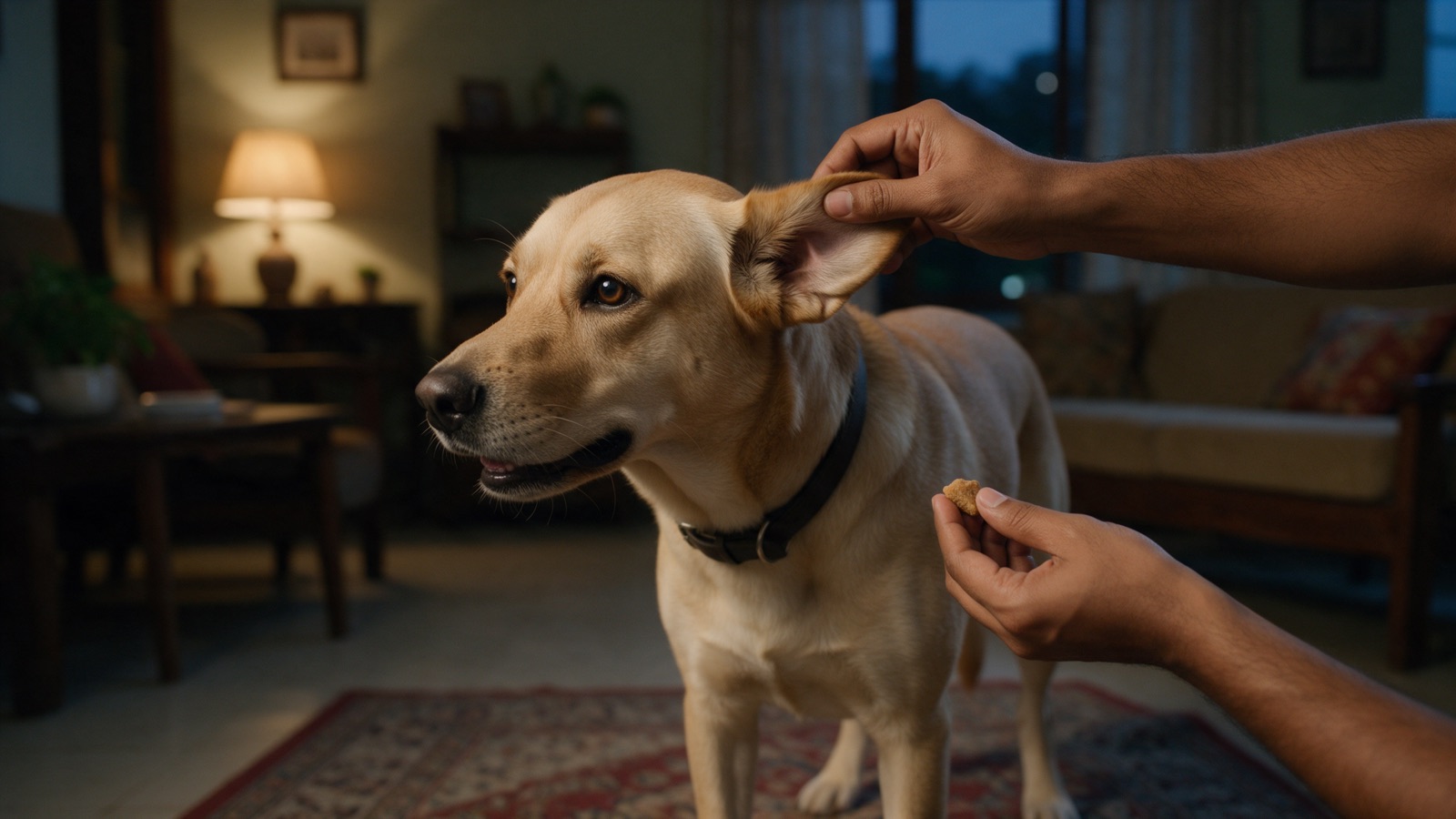
Your dog can't tell you that one ear itches or that a tooth hurts when they chew. What they can do is let you look. A short nose-to-tail check once a week, done on a calm evening after the walk, is the easiest way to learn what normal looks like for your dog, so you notice early when something changes.
This is not a replacement for your vet's yearly exam. Think of it as the homework that makes those visits more useful: you will arrive with notes instead of "I think he's been a bit quiet".
Your dog cannot say that one ear itches. A weekly nose-to-tail check lets them show you.
Before you start
- Pick a quiet time when your dog is relaxed, not straight after play or a meal.
- Keep a few small treats nearby and reward calm standing. Puppies who learn this early grow into dogs who are easy to examine.
- Have a phone ready for notes and photos. A dated photo of a lump or a patch of skin is very useful to your vet.
- Go gently. If any area makes your dog flinch, growl or pull away, stop and note it: pain is information, not bad behaviour.
Normal ranges at a glance
These are general figures for healthy adult dogs at rest. Puppies, tiny breeds and excited dogs run higher, so measure your own dog a few times when they are well to learn their baseline.
Check Usually normal Call your vet if Breathing while asleep Under 30 breaths a minute, often 15 to 25 Consistently over 30 asleep, or any effortful breathing Heart rate at rest About 60 to 100 a minute in large dogs, up to about 140 in small dogs Very fast, very slow or irregular with weakness Gum colour Moist and bubblegum pink Pale, white, grey-blue, brick red or yellow Capillary refill time Pink returns in under 2 seconds Slower than 2 seconds Temperature (rectal) About 38 to 39.2°C Above about 39.5°C or below 37.5°C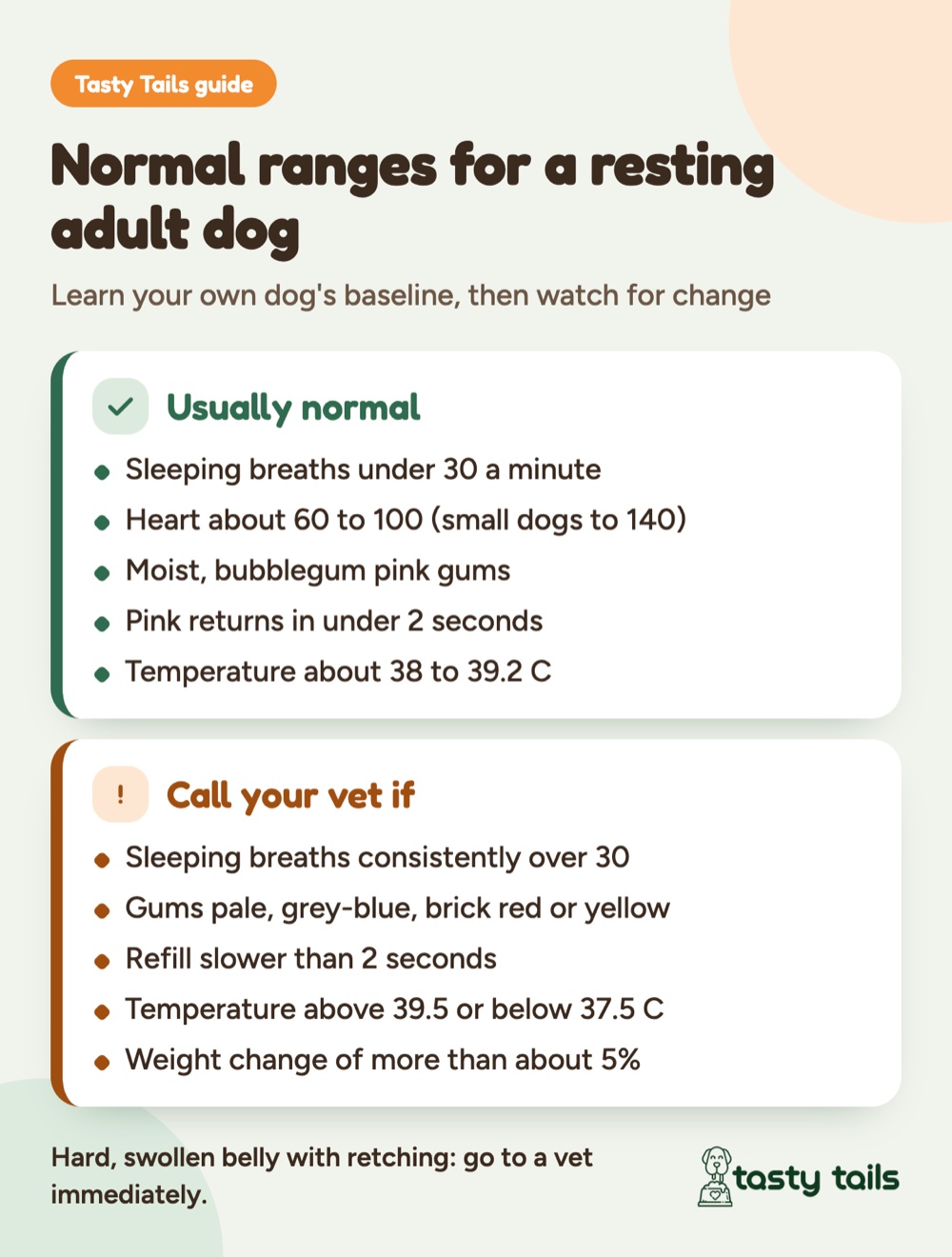
The 10-minute check, nose to tail
1. Breathing (1 minute)
Do this when your dog is fast asleep. Count each time the chest rises over 30 seconds and double it. A sleeping rate under 30 a minute is normal for most dogs. Write it down: a resting rate that creeps up over days can be an early sign of heart or lung trouble, and vets often ask owners of dogs with heart murmurs to track it.
2. Eyes
Eyes should be bright and clear, with both pupils the same size. A little dry crust in the corner in the morning is fine. Watch for squinting, redness, cloudiness, green or yellow discharge, or the third eyelid showing. Eye problems can get worse in hours, so a squinting, watering eye deserves a vet visit the same day.
3. Ears
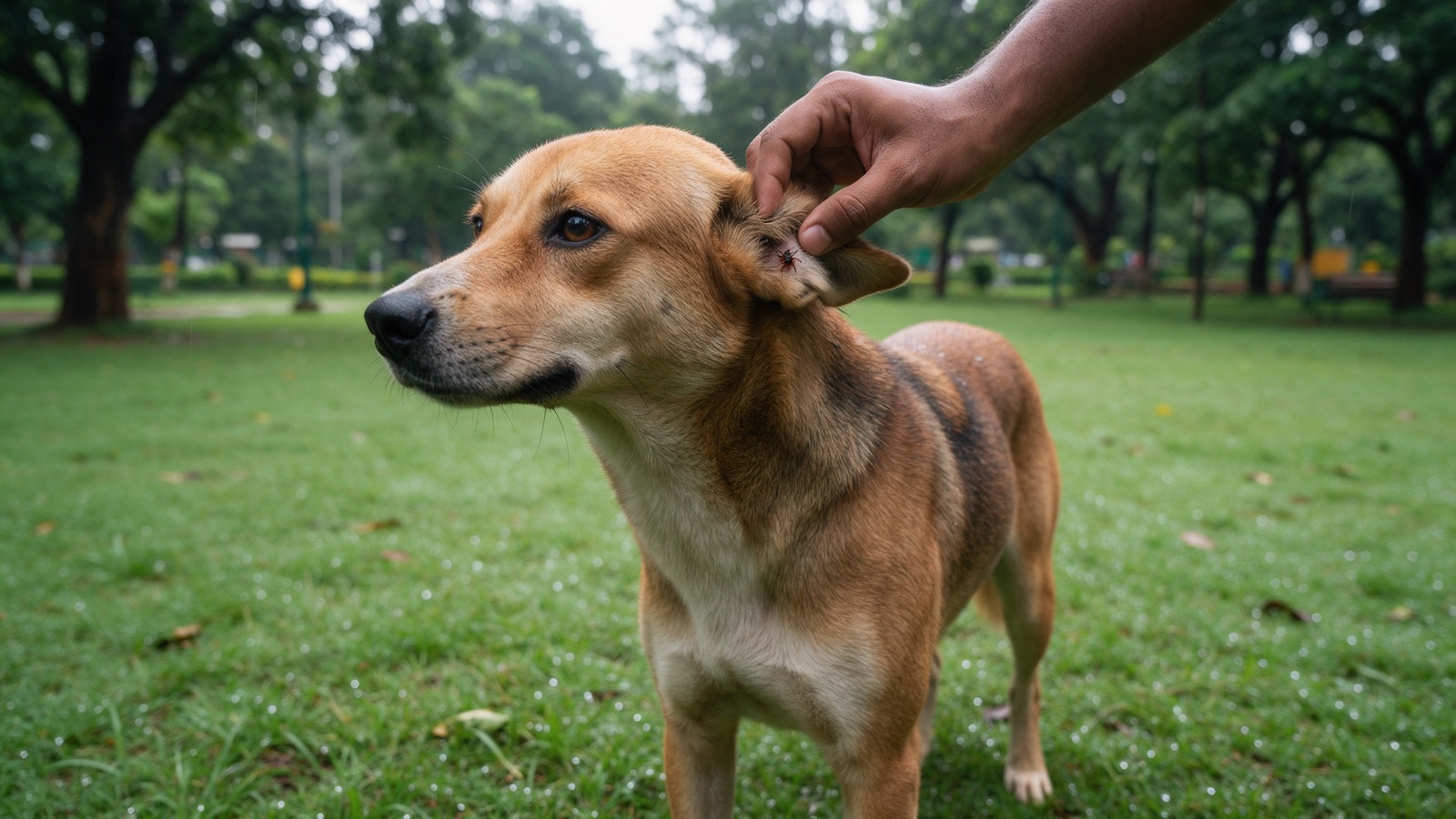
Lift each flap and sniff. Healthy ears are pale pink with a little light wax and no strong smell. Redness, dark brown discharge, a yeasty smell, head shaking or pain when you touch the base of the ear all point to an infection. Don't push cotton buds into the canal. Ear flaps are also a favourite hiding place for ticks; see our guide to tick fever in dogs.
4. Nose and mouth
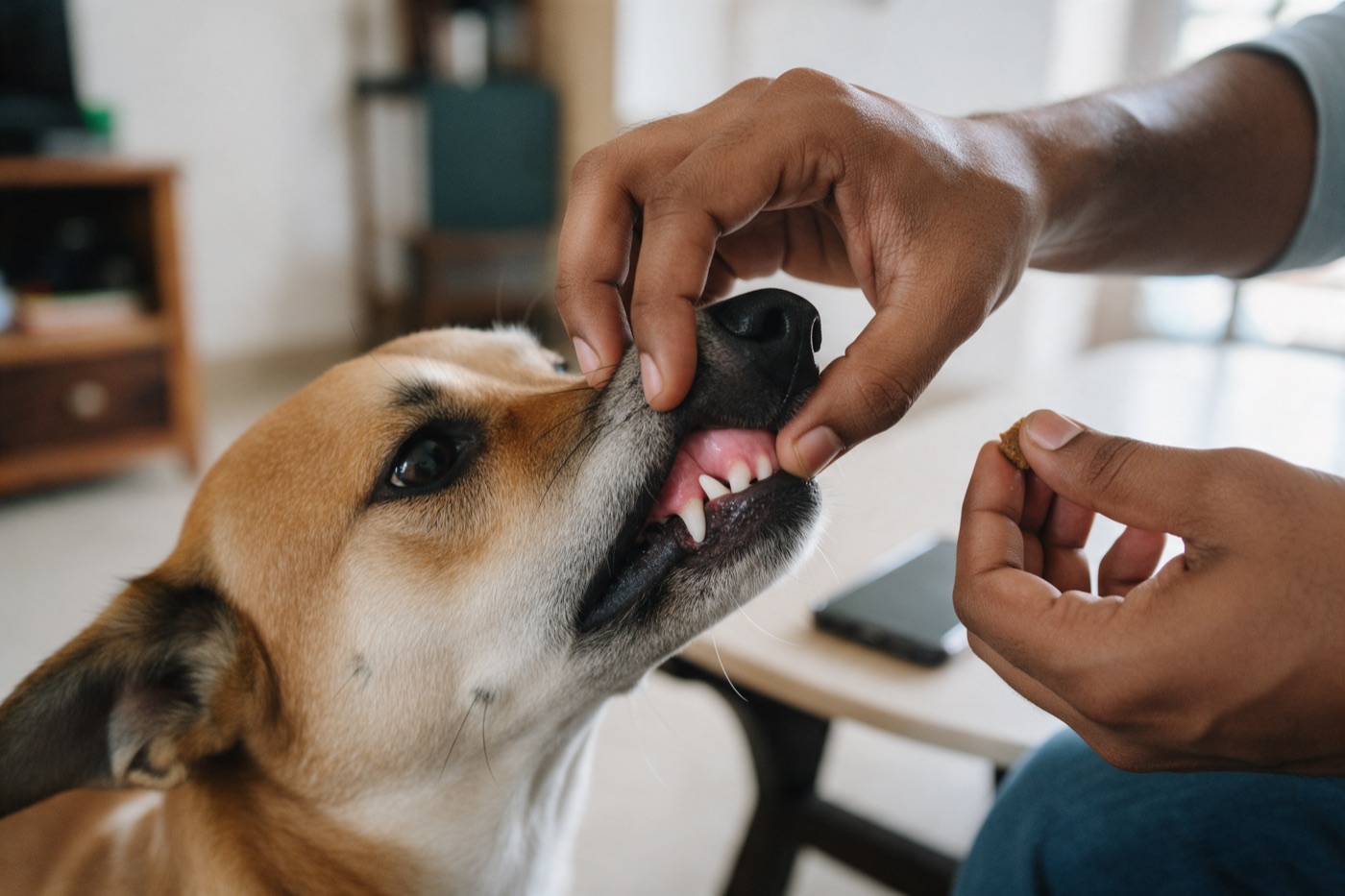
A dry nose on its own means very little; dogs' noses go dry after sleep or in a sunny spot. Look instead for crusting, bleeding or thick discharge. Then lift the lips. Gums should be moist and pink (some dogs have black patches, which is normal). Press a fingertip on a pink area until it blanches, let go, and count how long the colour takes to return: under 2 seconds is normal. Check for brown tartar, red gum lines, broken teeth, lumps and breath that is suddenly much worse than usual.
5. Skin and coat
Run your hands over the whole body, parting the fur in a few places. A healthy coat is clean with a gentle sheen and the skin underneath is not red or flaky. Look for fleas or black flea dirt near the tail base, ticks, scabs, hot spots, bald patches and lumps. For any lump, note where it is and roughly how big (pea, grape, lime) and photograph it. New lumps, or lumps that grow or change, should be checked by a vet, who can often sample them with a fine needle.
6. Body weight and shape
Feel along the ribcage. You should be able to feel the ribs easily under a thin layer of fat, without pressing hard, and see a waist when looking down from above. Weigh your dog monthly if you can: stand on the bathroom scale holding them and subtract your own weight. Unplanned loss or gain of more than about 5% deserves a chat with your vet. For portions, see how much should my dog eat.
7. Belly
With your dog standing, press gently along the underside. It should feel soft and not cause discomfort. A belly that is suddenly swollen, tight and painful, especially with retching that brings nothing up, is an emergency in deep-chested breeds such as German Shepherds, Great Danes and Dobermans. Go to the nearest vet immediately.
8. Legs, paws and nails
Flex each leg gently and watch for stiffness or pain. Spread the toes and look between the pads for redness, grass seeds, cuts and ticks. On hot Bangalore afternoons, check pads for burns after road walks. Nails should not click loudly on the floor or curl.
9. Rear end
The area under the tail should be clean. Scooting, licking the rear or a fishy smell can mean anal glands need attention. Check the genital area for discharge or swelling.
10. Toilet and behaviour
Finish with a quick mental review of the week. Is your dog eating with the usual enthusiasm? Drinking much more water than normal? Peeing more often, or straining? Is poop firm and well formed? Is energy on walks the same as last month? Changes in thirst, appetite and energy are some of the earliest signs of illness, and often the easiest to miss.
Signs that need a vet today
- Laboured breathing, breathing with the mouth open at rest, or blue, grey or white gums
- Collapse, seizures, or sudden weakness in the back legs
- A swollen, hard belly with unproductive retching
- Repeated vomiting, vomiting with diarrhoea, or blood in either
- Straining to pee and passing little or nothing, especially in male dogs
- A squinting, painful or suddenly cloudy eye
- Suspected poisoning: contact your nearest 24-hour vet or the ASPCA Animal Poison Control Center straight away
Keep a simple health log
A notes page on your phone is enough. Each week, jot down the date, sleeping breath rate, weight if you have it, anything new you found and anything unusual about food, water, poop or energy. Over a few months this becomes your dog's personal baseline, and it is exactly what your vet wants to see when something does go wrong.
A dated photo and a breath count make your vet visit far more useful than 'he seems quiet'.
Making it a happy routine
The check works best when your dog looks forward to it. Pair each step with a small reward and keep the whole thing short. Single-ingredient treats broken into tiny pieces are ideal: our Chicken & Oats Cookies are made from just chicken and oats, and Fish Bites are slowly dehydrated fish, useful for dogs who can't have chicken. A dog who is well fed tends to show it in their coat and energy; if you are curious about fresh meals, Tummy Full is chicken with pumpkin, carrots, beans, broccoli and rice. If you suspect a food reaction is behind itchy skin or ears, read our guide to food allergies in dogs before changing anything.
Questions about checking your dog's health at home
How often should I do a home health check?
Once a week is a good rhythm for most dogs, with a quick look over after every walk for ticks and grass seeds. Senior dogs and dogs with ongoing conditions benefit from more frequent breathing and weight checks.
Is a warm, dry nose a sign my dog is sick?
Not on its own. Nose temperature and moisture change through the day. Gum colour, appetite, energy and breathing tell you far more.
Do I need a thermometer?
It helps but is not essential. A digital rectal thermometer with a little lubricant gives a reliable reading; ear and touch estimates are not dependable. If your dog resists, leave temperature to your vet.
What is a normal breathing rate for a sleeping dog?
Most healthy adult dogs breathe fewer than 30 times a minute when sound asleep, often between 15 and 25. A rate that stays above 30, or breathing that looks like hard work, should be discussed with your vet promptly.
Sources
Small rewards for a calm check-up
Simple treats to make the weekly check something your dog enjoys, and a fresh everyday bowl from our kitchen.





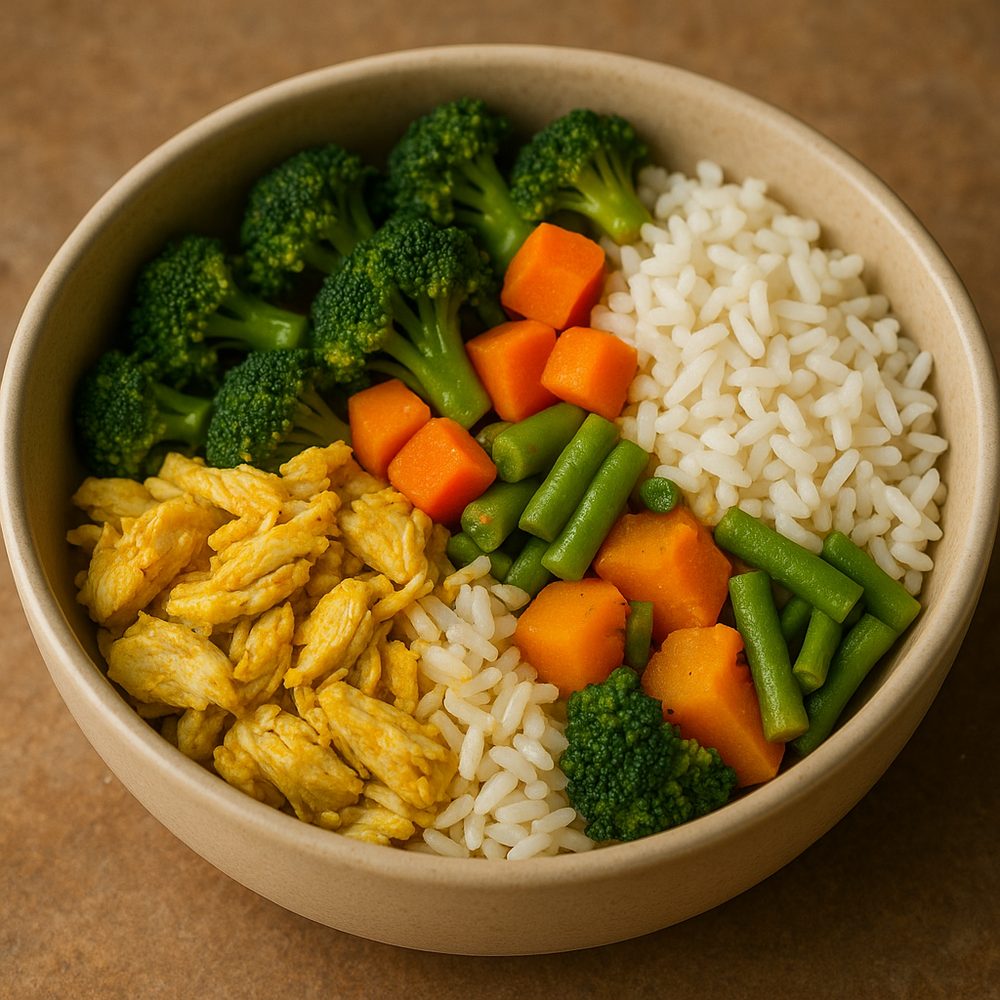


See the full menu or ask our nutritionist what suits your pet.
Was this helpful?
Share with a pet parent