
Tick fever in dogs: signs, blood tests and prevention in Bangalore
Tick fever is a group of infections, not one disease. Learn the early signs, the red flags that need a vet today, what CBC, smear, SNAP and PCR tests show, and how to keep ticks off after the rains.
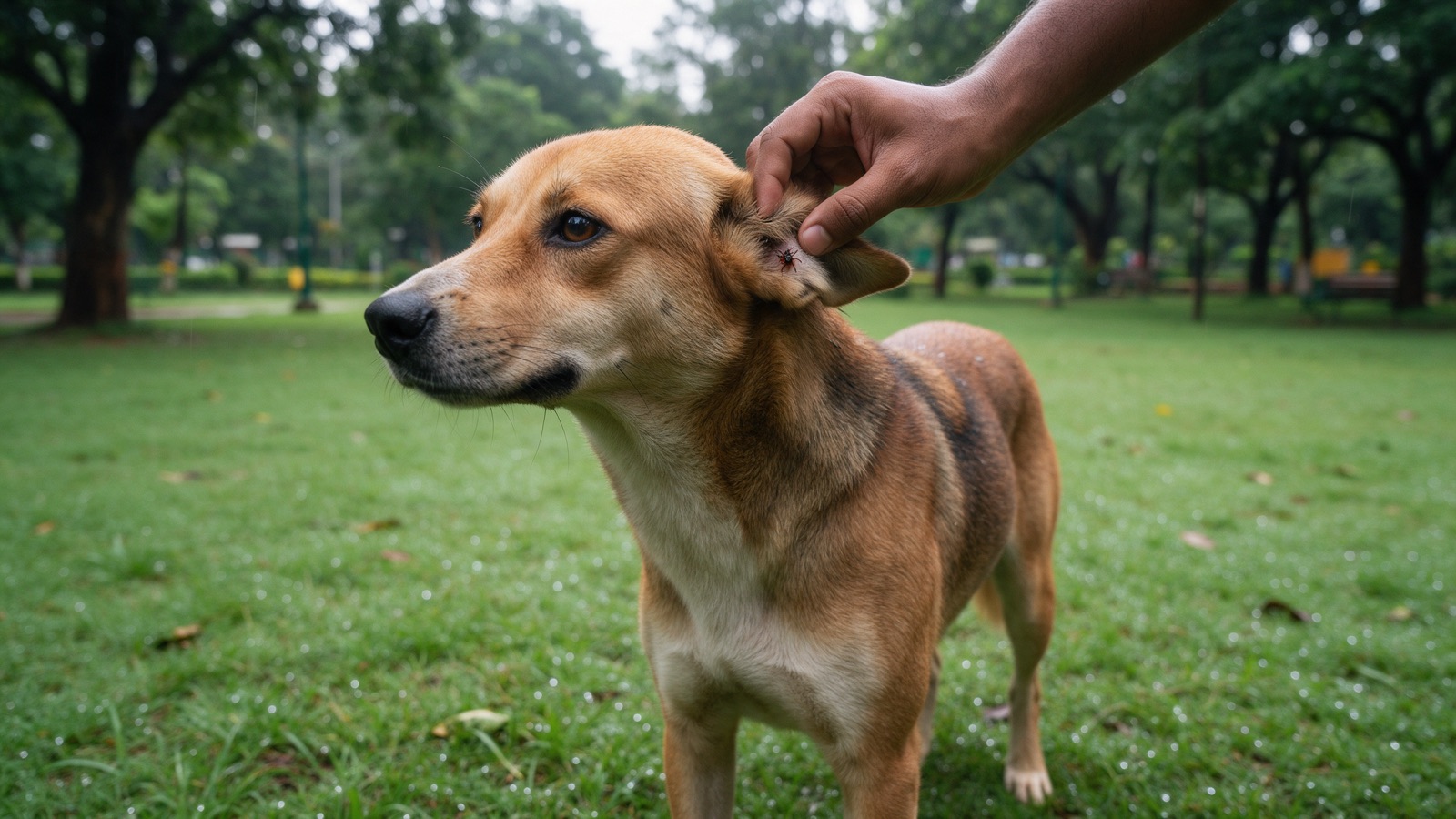
Every year, once the rains settle over Bangalore, vets across the city see the same pattern: a dog who was chasing squirrels in Cubbon Park last week is now lying flat, off his food, with a warm belly and pale gums. The blood report comes back with a platelet count far below normal, and the diagnosis is what most Indian pet parents call "tick fever".
Tick fever is not one disease but a group of infections carried by ticks. Caught early, most dogs recover well. Caught late, some of these infections can damage the bone marrow, kidneys or blood for good. This guide explains what to watch for, what the tests mean, and how to keep ticks off your dog in the first place.
A two-minute tick check after every walk can save a dog from weeks of tick fever.
What "tick fever" actually means
In India the term usually covers four infections. A dog can carry more than one at the same time, and co-infection is common. A survey of 525 dogs in Delhi, Mumbai, Sikkim and Ladakh found tick-borne organisms in roughly half of them when tested by PCR, most often Hepatozoon and Ehrlichia.
- Ehrlichiosis (Ehrlichia canis): a bacterium that lives inside white blood cells. It is spread mainly by the brown dog tick, the same small reddish-brown tick you find on street dogs and in kennel walls. It can be mild at first and then smoulder for months or years.
- Babesiosis (Babesia vogeli, Babesia gibsoni): a parasite that invades and destroys red blood cells, causing anaemia. B. gibsoni can also pass through bite wounds and blood, and it is harder to clear.
- Anaplasmosis (in India mostly Anaplasma platys): a bacterium that attacks platelets, so counts can rise and fall in cycles.
- Hepatozoonosis (Hepatozoon canis): unusual because dogs catch it by swallowing an infected tick, often while grooming or chewing at one, rather than through a bite. Many infected dogs show no signs, but it can cause fever, weight loss and anaemia, especially alongside another infection.
Signs to watch for
Signs usually appear one to three weeks after an infected tick bite, though chronic ehrlichiosis can surface much later. Look for:
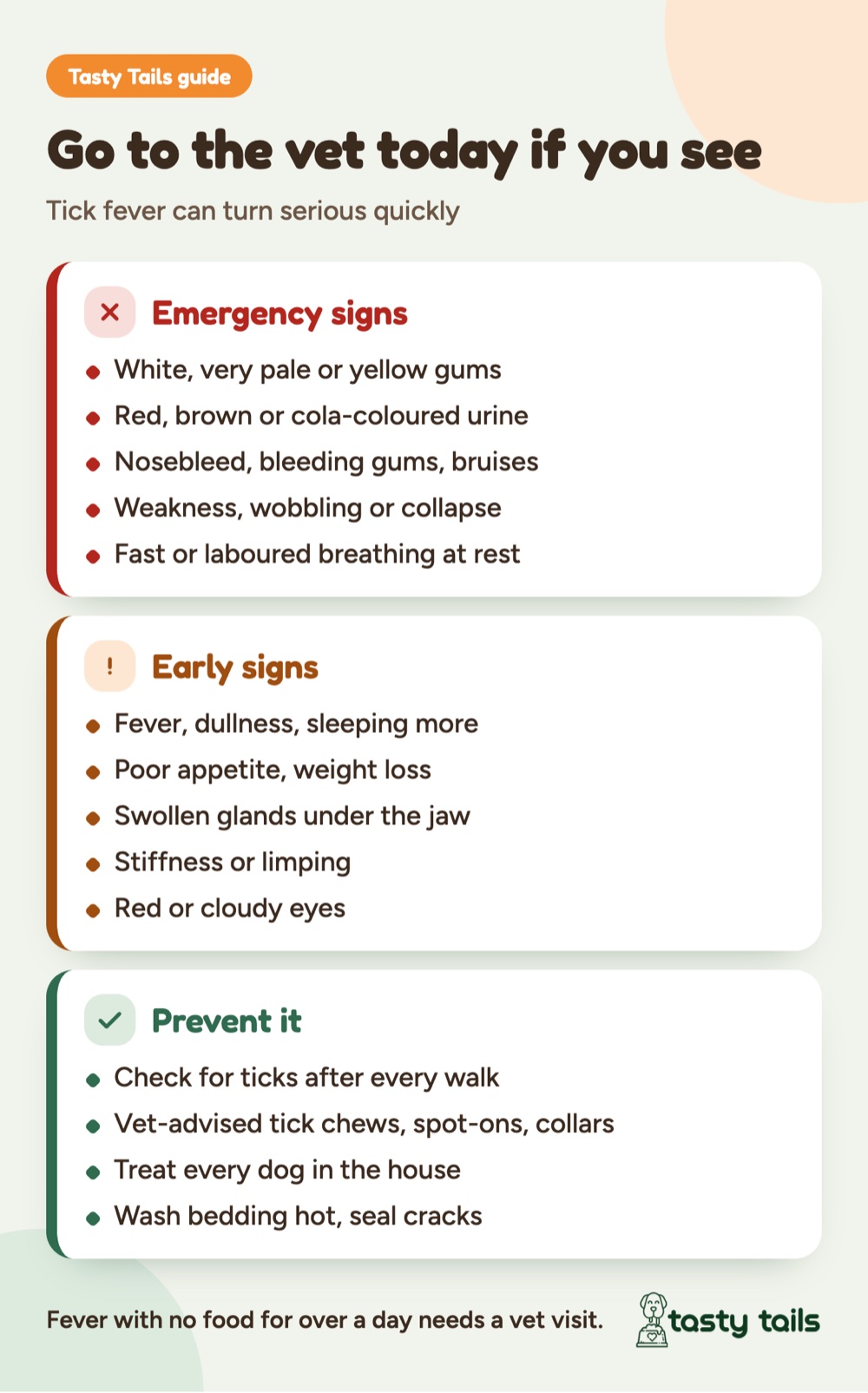
- Fever, dullness and sleeping much more than usual
- Poor appetite or refusing food, weight loss
- Pale gums (pink fading to pale pink or white)
- Small red pinpoint spots or bruises on the gums, inner ears or belly
- Nosebleeds, or blood in urine or stool
- Dark red, orange or brown urine (common with babesiosis)
- Yellow tinge to the gums or whites of the eyes
- Swollen lymph nodes under the jaw or behind the knees
- Stiffness, limping or reluctance to climb stairs
- Red or cloudy eyes, vomiting, or faster breathing at rest
Some dogs only seem "a bit off". If your dog has had ticks in the past month and seems unwell, tell your vet.
Go to the vet today if you see
- White, very pale or yellow gums
- Red, brown or cola-coloured urine
- A nosebleed, bleeding gums or spreading bruises
- Weakness, wobbling or collapse
- Fast or laboured breathing while resting
- Fever with no food for more than a day, or any of the above in a puppy or senior dog
Severe anaemia and very low platelets can become life-threatening quickly. Do not wait to see if it settles.
How vets test for tick fever
No single test catches everything, which is why your vet may suggest more than one.
- Complete blood count (CBC): the first step. Low platelets (thrombocytopenia) are one of the most common findings in tick-borne disease. The CBC also shows anaemia and white cell changes.
- Blood smear: a drop of blood examined under the microscope. It can show Babesia inside red cells or Hepatozoon in white cells. A negative smear does not rule infection out, because organisms are often too few to spot.
- Rapid antibody test (such as a SNAP kit): checks for antibodies to Ehrlichia and Anaplasma, and usually heartworm too. Early in an infection it can still be negative, and it can stay positive long after treatment, so your vet reads it alongside the other results.
- PCR: looks for the organism's DNA. It is more sensitive, can tell Babesia species apart, and is useful when the picture is unclear.
- Biochemistry and urine tests: check how the kidneys and liver are coping, which guides treatment and diet.
Treatment depends on which organism is found and is always prescribed by your vet. Bacterial infections like ehrlichiosis and anaplasmosis usually need a course of antibiotics lasting several weeks; babesiosis needs specific anti-parasite medicines. Very anaemic dogs may need a blood transfusion. Two things matter most at home: finish the full course even when your dog perks up in a few days, and go back for the repeat blood test, because platelets can look fine while infection lingers.
Finish the full course even when your dog perks up, and go back for the repeat blood test.
Checking for ticks after every walk
Ticks thrive in Bangalore for most of the year, peaking in the warm, humid months, and the brown dog tick happily lives indoors in cracks, under skirting, in bedding and in kennels. A two-minute check after walks catches most ticks before they have fed long enough to pass on infection.
- Run your fingers slowly against the direction of the coat, feeling for small bumps.
- Check the favourite spots: inside and behind the ears, along the ear edges, around the neck and collar line, armpits, between the toes, under the tail and around the groin.
- Comb long or double coats with a fine-toothed comb.
To remove a tick, grip it with fine-pointed tweezers or a tick hook as close to the skin as you can, and pull out with slow, steady pressure. Do not squeeze the body, twist hard or crush it with bare fingers. Skip the old remedies of kerosene, oil, salt or a lit match: they irritate the skin and can make the tick release more of its contents. Seal it in tape, clean the bite and wash your hands.

Prevention options to discuss with your vet
There is no vaccine in India against these infections, so prevention means keeping ticks off. Options include monthly or longer-acting oral tick chews, spot-on liquids, tick collars and medicated shampoos or sprays. The right one depends on your dog's age, weight, breed, health and how often they are bathed or swim, so choose with your vet and set reminders so doses are never late.
- Use only products made for dogs, at the weight band on the pack. Some dog spot-ons are dangerous to cats, so keep cats away from freshly treated dogs if your vet advises.
- Treat every dog in the house, and ask about the community dogs your dog meets daily.
- Wash bedding in hot water weekly, vacuum corners and seal cracks in kennels or walls where ticks hide.
- If your dog has had tick fever before, ask your vet about periodic blood checks, since some infections can come back.
Feeding a dog who is recovering
Dogs with tick fever often lose their appetite, and getting calories in gently matters. Small, soft, warm meals every few hours tend to work better than one big bowl. If blood tests showed the kidneys or liver were affected, ask your vet before changing the diet, as they may want protein or phosphorus adjusted.
From our kitchen, plain Fresh Chicken Broth (no salt, onion or garlic) poured over food can tempt a dog who is sniffing and walking away. Chicken Keema Mix is soft minced chicken with rice and vegetables, easy to eat when energy is low. For egg lovers, Egg Roster is mashed egg with sweet potato and rice, mild and simple. Keep fresh water close by, and tell your vet if your dog still isn't eating after a day.
For other everyday health questions, see our guides to how much your dog should eat and foods to keep off the plate.
Questions about tick fever in dogs
Can my dog get tick fever without me ever seeing a tick?
Yes. Young ticks are tiny and may drop off after feeding before you notice them. With hepatozoonosis, a dog can also be infected by swallowing a tick while grooming.
Can people catch tick fever from their dog?
Dogs do not pass these infections directly to people in normal contact. Ticks can bite humans, though, so remove ticks with tweezers rather than bare fingers and wash your hands afterwards.
My dog's platelets are low but they seem fine. Is that serious?
It can be. Dogs often hide low platelets until they bleed. Follow your vet's plan, avoid rough play and hard chews until counts recover, and go back promptly for the recheck.
Can a dog get tick fever more than once?
Yes. Recovery does not give lasting protection, and some infections can relapse. Year-round tick control and regular checks are the best defence.
Sources
- Merck Veterinary Manual: Ehrlichiosis and related infections in dogs
- Merck Veterinary Manual: Babesiosis in animals
- Abd Rani et al. (2011), A survey of canine tick-borne diseases in India, Parasites & Vectors
- VCA Animal Hospitals: Ehrlichiosis in dogs
- VCA Animal Hospitals: Hepatozoonosis in dogs
- AVMA: Ticks
Gentle meals for a dog on the mend
Soft, simple bowls and a plain broth that can help tempt a dog whose appetite is low while they recover, alongside your vet's plan.








See the full menu or ask our nutritionist what suits your pet.
Was this helpful?
Share with a pet parent