Signs your dog is in pain: the subtle cues most owners miss
Dogs are experts at hiding pain. Here are the quiet changes in movement, posture, face and habits that give it away, the emergencies not to wait on, and why paracetamol and ibuprofen must never be given to pets.
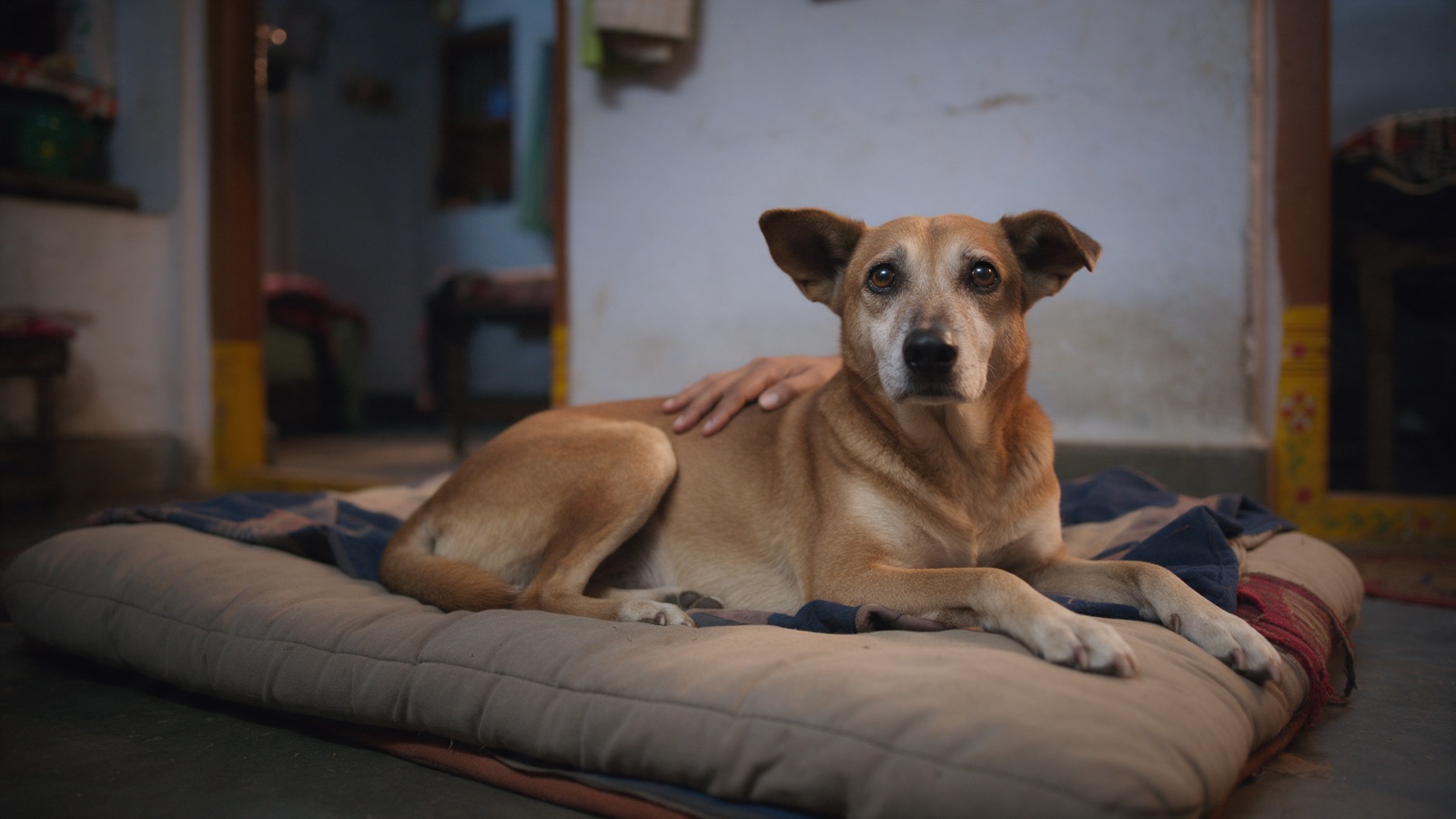
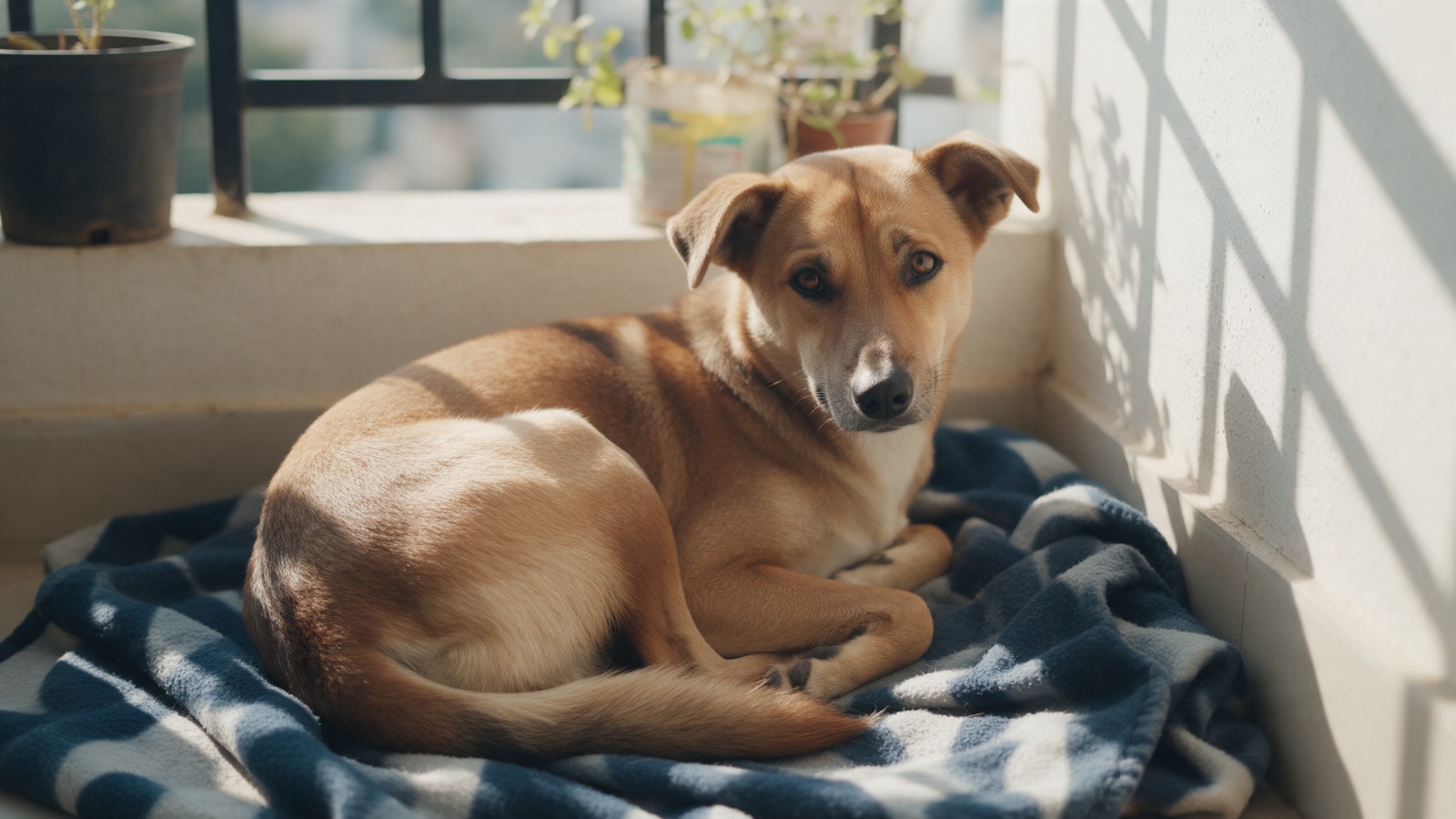
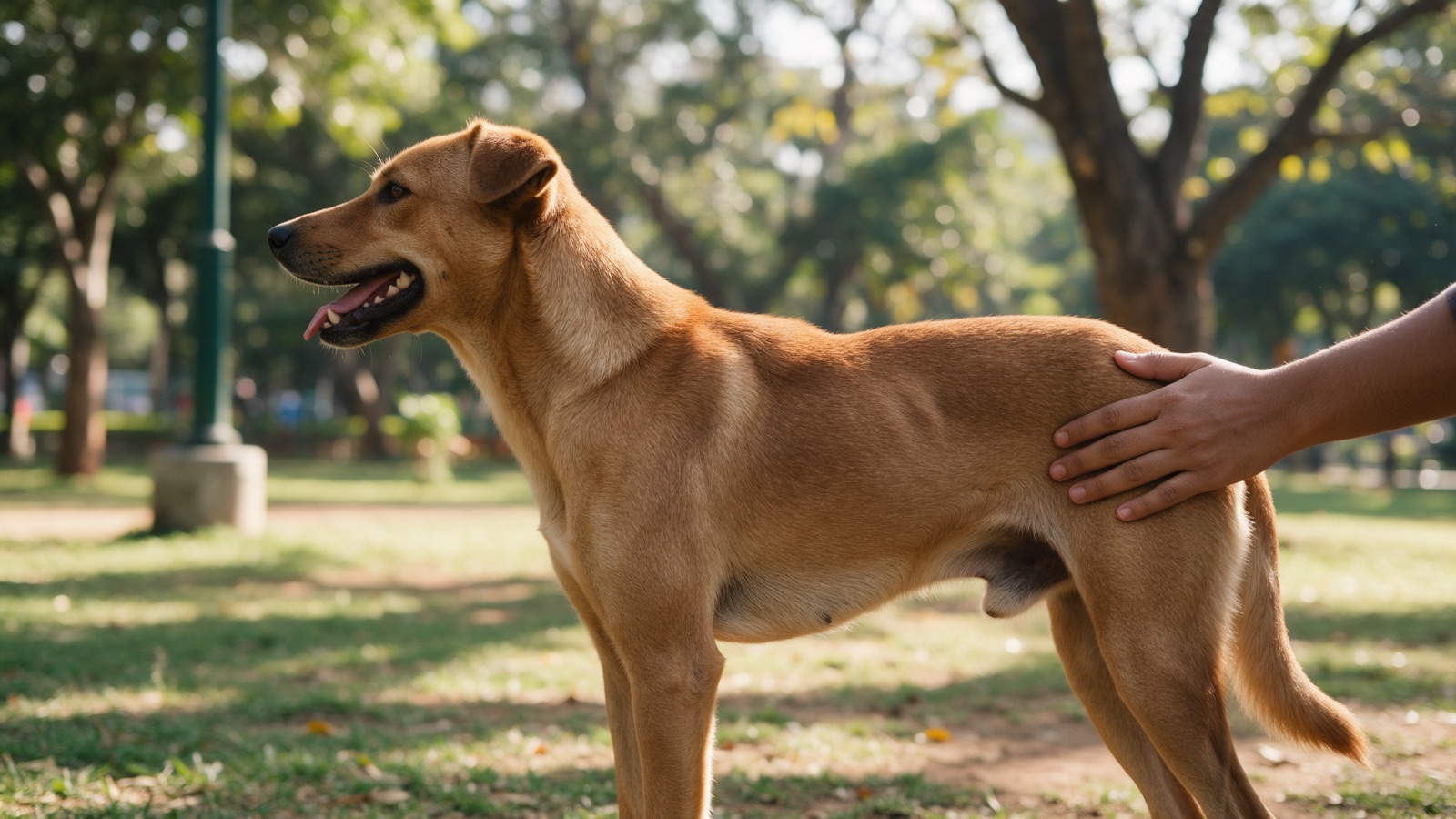
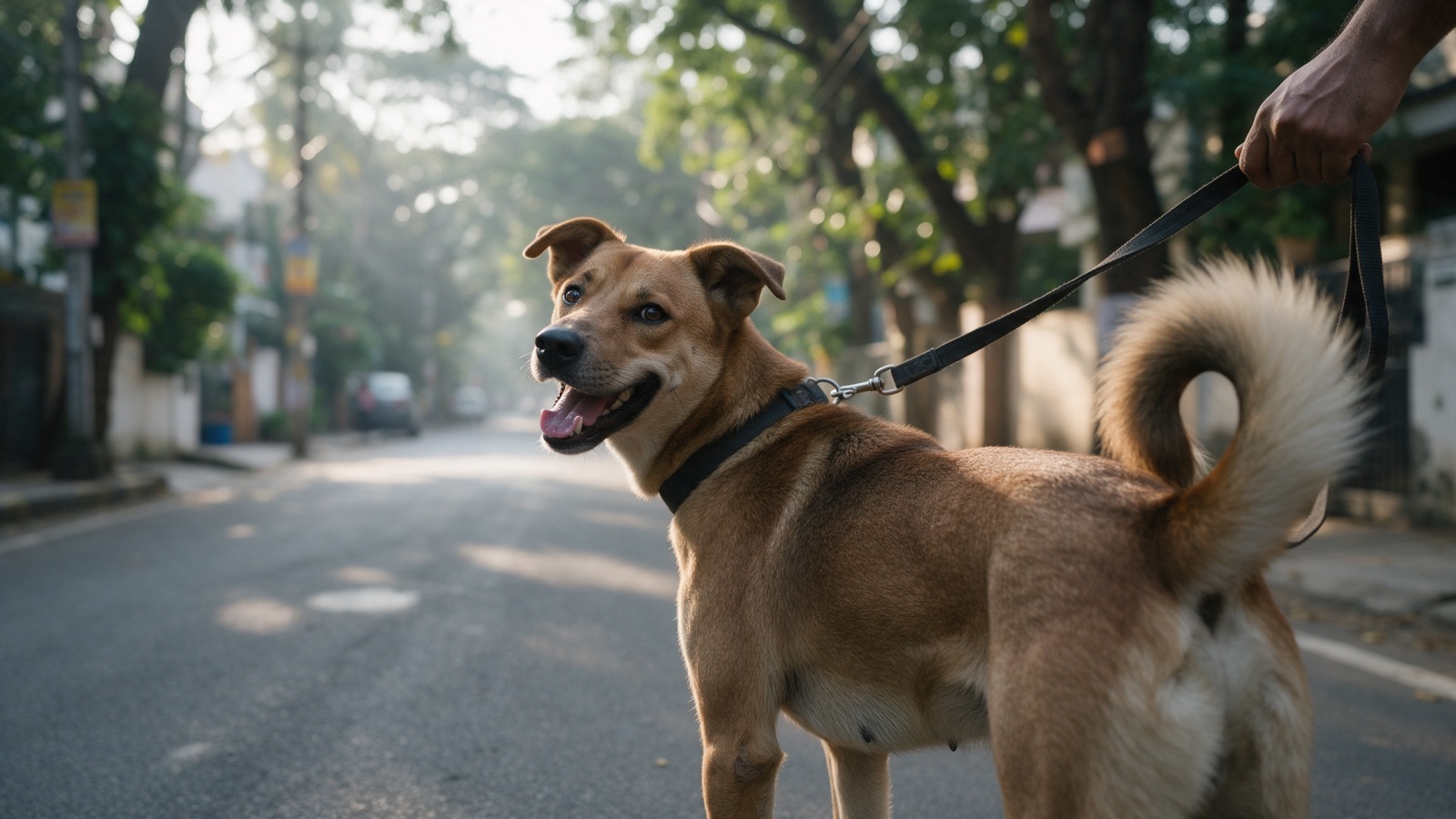
Dogs are very good at hiding pain. It is an old survival habit: an animal that limps or cries is an easy target, so many dogs carry on wagging, eating and greeting you at the door while something hurts. By the time most of us notice, the problem has often been building for weeks.
The good news is that pain almost always shows up somewhere, in posture, in habits, in the face, if you know where to look. This guide covers the subtle cues, the clear emergencies, and the one thing you should never do at home: reach for a painkiller from your own medicine box.
A wagging tail says your dog is happy to see you. It says nothing about whether their hip hurts.
Why pain is so easy to miss
We tend to expect pain to look dramatic: yelping, limping, refusing food. Acute injuries can look like that. Chronic pain, the slow kind from arthritis, a bad tooth or a sore back, rarely does. It looks like a dog who is "just getting lazy", "a bit grumpy these days" or "not as playful since the rains". Vets who use pain scoring tools, such as the ones recommended in the WSAVA pain guidelines, rely heavily on behaviour for exactly this reason.
The key is change. You know your dog's normal better than anyone. If you did the 10-minute nose-to-tail home check recently, you already have a baseline to compare against.
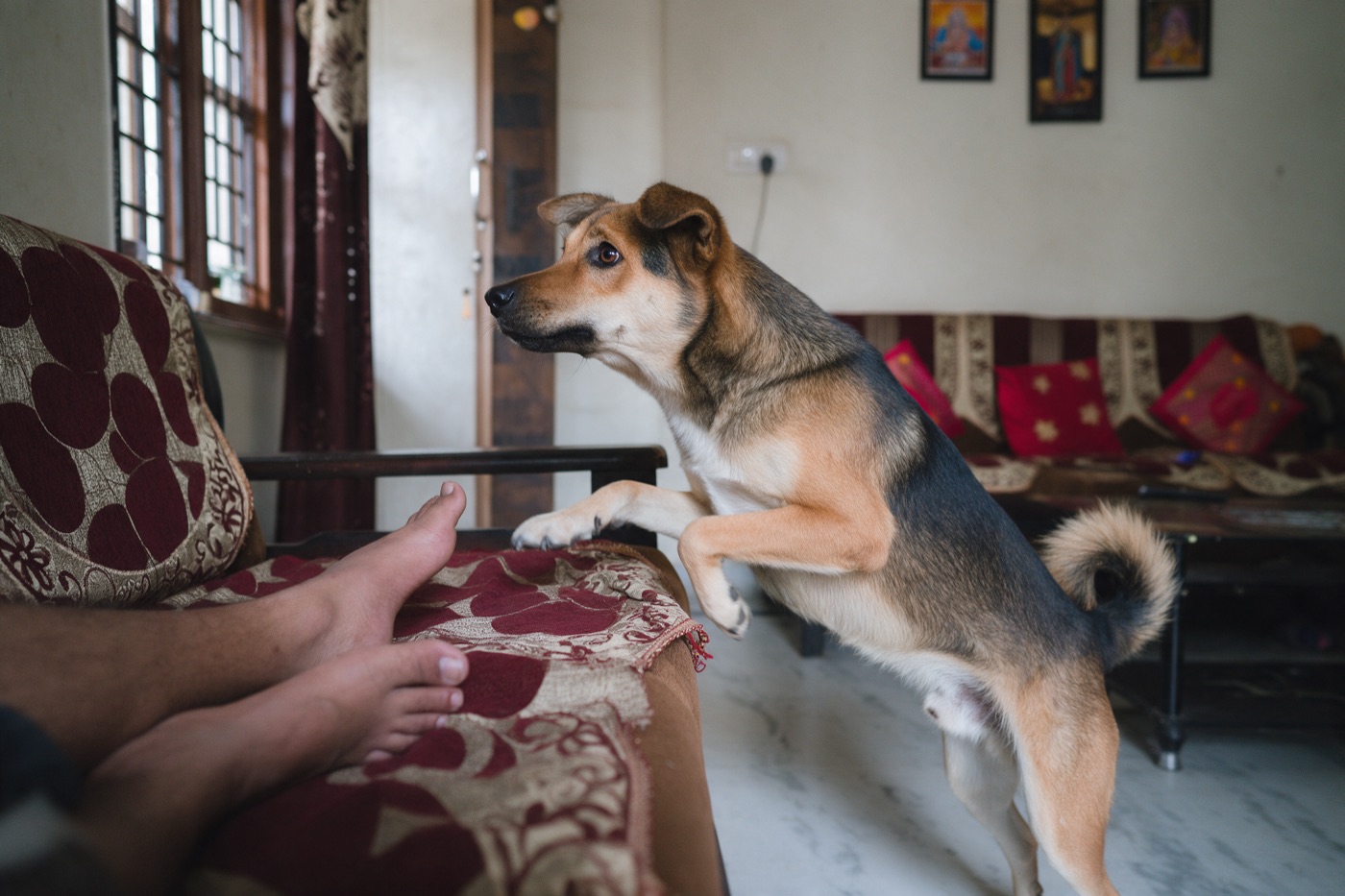
Subtle signs your dog may be in pain
Changes in movement
- Hesitating before jumping onto the sofa or bed, or into the car or autorickshaw.
- Taking stairs slowly, one at a time, or refusing them altogether.
- Getting up slowly after a nap, or stretching more than usual before walking.
- Sitting with one hind leg stuck out to the side, or shifting weight off one leg while standing.
- Lagging behind on walks, stopping often, or turning for home early.
- Slipping on tiled or marble floors more than before.
Changes in posture
- A hunched back or tucked-up belly.
- The "prayer position": front end down, rear end up, held for a while. This can mean belly pain.
- Holding the head low, or reluctance to lower the head to the food bowl, which can point to neck pain.
- A tail carried lower than usual, or a tail that no longer wags fully.
Changes in behaviour
- Withdrawing: sleeping in a different room, hiding under the bed, not coming to greet you.
- Restlessness: getting up and lying down repeatedly, pacing at night, unable to settle.
- Grumpiness when touched in a particular spot, or growling at a child or another pet when that never used to happen. Sudden "aggression" is very often pain.
- Less interest in toys, play or walks.
Changes in the face and body
- Squinting, or eyes that look tight or dull.
- Ears pulled back or flattened, a tense forehead, a set jaw.
- Panting at rest in a cool room, or faster breathing when nothing has happened.
- Trembling or shivering when not cold.
- Licking, chewing or nibbling one spot again and again, such as a paw, a joint or the flank.
Changes in daily habits
- Eating less, chewing on one side, dropping food, or preferring soft food over crunchy treats. Mouth pain is extremely common and very often missed.
- Difficulty squatting or lifting a leg to pee or poo, or accidents indoors in a house-trained dog.
- Whimpering or groaning when lying down or getting up.
Extra weight makes many of these worse, especially joint pain. If you are unsure where your dog stands, our guide on body condition scoring walks you through a hands-on check.
You know your dog's normal better than anyone. The key is change.
Common causes of hidden pain
- Arthritis and joint problems, common in older dogs and large breeds, but it can start earlier in dogs with hip or elbow problems.
- Dental disease: broken teeth, infected gums, tooth root abscesses.
- Back and neck problems, including disc disease, which is well known in long-backed breeds such as dachshunds and in beagles.
- Ear infections, which make many dogs head-shy and irritable.
- Belly pain from gastritis, pancreatitis (often after fatty festive food) or something swallowed.
- Infections and fevers, including tick-borne diseases. Muscle aches, stiffness and lethargy can be early signs; see our post on tick fever in dogs.
- Small injuries: a thorn or glass in a paw pad, a torn nail, a sprain from chasing a street dog.
Go to the vet now: red flags
Some signs need same-day or emergency care. Call your vet or go to your nearest 24-hour veterinary hospital if you see:
- A swollen, tight belly with retching that brings nothing up, drooling and restlessness, especially in a large, deep-chested dog. This can be bloat (gastric dilatation-volvulus), which is life threatening within hours.
- Sudden weakness, wobbling or dragging of the back legs, or crying out when the back or neck is touched.
- Straining to pee with little or nothing coming out.
- Pale, white or blue gums, collapse, or very rapid breathing.
- Any road accident or fall, even if your dog seems fine afterwards. Internal injuries are not always obvious.
- A painful, red, cloudy or bulging eye, or a dog that keeps one eye shut.
- Not putting any weight at all on a leg.
- Crying in pain that does not settle, or pain together with vomiting, fever or not eating for more than a day.
Never give human painkillers
This is the most important part of this article. Do not give your dog or cat any painkiller from your own medicine cabinet, not even "just half a tablet".
- Paracetamol (acetaminophen, sold in India under many common brand names) can damage a dog's liver and red blood cells. In cats, even a small amount can be fatal.
- Ibuprofen, diclofenac, naproxen, aspirin and similar anti-inflammatories can cause stomach ulcers, internal bleeding and kidney failure in dogs and cats. Pets process these drugs very differently from people, and the safe margin is tiny or non-existent.
- Pain-relief gels and sprays containing diclofenac or similar drugs are also a risk if a pet licks them off your skin or chews the tube.
Never share medicine prescribed for another pet, either. Vets have pain medicines made and tested for dogs, and they will pick one that suits your dog's age, kidneys, liver and other medicines. If your pet has already swallowed a human medicine, call your vet or nearest 24-hour vet straight away, or the ASPCA Animal Poison Control Center. Do not wait for symptoms, and do not try to make your pet vomit unless a vet tells you to.
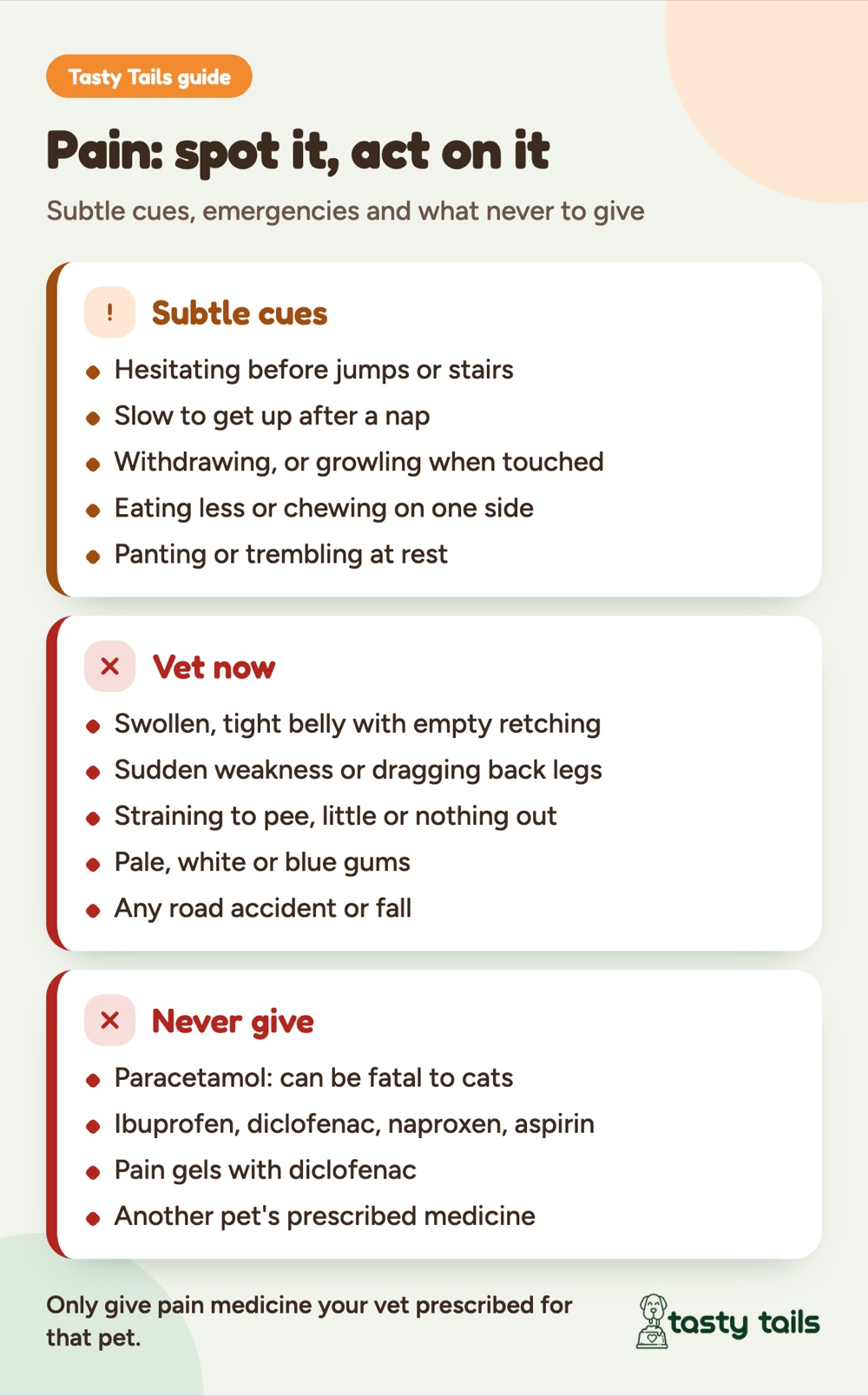
What you can do at home while you arrange a vet visit
- Keep your dog quiet and confined: no stairs, no jumping, no rough play.
- Give a soft, padded bed on the floor, away from slippery tiles. A yoga mat or rubber-backed rug helps.
- Note what you see and when: which leg, what time of day, after rest or after exercise. A short phone video of the limp or the strange posture is very useful to your vet, because many dogs perk up in the clinic.
- Do not massage or stretch a painful area, and do not apply your own ointments.
Soft, simple food from our kitchen
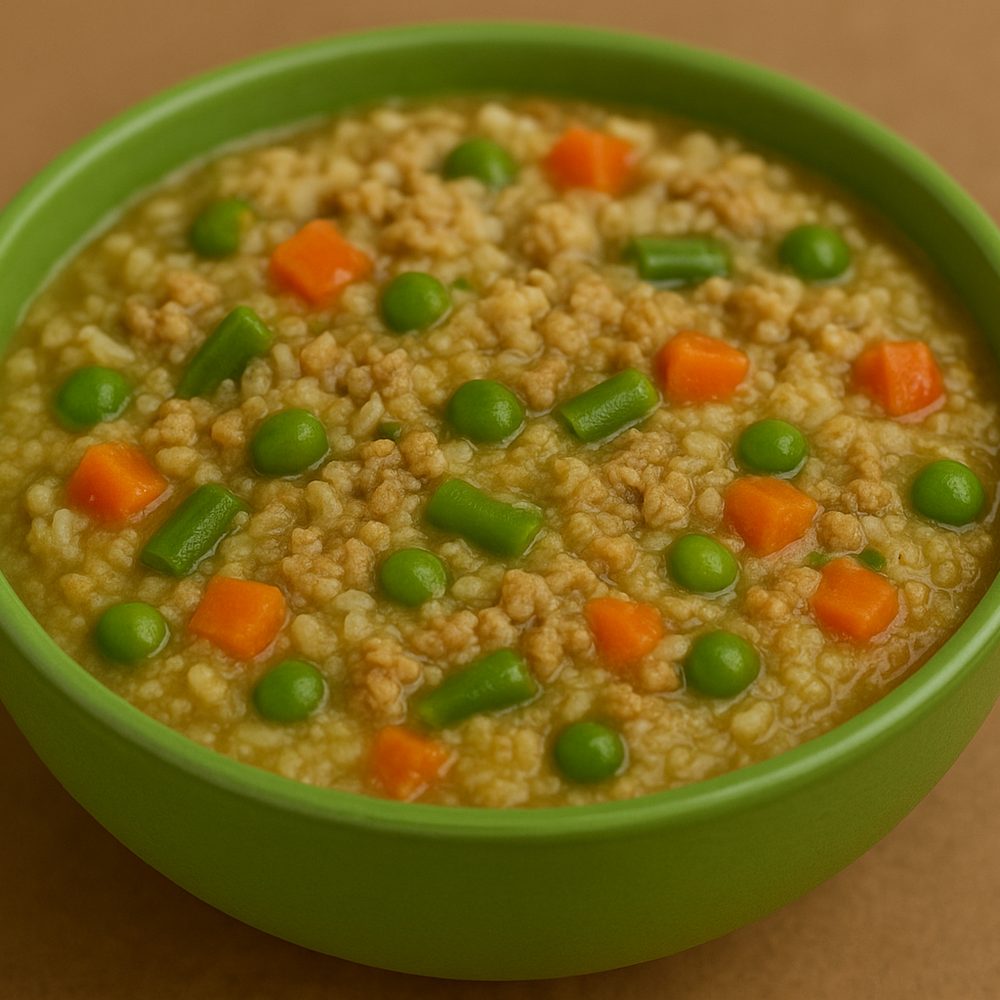
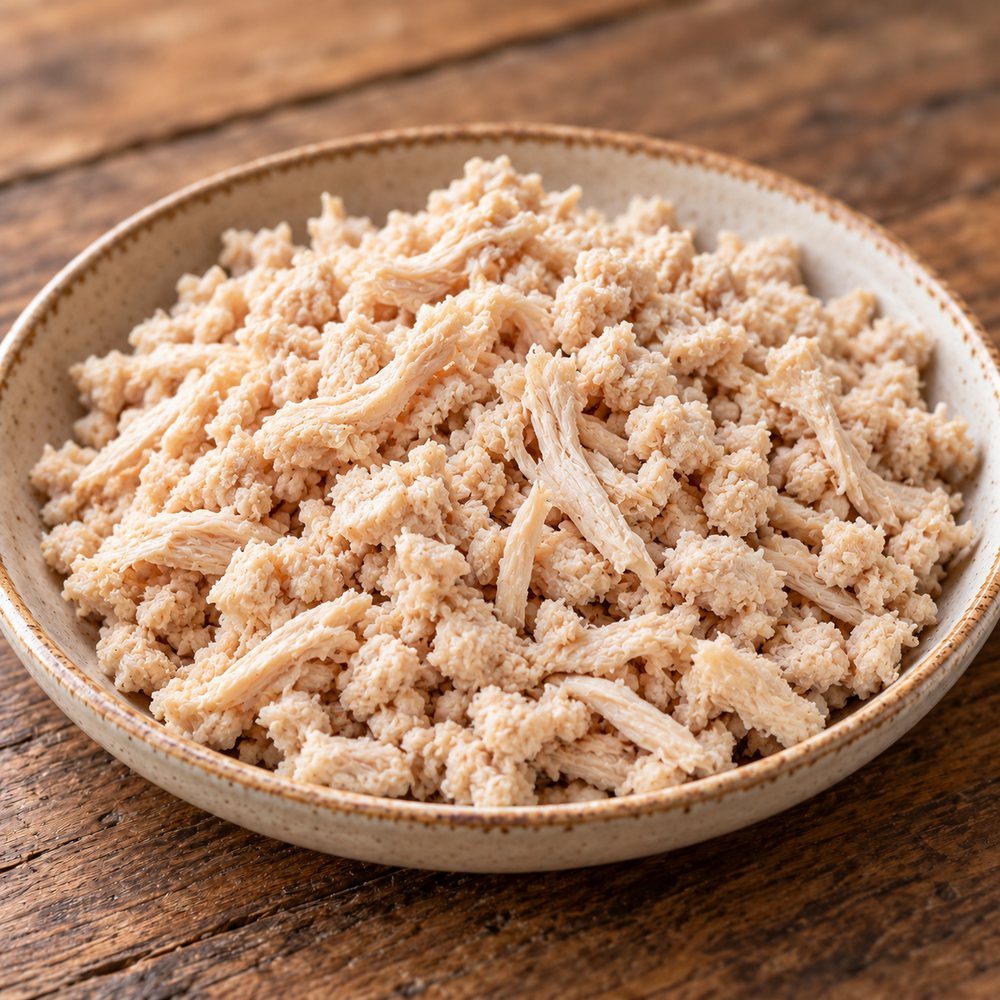
Pain is a vet's job, but food can make recovery more comfortable. Dogs with a sore mouth, or those resting after treatment, often manage soft meals better than crunchy ones. Our Chicken Keema Mix is minced chicken with rice, beans, peas and carrot, soft and easy to eat. Boiled Chicken Keema is plain chicken mince with nothing added, useful if your vet suggests a bland diet. A splash of Fresh Chicken Broth, made with no salt, onion or garlic, can tempt a dog who is off his food. If your dog stops eating altogether, that is a reason to call the vet, not to try another bowl.
Questions about pain in dogs
Can a dog be in pain and still wag its tail?
Yes. Tail wagging shows arousal and social engagement, not comfort. Many dogs with arthritis or dental pain wag, eat and greet visitors normally while still hurting.
Is it safe to give my dog paracetamol or ibuprofen for pain?
No. Paracetamol, ibuprofen, diclofenac, aspirin and similar human painkillers can cause liver damage, stomach ulcers, bleeding and kidney failure in pets, and paracetamol can kill cats. Only give pain medicine your vet has prescribed for that animal.
Is my old dog just slowing down, or is it pain?
Slowing down with age is often arthritis or another treatable source of pain, not simply age. Many "lazy" senior dogs become noticeably livelier once their pain is managed, so ask your vet to check.
Why has my gentle dog started snapping when touched?
Sudden irritability or growling when handled is a classic sign of pain, especially in the back, ears, mouth or a joint. Book a vet check before treating it as a training problem.
Sources
Soft, simple bowls for recovery days
Soft, gentle food from our kitchen for dogs with a sore mouth or resting after vet treatment.



See the full menu or ask our nutritionist what suits your pet.
Was this helpful?
Share with a pet parent