The Metal dog: the dignified perfectionist. Traits, health tendencies, food and exercise
The Metal dog loves routine, keeps a tidy toilet spot and goes quiet when life changes. Here is how to recognise one, what TCVM says about their skin, lungs and gut, and how to feed and walk them well.
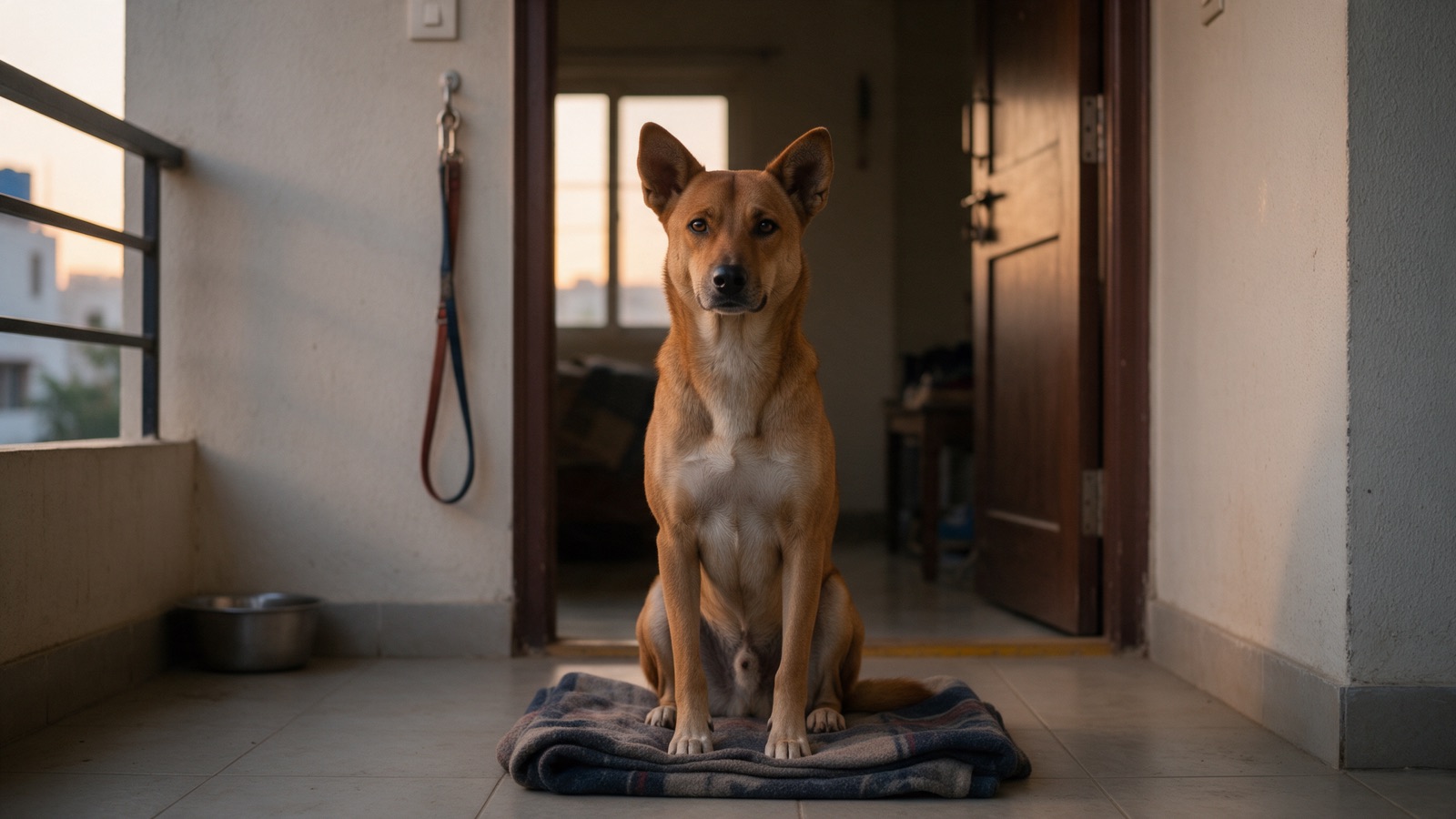
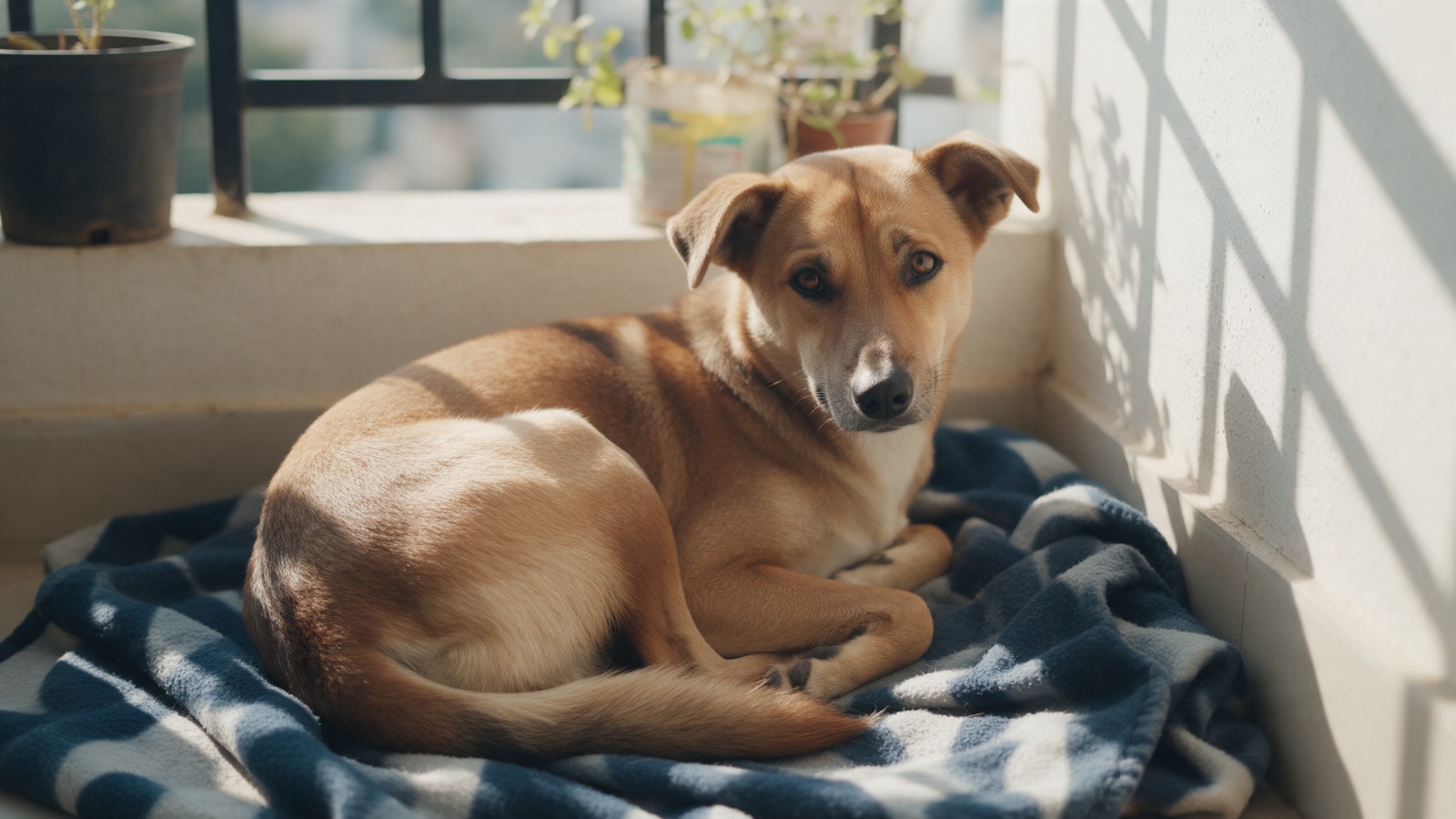
Some dogs greet you at the door like a long-lost friend. The Metal dog gives you a polite look, a single wag, and goes back to the exact spot on the rug they have decided is theirs. They know when the morning walk is due to the minute, they would rather not get their paws wet and they notice when you move the water bowl.
This is the fourth element in our Five Elements series. If you are new, start with our beginner's guide to the Five Elements, then meet the Wood, Fire and Earth dogs. Today it is Metal, the dignified perfectionist.
A quick, honest note: the Five Elements come from traditional Chinese veterinary medicine (TCVM). It is an old and genuinely useful way to observe temperament and tendencies, but it is not a diagnosis, and the scientific evidence behind it is limited. Use it to notice more about your dog, and take any health worry to your vet.
The Metal dog knows the walk is at 6.30 and will remind you at 6.29 with one polite look.
What Metal means in the tradition
In TCVM, Metal is linked with autumn, dryness, the lungs and the large intestine, and with the parts of the body that show their health on the outside: the nose, the skin and the coat. Its emotion is grief, or letting go. The character that follows is structured and self-contained: clear rules, clean edges, a predictable day.
How to recognise a Metal dog
Tick the ones that sound familiar. Several ticks suggest a strong Metal streak. Most dogs are blends, so you will probably see bits of other elements too.
- Reserved with strangers, affectionate on their own terms with family.
- Loves routine: meals, walks and bedtime at the same time, and protests politely when they slip.
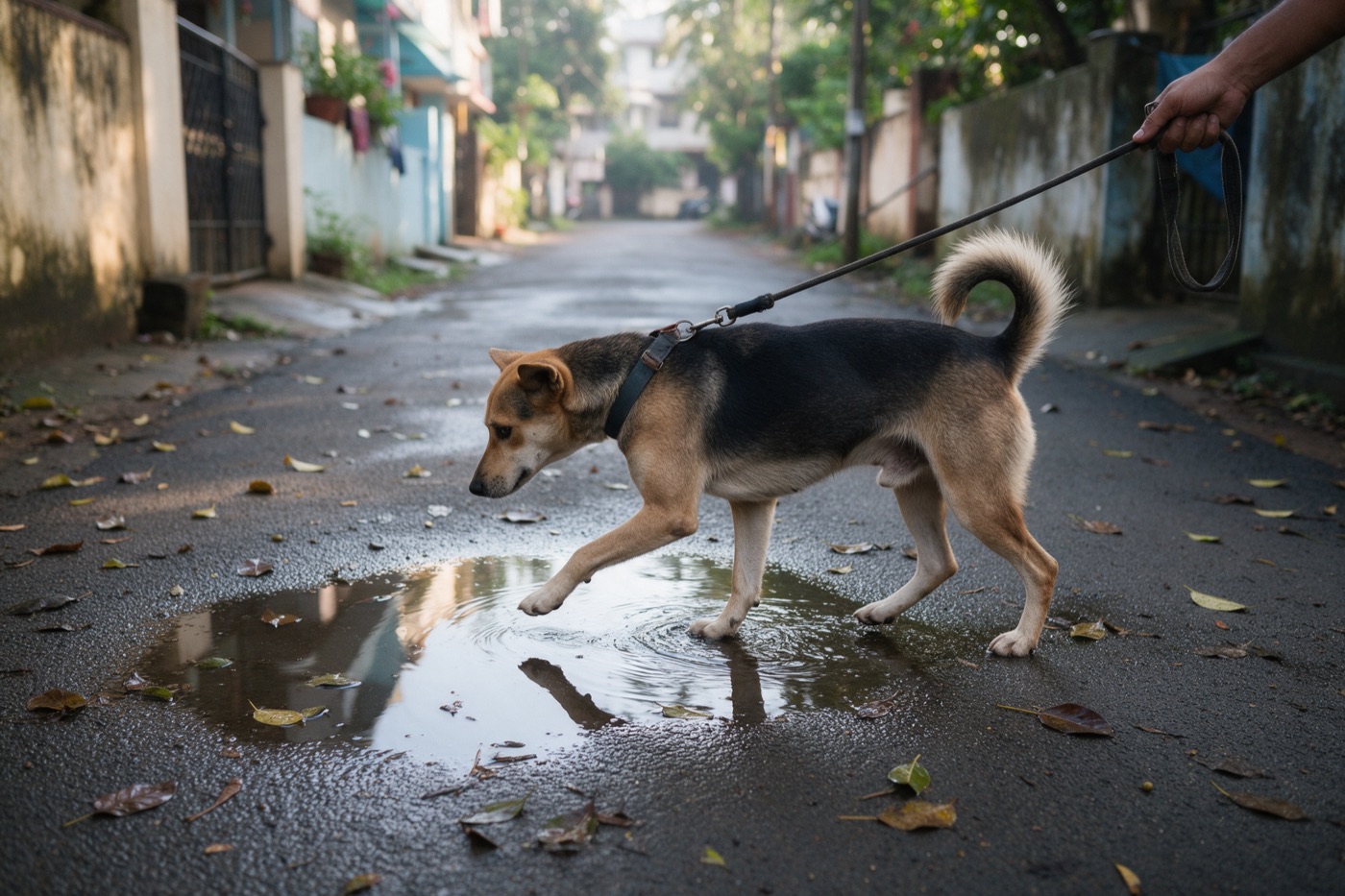
- Tidy habits: one favourite toilet spot, avoids mud and puddles, grooms themselves a lot.
- Bonds deeply with one or two people rather than with everyone.
- Skin and coat that show the weather: dull or flaky when the air is dry, itchy when seasons change.
- Sneezes or reverse-sneezes around dust, agarbatti smoke or mosquito coils.
- Takes change hard: a house move, a new pet or someone leaving home shows up as a quieter, flatter dog.
Strengths of the Metal dog
- Reliable: once a rule is learned, it tends to stay learned. House-training is often easy.
- Calm indoors: a good fit for flats and for families who keep regular hours.
- Loyal: the bond with their people is deep, even if it is not loud.
- Great at structured work: obedience, nosework and anything with clear steps.
How a Metal dog reacts to stress
Metal dogs rarely explode. They withdraw. Watch for:
- Going quiet, sleeping more or sitting apart from the family.
- Pickier eating, or skipping meals after a change.
- Licking paws and flanks, or over-grooming.
- Walking away from visitors rather than barking.
- Stool changes when the routine breaks, for example during travel or festivals.
Loss matters here. Because the tradition ties Metal to grief, many owners say their most orderly dog takes longest to adjust when a companion animal dies or a family member moves away. Keep the routine steady, offer quiet company and give it time. If low mood, poor appetite or weight loss lasts more than a few days, see your vet, because these signs have medical causes too.
Metal dogs rarely explode. They withdraw.
Health tendencies in TCVM, and what needs a vet
Because Metal governs the lungs, large intestine, skin and nose in the tradition, practitioners keep an eye on Metal dogs for:
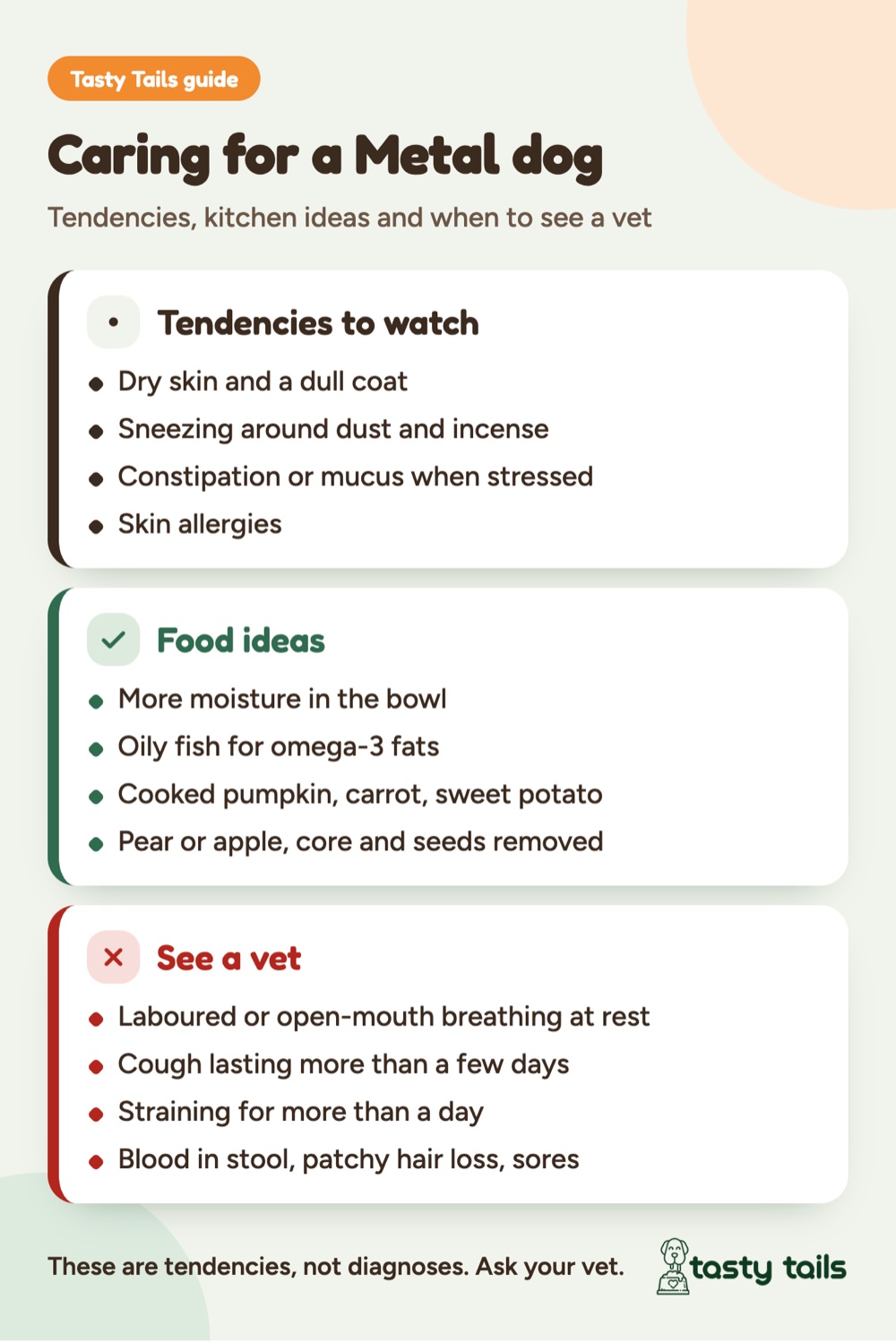
- Dry skin and coat: flaking, a dull coat, seasonal itch. In Bangalore this often shows from December to February, when the air is driest.
- Respiratory sensitivity: sneezing, coughing or a runny nose around dust, incense and, very soon, Diwali smoke.
- Large intestine troubles: constipation, or mucus in the stool when stressed.
- Allergies that show on the skin.
These are tendencies to watch, not predictions. Allergies, parasites, infections and hormonal problems cause the same signs and need proper tests.
These signs need a vet:
- Laboured or noisy breathing, open-mouth breathing at rest, or blue or very pale gums: go now.
- A cough that lasts more than a few days, or any cough with fever, tiredness or poor appetite.
- Straining without passing anything for more than a day. In male dogs, straining can be a urinary blockage, which is an emergency.
- Blood in the stool, or repeated vomiting.
- Patchy hair loss, open sores, red or smelly skin, or constant scratching.
- Thick, bloody or one-sided nasal discharge.
For a simple routine, see our 10-minute nose-to-tail home check, and the dog poop chart for what stools are telling you.
Food ideas for a Metal dog
The tradition talks about moistening a Metal dog to balance dryness. In everyday nutrition terms, that lines up with several things vets also suggest:
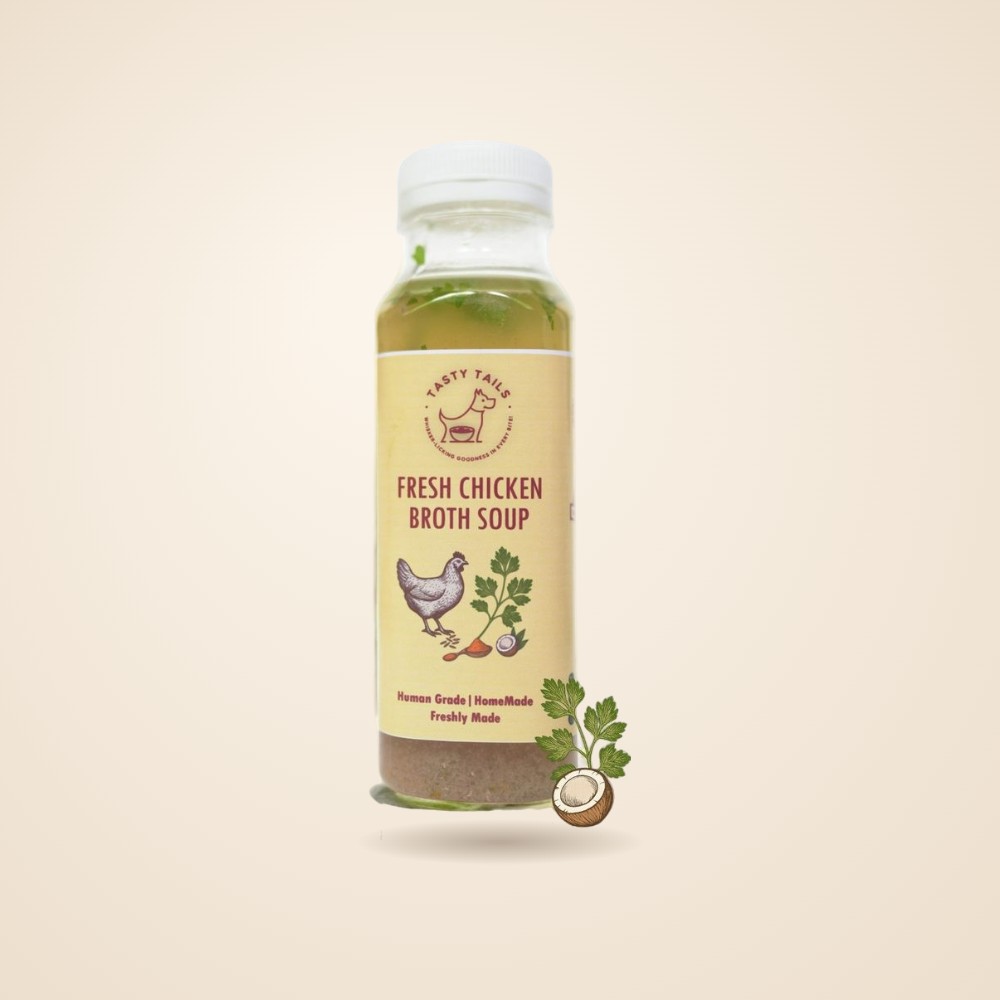
- Moisture in the bowl. Fresh cooked food carries far more water than dry kibble, and a splash of plain, unsalted broth helps on dry days.
- Fish. Oily fish such as salmon supplies omega-3 fats that support skin and coat, and fish sits on the cooler, moistening side of most TCVM food lists. Ask your vet before adding fish oil capsules, because dose matters.
- Gentle fibre for the large intestine. Cooked pumpkin, carrot and sweet potato help keep stools regular and well formed.
- Pear and apple. Classic moistening fruits in the tradition, safe as small treats with the core and seeds removed.
Whatever you choose, the base diet must be complete and balanced. Element-based tweaks sit on top of a sound diet; they never replace it. Change food slowly, as our 7-day transition plan explains.
Exercise and routine
- Same-time walks. For a Metal dog, 6.30 am means 6.30 am.
- Steady, rhythmic exercise: brisk walks and sniff walks on a familiar route, whether that is Cubbon Park or the quieter lanes of your layout.
- Clean air first: walk early, before traffic dust builds up. On smoky or high-pollution days, shorten outdoor time and play indoors.
- Games with rules: find-it, nosework and short obedience sessions give a Metal dog a satisfying job.
A Metal dog in an Indian home
Picture Bruno, a five-year-old Indie in an HSR Layout flat. He waits by the door at 6.25 every morning, pees at the same tree, and steps carefully around October puddles. When the family went to Mysuru for Dussehra and left him with a sitter, he ate half his meals and licked his paws raw. Every December his coat turns dull and flaky, and every Diwali he sneezes for days.
A Metal-minded plan for Bruno: next time, the sitter keeps his exact timetable and his own blanket comes too. Fish goes into his menu twice a week, with a spoon of broth on dry winter days. Agarbatti burns in another room, away from his bed. And he gets a vet check for the paw licking and winter skin, because allergies and mites can look exactly like "Metal dryness". Diwali is hard on Metal dogs, for the noise and the smoke, so our two-week sound training plan and Diwali safety guide are worth reading now.
From our kitchen for Metal dogs
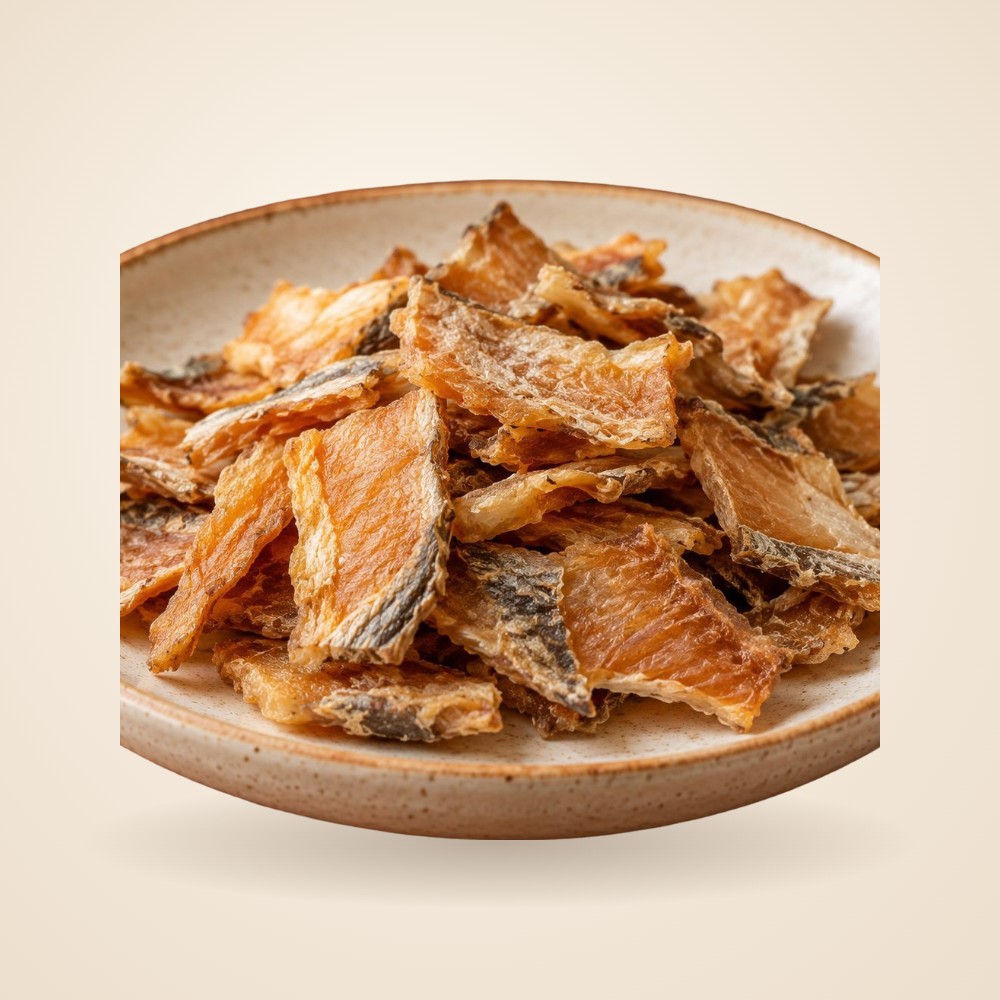
A few of our dishes fit the ideas above. The Salmon Fish Classic Bowl brings salmon, with its omega-3 fats, together with rice, sweet potato, carrot, peas, zucchini and spinach. Fish Delight is fresh fish with rice, carrot, peas, pumpkin and zucchini. Our Fresh Chicken Broth has no salt, onion or garlic, so it is an easy way to add moisture to a meal. For rewards, Fish Bites are a single-ingredient fish treat. If your vet is investigating a skin allergy, ask before adding a new protein.
Questions about Metal element dogs
Is my dog Metal just because they are aloof?
Not necessarily. Reserve can come from fear, pain, little early socialisation or simply age. Look at the whole pattern: love of routine, tidy habits, skin or breathing sensitivities and how they cope with change.
Why does my dog's coat get dry every winter?
Bangalore's winter air is drier, and some dogs show it in their coat. Moisture-rich food and omega-3 fats can help, but flaking, itching and hair loss can also mean allergies, mites or hormonal problems, so ask your vet.
Should a Metal dog eat only fish?
No. Fish is a useful addition, but your dog needs a complete and balanced diet, and rotating proteins is fine for most dogs. If you are using one protein because of an allergy, follow your vet's plan.
How can I help a Metal dog through a loss?
Keep meals, walks and bedtime exactly as they were, and offer quiet company and calm activities like sniff walks. If appetite or energy stays low for more than a few days, see your vet.
Sources
- Cheryl Schwartz, Four Paws, Five Directions: A Guide to Chinese Medicine for Cats and Dogs (Celestial Arts)
- Elizabeth Anne Johnson, Know Your Dog's True Nature
- AKC: Dry skin on dogs
- Merck Veterinary Manual: Skin disorders of dogs
- Merck Veterinary Manual: Lung and airway disorders of dogs
- WSAVA Global Nutrition Guidelines
Moisture-rich meals for Metal dogs
Fish-based bowls, a plain broth and a single-ingredient treat that fit the Metal dog's need for moisture and skin-friendly fats.

Main Meals For dogs & cats
Salmon Fish Classic Bowl
-

-

-

-

-

- +3
- Protein
- Healthy fats
- Fibre
- Vitamins
₹950 Medium · 350 g




See the full menu or ask our nutritionist what suits your pet.
Was this helpful?
Share with a pet parent