Two weeks to Diwali: a day-by-day sound training plan for firecracker-scared dogs
Diwali is two weeks away. This day-by-day plan uses quiet recordings, good food and short sessions to help a noise-sensitive dog feel a little braver before the crackers start in earnest.
Diwali falls on Sunday 8 November this year, which gives you exactly two weeks from today. If your dog spent last Diwali shaking under the bed, those two weeks are worth using. You can't undo a deep fear of firecrackers in a fortnight, but you can teach many dogs that a distant bang means something good is about to happen, and you can find out early whether your dog needs more help than training alone.
Our Diwali safety overview covers safe rooms, ID tags and sweets. This post is the training part, laid out day by day, so you know exactly what to do each evening between now and Choti Diwali.
You cannot cure a firecracker fear in a fortnight, but you can teach a bang to mean chicken.
How sound training works (and the one rule that matters)
The plan uses two techniques together. Desensitisation means playing recordings of the scary sound so quietly that your dog notices it but isn't worried, then raising the volume in tiny steps over many sessions. Counter-conditioning means pairing every sound with something your dog loves, usually food, so the sound starts to predict a treat rather than danger.
The one rule: always stay below your dog's fear threshold. If your dog looks worried, the sound is too loud, too close or too long. Stop, turn it down, and go back to the last level where they were relaxed. Pushing a frightened dog through the fear (sometimes called flooding) usually makes it worse, not better.
Behaviour charities such as Dogs Trust suggest starting this kind of programme six to eight weeks before a firework season. Two weeks is short, so set your goal accordingly: progress, not a cure. Many dogs will still need the safe room and calming routine on the night.
Before you start: is training the right first step?
Training is suitable for dogs with mild to moderate fear: they startle, look for you, maybe pace a little, but recover within minutes. If last Diwali your dog panicked, tried to dig through doors, hurt themselves, refused food for hours or hid for days afterwards, call your vet this week. Some dogs need medication prescribed by a vet to make the festival bearable, and it needs a trial run before the big nights. You can still do gentle sound work alongside, at whatever level your vet or a qualified behaviourist suggests.
A sudden new fear of noise in a dog who was fine before is also worth a vet check, as pain can make dogs more sound-sensitive.
What you need
- Good recordings. Dogs Trust's free "Sounds Scary" tracks are widely used, or record your own street on a quiet evening with a few distant crackers. Include a mix: single booms, whistling rockets, and the long crackle of a ladi.
- A speaker you can control finely. A phone speaker is fine to begin with; a Bluetooth speaker helps later because bass sounds closer to the real thing.
- High-value treats cut pea-sized: something better than everyday biscuits.
- A notebook. Write the volume level, the sound used and how your dog responded each session.
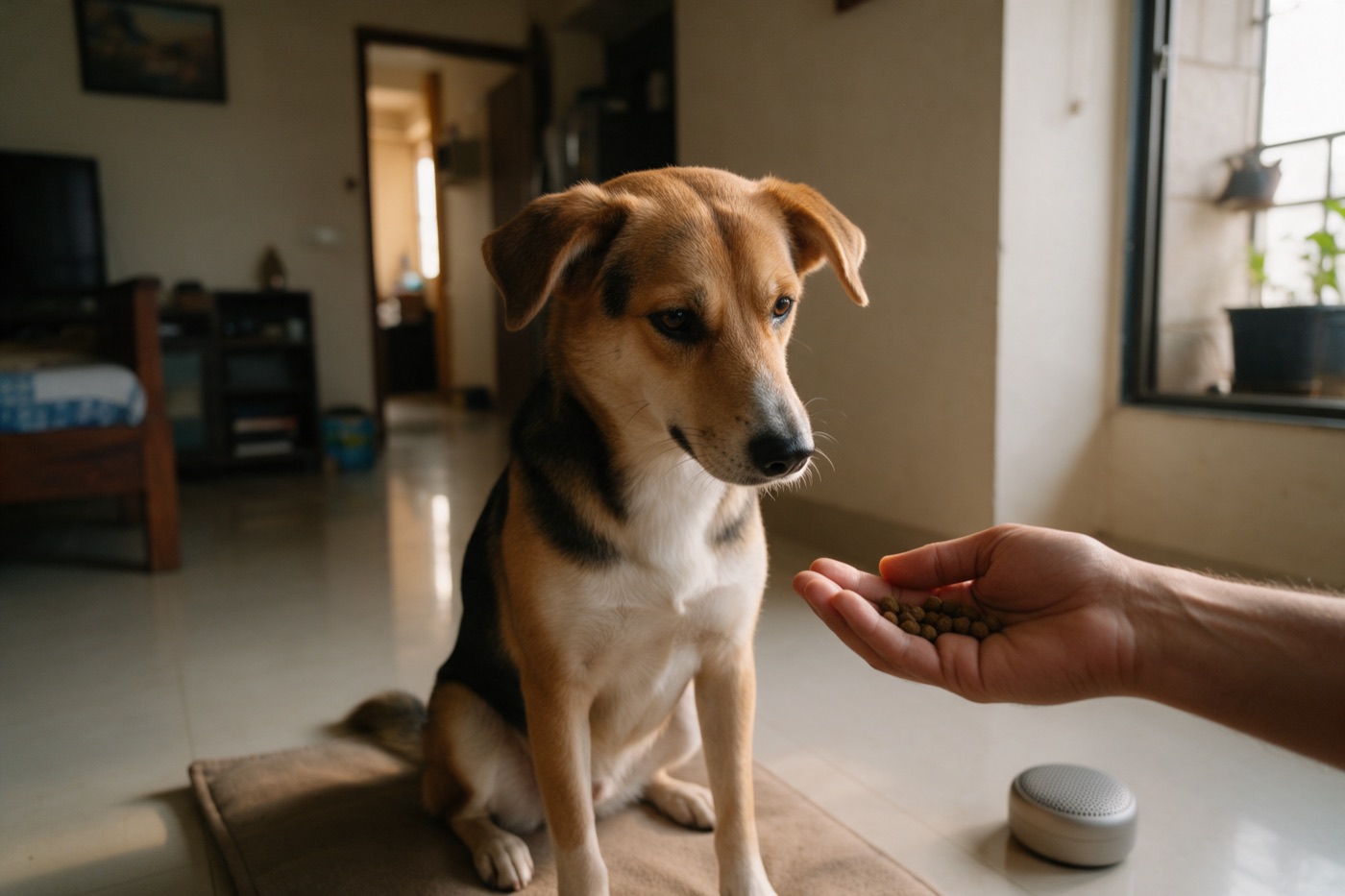
Signs your dog is going over threshold
Learn these before Day 1, because they tell you when to stop:
- Ears pinned back, tail tucked, body lowered
- Lip licking, yawning, panting when not hot
- Freezing, staring towards the sound, or moving away from it
- Pacing, trembling, whining or trying to hide
- Refusing a treat they normally love. This is the clearest sign the sound is too much.
If you see any of these, end the session calmly, drop the volume for next time, and don't repeat that level until your dog is relaxed at the step below.
Five good minutes beat thirty anxious ones.
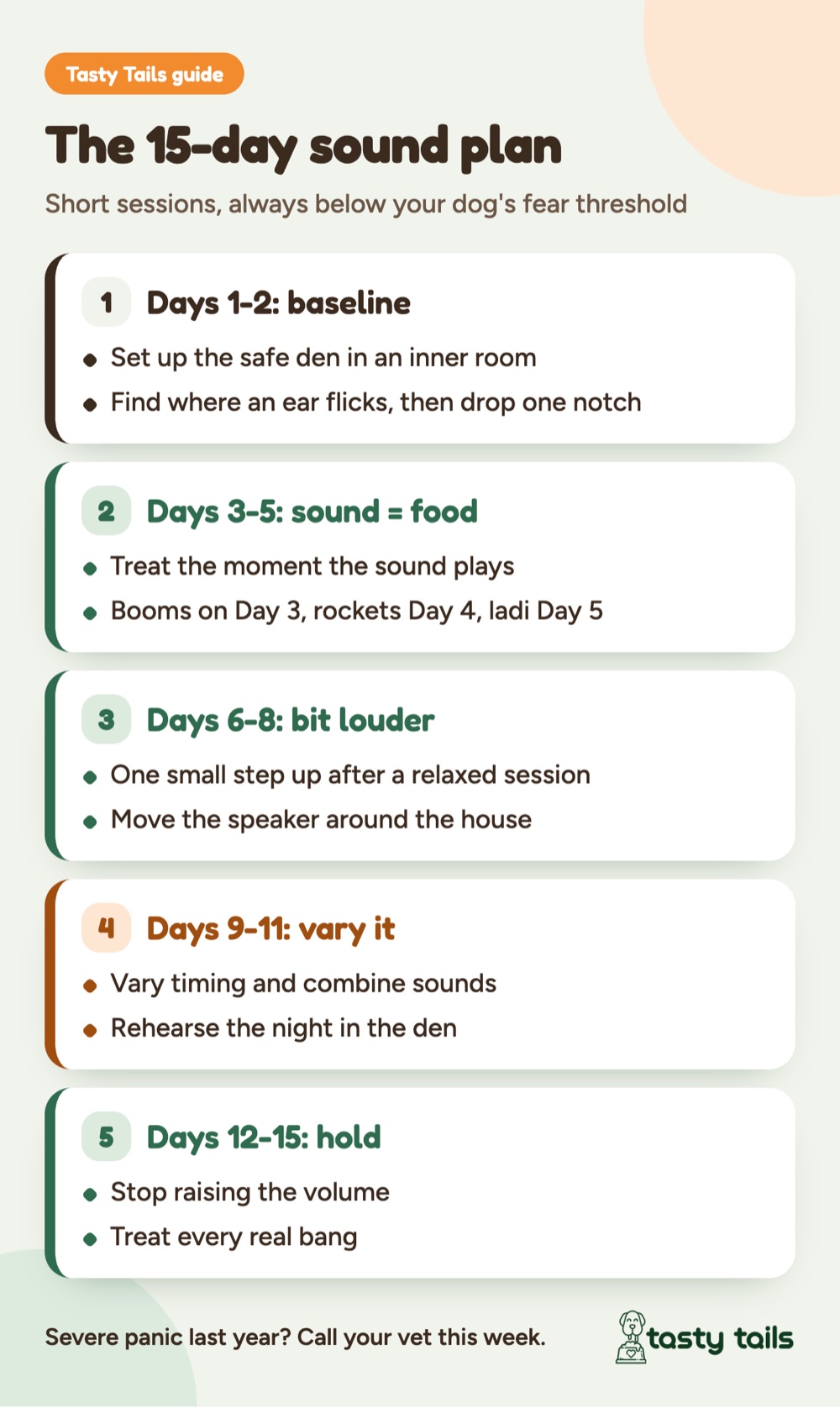
The 15-day plan
Keep sessions to 5 to 10 minutes, two or three times a day, ideally before meals when your dog is keen on food. Always end on a calm note.
Days 1–2 (Sat 24 – Sun 25 Oct): set the baseline
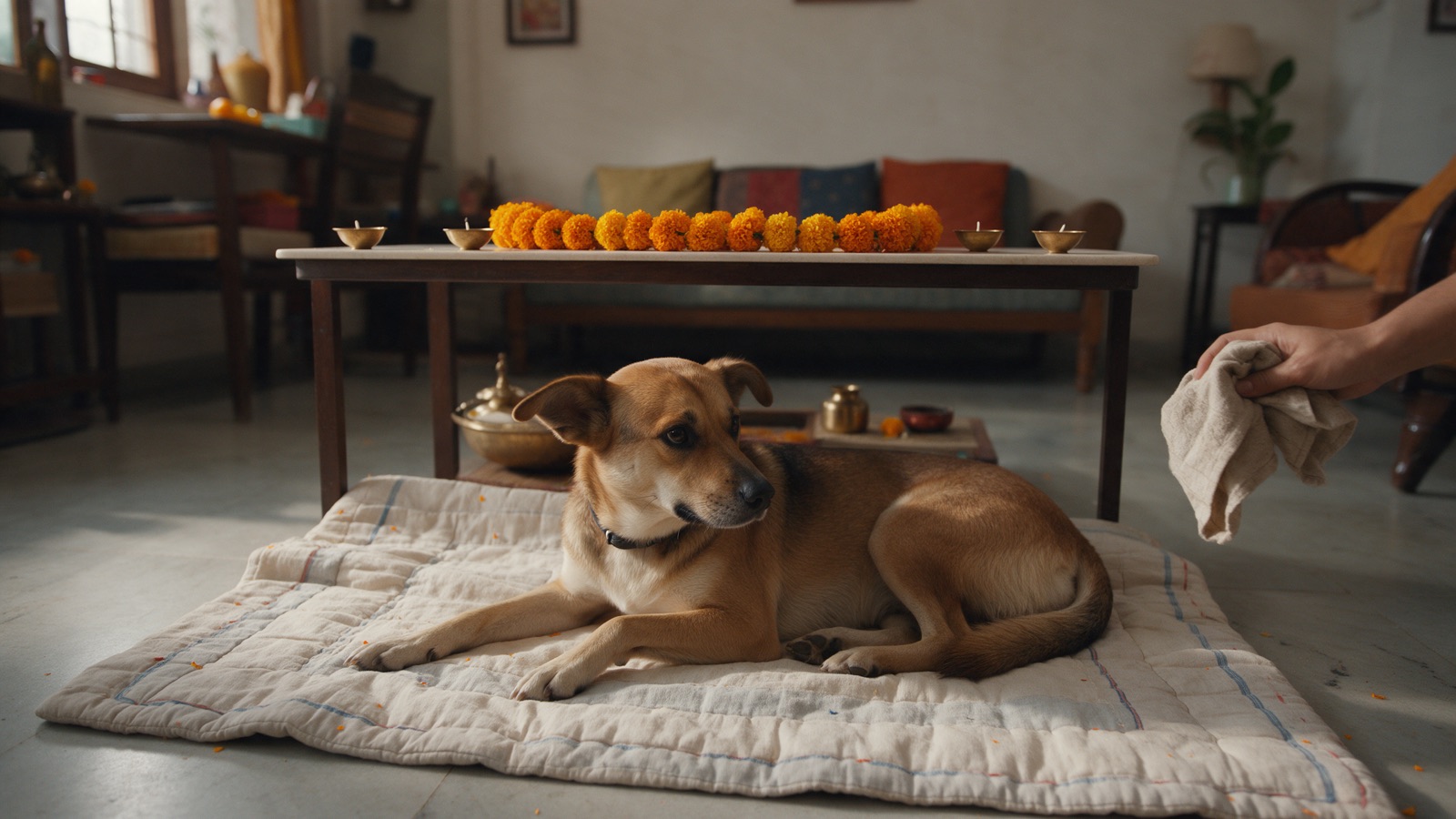
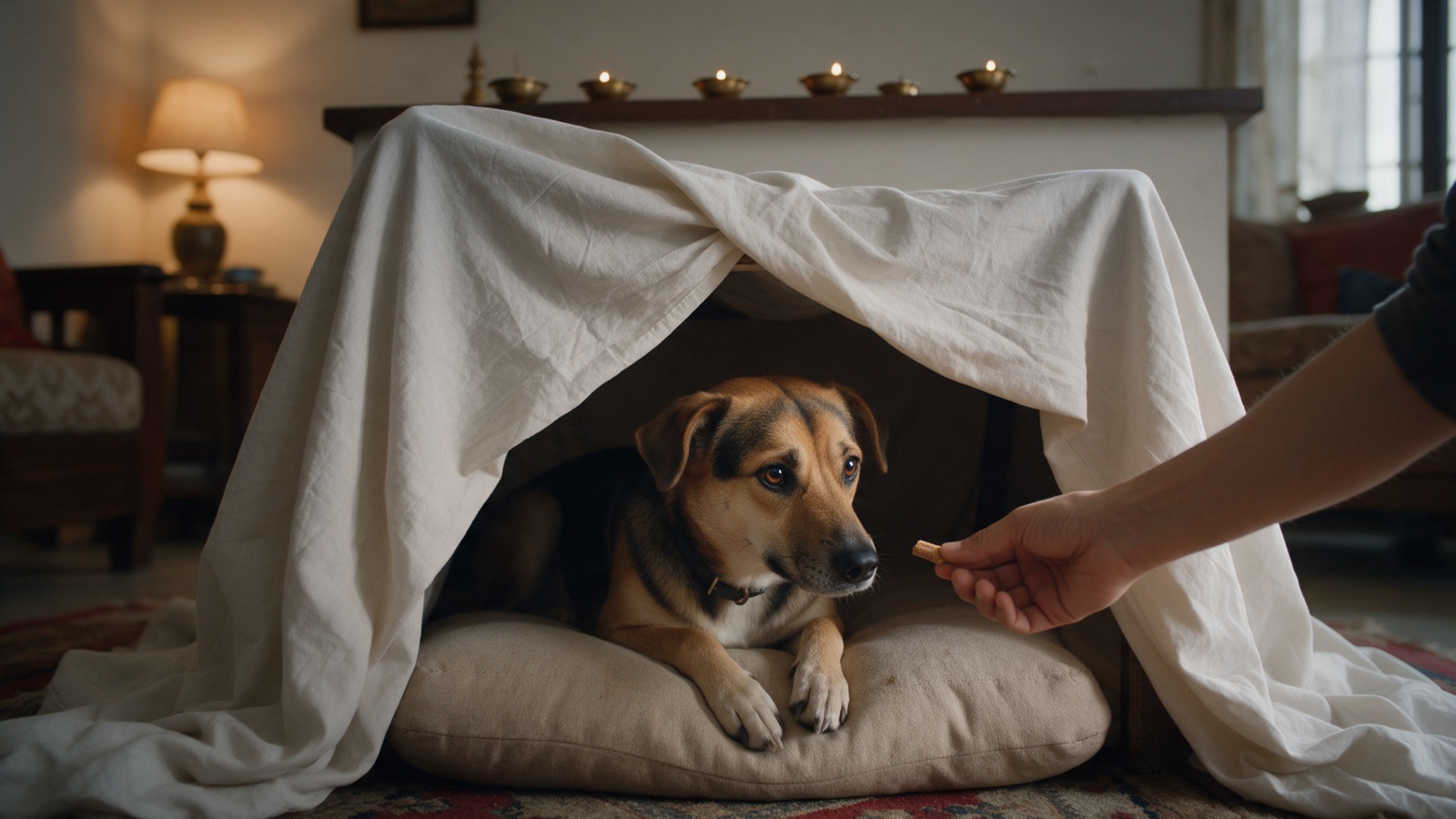
- Set up the safe den now, in an inner room away from the road: bed, water, an old T-shirt of yours, a covered crate or a table draped with a bedsheet. Feed a few treats there so it becomes a good place.
- Find the starting volume. With your dog nearby, play a single boom at the lowest volume. Raise it slowly until your dog's ear flicks or they glance up. Note that level, then drop a notch: that's your Day 3 starting point.
- Practise a simple "settle" on a mat with calm praise and treats. You'll use this during louder sessions later.
Days 3–5 (Mon 26 – Wed 28 Oct): sound means food
- Play the sound at your starting volume. The moment it plays, give a treat. Sound stops, treats stop. Repeat 8 to 10 times with pauses between.
- Use only booms on Day 3, add rockets on Day 4, add the ladi crackle on Day 5.
Days 6–8 (Thu 29 – Sat 31 Oct): turn it up, a little
- Raise the volume one small step per session, only if the previous session was completely relaxed.
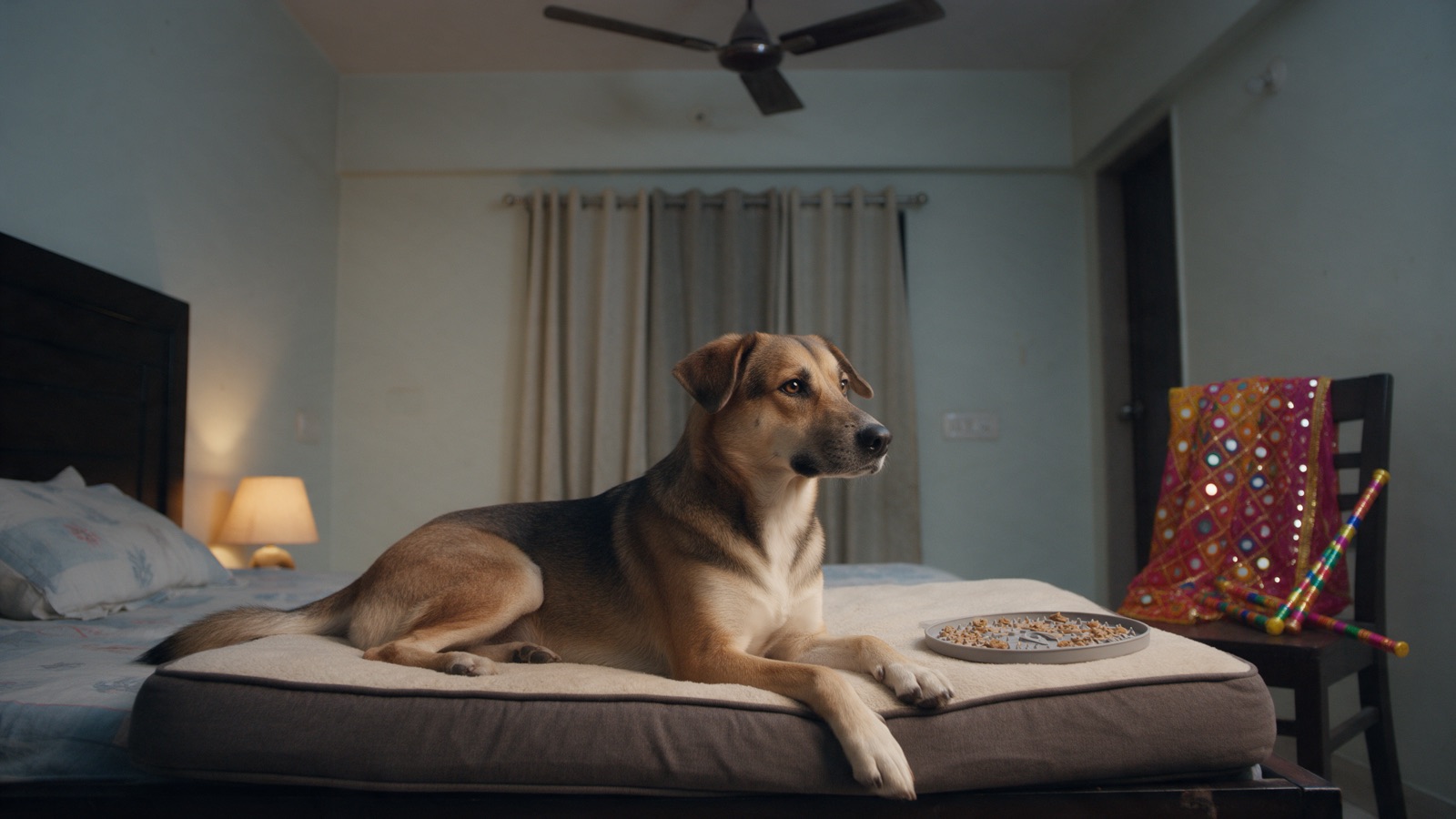
- Play sounds during dinner, during a game of tug, or while your dog licks a frozen lick mat. Good things happen while the sound is on.
- Move the speaker to different rooms, including near a window, so the sound doesn't always come from one spot.
Days 9–11 (Sun 1 – Tue 3 Nov): make it unpredictable
- Vary the timing: sounds at random moments in a session, not on a fixed beat.
- Combine sounds the way real Diwali does, with a rocket followed by booms followed by a crackle.
- Rehearse the night: close curtains, switch on a fan or soft music, go to the den, and run a short session there.
Days 12–15 (Wed 4 – Sat 7 Nov): hold steady and add real life
- Stop raising the volume. Real crackers will already be going off in most Bangalore neighbourhoods, and that's plenty of exposure. Use your recordings only at a comfortable level to keep the positive association fresh.
- Switch to ad hoc counter-conditioning: whenever a real cracker goes off, say a cheerful word and give a treat straight away, whatever your dog is doing. Bang, then chicken. In a large owner survey published in 2020, this was the technique owners rated most effective.
- Walk early in the day and on a well-fitted harness, ideally with a lead clipped to both harness and collar.
- On Day 15 (Choti Diwali), do the full evening routine: early dinner, den, curtains, background sound, and treats for each bang.
Common mistakes
- Going too loud too soon. The most common reason sound training fails. If in doubt, quieter.
- Long sessions. Five good minutes beat thirty anxious ones.
- Training only in one room. Dogs learn very specifically; move the speaker around.
- Scolding fear. Never punish a frightened dog. Comforting them is fine and won't "reward" the fear.
- Forgetting the treats are calories. Trim dinner slightly on heavy training days (see our calorie guide).
If you have a cat or a street dog you feed
Cats rarely sit through formal sound sessions, but the den idea works: a covered box up high in a quiet room, set up now. For community dogs you feed, the kindest help is a quiet sheltered corner on your property if possible, and feeding a little earlier in the evening on festival nights. If you're already caring for a fearful dog through Navratri and Dussehra, our posts on garba nights and Ravan dahan have more on handling the noise.
Treats that work for sound sessions
The best training treat is small, smelly and something your dog doesn't get every day. Thin strips of our Homemade Chicken Jerky snap into tiny pieces and are hard to ignore. Chicken & Oats Cookies, made from just chicken and oats, break easily for quick repetitions. For dogs who can't have chicken, Fish Bites are a single-ingredient option. Keep one jar just for sound practice, so the sound becomes the only time those treats appear.
Questions about firecracker sound training
Is two weeks enough to train a dog not to fear firecrackers?
Usually not enough for a full change, as most programmes suggest six to eight weeks. Two weeks can still reduce fear in mildly anxious dogs and teach a calm routine that helps on the night.
What should I do if my dog gets scared during a session?
Stop the sound calmly, let your dog settle, and next time start at a lower volume than the one that worried them. Never push on through visible fear.
Should I keep training on Diwali night itself?
No formal sessions on the night. Just give a treat after each bang if your dog will eat, and let them rest in their den. If they won't take food, they're too frightened, so focus on comfort.
My dog panics badly at crackers. Will this plan help?
For severe fear, training alone is unlikely to be enough before 8 November. Call your vet now to discuss options, including medication your vet can prescribe and test before the festival.
Sources
- American Kennel Club: Change your dog's behaviour with desensitisation and counterconditioning
- American Kennel Club: How to help a dog scared of loud noises
- Dogs Trust: Supporting your dog during fireworks
- RSPCA: Fireworks and pets
- AVSAB: Survey shows which treatments are effective for fireworks fears in dogs (Riemer, Journal of Veterinary Behavior, 2020)
Small, tasty rewards for sound practice
Sound training works best with a treat your dog really wants, broken into tiny pieces. These are favourites in our kitchen.




Quick Bites For dogs & cats
Chicken & Oats Cookies

- Protein
- Healthy fats
- Fibre
- Slow-release energy
₹290 250 g


See the full menu or ask our nutritionist what suits your pet.
Was this helpful?
Share with a pet parent