Puppy feeding chart for India: how much and how often, by age and weight
Four meals, then three, then two: a puppy feeding chart by age, plus a simple way to work out portions from your food's label and your puppy's weight.
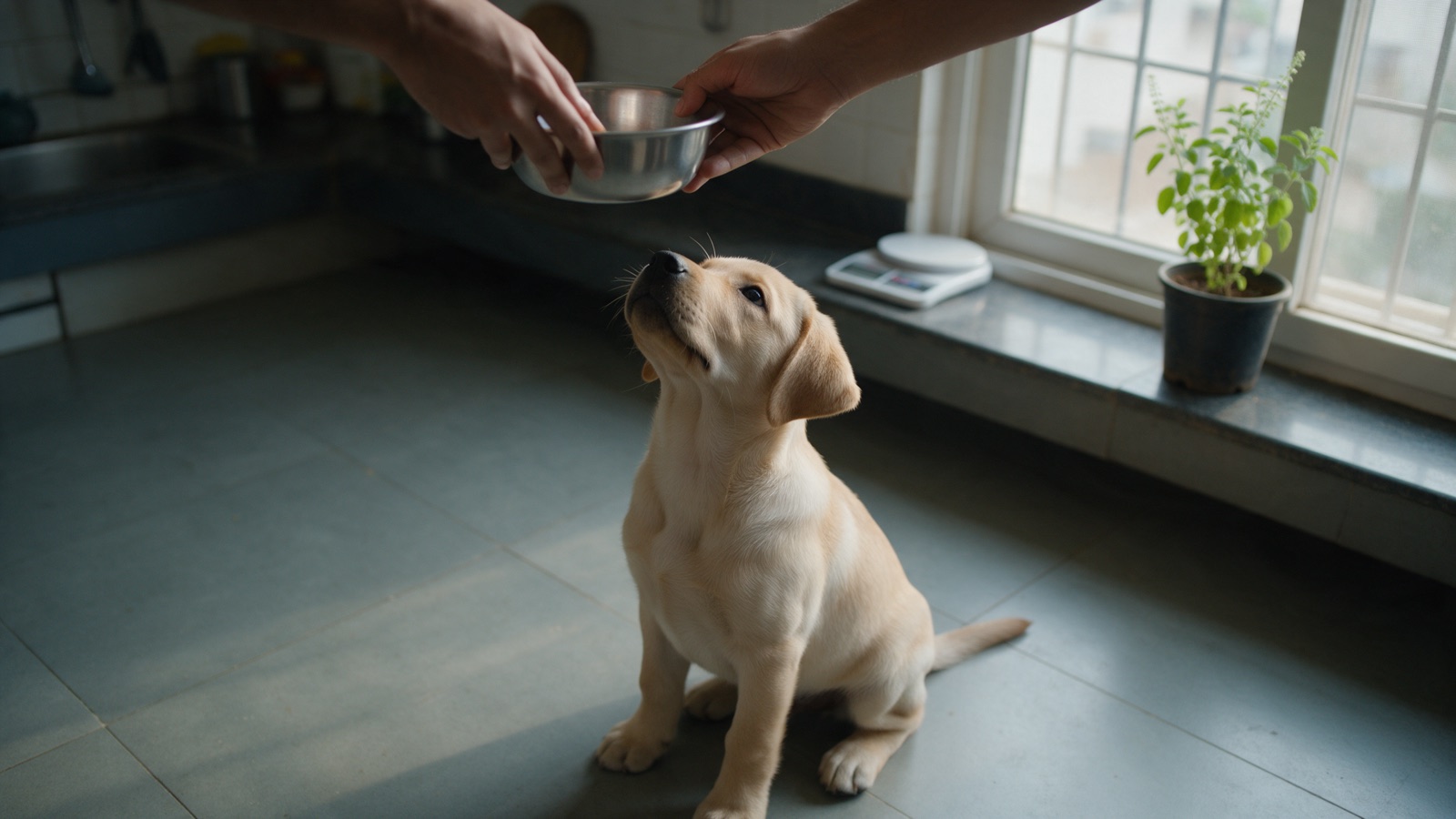
"How much should my puppy eat?" is usually typed at 11 pm, after a new puppy has wolfed down a bowl in thirty seconds and is now staring at you as if you've never fed him in his life. The short answer: most puppies need four meals a day from weaning to about 3 months, three meals a day from 3 to 6 months, and two meals a day from around 6 months, with the daily amount set by the calories on your food's label and your puppy's current weight, then adjusted every week as he grows.
This puppy feeding chart gives you the meals-per-day schedule by age, a simple way to turn a calorie number into grams, and the differences between a Shih Tzu puppy and a Labrador puppy that matter most. It is guidance to start from, not a prescription: your vet and your puppy's body shape have the final say.
Four meals, then three, then two. The calories on the label and the scale decide the rest.
The puppy feeding chart: meals per day by age
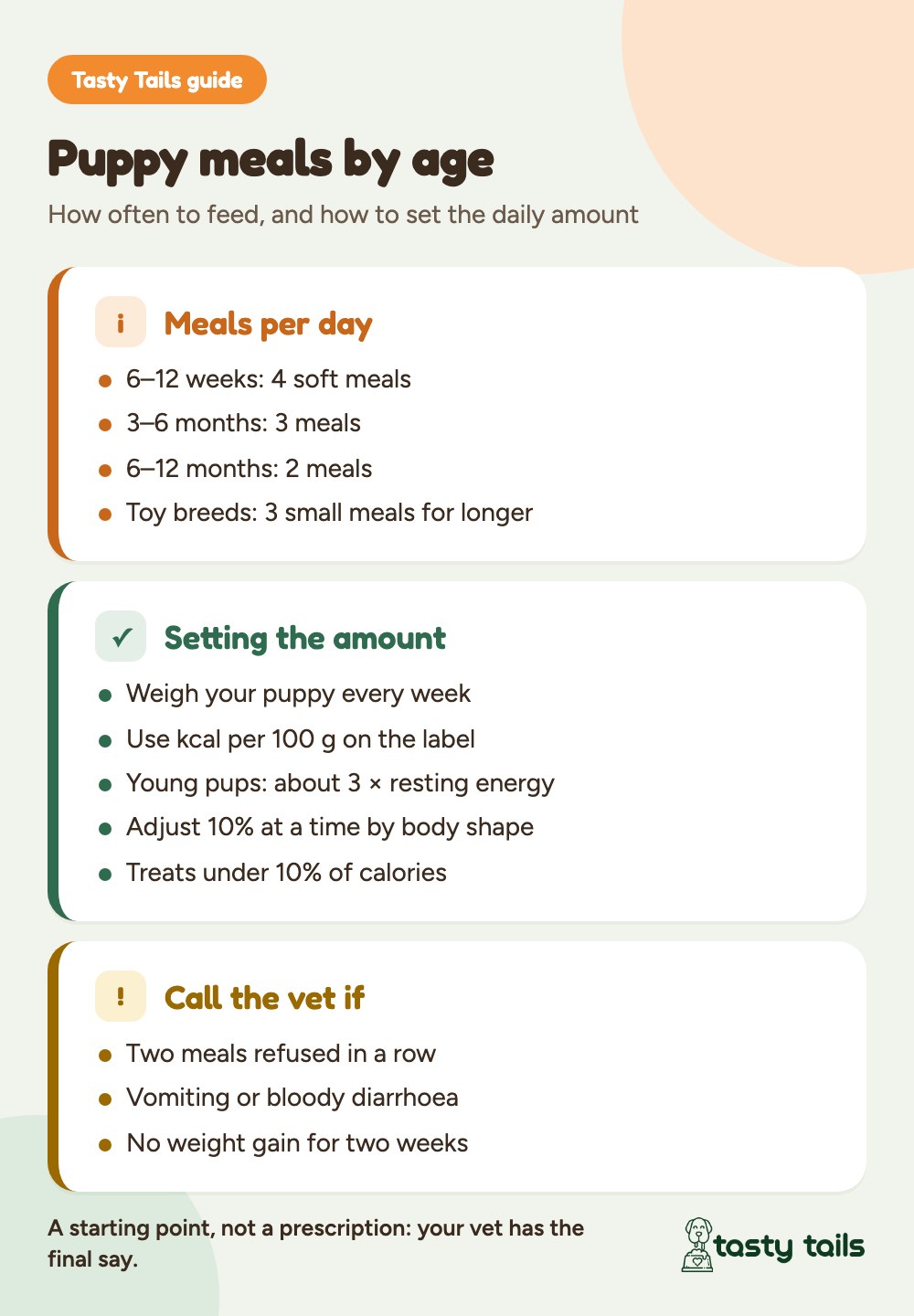
A puppy's stomach is small and his energy needs are huge for his size, so he does best on several small meals rather than one or two big ones. Here is the pattern most vets in India and abroad follow:
- 6 to 12 weeks (newly weaned): 4 meals a day, spaced roughly 3 to 4 hours apart through the day. Food should be soft or moistened.
- 3 to 6 months: 3 meals a day. Drop the late-evening meal first and keep the others evenly spaced.
- 6 to 12 months: 2 meals a day for most breeds. Toy and very small breeds (Chihuahuas, small Shih Tzus, Pomeranians) may need 3 smaller meals a little longer, because tiny puppies can get low blood sugar if they go too long without food.
- Large and giant breeds (Labradors, Golden Retrievers, German Shepherds, Great Danes): 2 to 3 meals a day after 6 months, and a puppy or "large-breed puppy" food until roughly 12 to 18 months, when they finish growing. Small breeds can usually move to adult food at around 9 to 12 months.
Going from four meals to three doesn't cut the daily total: the same day's food is split into fewer, bigger portions.
How much to feed: start with the label, then the scale
There is no honest single number for "grams per day" that suits every puppy, because foods vary enormously in calories. A dense dry kibble might be 380 to 400 kcal per 100 g; a fresh cooked meal might be a third of that. So work in calories, not cups.
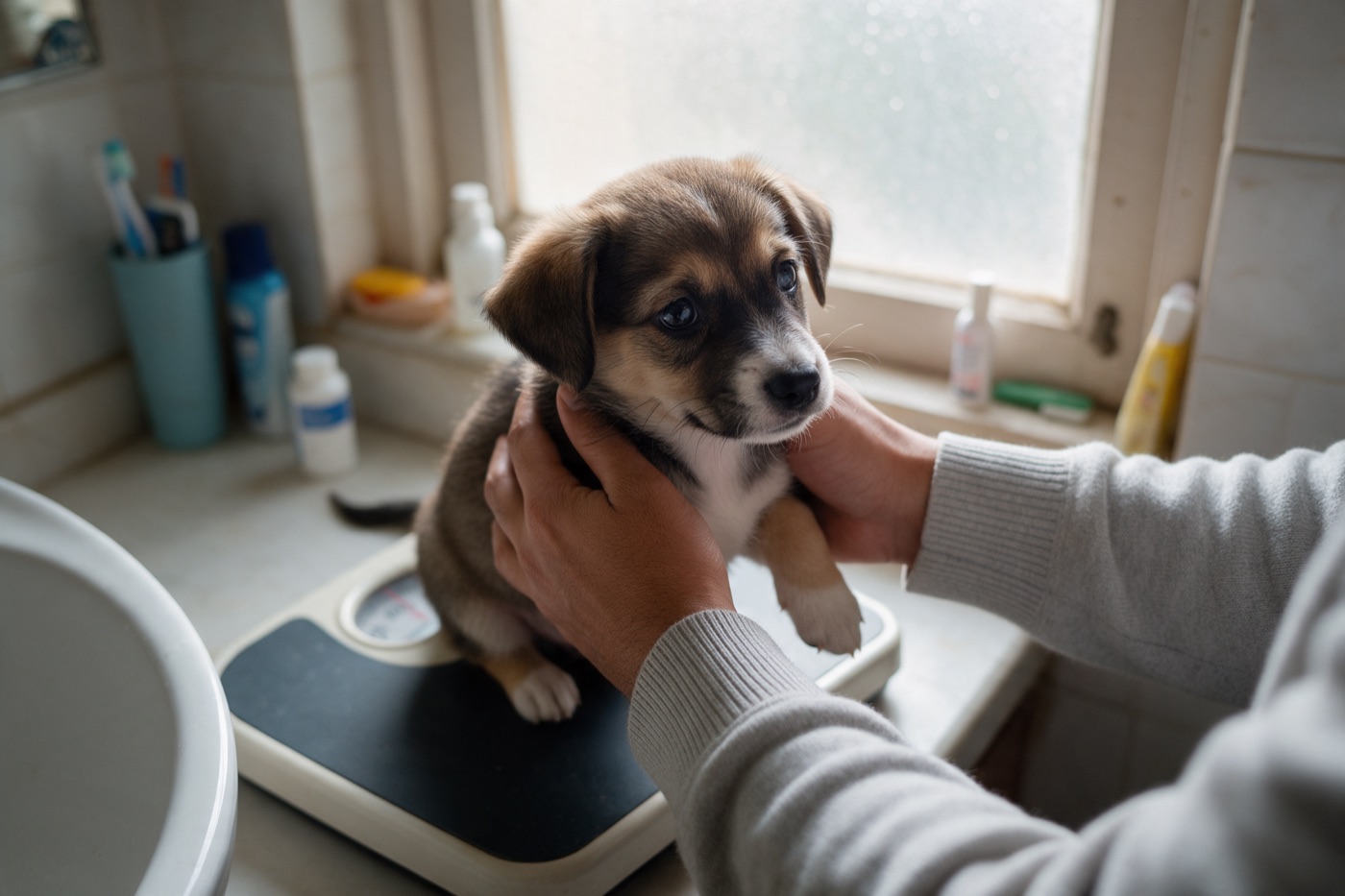
Step 1: weigh your puppy
Use a bathroom scale: weigh yourself, then weigh yourself holding the puppy, and subtract. Repeat weekly and note it down.
Step 2: estimate the daily calories
Vets use a resting energy formula: 70 × (body weight in kg) to the power 0.75. Your phone calculator can do it (type the weight, press the x^y key, enter 0.75, then multiply by 70). Growing puppies need a multiple of that resting number:
- Young puppies, under about half their expected adult weight: roughly 3 × the resting number.
- Older puppies, over half their adult weight: roughly 2 to 2.5 × the resting number, falling towards 2 × as they near adult size.
Example: a 10 kg Labrador puppy at 3 months. 10 to the power 0.75 is about 5.6, × 70 = about 390 kcal resting. Times 3 gives roughly 1,150 to 1,200 kcal a day. Our calorie guide walks through the same maths for adult dogs.
Step 3: turn calories into grams
Divide the daily calories by the kcal per 100 g on the label, then multiply by 100. If that Lab puppy's food is 380 kcal per 100 g, he needs about 300 g of it a day, split into three meals of about 100 g. If you mix foods (say, kibble plus a fresh topper), count both.
Step 4: compare with the pack, then adjust
A good puppy food's feeding guide is built the same way, so the two numbers should be close. Either way it's a starting point: the scale and your hands decide what happens next.
Large breed vs small breed puppies: what changes
Size changes more than the portion.
- Large-breed puppies should grow steadily, not fast. Too many calories, or too much calcium, in the first year is linked with joint problems such as hip and elbow dysplasia. Feed a food labelled for the growth of large-size dogs, keep them lean, and never add calcium powder or bone meal to a complete food unless your vet asks you to.
- Small and toy-breed puppies burn energy quickly and have tiny reserves. Don't skip meals, and if a small puppy is weak, wobbly or unusually sleepy after missing food, call your vet straight away.
Large-breed puppies should grow steadily, not fast. A lean puppy is a puppy whose joints will thank you later.
Is my puppy eating the right amount? Signs to check every week
Puppies should look lean and athletic, never round. Once a week, alongside the weigh-in:
- Ribs: you should feel them easily under a thin layer of fat, like the back of your hand, without seeing them stick out.
- Waist: looking down from above, you should see a gentle waist behind the ribs.
- Tummy tuck: from the side, the belly should rise up towards the back legs.
- Weight curve: steady weekly gains, with no sudden jumps or stalls.
- Poop: firm, well-formed stools. Loose stools are often a sign of overfeeding or a food change that was too fast.
If the ribs are disappearing, trim the daily amount by about 10 percent and recheck in a week. If the ribs and hip bones are showing, add 10 percent and talk to your vet. Our body condition score guide shows the hands-on check in detail.
Treats, water and the Indian-kitchen extras
- Treats stay under 10 percent of daily calories. Puppies in training earn a lot of rewards, so use small pieces, and take some of each meal's food as training rewards on busy days.
- Fresh water, always. Bangalore's winter air is dry, and puppies on dry food drink a lot.
- No cow's milk. Most puppies digest lactose poorly after weaning, and milk adds calories without balance.
- Go easy on table food. Bits of roti, rice or dal fill a small stomach without the protein, calcium and vitamins a growing body needs. Never share anything with onion, garlic, grapes, chocolate or cooked bones; our list of foods dogs should never eat covers the Indian kitchen.
- Cold mornings: puppies don't need extra food just because it's winter unless they spend long hours outdoors. Our winter diet guide explains when it does matter.
Fresh food for growing puppies from our kitchen
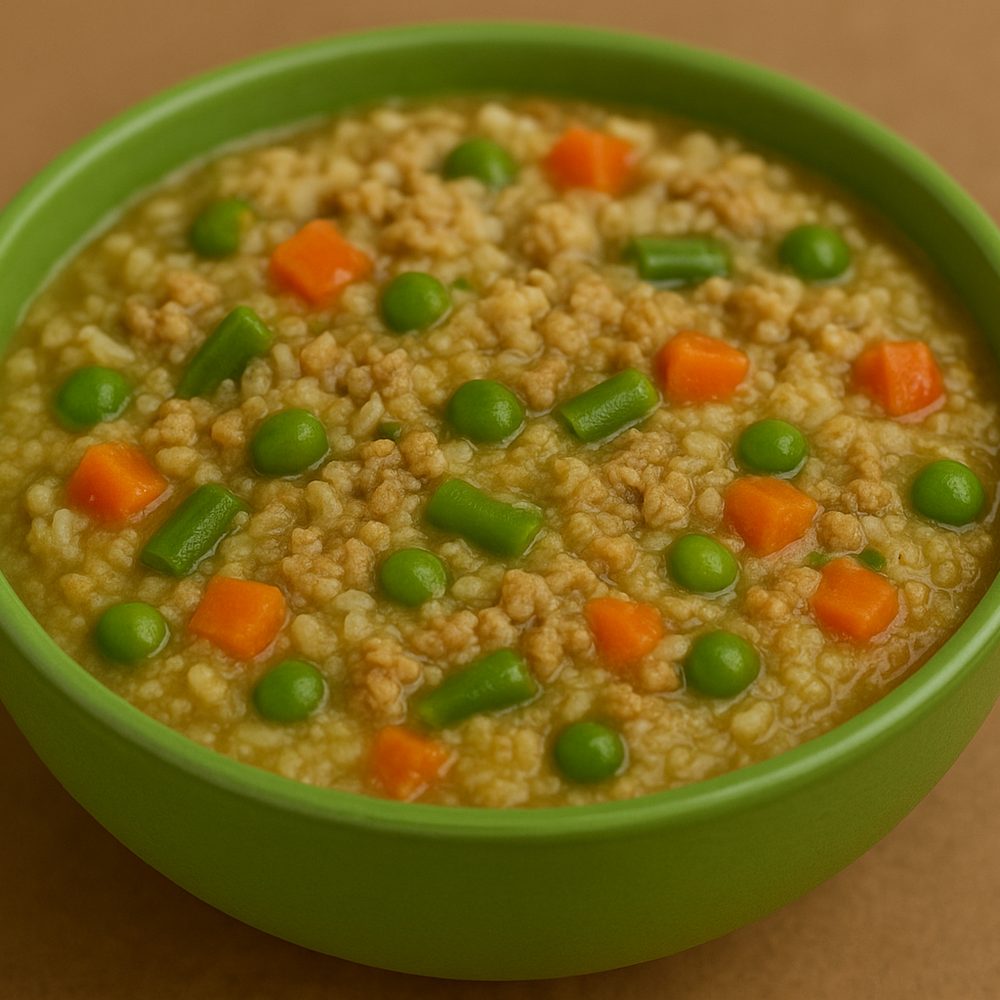
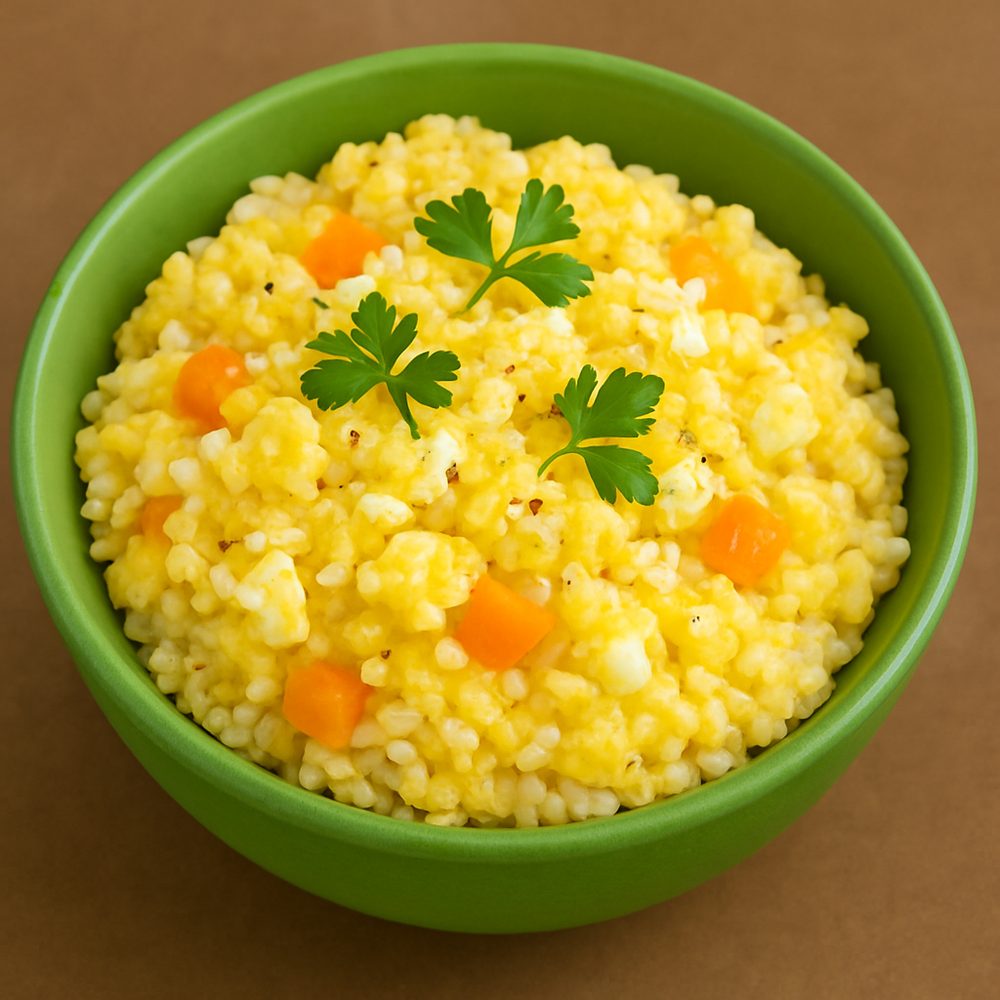
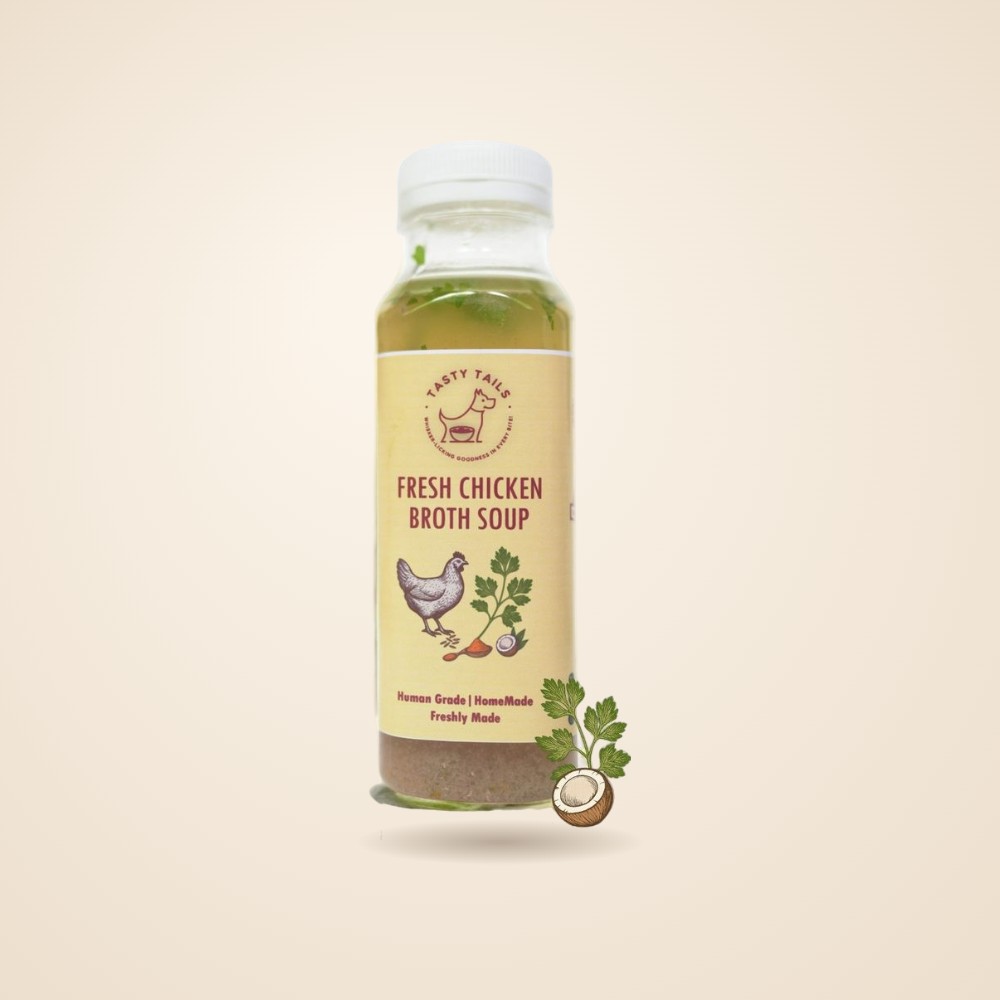
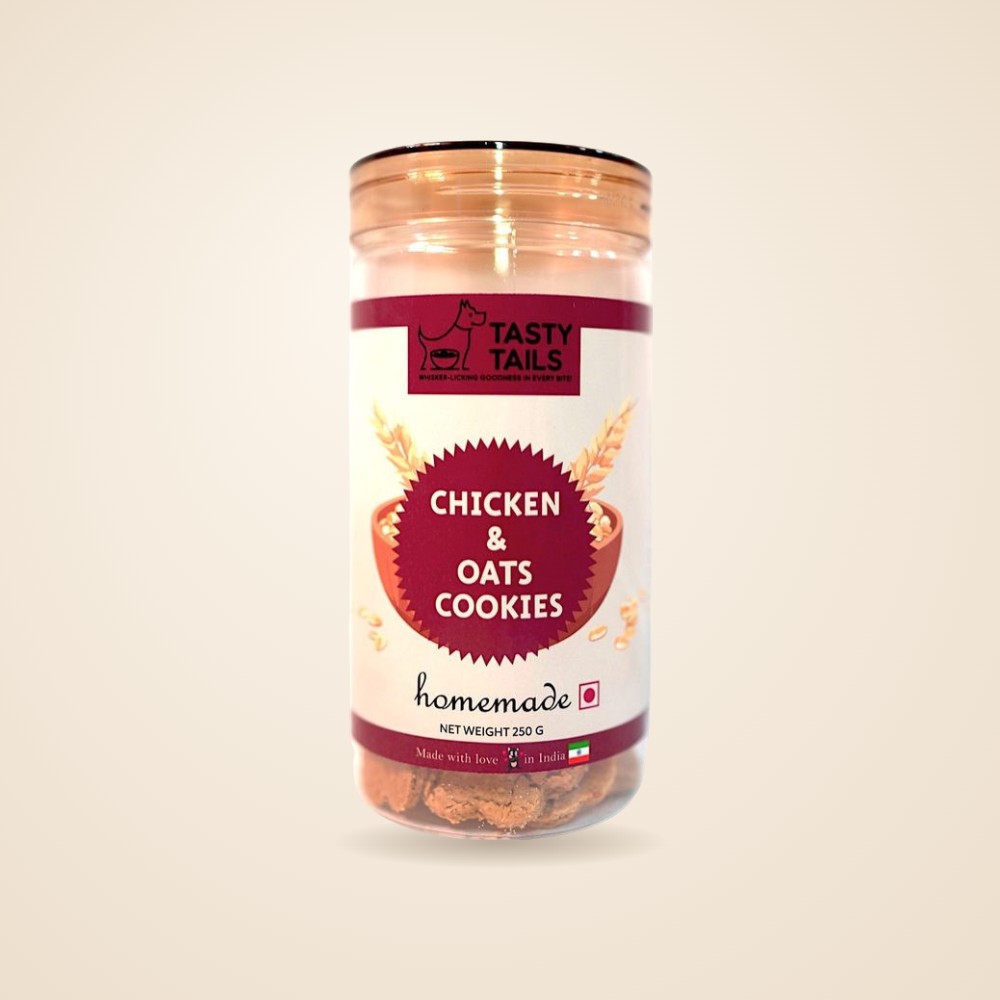
A growing puppy's main diet should be complete and balanced for growth, whether that is a good puppy food or a fresh diet your vet or a veterinary nutritionist has checked. Fresh meals work well as toppers and to tempt picky eaters, as long as you count their calories. The Chicken Keema Mix (minced chicken with rice, beans, peas and carrot) is soft and easy for small mouths. The Egg Roster of mashed egg, sweet potato and rice is a gentle option for puppies who do well on egg. A spoon of plain Fresh Chicken Broth, made with no salt, onion or garlic, softens kibble for young puppies. For training, break our two-ingredient Chicken & Oats Cookies into tiny pieces. If you're moving a puppy onto fresh food, follow the 7-day switch plan and go slower if stools soften.
When to call the vet about feeding
- Your puppy refuses two meals in a row, or a toy-breed puppy misses even one and seems weak.
- Vomiting more than once, or diarrhoea with blood, especially in a puppy who hasn't finished his vaccines (parvovirus is a real risk).
- Weight stays the same for two weeks, or drops.
- A swollen, hard belly, particularly with a dull coat (worms are common in puppies).
Questions about the puppy feeding chart
How many times a day should I feed a 3-month-old puppy?
Three meals a day suits most puppies from about 3 to 6 months. Keep the total daily amount the same as before and split it into three evenly spaced meals.
When should a puppy switch from 3 meals to 2?
Most puppies move to two meals at around 6 months. Toy breeds may need three small meals for longer, and large breeds often do well on three until 8 or 9 months.
Should I follow the feeding guide on the puppy food pack?
Use it as a starting point. Weigh your puppy weekly, check ribs and waist, and adjust the amount by about 10 percent at a time to keep a lean body shape.
Can I free-feed my puppy and leave food out all day?
It's better not to. Set meals make it easy to notice a dip in appetite, help with toilet training, and stop greedy breeds like Labradors from overeating.
When does a puppy stop eating puppy food?
Small breeds usually switch to adult food at 9 to 12 months, medium breeds around 12 months, and large or giant breeds at 12 to 18 months. Your vet can confirm when your puppy has finished growing.
Sources
Soft, simple food for growing puppies
Fresh toppers and tiny training treats to fit inside your puppy's daily calories.


Main Meals For dogs & cats
Egg Roster


- Protein
- Healthy fats
- Fibre
- Vitamins
₹250 Small · 250 g 3 sizes
Quick Bites For dogs & cats
Chicken & Oats Cookies

- Protein
- Healthy fats
- Fibre
- Slow-release energy
₹290 250 g
See the full menu or ask our nutritionist what suits your pet.
Was this helpful?
Share with a pet parent