Winter diet for dogs in Bangalore: what really changes when mornings turn cold
Foggy mornings make dogs hungrier and lazier at the same time. Here is what a Bangalore winter actually changes in your dog's bowl, and what it doesn't.
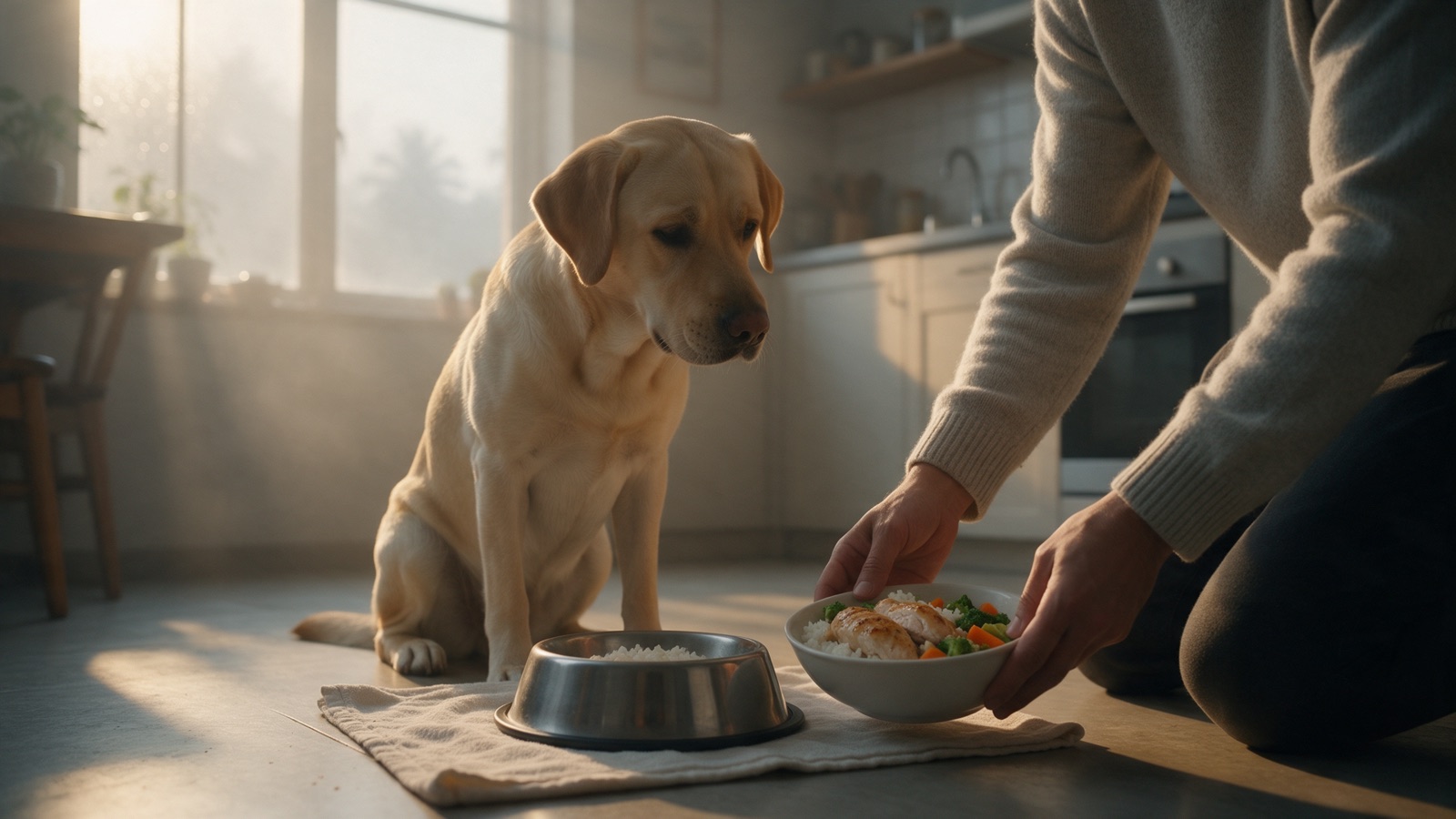
It is 6.30 am, the fog is still sitting on the trees outside your building, and your Labrador has decided the walk can wait. Then at 8 pm he is at his bowl twice as early as usual, staring at you. So does a winter diet for dogs in Bangalore need more food, warmer food or different food? For most pet dogs here, the honest answer is: not more food, but smarter food.
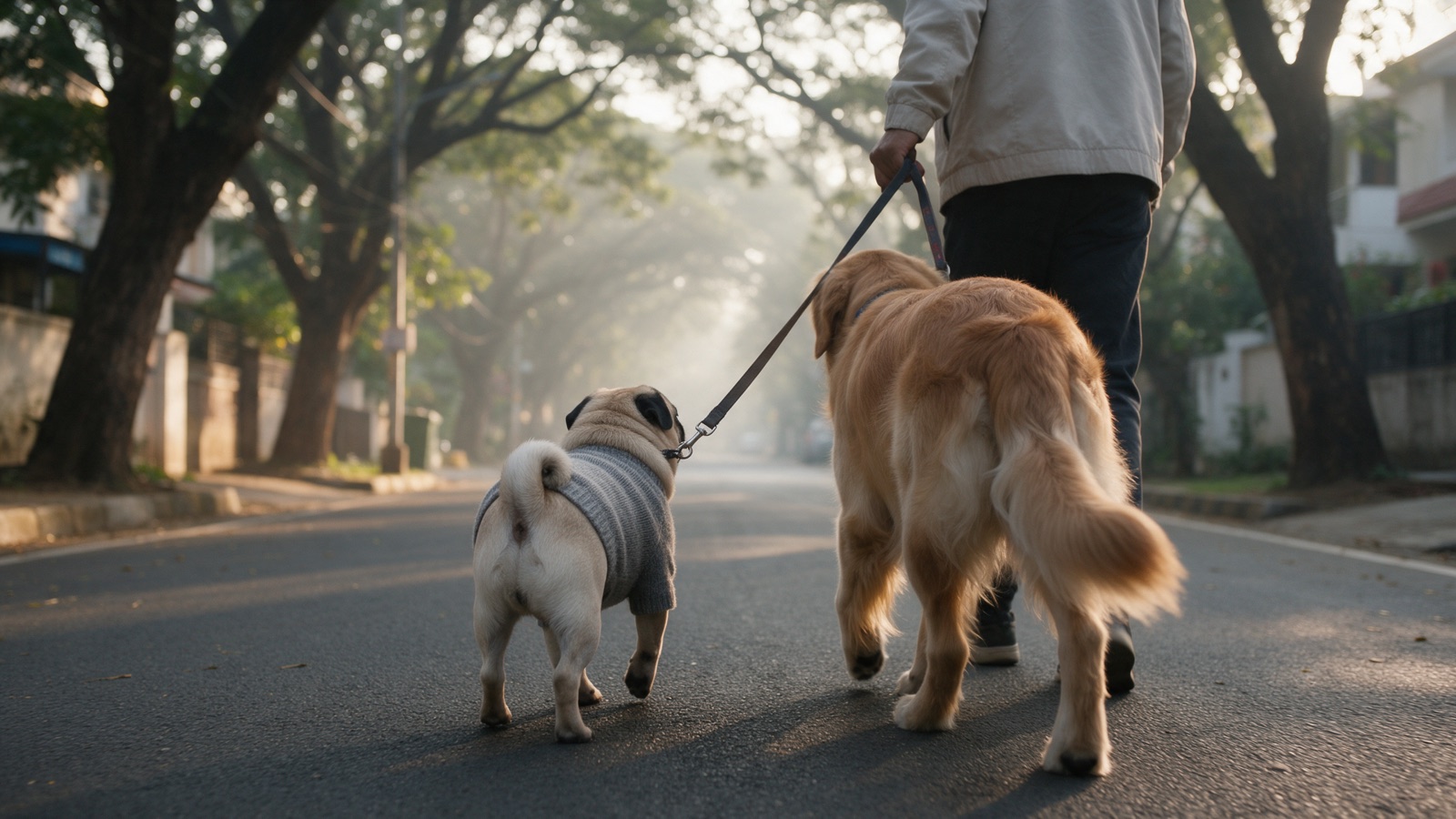
A Bangalore winter is mild. Dawn sits around 14–17°C and the afternoons are pleasant, so a dog who lives indoors burns roughly the same energy in December as in September. The real winter changes are shorter, later walks (which mean fewer calories burned), drier air, and dogs who quietly drink less water. Only dogs who spend long hours outdoors, work hard, or are already thin need a genuine calorie bump.
In a Bangalore winter, most dogs need smarter food, not more of it.
Does my dog need more food in winter?
Dogs living in snow, or sleeping outside in freezing weather, do burn extra energy to stay warm, which is why cold-climate advice often says to feed a little more. That advice does not translate neatly to an apartment in HSR Layout or a house in Malleshwaram. Here is a simple way to decide:
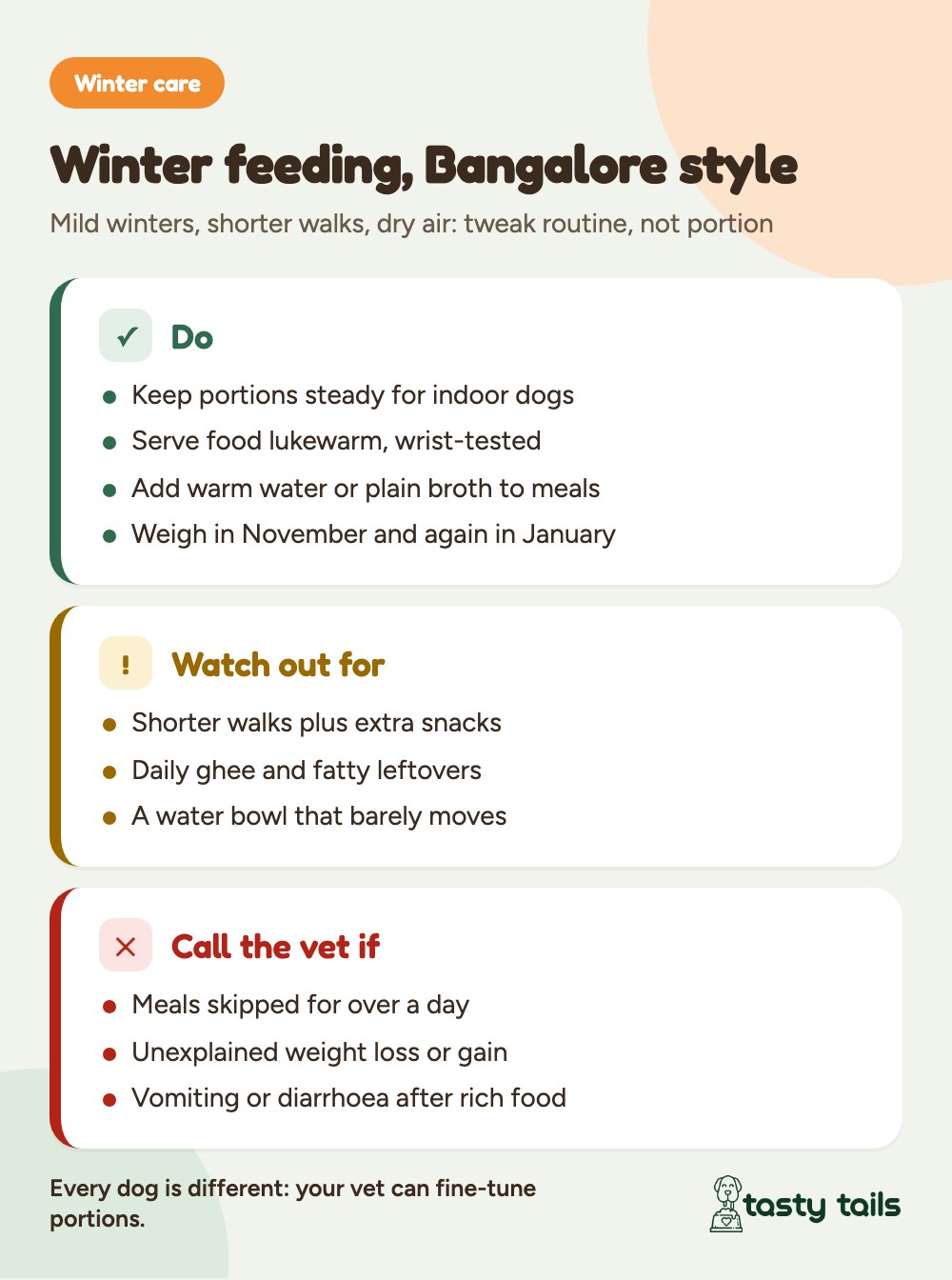
- Indoor dog, walks shrinking: keep portions the same, or trim treats. This is the dog most likely to gain weight between November and January.
- Indoor dog, same activity as always: keep everything the same and watch the waistline.
- Dog who sleeps on a terrace, farmhouse guard dog, or a very active working breed: a modest increase (about 5–10%) may help, guided by body condition rather than guesswork.
- Thin seniors and dogs recovering from illness: ask your vet; cold mornings can make a lean dog lose weight faster.
If you are not sure where your dog sits, our simple calorie guide gives you a starting number, and the ribs-and-waist check in our body condition score post tells you whether that number is working.
The quiet winter problem: weight gain
Winter weight gain in city dogs rarely comes from the bowl. It comes from three small habits that stack up:
- Walks get later and shorter. Nobody wants to stand in the fog at 6 am, so the long morning walk becomes a quick loop around the block.
- Winter snacks multiply. Groundnuts in December, plum cake at Christmas, a bit of roti with ghee because it is cold. Each one feels tiny.
- Comfort feeding. A dog curled up on a blanket looks like he "needs" something warm, so he gets an extra spoon.
Weigh your dog once at the start of winter and again in mid-January. A gain of more than about 5% in two months is a signal to cut treats first, then trim the meal slightly. Keep treats under 10% of the day's calories, and count that biscuit you gave at the gate.
Winter weight gain in city dogs rarely comes from the bowl. It comes from shorter walks and small extras.
Warm, not hot: serving food on cold mornings
Fresh food straight from the fridge on a 15°C morning is not dangerous, but many dogs, especially seniors and fussy eaters, eat more happily when the food is lukewarm. Warmth releases aroma, and smell drives appetite in dogs far more than taste.
- Take the portion out of the fridge 20–30 minutes before the meal, or warm it gently in a steel bowl set in hot water.
- If you use a microwave, stir well and wait; microwaves leave hot pockets that can burn a tongue.
- Test it like baby food: it should feel just warm on the inside of your wrist, never hot.
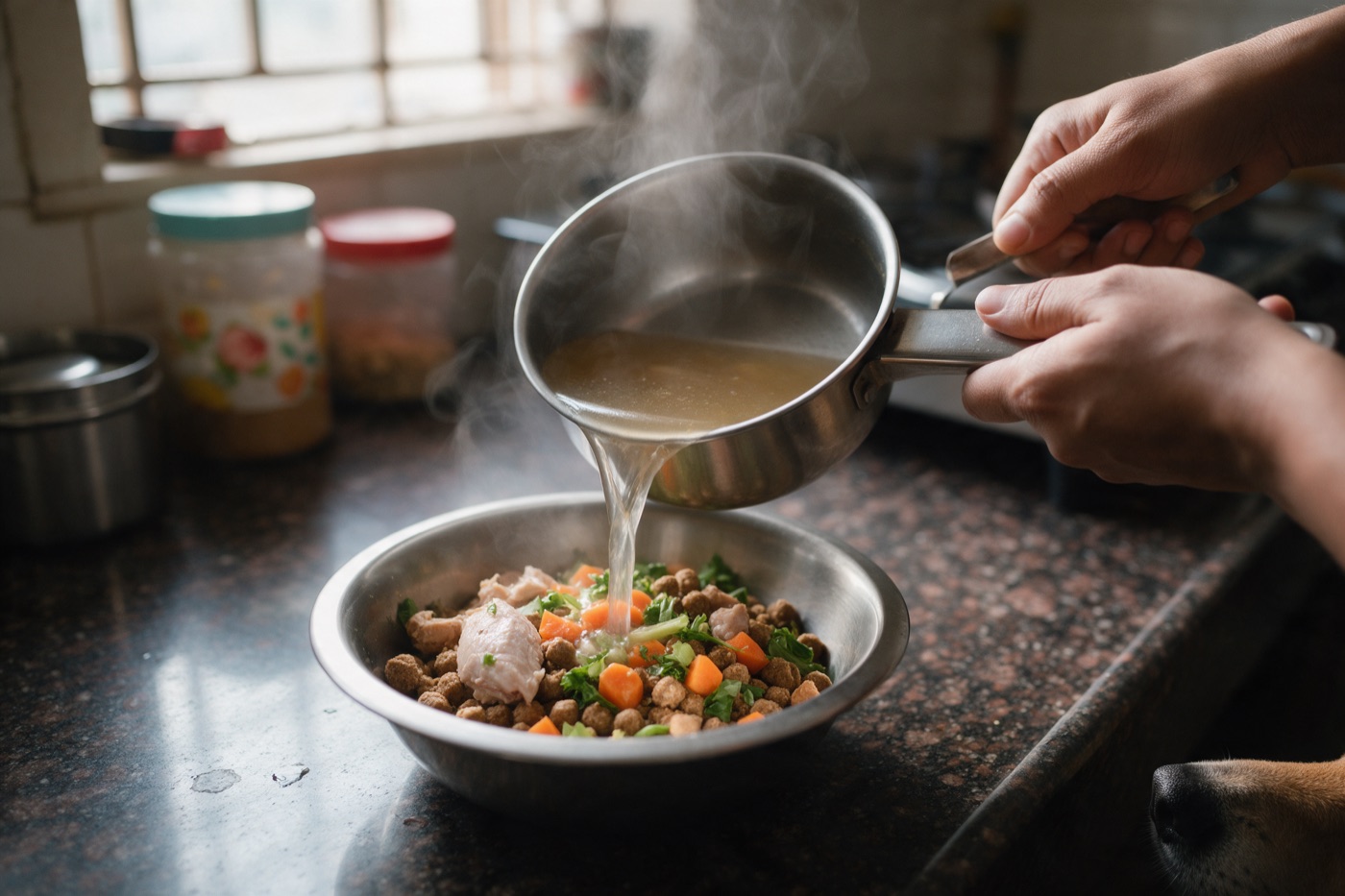
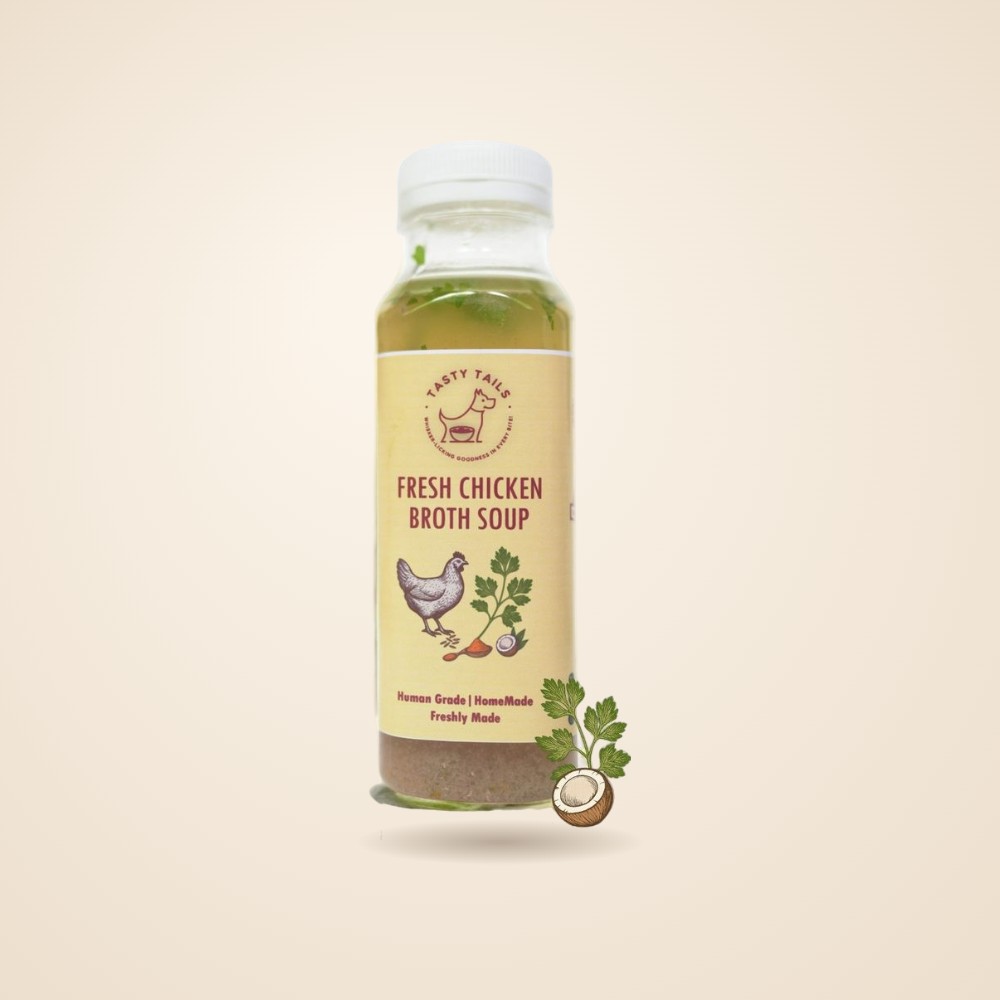
- A spoon or two of warm, unsalted broth poured over the meal is the easiest trick for a dog who sniffs and walks away.
Never add tadka, onion, garlic or salt to "warm it up". Those Indian kitchen staples are on our list of foods dogs should never eat, cold season or not.
Water: why winter dogs get quietly dehydrated
Dry Bangalore air and cool weather mean dogs feel less thirsty, so they drink less, while still losing water through breathing and the dry air indoors. Mild dehydration in winter shows up as harder stools, dull coat, flaky skin and darker urine.
- A healthy dog needs very roughly 50–60 ml of water per kg of body weight a day, from the bowl and food combined. A 25 kg Labrador needs well over a litre.
- Steel bowls on a cold granite floor can feel icy; some dogs drink more from room-temperature water in a bowl placed on a mat.
- Fresh food carries a lot of moisture on its own, which is one reason dogs on cooked meals often cope better with dry weather than dogs on dry kibble alone.
- Add a little warm water or plain broth to meals if your dog's water bowl barely moves.
What should a winter diet for dogs include?
A complete, balanced diet does not need to change dramatically with the season. A few tweaks are worth considering:
- Good-quality protein to maintain muscle when walks shrink, especially in seniors.
- Omega-3 fats from fish once or twice a week, which support skin and coat through the dry months.
- Fibre from pumpkin, carrots and beans to keep stools regular when dogs drink less.
- Sensible fat. A rich, fatty winter diet (lots of ghee, fatty mutton, fried leftovers) is a common trigger for upset stomachs and, in some dogs, pancreatitis. Warming does not mean greasy.
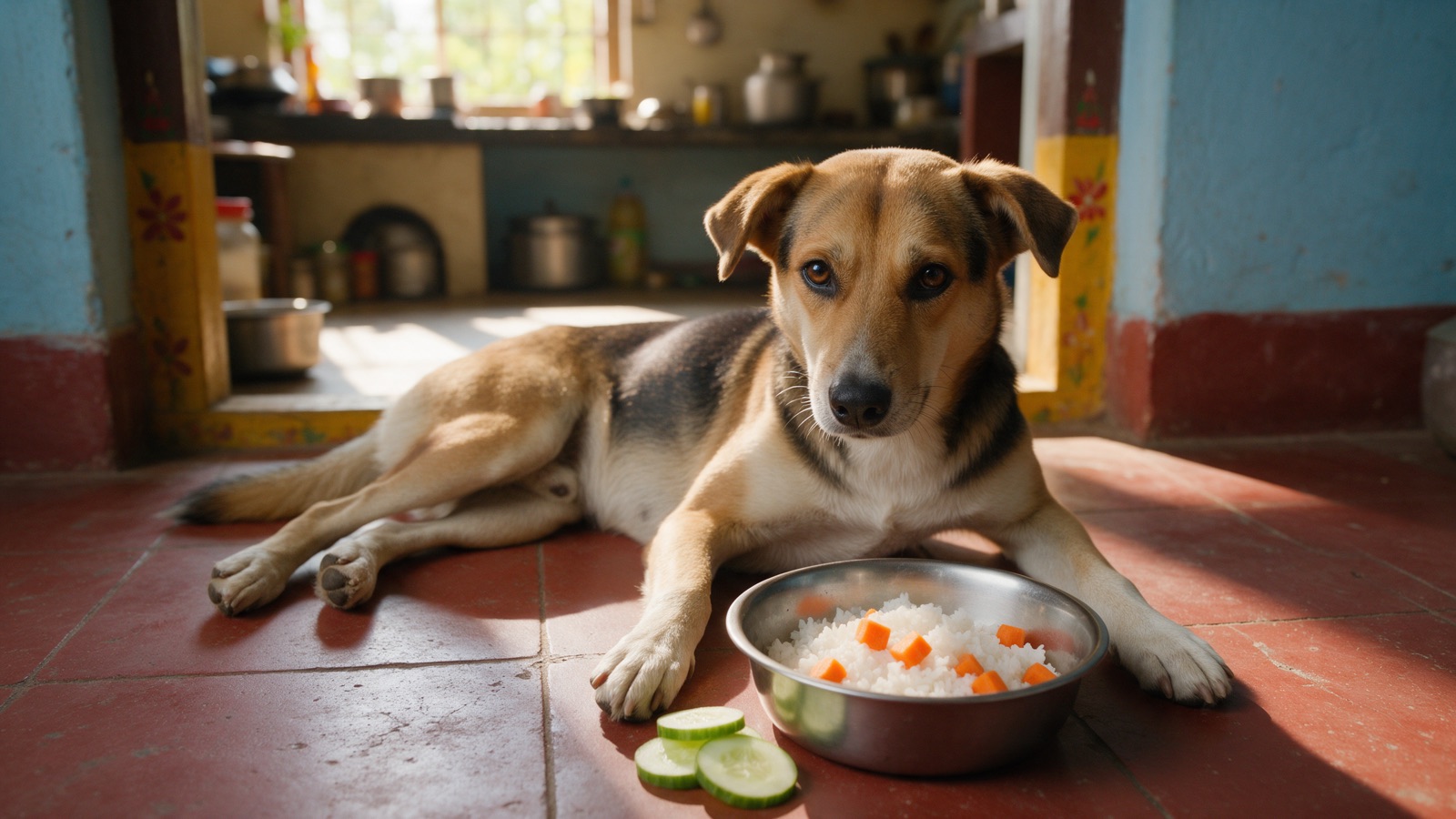
Community dogs on your street are a different story. They sleep outdoors and genuinely burn more in December, so a regular, plain meal (rice with a boiled egg or some chicken, no salt or masala) and a bowl of clean water help them more than biscuits or leftover curries.
The warming foods idea, briefly
Traditional Chinese veterinary medicine sorts foods into warming, neutral and cooling. In that tradition, chicken and mutton count as warming, and fish and many vegetables lean cooling, so a dog who seeks out warm spots in winter might get a little more of the former. It is a traditional framework, not hard science, but it can be a nice way to think about rotating proteins. We explain it with Indian kitchen examples in warming and cooling foods for dogs.
Winter bowls from our kitchen
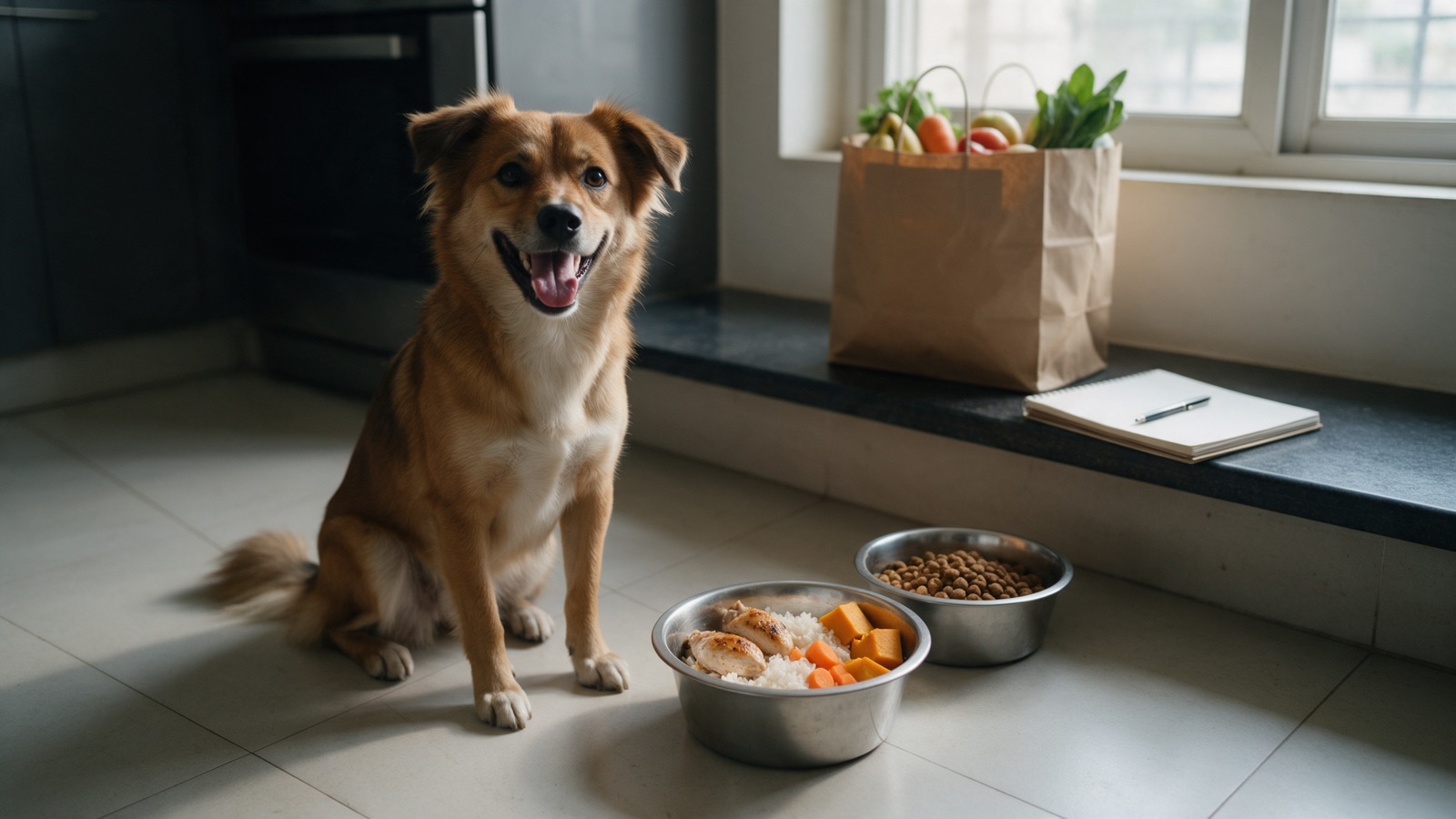
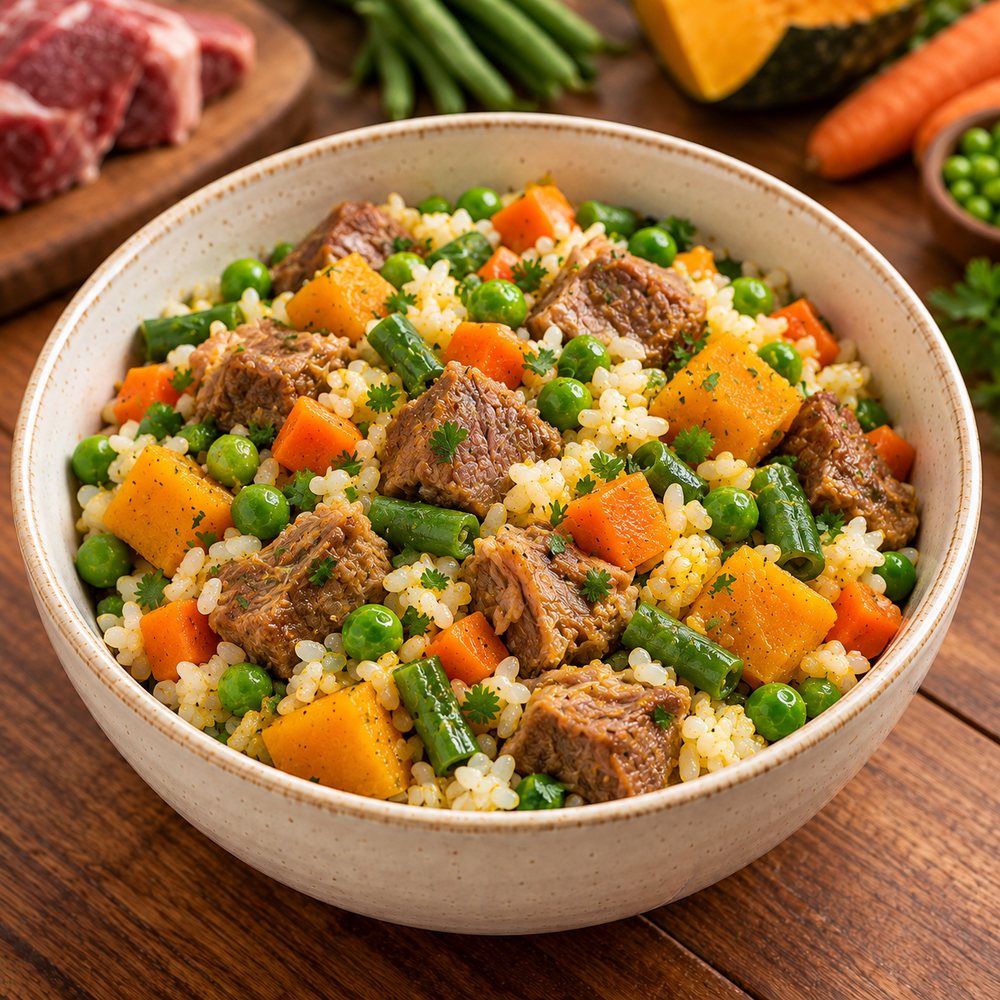
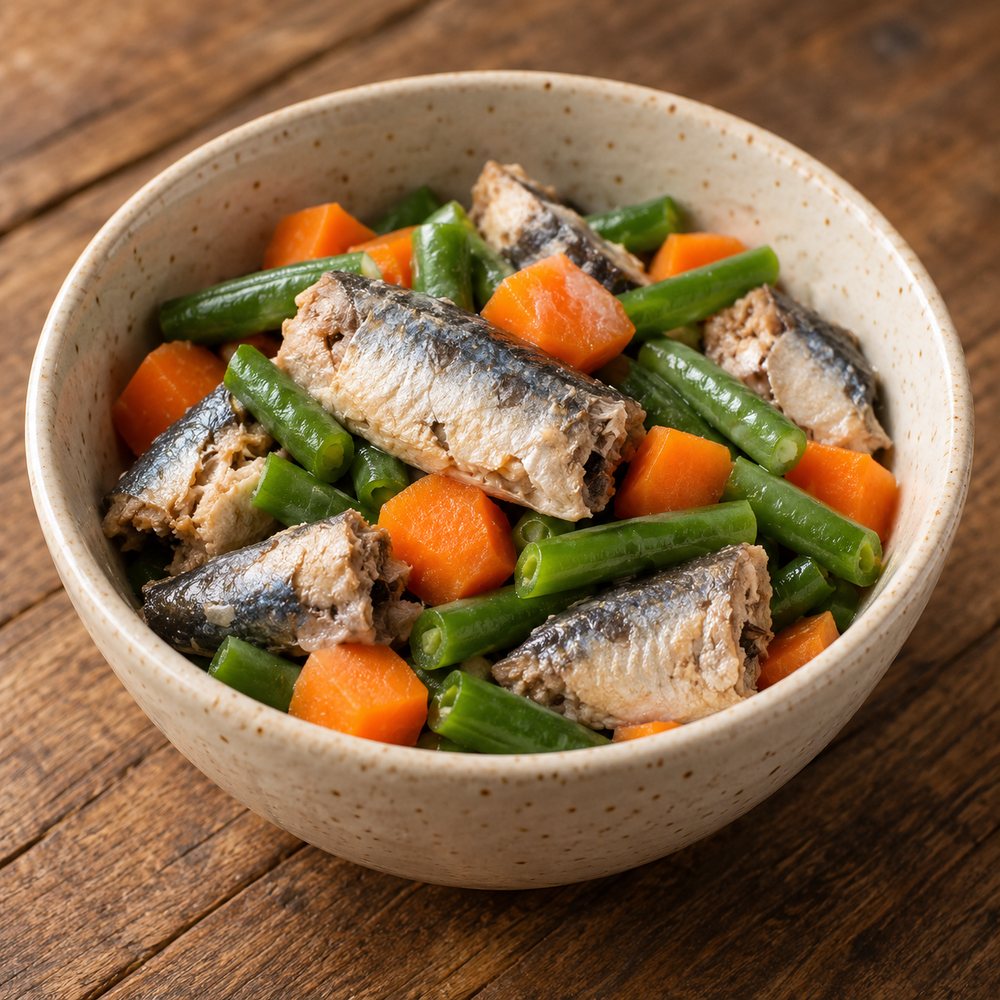
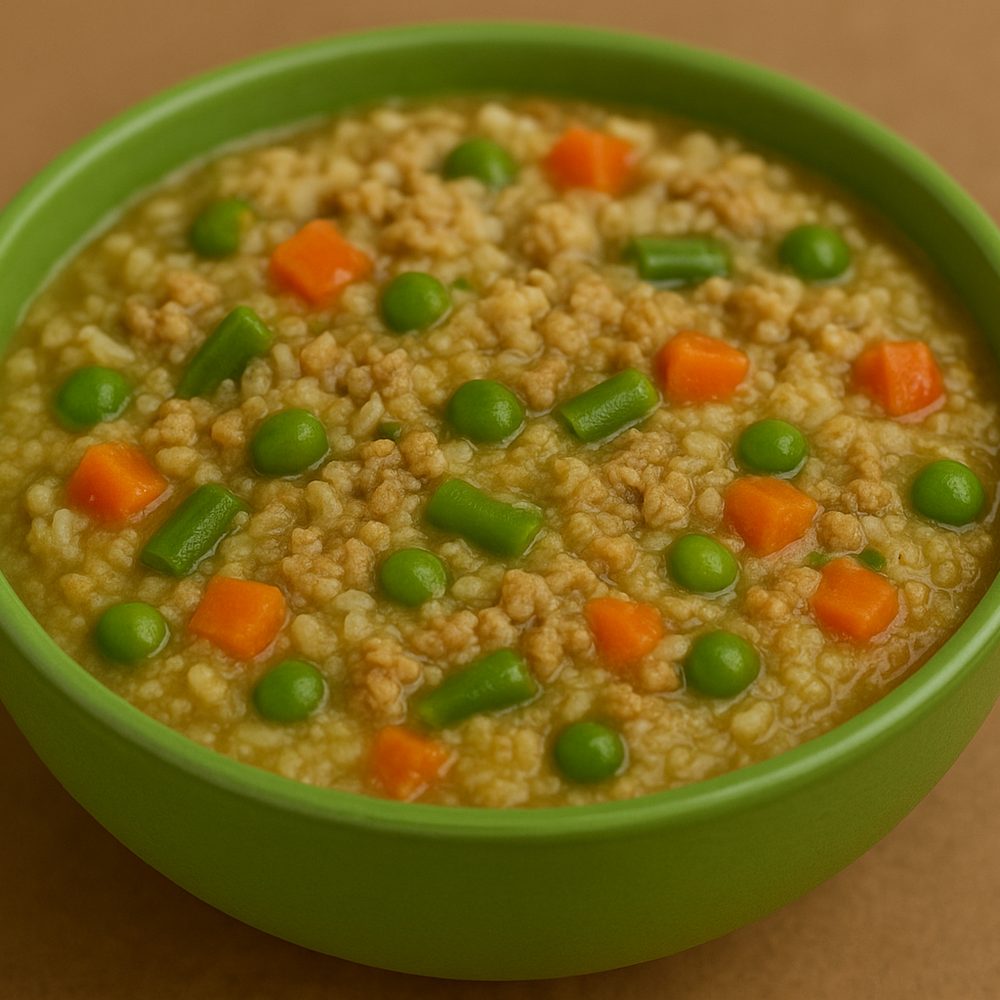
If you would like help with cold-weather meals, a few of our dishes fit the season well. The Mutton Bowl is a hearty red-meat bowl of slow-cooked mutton with rice, carrot, beans, peas and pumpkin, a nice protein change for a dog who loves winter walks. For a dog whose activity has dropped, the Fish & veggie bowl is light and high in protein, with no salt, oil or spices. The Chicken Keema Mix is soft and easy for seniors on stiff mornings, and our Fresh Chicken Broth, simmered with no salt, onion or garlic, can be warmed and poured over any meal to coax a slow eater and add water.
When to call your vet
Winter itself should not make a healthy dog lose interest in food. Call your vet if you notice:
- Your dog skips meals for more than a day, or a puppy or senior misses even one or two.
- Weight loss you cannot explain, or a steady gain despite smaller portions.
- Vomiting, diarrhoea, or a painful, hunched belly after a rich festive meal.
- Drinking much more or much less than usual, or very dark urine.
Questions about winter diet for dogs
Should I give my dog more food in winter in Bangalore?
Usually not. Bangalore winters are mild and most pet dogs live indoors, so their energy needs barely change. Only dogs who live outdoors, work hard or are underweight may need a small increase.
Is it OK to give my dog warm food?
Yes, lukewarm food is fine and often more appealing. Test it on your wrist; it should feel just warm, never hot, and stir microwaved food well to remove hot spots.
Can I add ghee to my dog's food in winter?
A small amount occasionally is fine for most healthy dogs, but daily spoonfuls add a lot of calories and fat. Dogs with a history of pancreatitis or weight problems should skip it.
Why is my dog drinking less water in winter?
Cooler weather reduces thirst, but dogs still lose water to the dry air. Add a little warm water or plain broth to meals, and call your vet if drinking drops sharply or your dog seems lethargic.
Sources
Cold-morning bowls from our kitchen
Hearty, light and soft options for the cool months, plus a plain broth to warm over any meal.


Main Meals For dogs & cats
Fish & veggie bowl
-

-

-

-

-

- +2
- Protein
- Healthy fats
- Fibre
- Vitamins
₹495 Small · 250 g

See the full menu or ask our nutritionist what suits your pet.
Was this helpful?
Share with a pet parent