
What's your cat's element? A Five Elements cat guide for beginners
Bold balcony patroller or sleepy food-lover? The Five Elements of Chinese veterinary medicine give you a fun, careful way to read your cat's temperament, with honest limits.
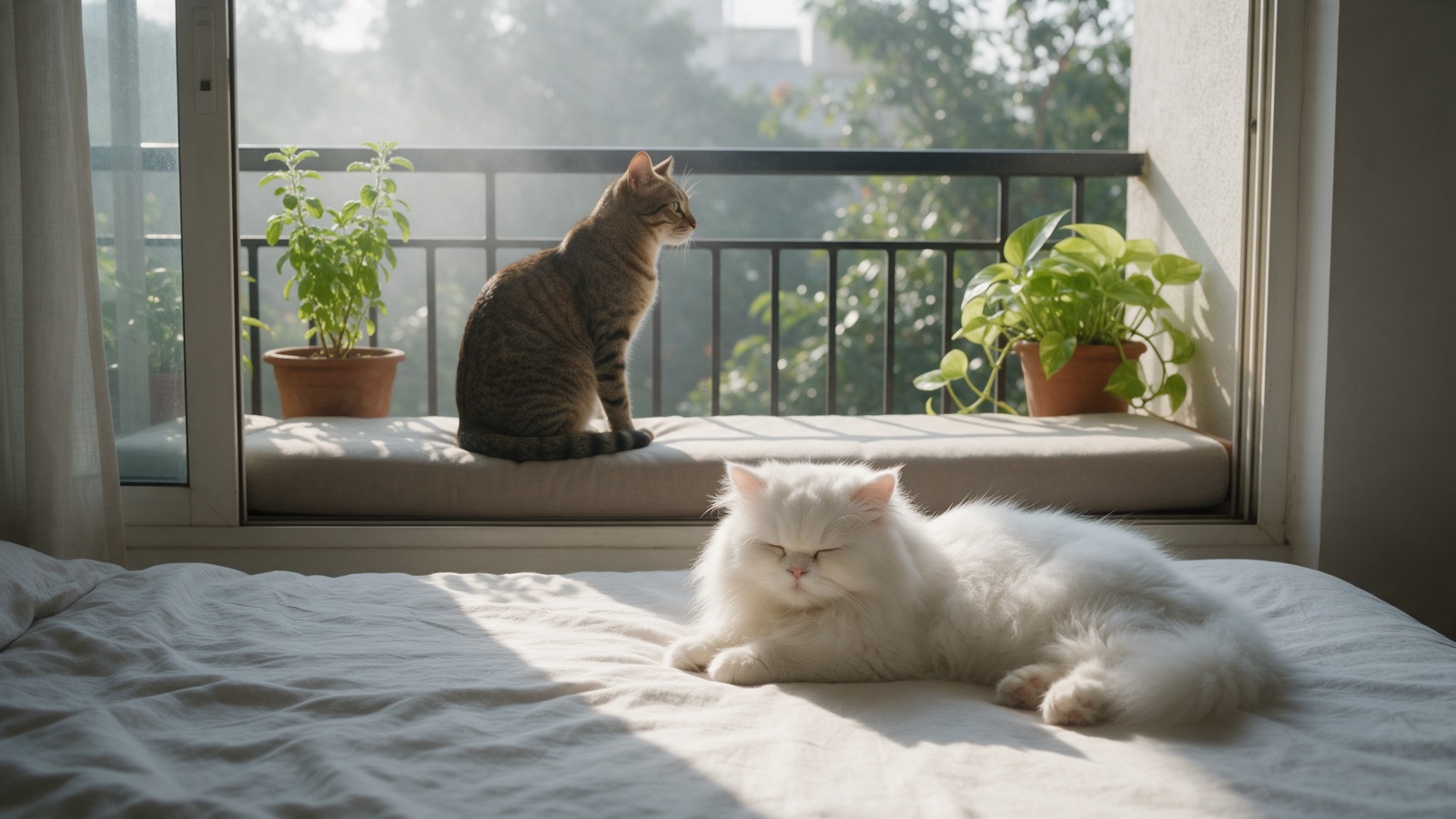
Two cats, one Bangalore flat. One is perched on the balcony grille at six in the morning, tail twitching at the crows on the next building. The other has not left the warm patch on the bed since the fog rolled in, and only moves when the fridge door opens. Same food, same home, two completely different animals. If you have ever wondered why, the Five Elements of traditional Chinese veterinary medicine (TCVM) offer a surprisingly handy way to describe it.
In short, the Five Elements cat framework sorts feline temperament and body tendencies into five types: Wood, Fire, Earth, Metal and Water. Each type is linked with certain organ systems, a season, typical strengths and typical weak spots. Knowing your cat's likely element helps you notice small changes early and choose play and food that suit them. It is a way of observing, not a diagnosis.
Same flat, same food, two completely different cats. The Five Elements help explain why.
Where the Five Elements idea comes from
TCVM adapts the old Chinese medical system for animals. It sees health as balance, and illness as something tipping it: too much heat, too much damp, too little moisture. The Five Elements are one of its main maps. Each element feeds the next in a cycle (Wood feeds Fire, Fire makes Earth, Earth holds Metal, Metal gathers Water, Water nourishes Wood) and each also keeps another in check.
For pet parents, the best-known introduction is Dr Cheryl Schwartz's Four Paws, Five Directions, a vet's guide to Chinese medicine for cats and dogs. We ran a dog series on this blog earlier in the year, starting with What's your dog's element?. Cats deserve their own version: they are not small dogs, and they are very good at hiding when they feel unwell.
An honest word before you start
The Five Elements is a traditional framework for noticing temperament and tendencies. The scientific evidence for typing animals this way is limited, no blood test will show you an element, and it does not replace a proper examination. Treat it as a structured way of paying attention. If you see anything that looks like illness, your vet comes first, and if you want the TCVM view as well, look for a vet with formal TCVM training rather than trying herbs or home remedies yourself.
Most cats are also a blend, say mostly Earth with a streak of Fire.
Treat the Five Elements as a structured way of paying attention, not as a diagnosis.
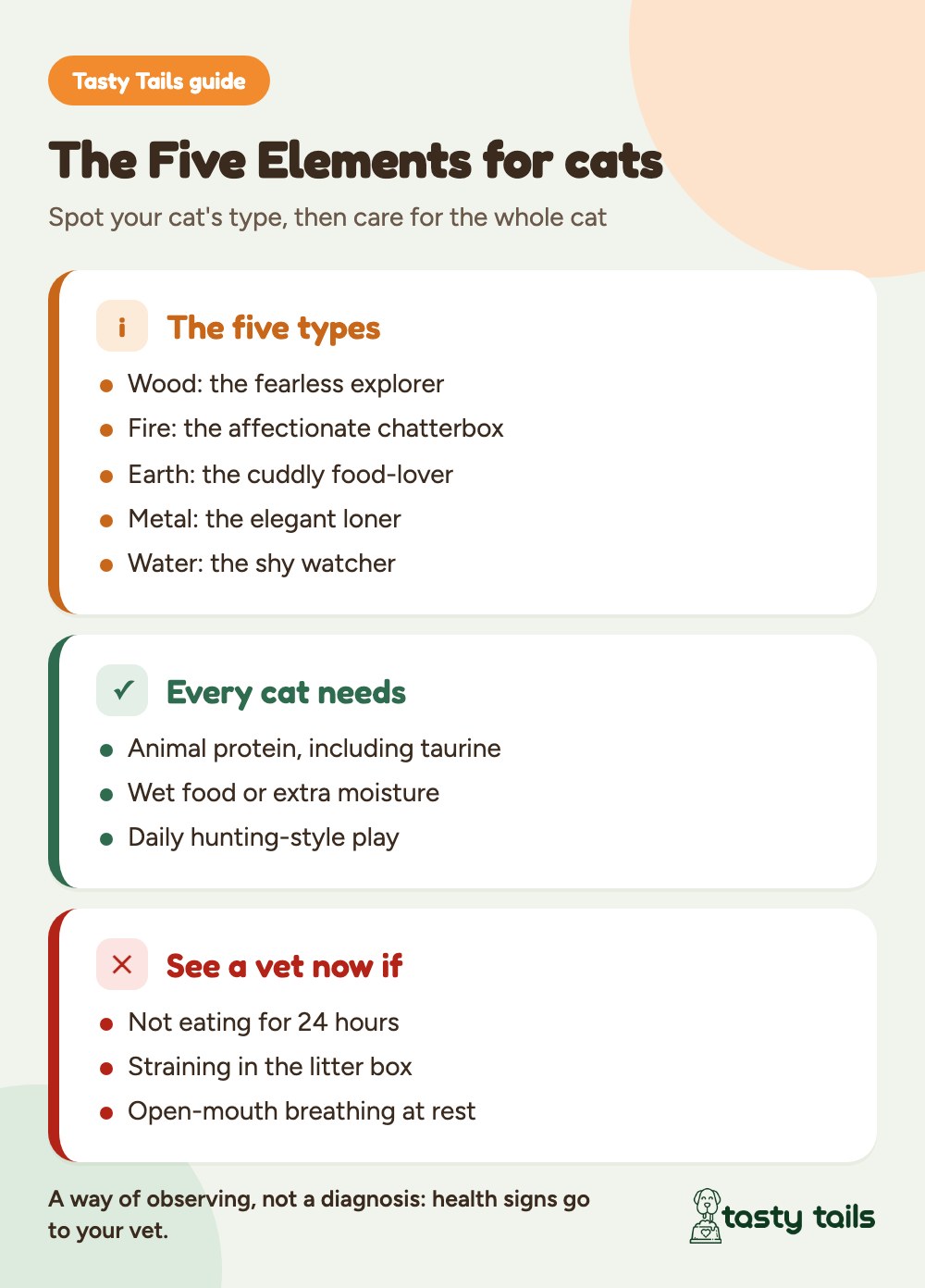
The Five Elements cat types at a glance
- Wood, the fearless explorer: confident, curious, territorial and quick to swat. Linked with the liver and gallbladder, eyes, tendons and spring. Watch for frustration, eye troubles and marking.
- Fire, the affectionate chatterbox: social, vocal, follows you room to room. Linked with the heart and small intestine, tongue and summer. Watch for overexcitement, restlessness, heat and heart checks.
- Earth, the cuddly food-lover: easy-going lap cat and kitchen supervisor. Linked with the spleen and stomach, mouth, muscles and late summer. Watch for weight gain, soft stools and worry.
- Metal, the elegant loner: tidy, reserved, fussy about routine and litter. Linked with the lungs and large intestine, skin and coat, nose and autumn. Watch for a dry coat, hairballs, coughing and constipation.
- Water, the shy watcher: cautious, hides from guests, bonds deeply with one person. Linked with the kidneys and bladder, bones, ears and winter. Watch for fearfulness, urinary troubles and ageing kidneys.
The Wood, Fire, Earth, Metal and Water cat posts follow over the coming weeks, one element at a time, each with a checklist, health tendencies and food and play ideas.
How to work out your cat's element
Give it two weeks of quiet watching rather than a quick quiz. These questions help:
- The doorbell rings. Does your cat stride up to inspect the delivery person (Wood or Fire), carry on napping (Earth), watch from a distance with disapproval (Metal) or vanish under the bed for an hour (Water)?
- A new cardboard box arrives. Who claims it first, and how fast? Wood cats are usually inside before you have finished opening it.
- Mealtime. Is food the highlight of the day (Earth), something to eat fast and get back to patrolling (Wood), or something to be served exactly on time in exactly the same bowl (Metal)?
- Affection. A cat who climbs onto your laptop to chat is showing Fire. One who sits near you but not on you is often Metal or Water.
- Warm or cool spots. In TCVM, a cat who seeks the sunny window and the warm laptop even on mild days may run cold, while one stretched out on cool floor tiles may run warm. Don't over-read it in a Bangalore December, when most cats chase the sun.
Kittens often look Wood or Fire simply because they are young and bold, and many older cats drift towards Water. Read your cat as an adult in a settled home if you can. Our post on mixed elements, seasons and life stages was written for dogs, but the same thinking applies to cats.
What the elements mean for your cat's food
Whatever the element, feline nutrition rules come first. Cats are obligate carnivores: they need animal protein, plus nutrients such as taurine that they cannot make enough of themselves. A long-term taurine shortage can damage the heart and eyes, which is why a cat cannot share a dog's dal and rice bowl or go vegetarian. Cats also have a weak thirst drive, so wet food, or fresh food with plenty of moisture, helps keep the bladder and kidneys happy. Onion, garlic and chives are toxic to cats even in small amounts of gravy, and most adult cats do not digest milk well. Our list of foods dogs and cats should never eat covers the rest of the Indian kitchen, and fresh food for cats explains how a fresh diet for a cat differs from one for a dog.
The TCVM layer sits on top of that. The tradition describes foods as warming, neutral or cooling: chicken and mutton are usually called warming, fish is generally considered cooling, and many vegetables lean cool. A cat that seems to run hot and restless might, in the tradition, do better with more cooling proteins in the rotation, while a thin, chilly senior might suit warmer ones. Any change belongs inside a complete, balanced cat diet, made slowly, with your vet in the loop.
The Five Elements in everyday Indian homes
Patterns we often hear about from cat parents here:
- The adopted street cat. Many rescued Indies start out Water, wary and watchful, then show a bolder Wood side once they trust their new home and realise the balcony is theirs.
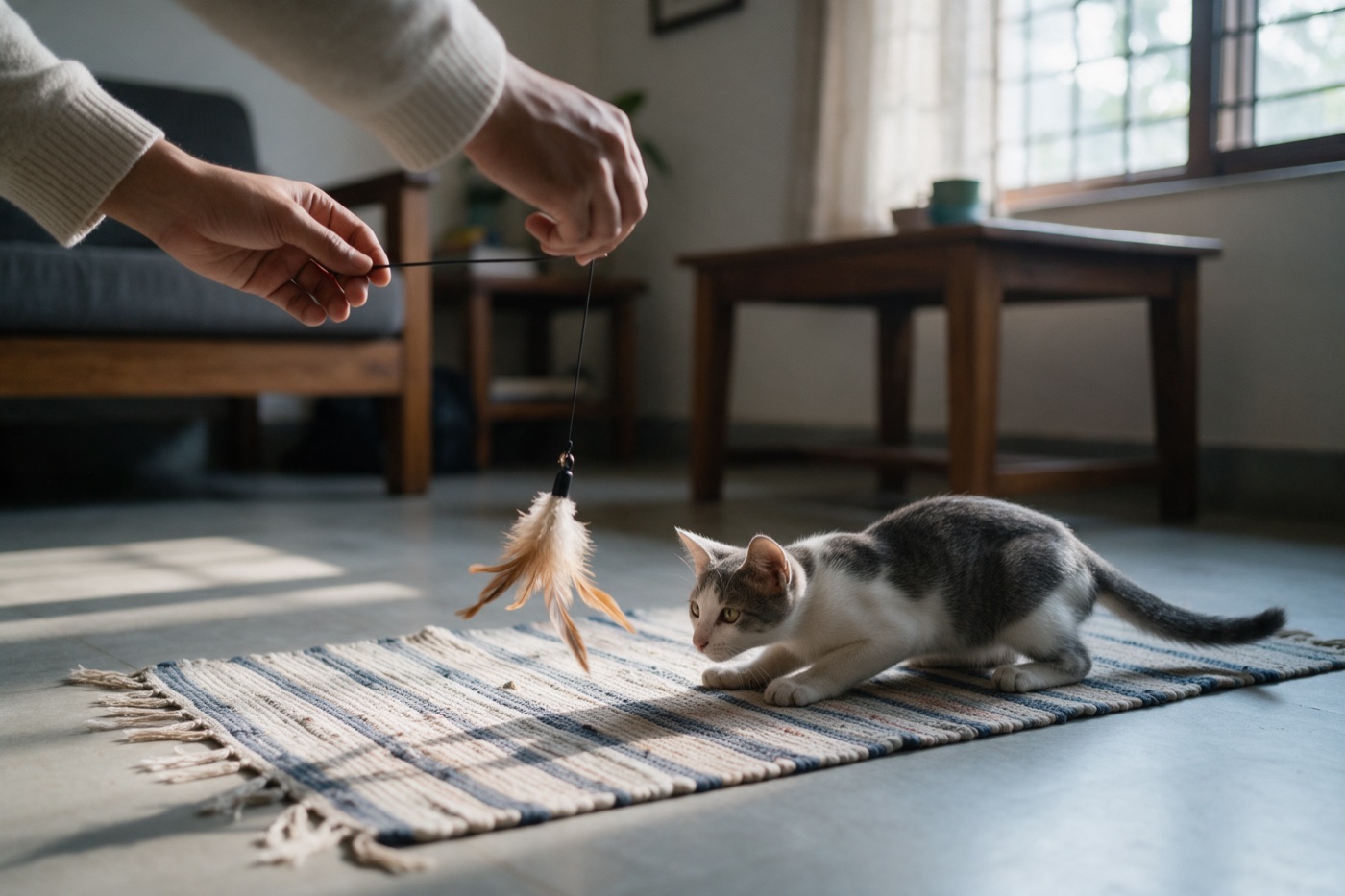
- The flat cat. Indoor cats in apartments have less to hunt, so a Wood or Fire cat with no outlet can turn that energy on ankles, curtains and the pet parent's sleep. Daily play matters for every element.
- The festival season. Crackers, guests and puja smoke are hardest on Water and Metal cats.
Toppers and treats from our kitchen
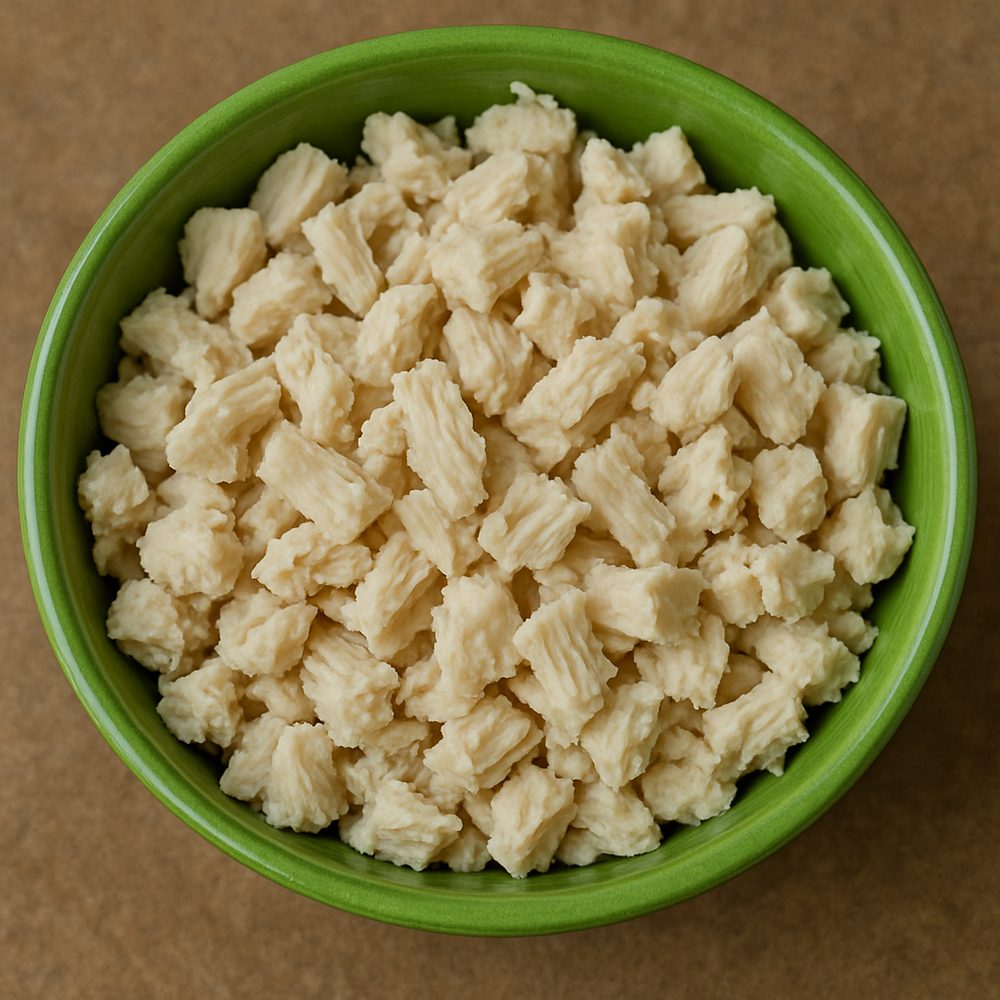
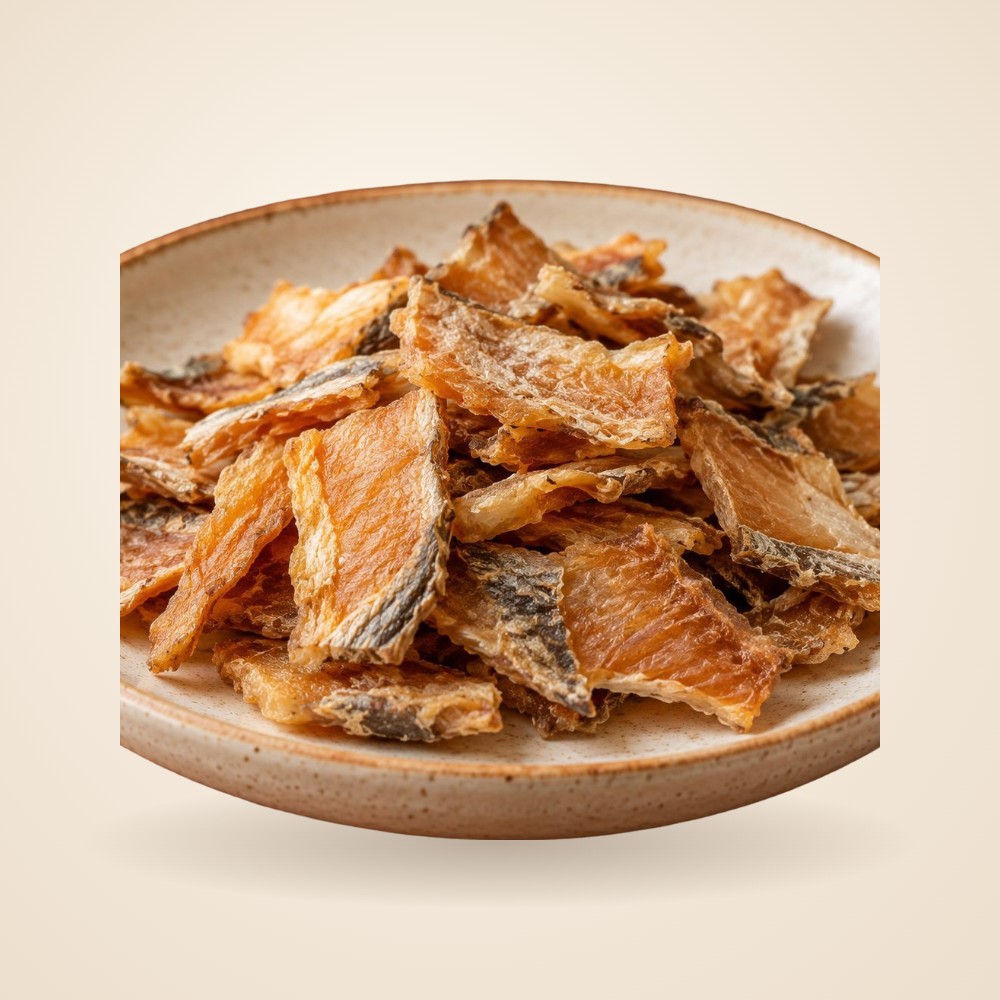
A few of our plain proteins work well as cat toppers or treats alongside a complete cat food. Boiled Chicken (Boneless) is simple animal protein that most cats love. Fresh Chicken Broth is simmered with no salt, onion or garlic, and a spoon over a meal adds moisture for cats who drink little. Fish Bites are a single-ingredient fish treat. Keep extras to about a tenth of the day's food so the main diet stays balanced.
When to skip the theory and see a vet
Cats hide pain well, so some signs need a vet the same day, whatever element you think your cat is:
- Not eating for 24 hours, especially in an overweight cat, as this can trigger a serious liver condition
- Straining in the litter box or passing little or no urine, especially in male cats
- Open-mouth breathing or panting at rest
- Repeated vomiting, sudden weakness, hiding with lethargy, or yellow or very pale gums
If you suspect your cat has eaten something toxic, call your nearest 24-hour vet or the ASPCA Animal Poison Control Center straight away.
Questions about the Five Elements for cats
Can a cat be more than one element?
Yes, and most are. Usually one element is strongest with a second one showing through, and the balance can shift with age, season or big changes at home.
Does a cat's element change as it ages?
The core temperament tends to stay, but the tradition expects older cats to show more Water traits, such as caution and kidney and bladder concerns.
Should I change my cat's food based on its element?
Only within a complete and balanced cat diet, and gradually. Element ideas can guide which proteins you rotate, but taurine, enough animal protein and plenty of moisture matter for every cat. Talk to your vet before big changes, especially if your cat has a health condition.
Is TCVM a replacement for my regular vet?
No. A vet with TCVM training uses it alongside examination and tests, never instead of them. Any health sign still goes to the vet.
Sources
- Cornell Feline Health Center: Feeding your cat
- Cornell Feline Health Center: Hydration
- VCA Animal Hospitals: Taurine in cats
- ASPCA: People foods to avoid feeding your pets
- Merck Veterinary Manual: Feline hepatic lipidosis
- Cheryl Schwartz, Four Paws, Five Directions: A Guide to Chinese Medicine for Cats and Dogs (Celestial Arts), further reading
Simple cat toppers from our kitchen
Plain proteins and broth to add to a complete cat diet, as a topper or a treat.
Main Meals For dogs & cats
Boiled Chicken (Boneless)

- Protein
- Healthy fats
₹400 Small · 250 g 3 sizes


See the full menu or ask our nutritionist what suits your pet.
Was this helpful?
Share with a pet parent