Fresh food for cats: what's different
Cats are not small dogs, especially at dinner time. What they need from fresh food (taurine, protein, water), and how to switch a cat safely.
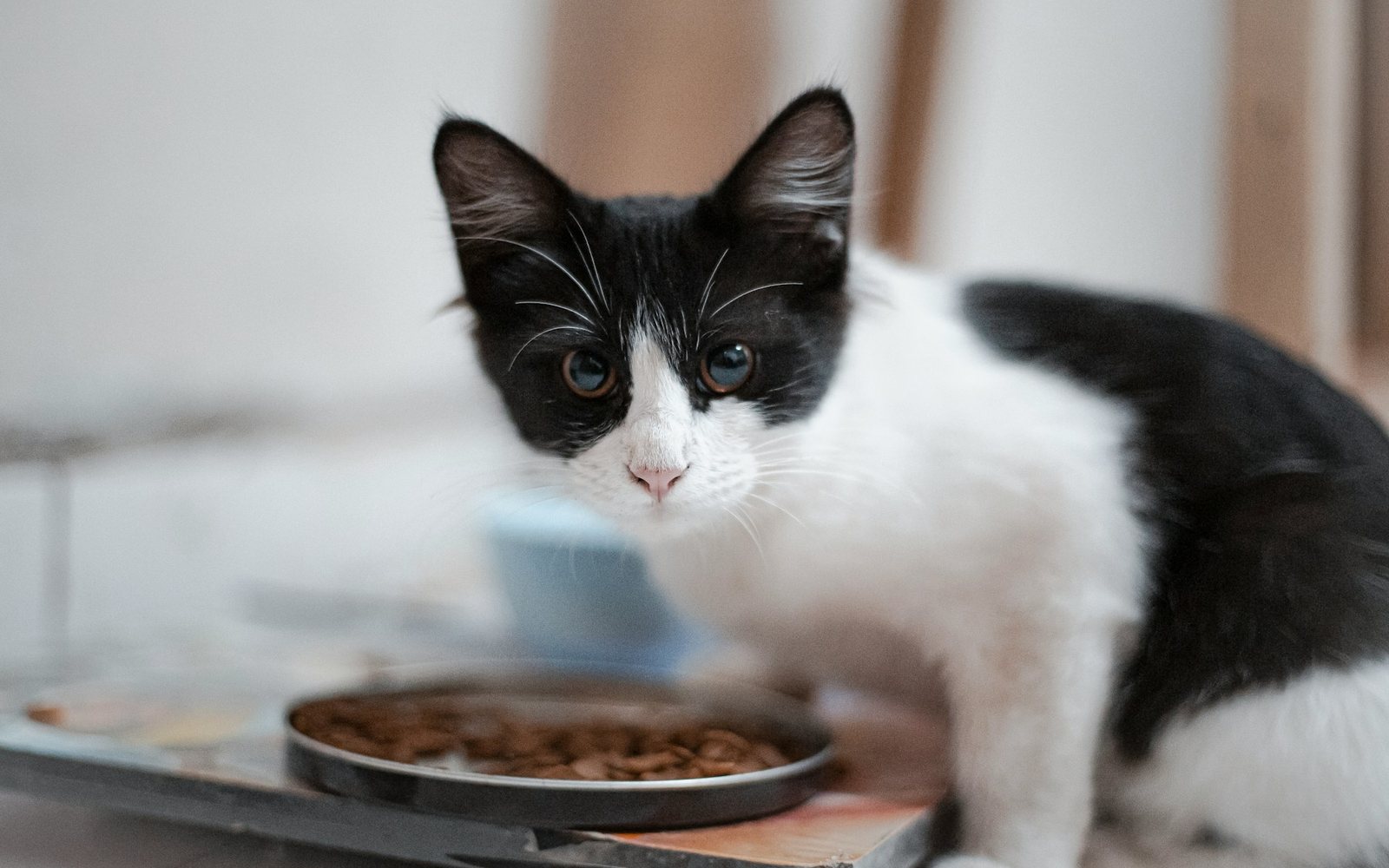
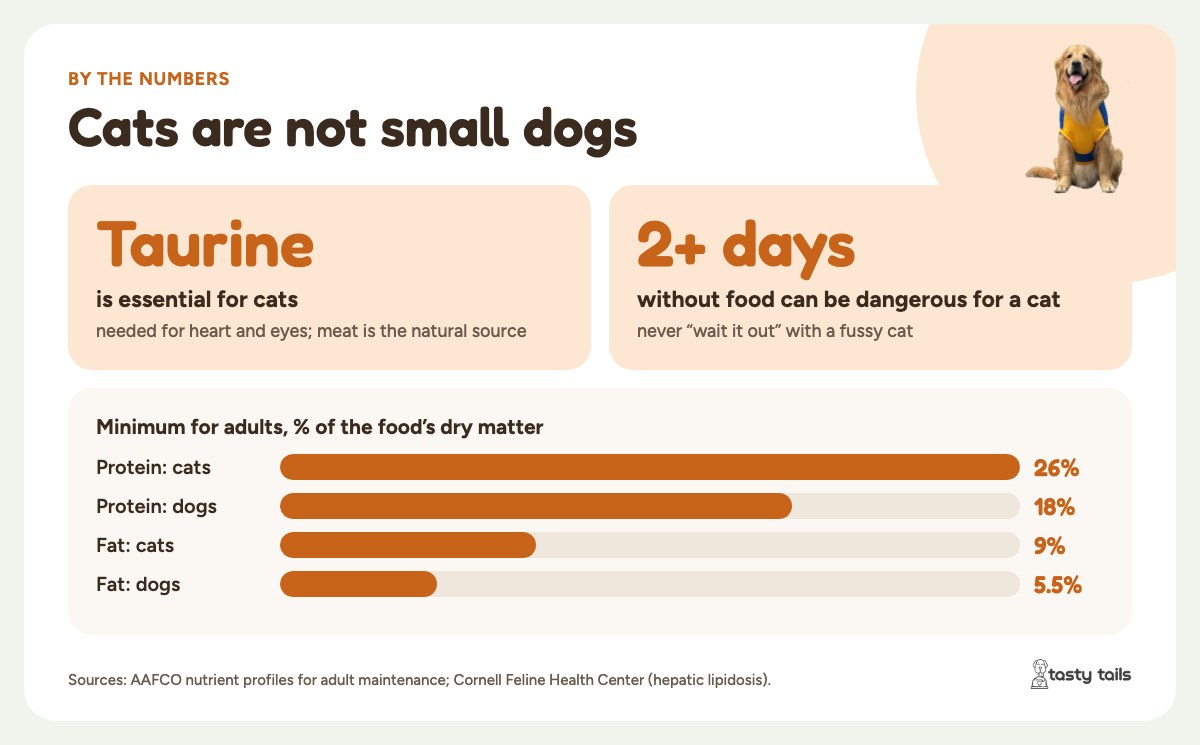
If you share your home with a cat and a dog, you have probably noticed they approach dinner very differently. The differences go deeper than manners. Cats are obligate carnivores: their bodies are built to run on meat, and they need some nutrients that dogs can make for themselves.
A cat is not a small dog, especially at dinner time.
What cats need that dogs don't
Taurine
An amino acid found in meat, fish and eggs. Dogs can make most of the taurine they need; cats can't make enough. Without it, cats can develop a serious heart disease (dilated cardiomyopathy), blindness and reproductive problems. This was discovered in the 1980s, and it is why every complete cat food is supplemented with taurine. Some taurine is lost when meat is cooked, especially into cooking water that gets thrown away.
More protein
Cats use protein for energy all the time and can't turn this down when protein is scarce, so they need much more of it than dogs do.
Ready-made vitamin A and arachidonic acid
Dogs can make vitamin A from the beta-carotene in carrots and pumpkin. Cats can't: they need it ready-made, from liver, eggs or fish oils. The same goes for arachidonic acid, a fat found in animal tissue.
This is why dog food isn't suitable as a cat's main diet, and why a cat can't be vegetarian.
Water: the quiet benefit of fresh food
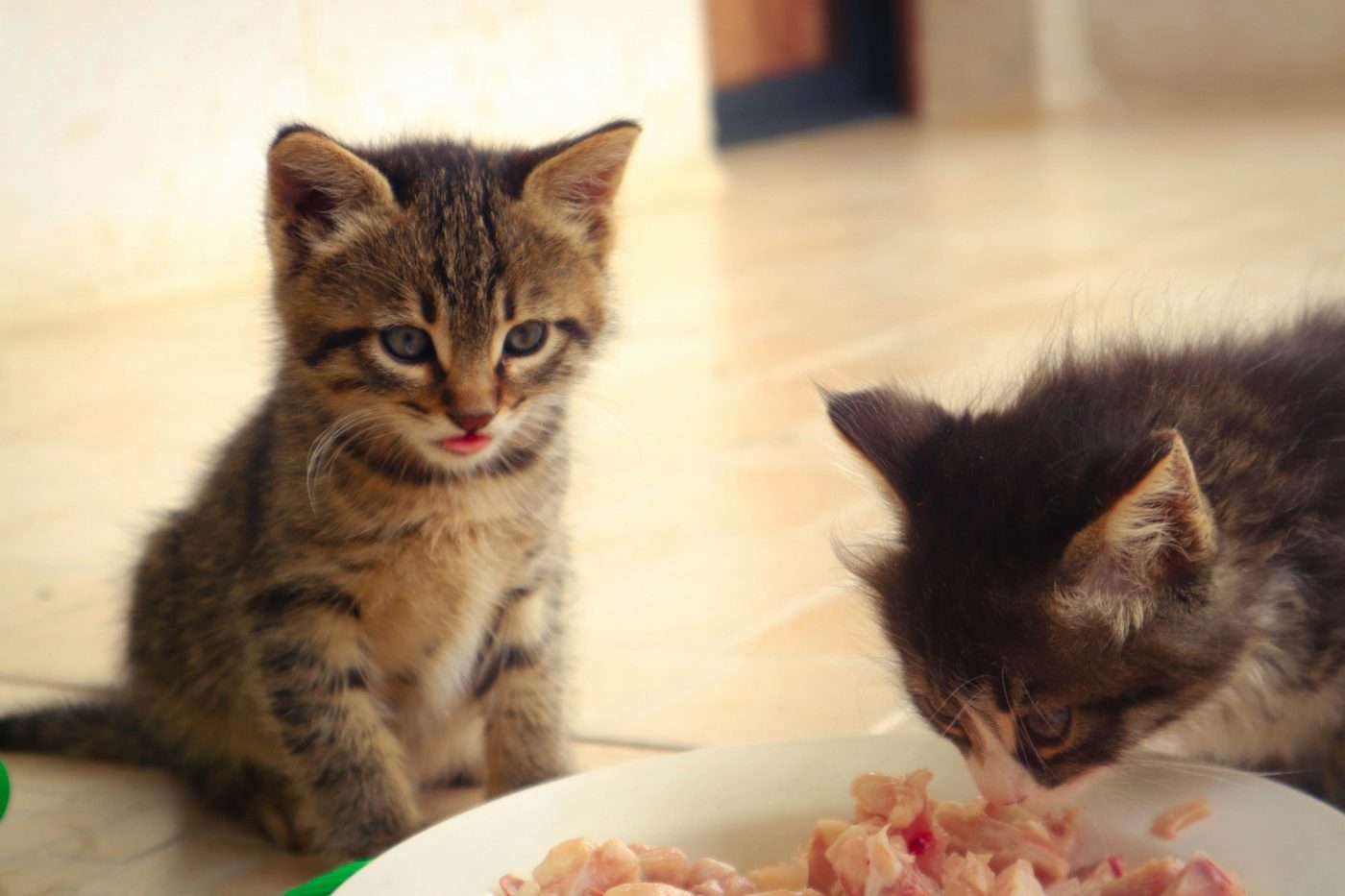
Cats descend from desert animals and have a weak thirst drive: they are designed to get most of their water from prey. A cat eating only dry food (around 10% water) often drinks less than it needs, which is linked to urinary problems. Fresh and wet foods are around 70 to 80% water, so they help cats stay hydrated without trying.
How much does a cat eat?
Much less than you might think. An average 4 kg indoor, neutered adult cat needs roughly 200 to 240 kcal a day. That is the whole day's food, treats included, so a few bites of chicken from your plate quickly add up.
- Cats naturally eat several small meals. Two to four portions a day suits most.
- Serve fresh food slightly warm, around body temperature. Cats often refuse food straight from the fridge.
- Use a shallow, wide bowl; many cats dislike their whiskers touching the sides.
Switching a cat: slow and never hungry
Cats can be wary of new food, and switching too fast often leads to a flat refusal. Plan for 10 to 14 days or more, mixing in a little more of the new food every couple of days.
Never let a cat go without food to make it try something new. A cat that eats nothing for a day or two, especially an overweight one, can develop hepatic lipidosis (fatty liver disease), which is life-threatening. If your cat stops eating for more than 24 hours, call your vet.
Home-cooked food for cats: be careful
Studies that analysed home-made cat recipes, including ones from books and websites, found that almost all of them were missing essential nutrients. Plain cooked chicken and rice, for example, is far too low in calcium, taurine, vitamins and essential fats to feed on its own. If you want to feed your cat home-cooked food as its main diet, the recipe needs to be formulated by a veterinary nutritionist and include the right supplements.
A note on fish
Most cats love fish, and cooked fish is a fine part of the diet. But a diet of mostly fish can cause problems: too much oily fish without enough vitamin E can lead to painful inflammation of body fat, and raw fish contains an enzyme that destroys thiamine (vitamin B1). Variety, and cooking, keep things safe.
Where fresh food fits
For most cats, fresh food works best as part of a complete, balanced diet: as a topper on a complete food, or as a formulated fresh diet. If you'd like to add fresh food to your cat's bowl, tell us about your cat first. We'll ask about their age, weight and health, and tell you honestly which of our meals suit them and how much to use.
Keep reading: foods cats and dogs should never eat, and safe homemade treats. For a complete plan for your cat, talk to our nutritionist.
Questions pet parents ask
Can cats eat dog food?
Not as their regular diet. Dog food is not made to give cats the extra protein, taurine and other nutrients they need. A bite stolen from the dog bowl is fine.
Is fish good for cats every day?
Fish can be part of a balanced diet, but a fish-only diet is not complete. Raw fish also contains an enzyme that destroys thiamine (vitamin B1), so fish should be cooked.
How do I get my cat to drink more water?
Moist food is the easiest way. Fresh water in several places, wide shallow bowls and a pet water fountain also help many cats drink more.
Sources
- WSAVA Global Nutrition Guidelines
- FEDIAF Nutritional Guidelines, cat nutrient recommendations
- AAFCO: Understanding pet food and the cat food nutrient profiles
- National Research Council (2006): Nutrient Requirements of Dogs and Cats
- Pion P.D., Kittleson M.D., Rogers Q.R., Morris J.G. (1987). Myocardial failure in cats associated with low plasma taurine. Science 237: 764–768.
- Wilson S.A., Villaverde C., Fascetti A.J., Larsen J.A. (2019). Evaluation of the nutritional adequacy of recipes for home-prepared maintenance diets for cats. Journal of the American Veterinary Medical Association 254(10): 1172–1179.
Simple toppers and treats for cats
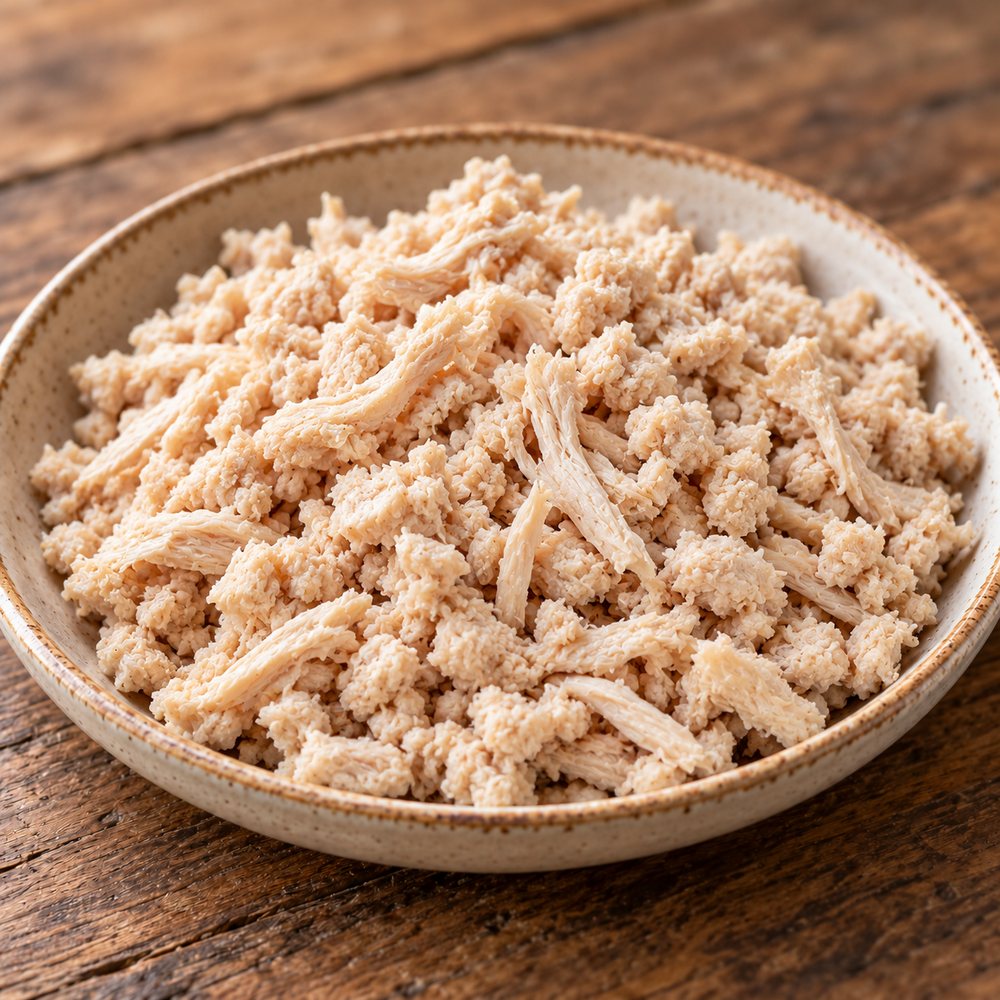
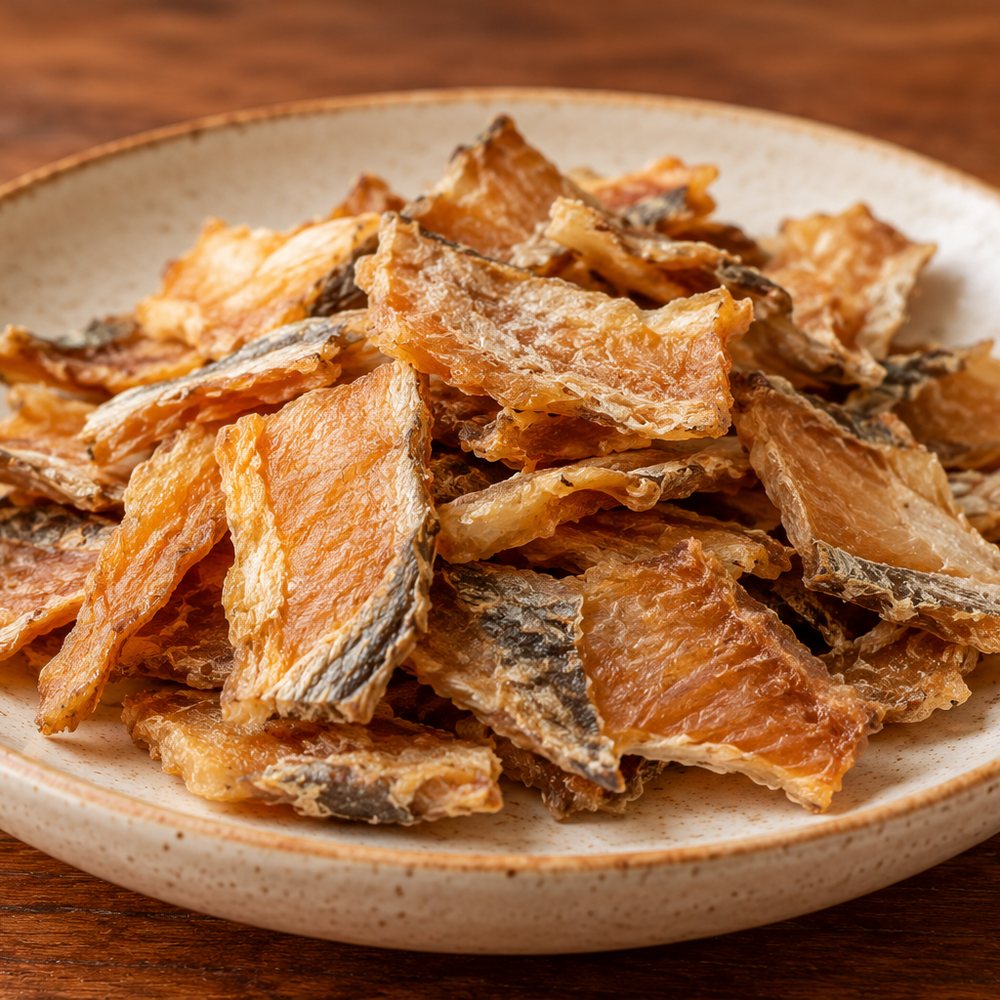
Plain, single-protein foods that many cat parents use as toppers or treats. They are not a complete diet for a cat on their own: ask our nutritionist for a full plan.





See the full menu or ask our nutritionist what suits your pet.
Was this helpful?
Share with a pet parent