Diwali with cats: hiding spots, diyas, stress signs and gentle food
Cats rarely panic loudly like dogs do. They vanish, stop eating or go quiet. How to keep your cat safe and settled through the festival week, and the signs that need a vet.
Most Diwali advice is written for dogs, because dogs make their fear obvious. Cats tend to do the opposite. They disappear under the bed on Choti Diwali and you see a pair of eyes and not much else for three days. It is easy to assume a hidden cat is a fine cat. Often it is coping, but sometimes the stress shows up later as a cat that stops eating or has trouble in the litter tray.
With crackers still going off in bursts this week, and Bhai Dooj bringing another round of guests, here is how to keep your cat safe, comfortable and eating.
Cats do not panic loudly; they vanish. A hidden cat is coping, as long as it is still eating.
Let your cat hide, and make hiding easy
Hiding is a cat's main coping strategy. It is a healthy response to noise, not a problem to fix. Your job is to offer good places to hide and then leave your cat alone in them.
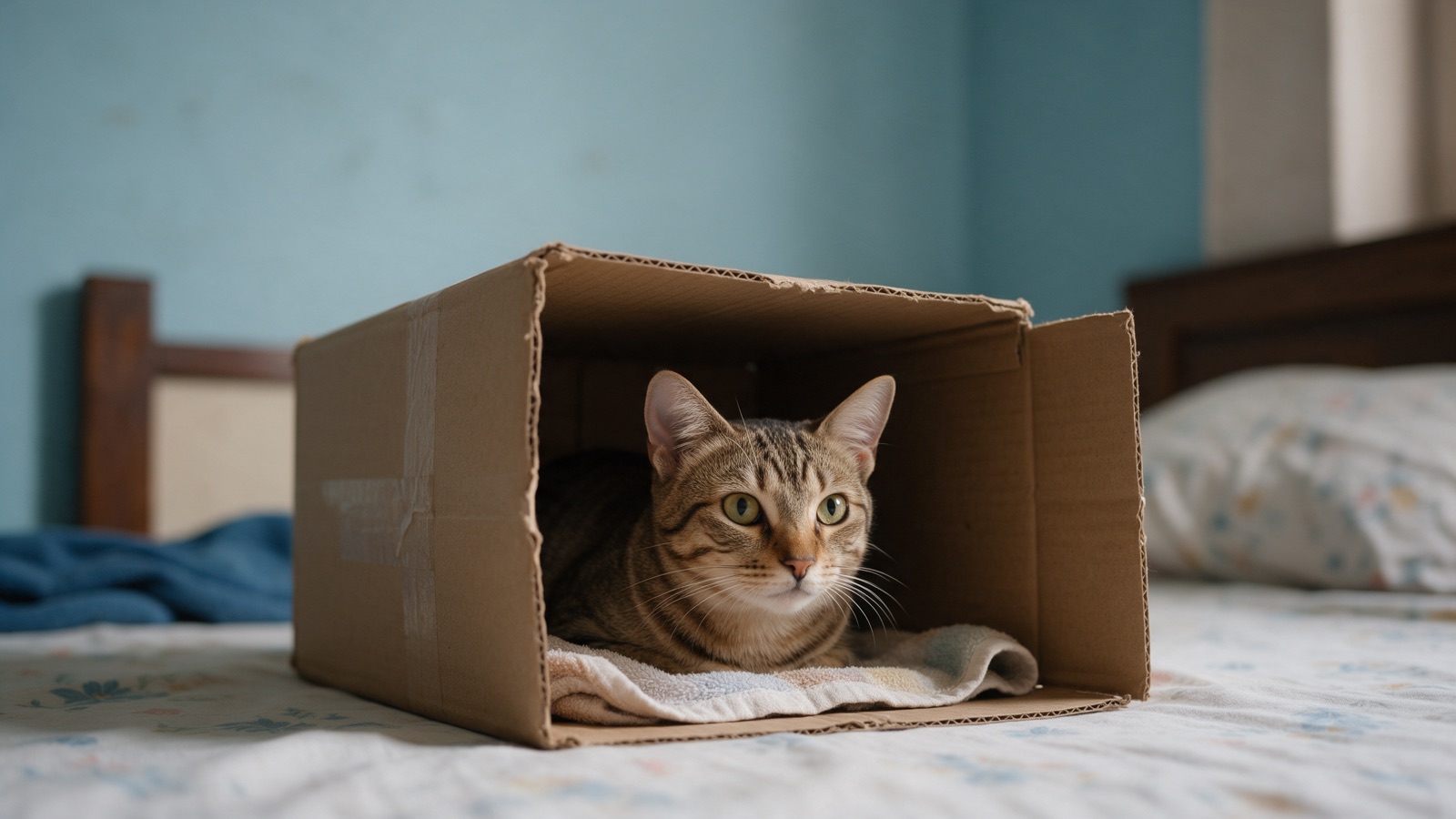
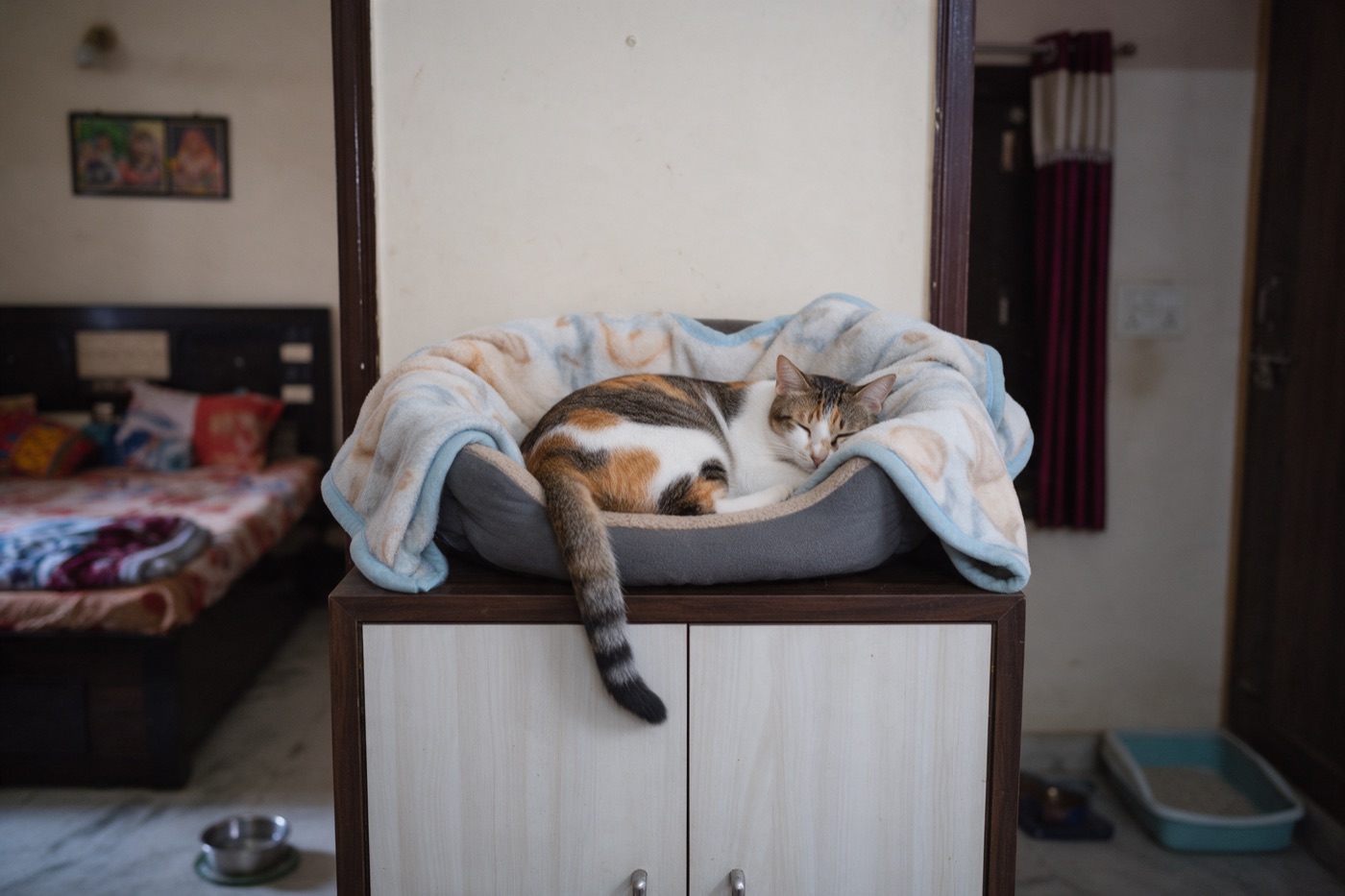
- Offer several options. A cardboard box on its side with a towel inside, the space under a bed, a covered cat bed, or the top of a wardrobe or bookshelf with a blanket. Many cats feel safest high up.
- Put essentials nearby. Food, water and a litter tray within a short dash of the hiding spot, so your cat does not have to cross a noisy room to reach them.
- Never drag a cat out. Pulling a frightened cat from under the bed teaches it that even its safe place is not safe, and you may get badly scratched or bitten. If you must check on your cat, look with a torch and talk softly.
- Do not hold a struggling cat during crackers. A panicking cat can injure you and itself, and may bolt for an open window.
- Keep the house routine steady. Same feeding times, same play times, same lights going on and off. Cats find predictability calming.
Indoors, with windows shut
If your cat usually goes out, keep it indoors from Choti Diwali until crackers have mostly stopped, usually a few nights after Diwali. Frightened cats run far and hide for days, and cats are injured by crackers every year, sometimes deliberately. Shut windows, especially in high-rise flats, and check balcony nets for gaps. Cats that would never normally jump can do so in a panic.
An ID collar with a quick-release clasp, and a microchip with your current details, help if your cat does get out. Our ID and microchip checklist is written for dogs but most of it applies to cats too.
If you feed community cats, put food out earlier in the day, before the noise starts, and leave a box or a covered crate in a sheltered corner where they can tuck in.
Diyas, candles, flowers and other festival hazards
Cats climb, jump and explore shelves, which puts them in the path of things dogs never reach.
- Diyas and candles. Cats walk across puja shelves and windowsills, brushing tails and whiskers over flames. Use LED diyas on any surface a cat can reach, and never leave a real flame alone in a room with a cat.
- Lilies. Lilies are often added to festive flower arrangements, and they are extremely toxic to cats. All parts, including the pollen and the water in the vase, can cause kidney failure. Keep lilies out of a home with cats entirely. If your cat has had any contact with a lily, see a vet immediately.
- Marigolds and other garlands are less dangerous but can upset a cat's stomach if chewed. Keep toran and garlands out of reach.
- Rangoli colours, paint and cleaning products. Cats groom everything off their paws and fur. Our Diwali home prep guide covers what to watch for.
- Incense, dhoop and camphor smoke can irritate cats' airways, especially cats with asthma. Burn less, ventilate well and keep your cat's room smoke-free.
- Ribbons, strings and gift wrap. Cats love to play with string, and swallowed string or tinsel can cause a serious gut blockage.
- Sweets and chocolate. Most cats are not interested in mithai, but some will lick ghee, cream or khoa. Keep boxes closed and out of reach.
Never leave a real flame alone in a room with a cat; use LED diyas within its reach.
Stress signs in cats
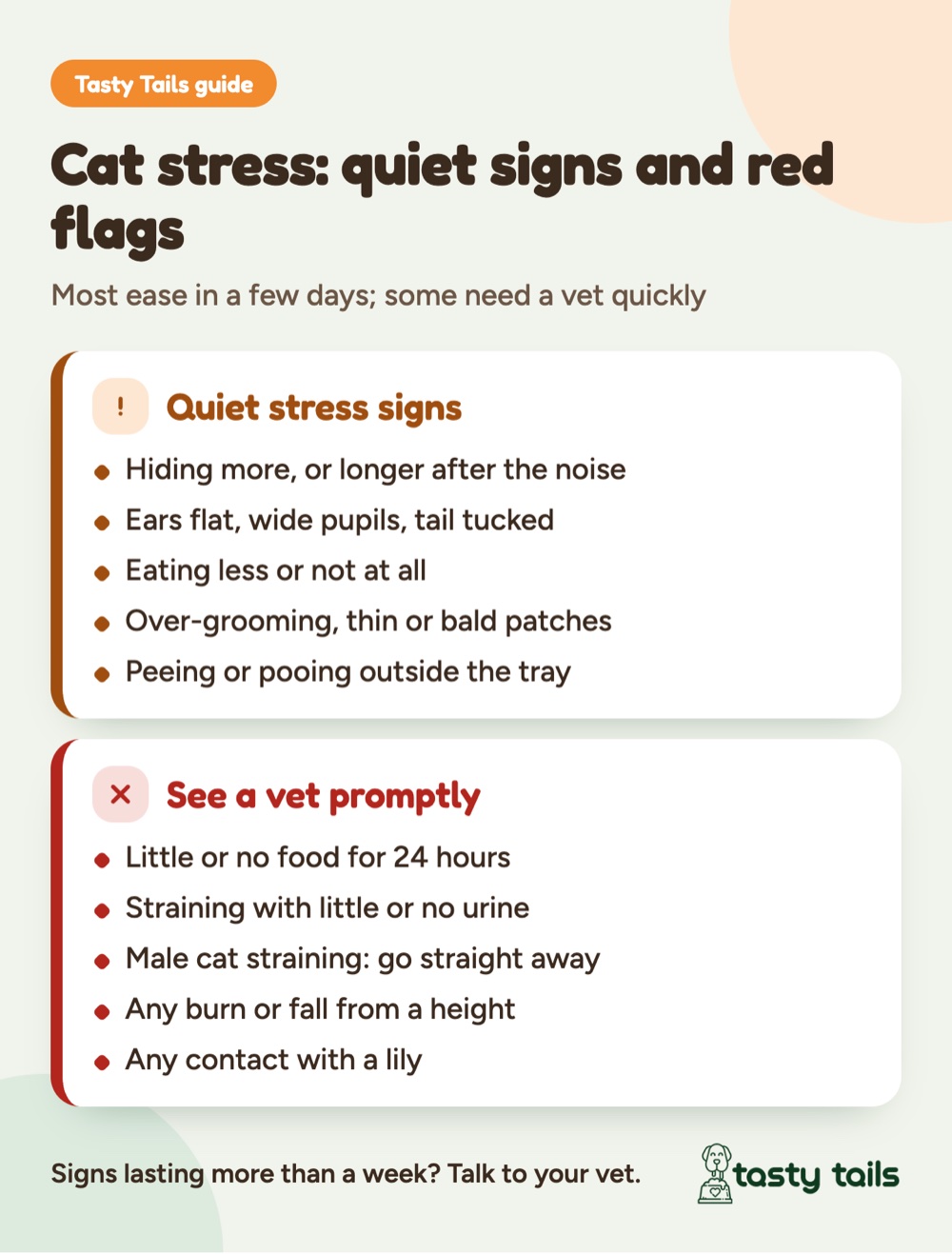
Cat stress is quiet. Watch for:
- Hiding much more than usual, or for longer after the noise stops.
- Crouching low, ears flat, wide pupils, tail tucked around the body.
- Eating less, or not at all.
- Over-grooming, sometimes leaving thin or bald patches.
- Peeing or pooing outside the litter tray.
- Hissing, swatting or hiding from family members.
- Restlessness at night, or excessive meowing.
Most of these ease within a few days once the festival is over. If they carry on for more than a week, or keep coming back, talk to your vet about your cat's stress and whether anything else is going on.
When a stressed cat needs a vet
Two situations need prompt attention.
- Not eating for more than a day. Cats should not go without food for long. A cat that stops eating, especially an overweight cat, can develop a serious liver condition called hepatic lipidosis. If your cat has eaten little or nothing for 24 hours, call your vet.
- Straining in the litter tray. Stress is linked to bladder inflammation in cats. Signs include frequent trips to the tray, passing only small amounts, crying while peeing, or blood in the urine. A male cat that is straining and producing little or no urine may have a blockage, which is an emergency. Go to a vet straight away, day or night.
Also see a vet for any burn, a cat that has fallen from a height, or any chance your cat has eaten something toxic. ASPCA Animal Poison Control or your nearest 24-hour vet can advise on poisonings.
Gentle food during a stressful week
The best food for a stressed cat is usually its normal food, served at normal times, in its usual place. This is not the week to switch brands or start a new diet.
- Keep the bowl close to the hiding spot for a few days, and away from the litter tray.
- Offer small, frequent meals if your cat is picking.
- Warm wet food slightly to body temperature. A stronger smell can tempt a cat whose appetite has dipped.
- A small plain topper can help. A spoon of unsalted chicken broth or a little plain boiled chicken over the usual food is often enough to get a cat eating again.
- Keep water fresh and easy to reach. Stress and dry food together can mean a cat drinks too little, which is hard on the bladder.
- Skip milk, mithai and festive leftovers. Many adult cats do not digest milk well, and rich or spiced food is not kind to a nervous stomach.
Remember that cats have very different nutritional needs from dogs. They need certain nutrients, such as taurine, that dog food and home-cooked chicken and rice do not reliably provide. Toppers and treats are extras. Our post on fresh food for cats explains why.
Plain extras from our kitchen
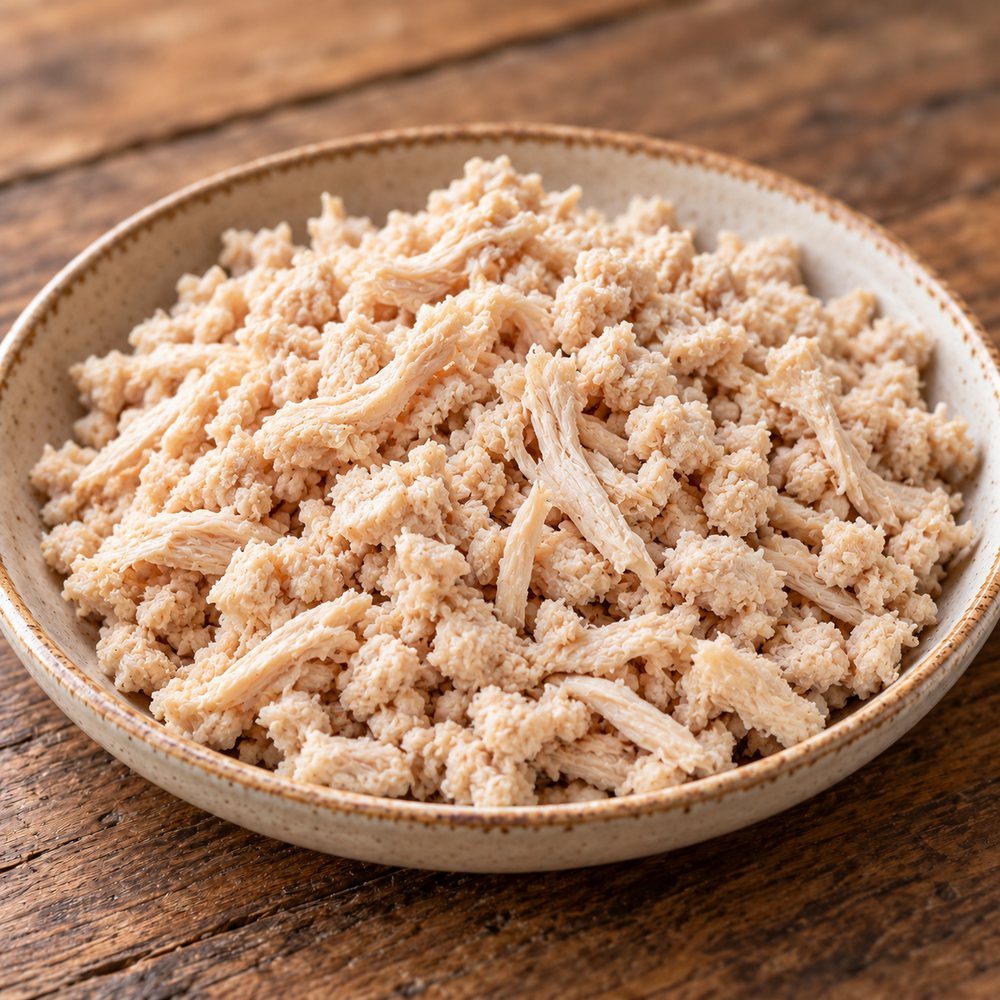
If your cat needs a little encouragement, our Fresh Chicken Broth is plain chicken broth with no salt, onion or garlic, and a spoonful over the usual food often does the trick. Boiled Chicken Keema is plain boiled chicken mince with nothing else added, so a pinch makes a gentle topper. And Fish Bites, a single-ingredient dehydrated fish treat, can be broken into tiny pieces to reward a cat that comes out to say hello. Keep all of these to small amounts so your cat's main diet stays balanced.
Questions about cats and Diwali
Should I take my cat out of its hiding place to comfort it?
No. Hiding is how cats cope, and pulling a cat out takes away its safe place. Make sure food, water and a litter tray are nearby, check gently from a distance, and let your cat come out when it is ready.
My cat has not eaten since Diwali. Should I worry?
If your cat has eaten little or nothing for 24 hours, call your vet. Cats, especially overweight ones, can develop serious liver problems if they stop eating for even a few days.
Are diyas dangerous for cats?
They can be. Cats jump onto shelves and windowsills and can burn their tails or whiskers or knock a diya over. Use LED diyas where your cat can reach, and never leave a real flame alone with a cat.
Can stress cause urinary problems in cats?
Yes, stress is linked to bladder inflammation in cats. Frequent trips to the tray, straining or blood in the urine need a vet, and a male cat passing little or no urine needs one straight away.
Sources
Small, plain extras for a stressed cat
Toppers and treats to tempt a cat back to the bowl. Use them in small amounts alongside a complete cat diet, not instead of it.




See the full menu or ask our nutritionist what suits your pet.
Was this helpful?
Share with a pet parent