Firecracker anxiety toolkit: safe room, wraps, sound masking, chews and when to ask your vet
Four days to Diwali. Here's every tool worth trying for a firecracker-scared dog, how to use each one properly, what the evidence says, and when it's time to talk to your vet about medication.
Diwali is on Sunday, and in most Bangalore neighbourhoods the crackers have already started. If you've been doing sound training, keep going gently. If you haven't, there's still a lot you can do in four days to make the noisy nights easier, and a clear point at which it's time to call your vet.
Our Diwali safety overview lists the basics. This post goes tool by tool: how to set each one up properly, what the evidence suggests, and who it's for. No single tool works for every dog, so most people do best with three or four used together.
You cannot muffle Diwali, but you can give a scared dog a dark, soft place to ride it out.
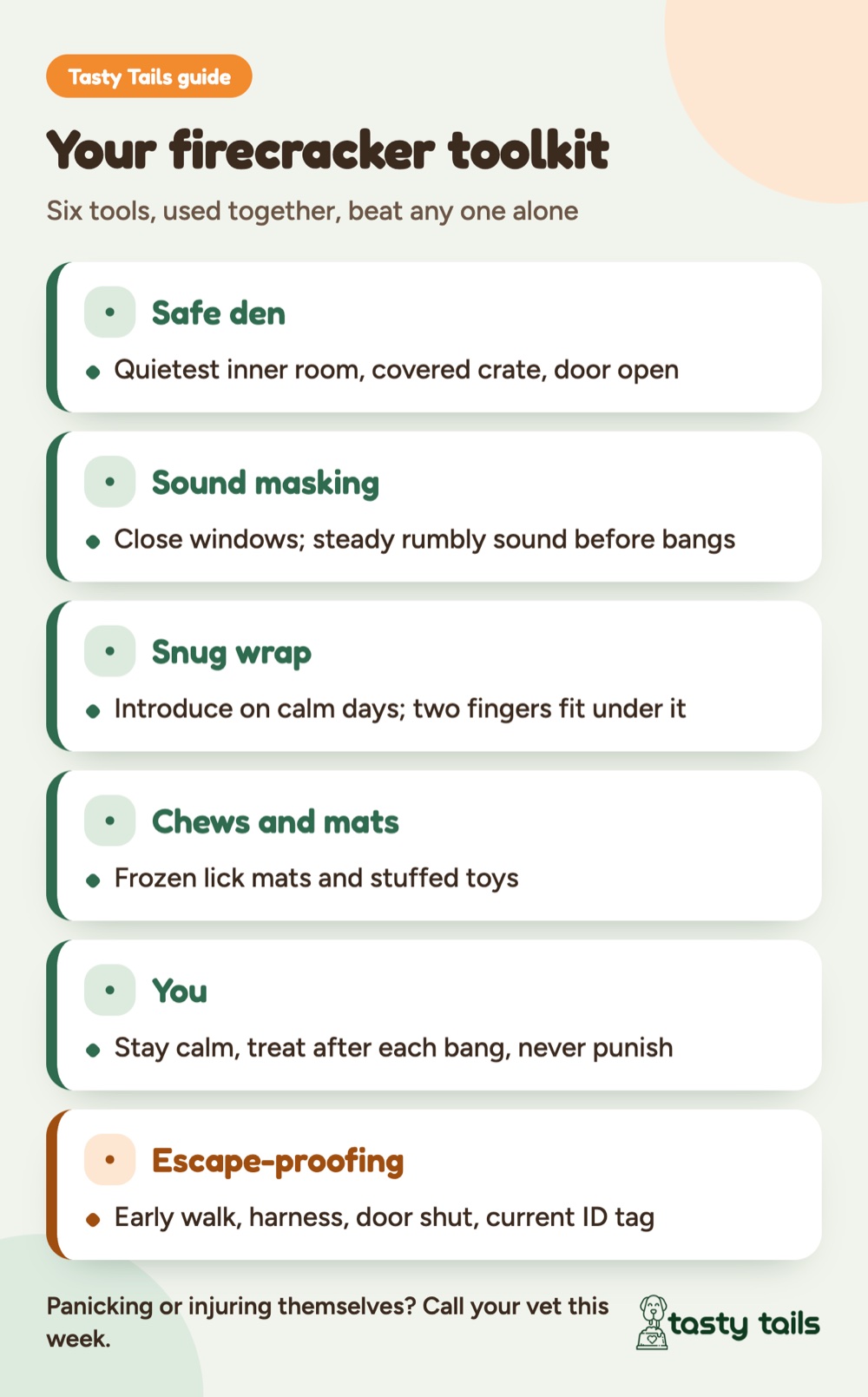
1. The safe den
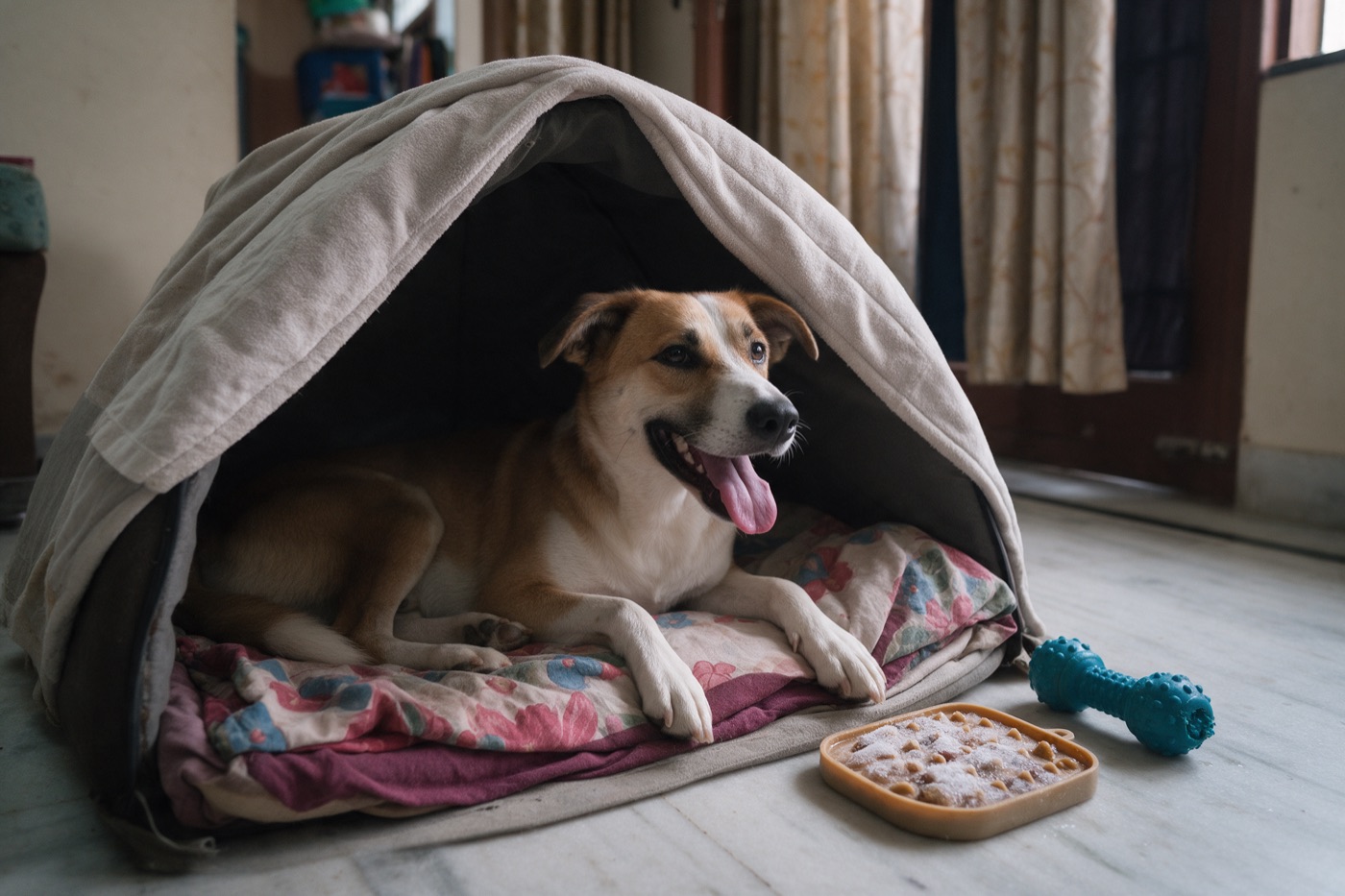
This is the foundation. A frightened dog wants somewhere enclosed, dim and quiet, and they'll pick a spot themselves if you don't provide one (often behind the toilet or under the bed).
- Choose the quietest inner room: away from the road, with the fewest windows. In flats, a bathroom or a walk-in wardrobe often works best.
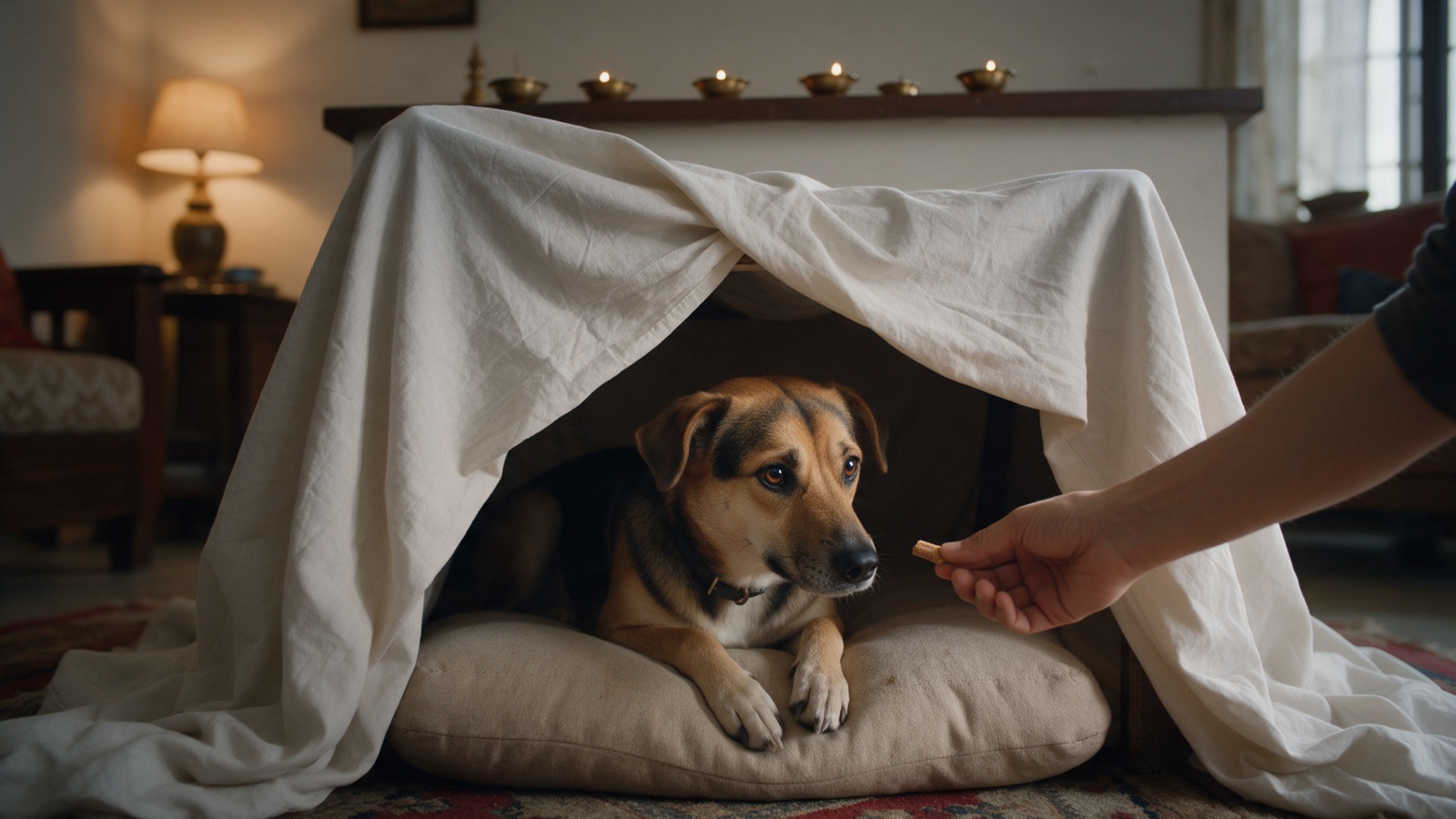
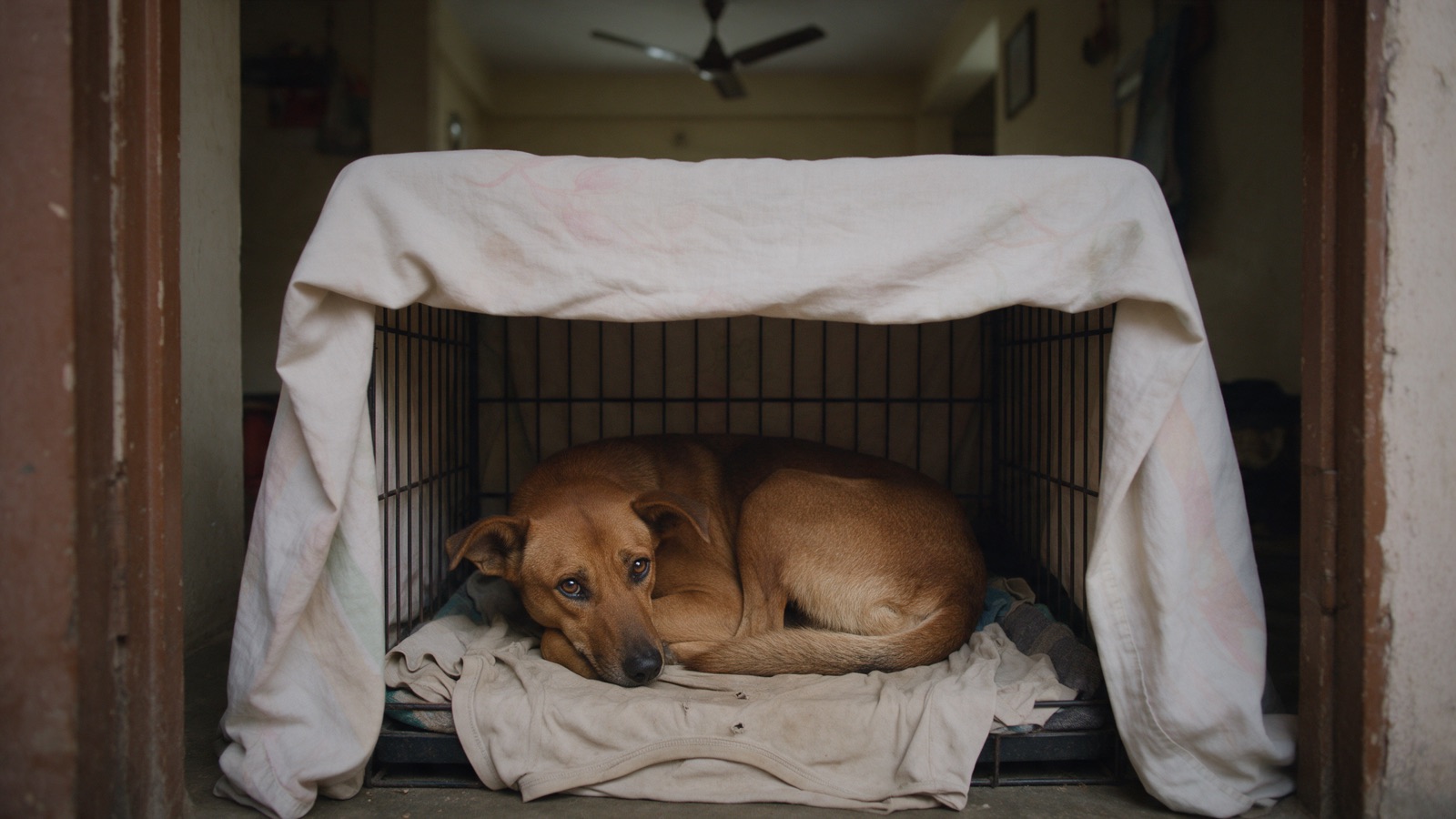
- Build a covered spot: a crate with a bedsheet over the top and sides, or a table draped to the floor. Leave the door open; never shut a panicking dog in.
- Add bedding, water and something that smells of you, like a worn T-shirt.
- Practise now. Feed treats and meals there over the next few days so the den already feels safe before Sunday.
- If your dog has already chosen a spot, make that the den instead. Let them use it, and don't pull them out.
2. Sound masking
You can't block cracker noise, but you can blunt the sudden bangs.
- Close windows and draw heavy curtains. Pile cushions against a window in the den room if it faces the street.
- Run a steady background sound: a fan, the AC, a white or brown noise track, or calm music at a moderate volume. Lower, rumbly sounds mask booms better than high-pitched music.
- Turn it on before the noise starts, so the change in sound isn't itself a signal that something bad is coming.
- The TV works too, though sudden loud ads and action scenes don't help.
3. Pressure wraps and snug T-shirts
Close-fitting anxiety wraps apply gentle, even pressure around the chest, a bit like swaddling. Some dogs visibly relax in one; others don't change at all. Owner surveys and small studies suggest a modest benefit for some dogs, not a cure.
- Introduce it now, on calm days, with treats: put it on for a few minutes, reward, take it off. If you only use it on Diwali night, it can become part of the scary routine.
- Snug, not tight: you should slide two fingers under it easily.
- No commercial wrap? A close-fitting T-shirt knotted at the waist does a similar job for many dogs.
- Take it off if your dog freezes, tries to remove it or seems more stressed. Don't leave it on unsupervised for hours.
Dog earmuffs can help some dogs who have been trained to wear them, but don't push cotton or anything else into your dog's ear canals.
4. Chews, lick mats and food puzzles
Licking and chewing are natural ways for dogs to calm themselves, and they keep the mouth and brain busy while the bangs happen.
- Frozen lick mats: spread with something soft and plain, then freeze. A frozen layer lasts much longer.
- Stuffed rubber toys filled with your dog's own meal and frozen.
- A long chew suited to your dog's size, with supervision.
- Snuffle mats for dogs who love sniffing out food.
One important point: a dog who won't touch food they normally love is telling you their fear is high. That's not the moment to try harder with treats; switch to comfort and the den, and treat it as a sign to involve your vet for future festivals.
Avoid introducing new rich foods or human sweets as comfort; an upset stomach on top of fear makes the night worse. If someone does slip your dog a sweet, our guide to dogs eating mithai explains the next steps.
5. You
Your behaviour is one of the most powerful tools here.
- Comfort is fine. Stroking and staying close won't "reward" the fear. Follow your dog's lead: some want contact, some want to be near you without being touched.
- Stay calm and ordinary. A relaxed voice and normal movements help more than anxious fussing.
- Treat after each bang if your dog will still eat: the bang predicts chicken. This is the same idea as our sound training plan, applied to real crackers.
- Never punish fear, including trembling, hiding, accidents indoors or chewing in panic.
Comfort is fine. Stroking and staying close will not reward the fear.
6. Escape-proofing
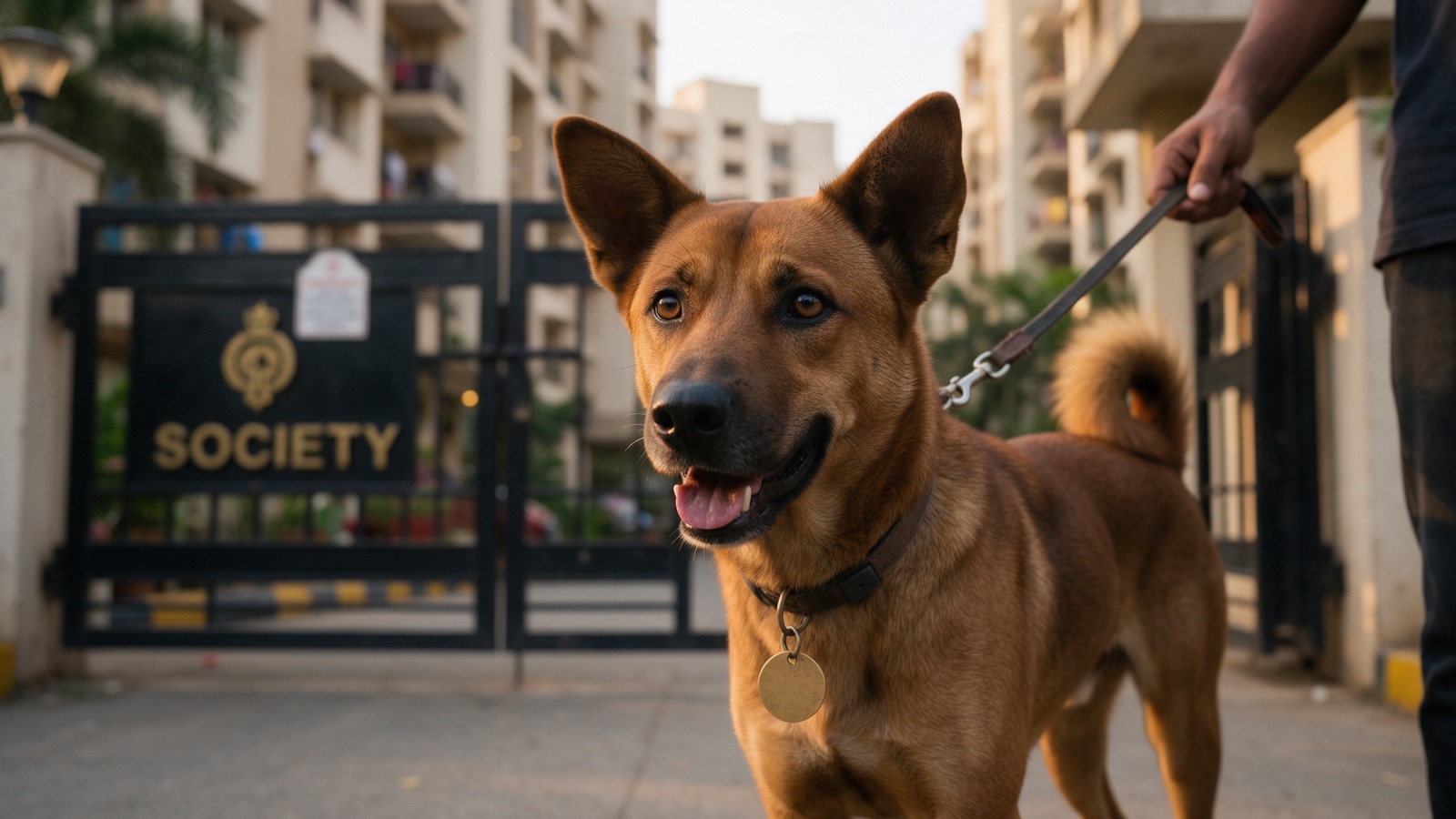
A panicking dog can climb, dig, squeeze or slip a collar. Walk early in the day on a well-fitted harness, keep the main door shut while guests come and go, check gates and balcony gaps, and make sure the ID tag has a current phone number.
What about diffusers and calming supplements?
Pheromone diffusers and calming supplements are widely sold. Evidence for them is mixed, and in a large 2020 owner survey on firework fear, behavioural approaches such as counter-conditioning and relaxation training were rated as working much better. They're unlikely to harm most dogs, but don't rely on them alone for a dog who is very frightened, and check with your vet before adding any supplement, especially if your dog takes other medicines.
When to ask your vet about medication
Some dogs are so frightened that no amount of den-building or treats will reach them. That is a welfare problem, and vets can help with medicines prescribed specifically for noise fear. Call your vet this week if your dog:
- Panics: frantic pacing, trying to escape through doors or windows, digging at floors
- Has injured themselves, broken teeth or nails, or destroyed things during past festivals
- Trembles, pants or drools for hours, or won't eat or drink
- Has accidents indoors from fear
- Stays withdrawn or jumpy for days afterwards
- Is getting worse each year
A few things to know:
- Medication only via your vet. Never give human sleeping pills, anxiety tablets or a friend's pet's prescription. Some human medicines are dangerous for dogs, and doses differ hugely.
- Ask for a trial run. Your vet may suggest testing a dose on a quiet day before Diwali, to see how your dog responds.
- Ask specifically about anxiety relief, not just sedation. A drug that only makes a dog sleepy may leave them still frightened but unable to move away.
- Plan for next year. For long-term improvement, ask about a referral to a veterinary behaviourist and start training months ahead.
Putting the kit together
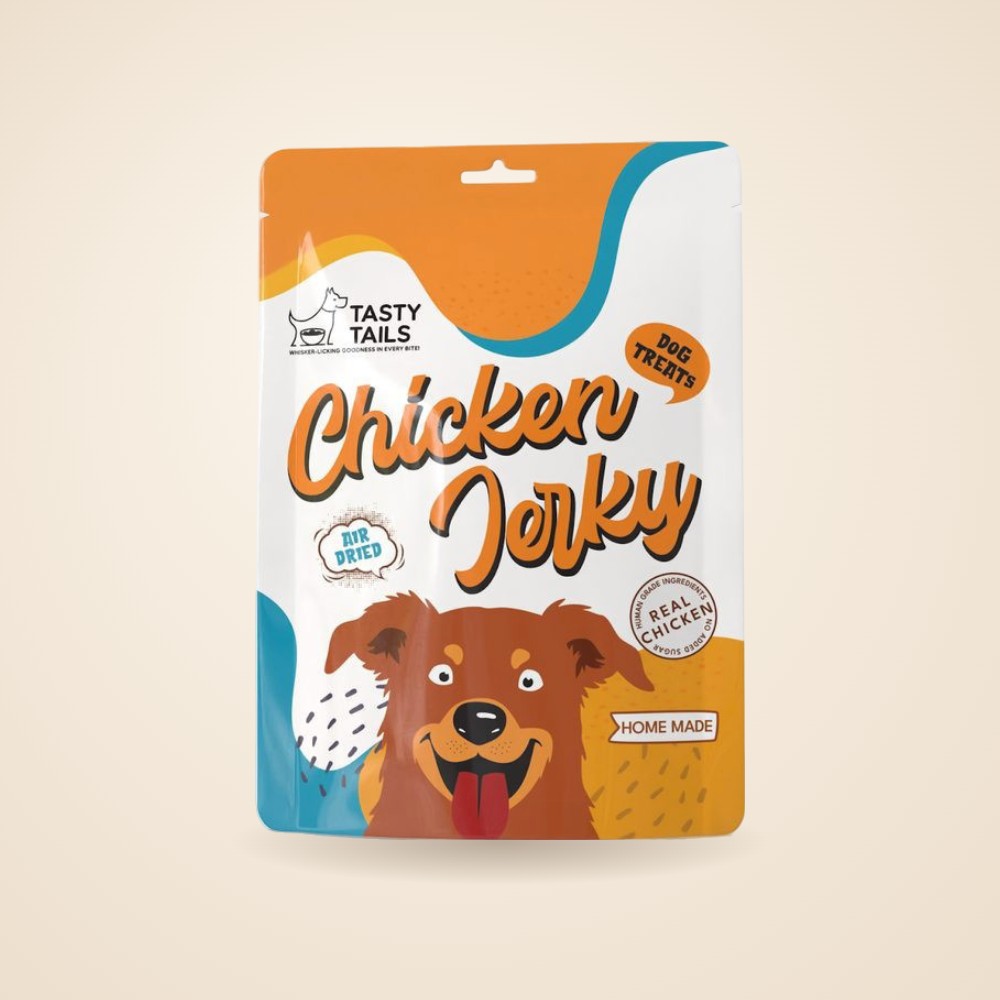
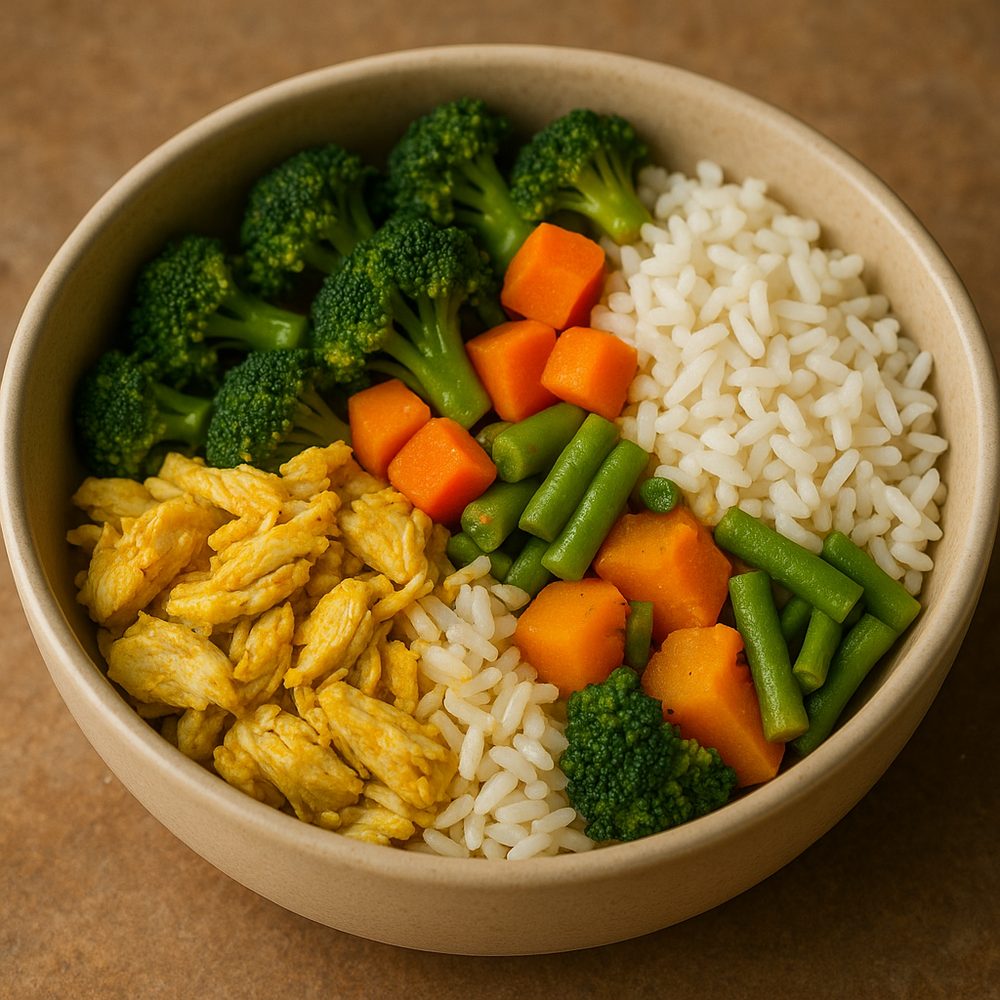
For the lick mat, our Fresh Chicken Broth is made with no salt, onion or garlic, so you can freeze it into a mat or a stuffed toy with a little of your dog's meal. Strips of Homemade Chicken Jerky make an easy "bang means treat" reward. And on Diwali evening, serve dinner early so your dog has a full, settled tummy before the noise peaks; a familiar meal such as Tummy Full (chicken, vegetables and rice) is ideal. Stick with foods your dog already eats; festival night isn't the time for something new.
Questions about calming a dog during firecrackers
Do anxiety wraps really work for firecracker fear?
They help some dogs and make little difference to others. Introduce one with treats on calm days first, and remove it if your dog seems more stressed.
What music or sound helps dogs during crackers?
Steady background sound works best: a fan, AC, white or brown noise, or calm music at a moderate volume. Start it before the crackers begin.
Can I give my dog something to sleep through Diwali?
Only medication your vet prescribes for your dog. Never use human sleeping pills or anxiety medicines, and ask your vet about a trial dose before the festival.
Is it okay to comfort my dog when they're scared?
Yes. Comforting a frightened dog doesn't reinforce fear. Stay calm, stay close if they want you, and let them hide if they prefer.
Sources
For the lick mat, the chew and an early dinner
A frozen broth lick mat, a long chew and a filling early dinner are three simple ways to help a dog settle before the bangs begin.



Main Meals For dogs & cats
Tummy Full
-

-

-

-

-

- +4
- Protein
- Healthy fats
- Fibre
- Vitamins
₹350 Small · 250 g 4 sizes
See the full menu or ask our nutritionist what suits your pet.
Was this helpful?
Share with a pet parent