Choti Diwali checklist: ID tags, microchips, a recent photo and what to do if your dog bolts
Frightened dogs slip out of gates and leads every Diwali. A ten-minute Choti Diwali check of the tag, microchip and photos, plus a plan for the first hour if your dog runs.
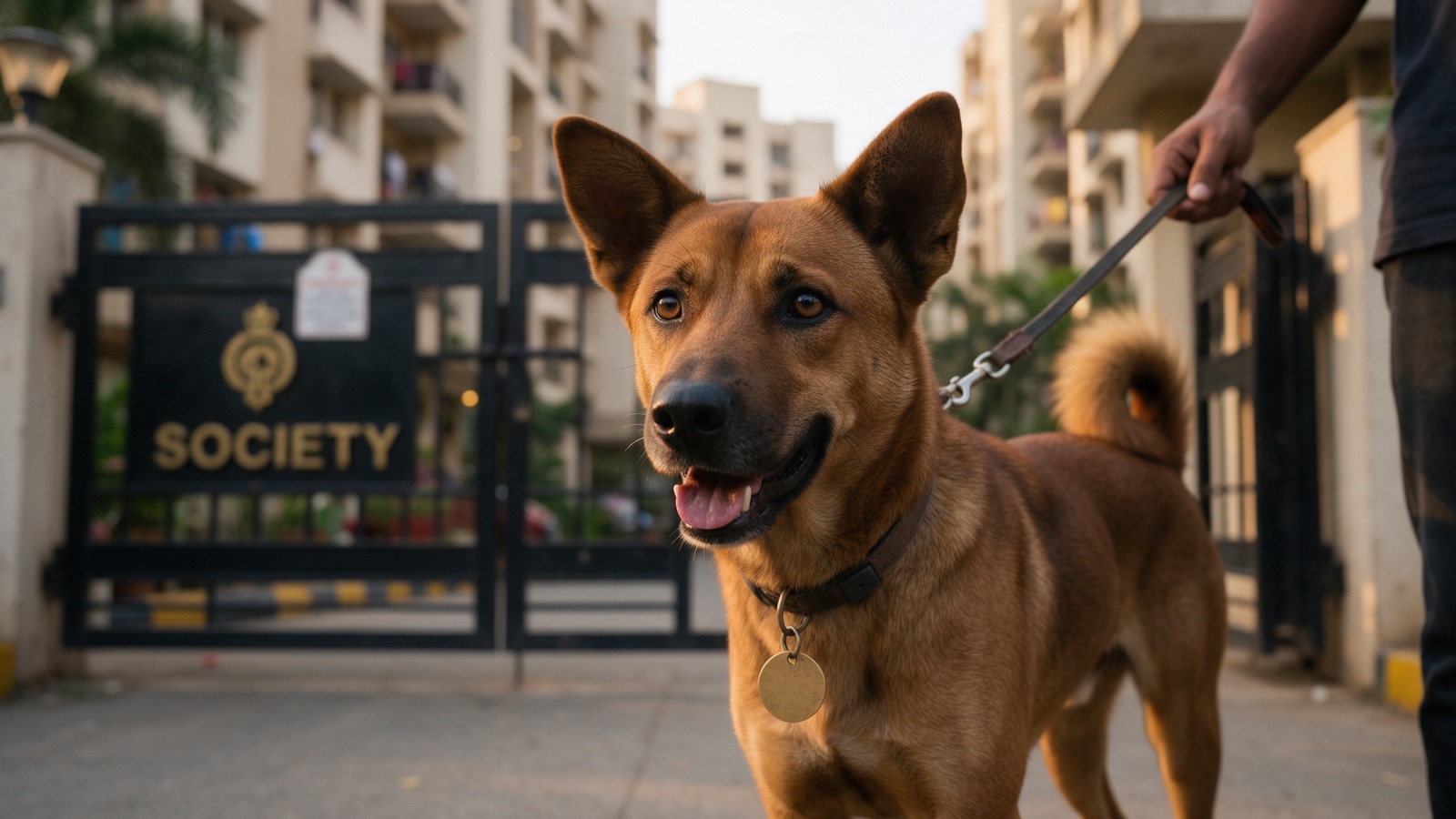
Every year, the days after Diwali bring a wave of messages in Bangalore society groups: a photo of a dog, a colony name, and the words "missing since last night". Most of these dogs were not adventurous, just terrified: a bomb near the gate, a door left open, a lead slipping out of a hand.
Choti Diwali is the right day to make sure that if it happens to you, your dog can be identified and brought home quickly. It takes about ten minutes, and you can do most of it from the sofa.
Most missing dogs are not adventurers, just terrified. A readable tag gets them home.
Why dogs go missing over Diwali
Fear changes how a dog behaves. A dog who normally sticks to your side can panic and run in a straight line, ignoring its name, treats and traffic. Add the usual festival conditions and the risk climbs:
- Main doors and society gates open more often for guests, deliveries and puja visitors.
- Walks happen in the dark or at odd hours to avoid the noise, often with a different person holding the lead.
- Collars are loose or old, and frightened dogs back out of them in a second.
- Once outside, a pet dog may be chased by street dogs defending their territory, which pushes it even further from home.
The ID tag: small, cheap and the first thing anyone checks
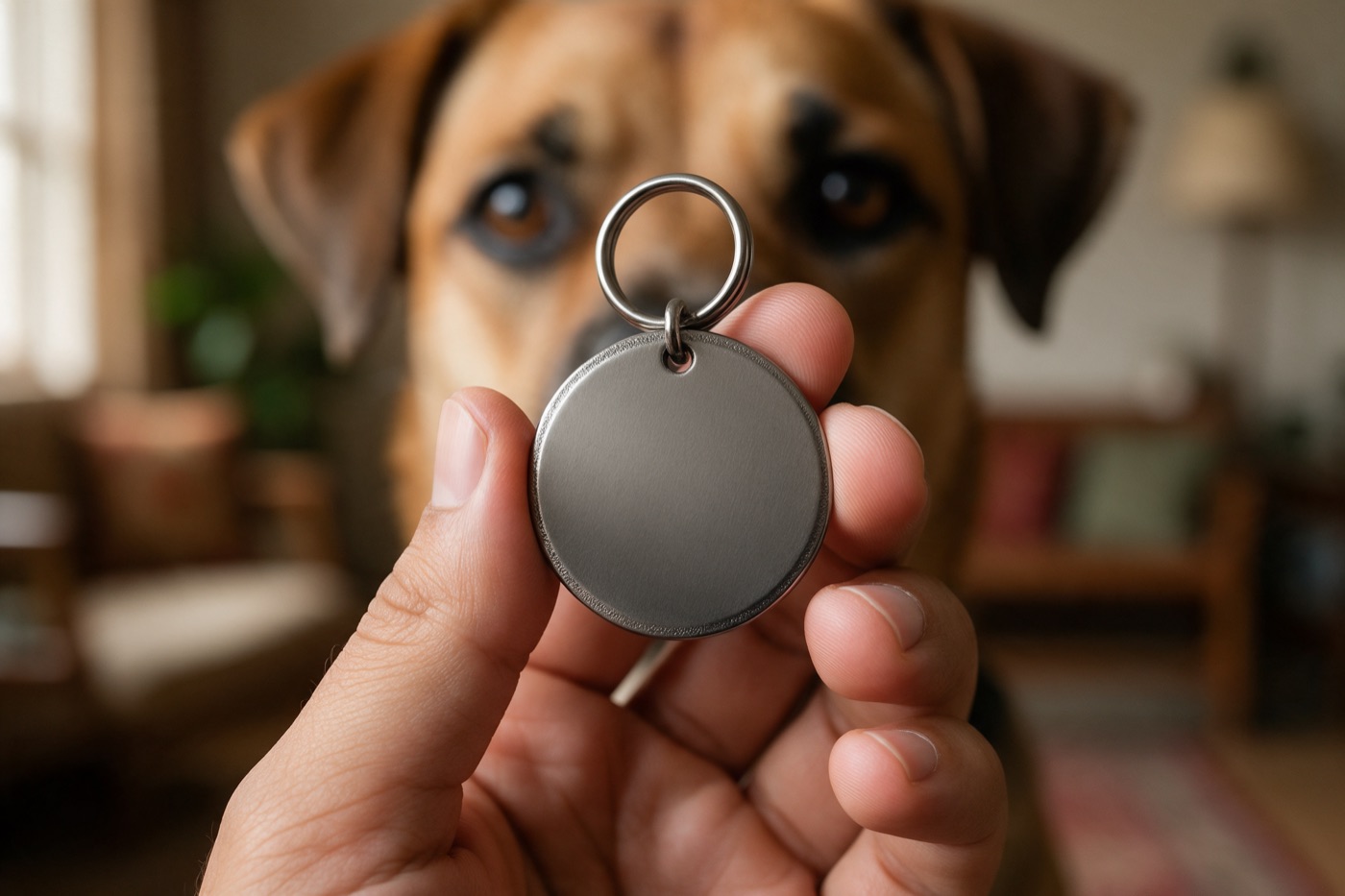
A microchip needs a scanner. A tag can be read by a security guard, a vegetable vendor or a child. It is still the fastest way home.
- Put your phone number on it, ideally two. Add a second family member's number in case your phone is busy or out of charge on Diwali night.
- Your dog's name is optional. Some people prefer to leave it off. A short line such as "I am lost, please call" works well.
- Add medical needs if relevant, for example "needs daily medication", which tends to make finders act faster.
- Read the tag aloud. Engravings wear down. If you have to squint, get a new one.
- Check the split ring and the collar. You should be able to slide two fingers under the collar, no more. A collar your dog can pull over its head is not doing its job.
For walks this week, a well-fitted harness plus a collar with the tag, with the lead clipped to the harness, is a sensible combination.
Microchips: a chip is only as good as the details behind it
A microchip is a tiny implant under the skin, usually between the shoulder blades, carrying a unique number. When a vet clinic or shelter scans a found dog, they get that number. The number then has to be looked up in a database to find you. That last step is where things often go wrong.
- Find out which database your dog's chip is registered with. In India there is no single national registry. Your vet, breeder, rescue or the chip supplier will have registered it with a particular database. Ask your vet which one, and note it down with the chip number.
- Check the details are yours and current. If you adopted your dog, the chip may still be linked to the rescue or breeder. If you have changed your phone number or moved flats, the record may still have the old ones. Update them with that database.
- Ask your vet to scan the chip. Chips occasionally move or fail. If you went for a Dhanteras check-up yesterday and forgot, a quick scan at any clinic visit takes seconds.
- A microchip is not a GPS tracker. It cannot tell you where your dog is. It only works once someone finds your dog and takes it to a place with a scanner. If you want live tracking, that is a separate collar device, and it still needs to be charged and fitted firmly.
A chip is only as good as the details behind it: check they are yours and current.
Take a recent photo today
Most dog photos are useless on a lost poster. Take three now, in daylight:
- A full side view, standing, so people can judge size and shape.
- A clear face photo, looking at the camera.
- A close-up of anything distinctive: a white sock on one paw, a notched ear, a kinked tail, a particular collar.
Save them in one album with a short description you can paste anywhere: type, colour, size, age, collar colour, whether your dog is nervous with strangers, and your number. Add a Kannada version if you can, since many guards and shopkeepers will read that first.
Secure the house for the next 48 hours
- Agree on a family rule: whoever opens the main door checks where the dog is first.
- Put the dog in a quiet room before guests arrive and during puja, especially if you have set up a safe room from the firecracker anxiety toolkit.
- Check balcony gaps, low compound walls and the gap under the society gate.
- Walk early, before the evening crackers start, and keep the lead on even inside the society compound.
- Tell your security guards you have a dog that may be frightened, and show them a photo. It costs nothing and they are your first line of help.
Our Diwali pet safety guide covers crackers and sweets together.
If your dog bolts: the first hour
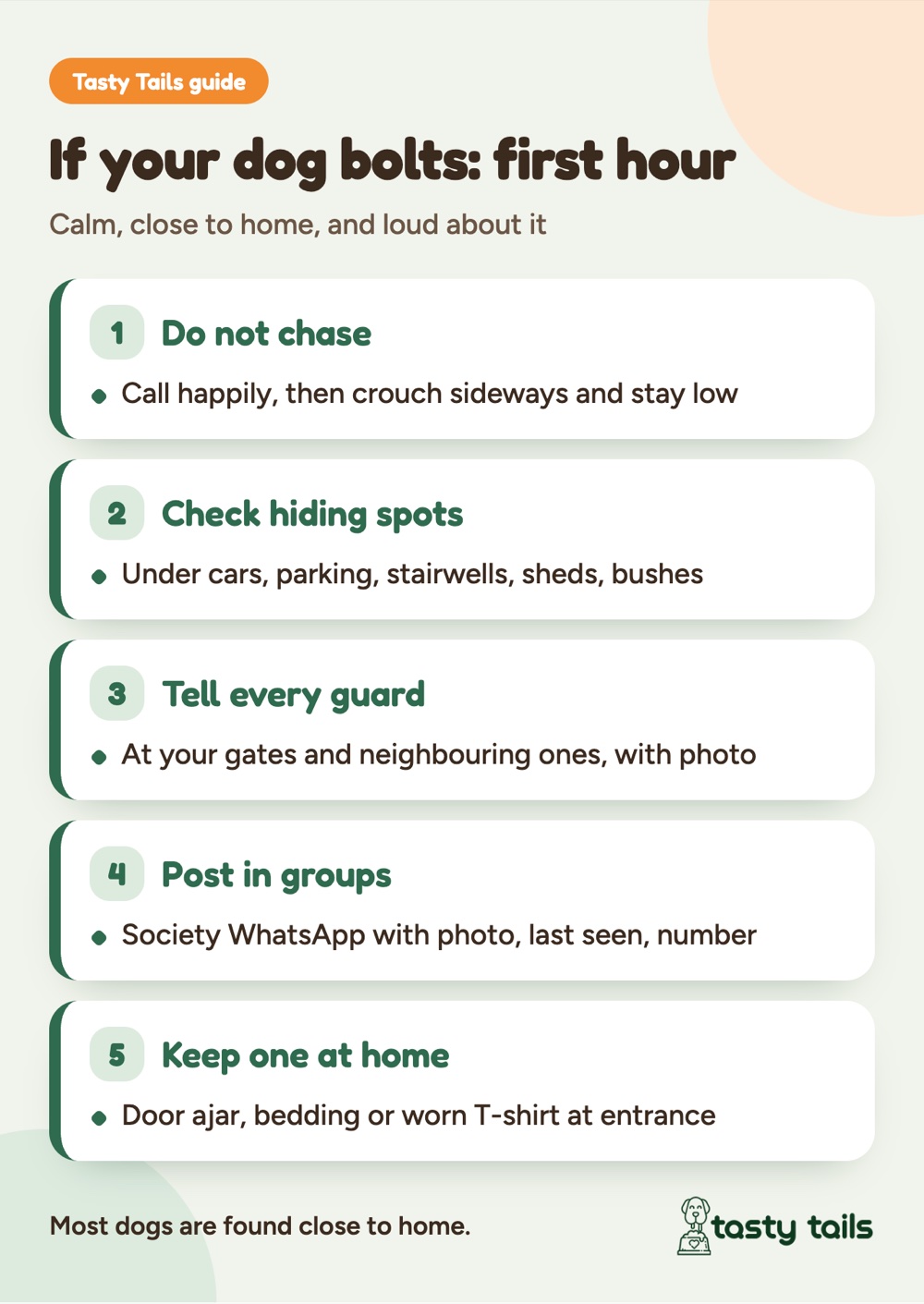
Most dogs are found close to home, and the first hour matters most.
- Do not chase. Running after a frightened dog looks like pursuit and makes it run further. Call in a calm, happy voice, then crouch or sit down, turned slightly sideways. Many dogs come to a person who is low and still.
- Check the nearest hiding spots first: under parked cars, in basement parking, stairwells, behind generators, inside open sheds and in bushes along the compound wall.
- Tell every security guard at every gate of your society and the neighbouring ones. Show the photo and leave your number.
- Post in your society WhatsApp group and any neighbourhood or apartment-federation groups, with the photo, description, where and when your dog was last seen, and your number.
- Keep one person at home with the door ajar and your dog's bedding or a worn T-shirt at the entrance. Some dogs make their own way back.
The next 24 to 48 hours
- Search when it is quiet. Frightened dogs often lie low during the noise and move when things calm down. Very early morning, before traffic, is a good time to walk the area slowly, calling and shaking a treat packet.
- Call or visit nearby vet clinics, since finders often take an injured or friendly dog to the closest one, and clinics are where chips get scanned.
- Contact local shelters and animal welfare organisations. In Bangalore, CUPA is one of the best-known animal welfare organisations, and there are many smaller rescue groups and feeders who know every lane in their area. Ask whether a dog matching your description has come in.
- Put up posters at society gates, tea stalls, pet shops, vet clinics and bus stops. Large photo, phone number, one line of description.
- Talk to people out at dawn: milk and newspaper delivery, street-dog feeders and night-shift guards.
- Be wary of anyone who asks for money before showing you the dog, or who will not send a current photo.
When your dog comes home
Keep the welcome calm. Offer water, then a small, plain meal. Check paws, look for limping, wounds or bite marks, and see your vet if anything looks wrong or your dog was in a fight.
Treats that help with recall this week
Practise "come" a few times a day indoors this week, rewarding with something better than everyday biscuits. Our Homemade Chicken Jerky is made from fresh boneless, skinless chicken breast and tears easily into tiny pieces. Chicken & Oats Cookies, made from just chicken and oats, are easy to keep in a pocket for walks. For dogs who cannot have chicken, Fish Bites are a single-ingredient fish treat with a smell few dogs ignore.
Questions about lost dogs and ID over Diwali
Is a microchip enough on its own?
No. A microchip only helps once someone takes your dog to a vet or shelter with a scanner, and only if your details in the chip's database are correct. A visible ID tag with your phone number is still the quickest way home.
How do I update my dog's microchip details in India?
Ask your vet, breeder or rescue which database the chip number is registered with, then contact that database to update your name, phone number and address. If you adopted your dog, check that the record is not still in the rescue's name.
Where do frightened dogs usually hide?
Often surprisingly close to home: under cars, in basement parking, stairwells, drains, bushes and sheds. Search these spots slowly and quietly before widening the search.
Should I chase my dog if it runs during crackers?
No. Chasing usually makes a scared dog run further. Call calmly, crouch down and let your dog come to you, then hold the collar or harness gently once it is close.
Sources
High-value treats for a reliable recall
A treat your dog will come running for is worth more than any gadget on Diwali week. These are small, strong-smelling and easy to carry in a pocket.




Quick Bites For dogs & cats
Chicken & Oats Cookies

- Protein
- Healthy fats
- Fibre
- Slow-release energy
₹290 250 g


See the full menu or ask our nutritionist what suits your pet.
Was this helpful?
Share with a pet parent