Chicken and rice for dogs: the right ratio, portion by weight and when to use it
A plain chicken and rice meal can rest an upset gut for two or three days. Here is the ratio, the cooking method, portions by weight and the signs that mean a vet visit instead.
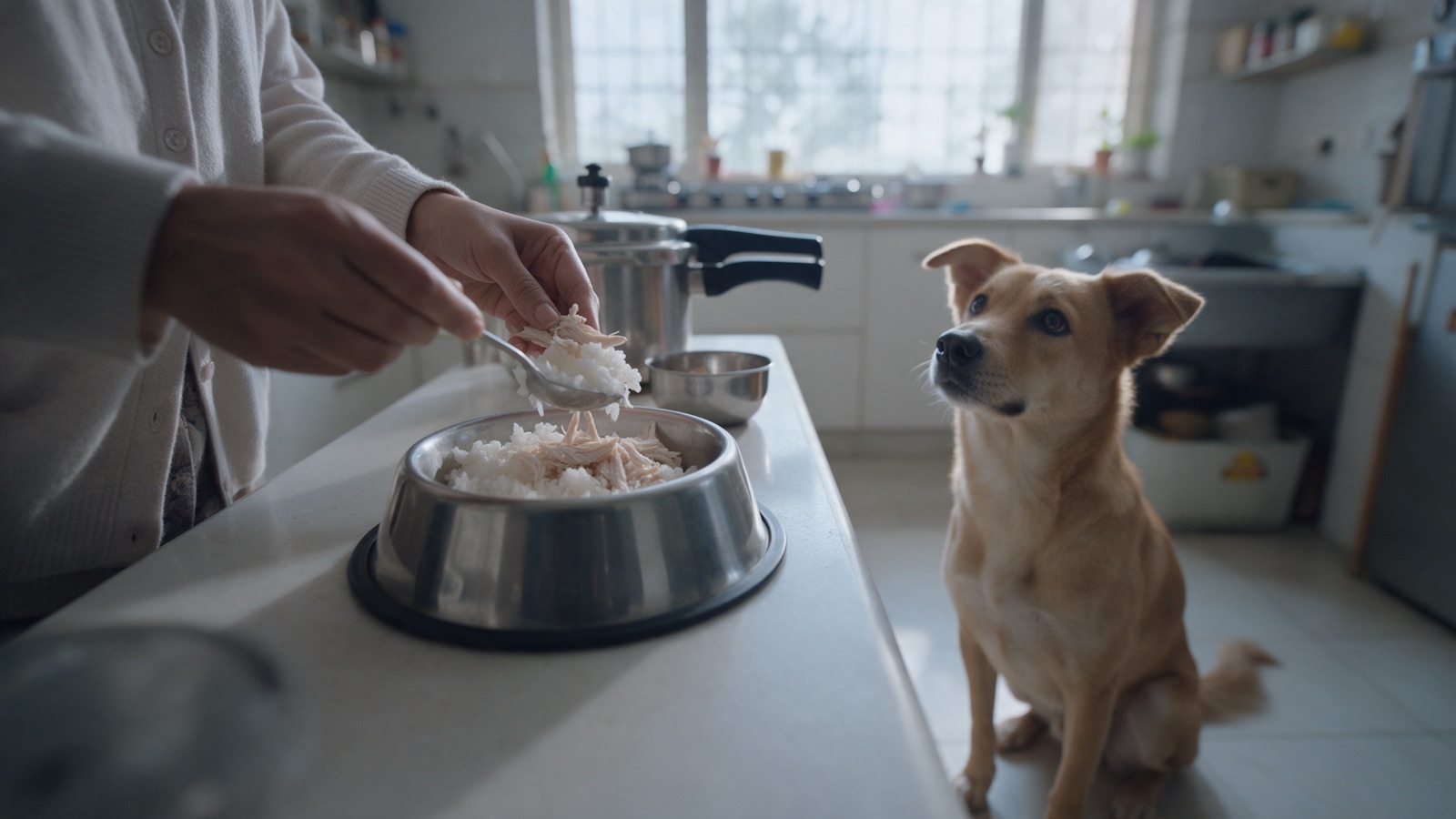
It is 6 a.m., the fog is still sitting over the road, and your Labrador has had loose stools twice since midnight. He seems bright, wants his breakfast and is wagging at you. Your mother says "give him curd rice", the internet says "chicken and rice for dogs". What exactly should go in the bowl, and how much?
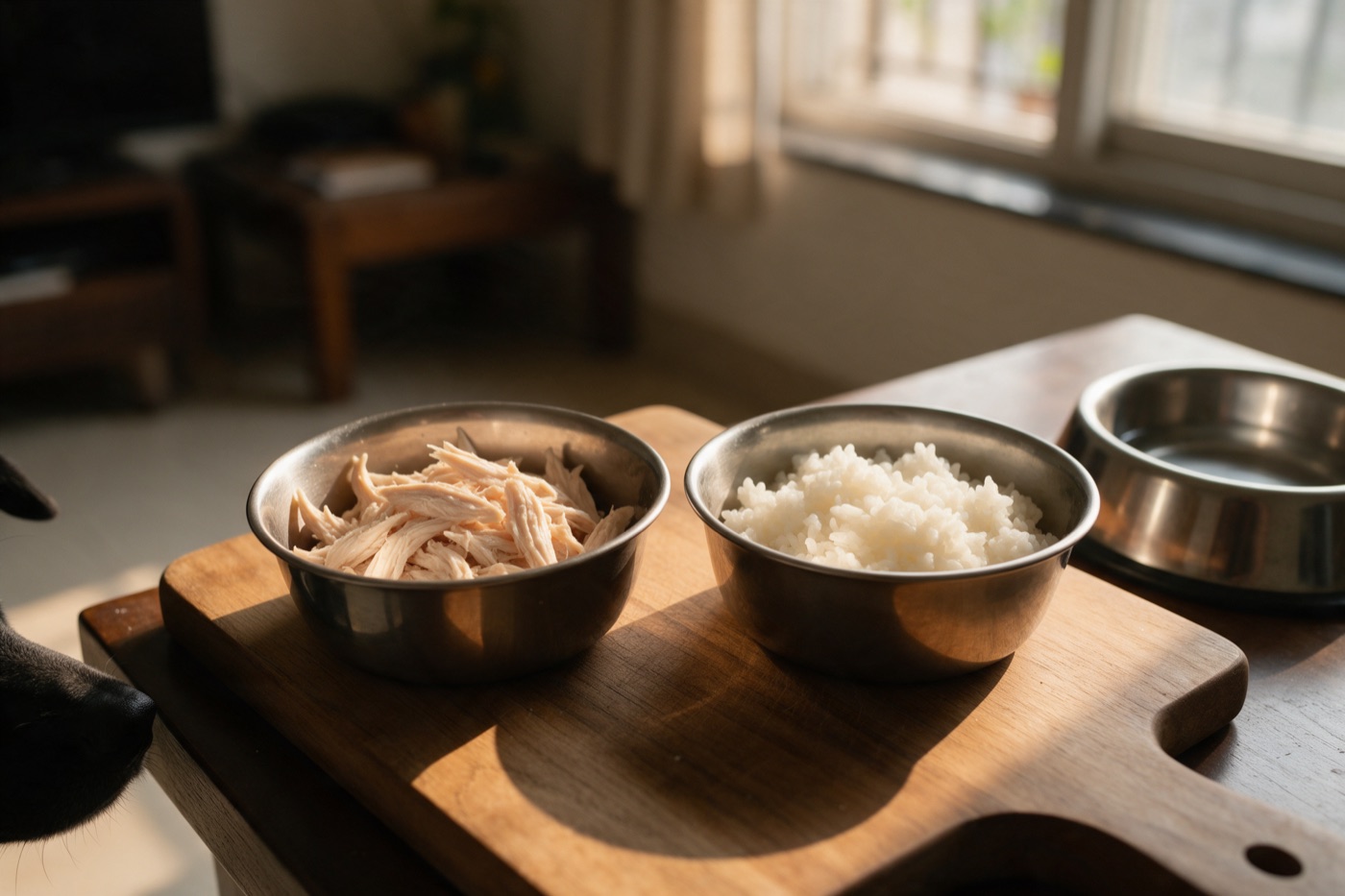
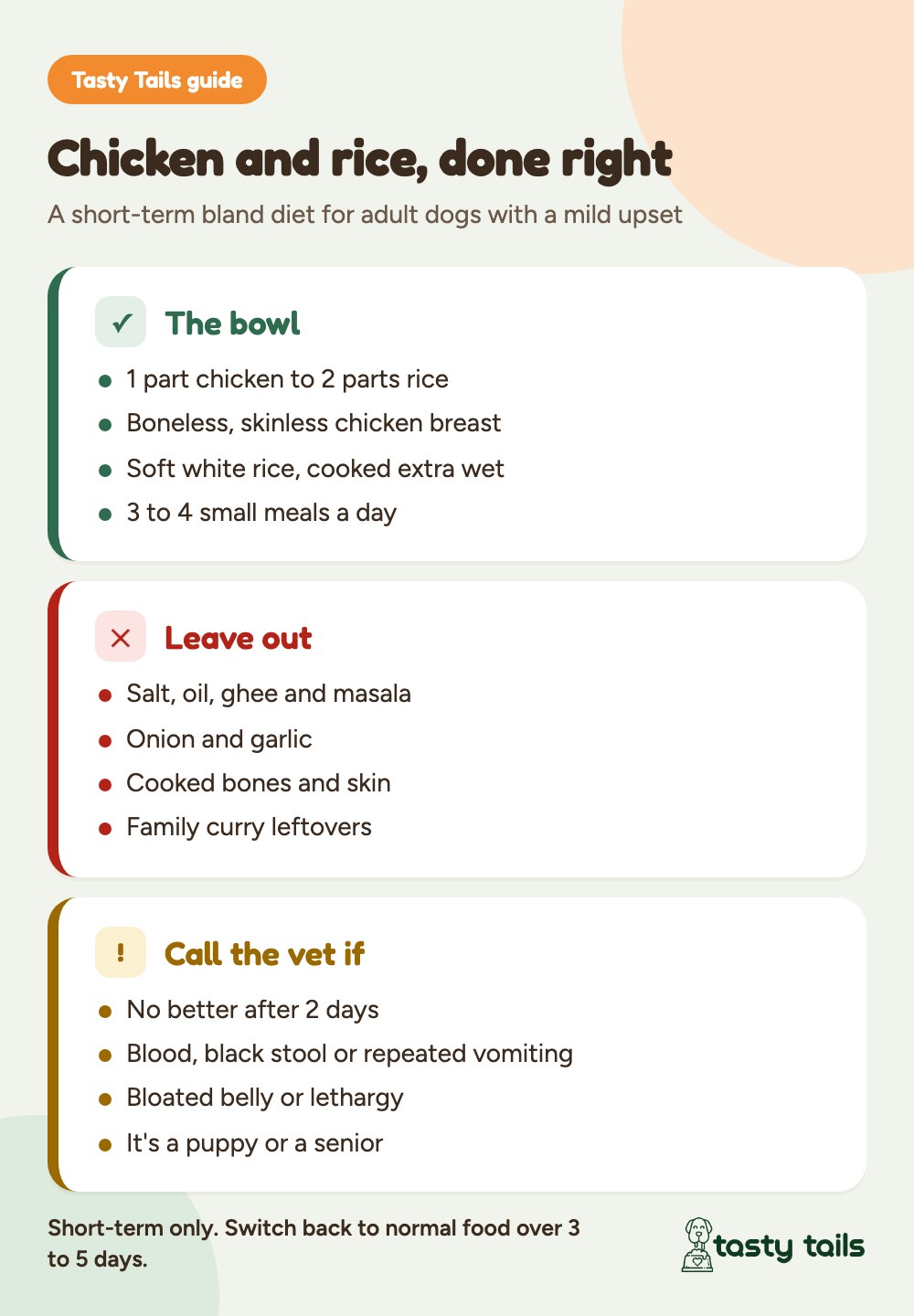
Here is the short answer. For a dog who is otherwise well, a plain chicken and rice meal of about one part boiled, boneless, skinless chicken to two parts soft-cooked white rice, fed in small meals three or four times a day, is a gentle way to rest the gut for two to three days. No salt, oil, ghee, masala, onion or garlic. It is not a complete diet, so you move back to normal food over the next few days, and if the tummy trouble lasts more than two days, or any red flag appears, you call your vet.
Chicken and rice is first aid for the gut, not a new diet: two or three days, then back to normal food.
Why chicken and rice for dogs works (and what it can't do)
A bland diet is low in fat, low in fibre and made of very few ingredients. Lean chicken breast gives easily digested protein, and well-cooked white rice gives starch that is gentle on an irritated gut and helps firm up stools. Fewer ingredients also means less for a cranky stomach to react to.
What it cannot do is nourish your dog for long. Chicken breast and white rice on their own are short of calcium, several vitamins, essential fatty acids and trace minerals. VCA Animal Hospitals points out that the mix is missing more than ten essential nutrients and that vets now often prefer a prescription gastrointestinal diet. So think of home-made chicken and rice as a first-aid meal for a few days, not a new way of feeding.
When a bland diet makes sense
- One or two episodes of loose stool or a single vomit in an adult dog who is still alert, drinking and interested in food
- A mild upset after a change of food, a stolen samosa or a festive treat
- When your vet has examined your dog and asked you to feed bland food for a few days
When to skip it and see the vet first
- Puppies, very small dogs and seniors, who dehydrate fast
- Repeated vomiting, or vomiting with diarrhoea
- Blood in the stool or vomit, or black, tarry stools
- A swollen or painful belly, retching with nothing coming up, weakness or collapse
- If your dog may have eaten something toxic, such as chocolate, grapes or a xylitol sweet: call your vet or the ASPCA Animal Poison Control line straight away
The right chicken and rice ratio for dogs
The most common starting point is 1 part chicken to 2 parts rice, measured by volume in the same katori or cup. Many vets suggest a little more rice, up to 1:3, while stools are very soft, then shifting back towards 1:2 as they firm up. Rice is the binder; chicken is the protein. Too much chicken makes the meal richer than you want for a sore gut.
How to cook it
- Take boneless, skinless chicken breast. Breast is leaner than thigh. Trim off any visible fat.
- Put it in a pan, cover with plain water and simmer for about 20 to 25 minutes until it is cooked right through, with no pink inside.
- Lift it out, let it cool, and shred it into small pieces with your fingers. Check carefully for bone fragments. Never add cooked bones.
- Cook plain white rice (sona masoori or any everyday rice) with extra water, so it is soft and slightly mushy. Skip brown rice for now: its extra fibre is harder work for an upset gut.
- Mix the shredded chicken into the rice at your chosen ratio. Serve lukewarm, not hot.
Leave out salt, oil, ghee, butter, haldi, pepper, onion, garlic and stock cubes. If you want to keep the cooking water, chill it so the fat sets on top, skim that off, and use a little to moisten the bowl.
How much chicken and rice to feed your dog, by weight
A homemade 1:2 mix gives very roughly 140 kcal per 100 g. On a bland diet you start a little below your dog's normal amount and build up. The table below is a rough guide for an adult dog's whole day, split into three or four small meals. It is not a replacement for your vet's advice.
- 5 kg: Example: Shih Tzu, small Indie pup; Chicken and rice per day: 160 to 230 g
- 10 kg: Example: Beagle; Chicken and rice per day: 280 to 390 g
- 15 kg: Example: Indie adult; Chicken and rice per day: 375 to 525 g
- 20 kg: Example: Small Labrador, large Indie; Chicken and rice per day: 465 to 650 g
- 30 kg: Example: Labrador, Golden Retriever; Chicken and rice per day: 630 to 880 g
Start at the lower number on day one, offered as small meals every four to six hours. If everything stays down and stools improve, move towards the higher number. Keep fresh water available at all times. For a fuller picture of your dog's normal needs, see our simple calorie guide.
How long to feed it, and how to switch back
Most mild upsets settle in 24 to 48 hours. Once stools look normal, begin mixing the usual food back in over three to five days:
- Days 1 to 2 of the switch: three quarters chicken and rice, one quarter usual food
- Days 3 to 4: half and half
- Day 5: mostly usual food, then fully back
If the stools go soft again, drop back a step for a day. Our 7-day transition plan uses the same slow, step-by-step idea. Use our dog poop chart to judge whether things are really firming up.
If there is no clear improvement after two days of bland food, call your vet. Ongoing diarrhoea can be a sign of parasites, infection, tick-borne illness, pancreatitis or a food allergy, and none of those are fixed by rice.
If there is no clear improvement after two days of bland food, call your vet. Rice can't fix parasites or infection.
Common chicken and rice mistakes in Indian kitchens
- Using leftover family chicken. Even "light" home curry has onion, garlic, salt and oil. Cook the dog's chicken separately.
- Adding ghee or curd "for strength". Fat can make an upset gut worse. Plain curd suits some dogs, but wait until the tummy has settled.
- Giving the bones. Cooked bones splinter and can block or cut the gut.
- Feeding it for weeks. A long-term chicken and rice diet leads to deficiencies, especially calcium. If your dog needs a gentle diet for longer, ask your vet about a complete and balanced plan.
- One huge bowl. Small, frequent meals are easier on the stomach than one big serving.
In winter, it is also tempting to bulk up portions. If your dog is mostly indoors, the cool weather doesn't call for more food; our winter diet guide for Bangalore dogs explains why.
Gentle options from our kitchen
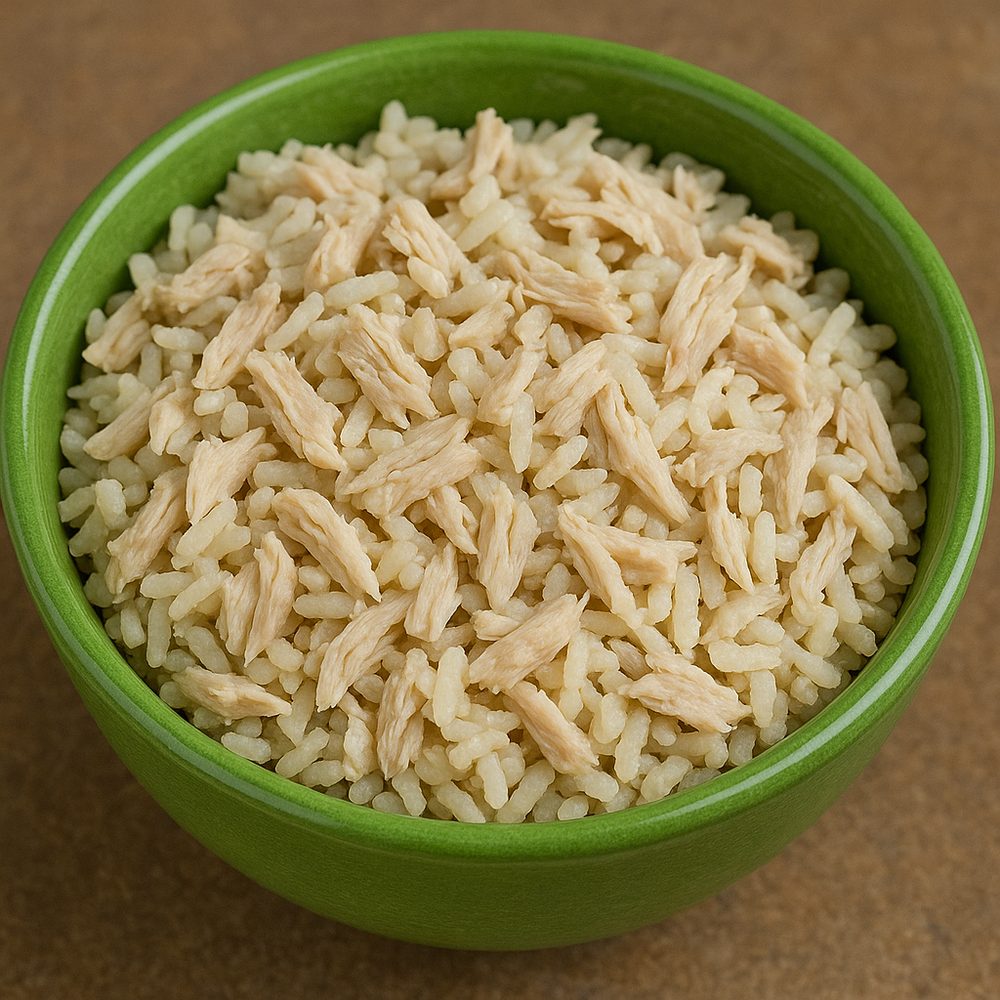
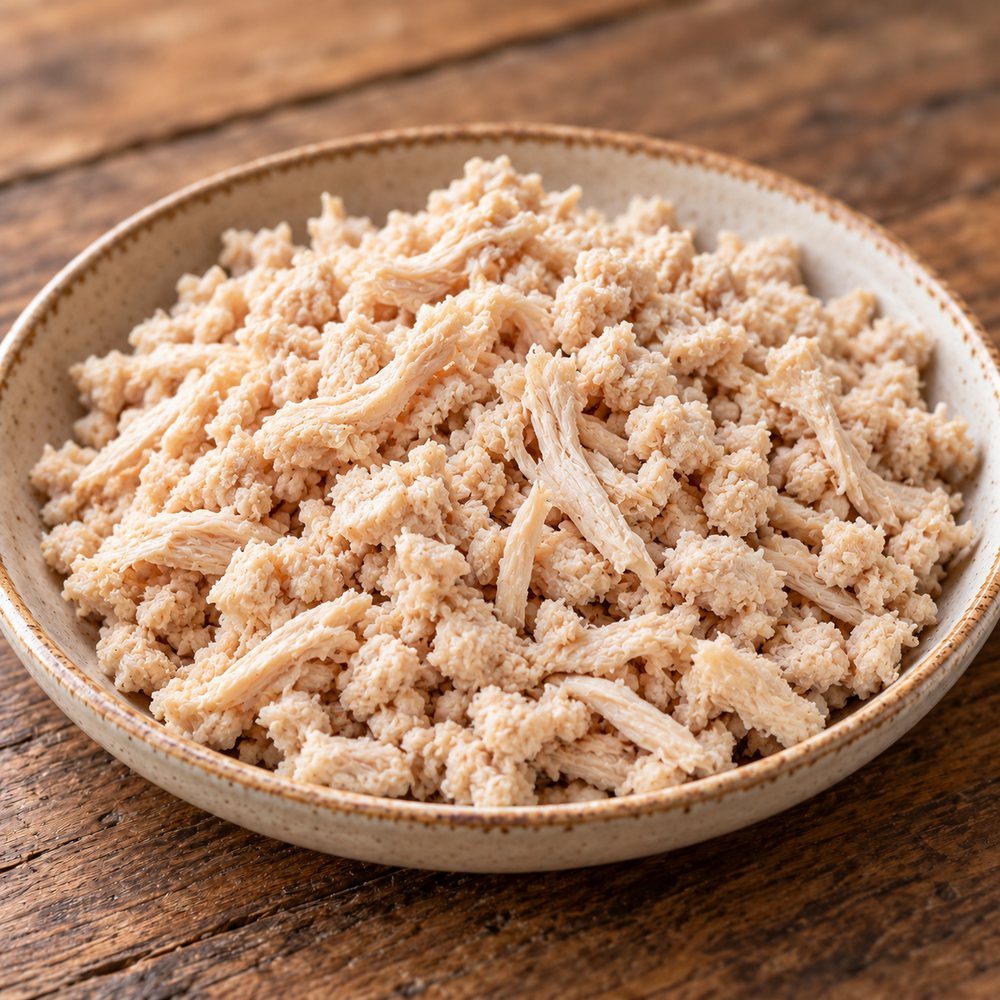
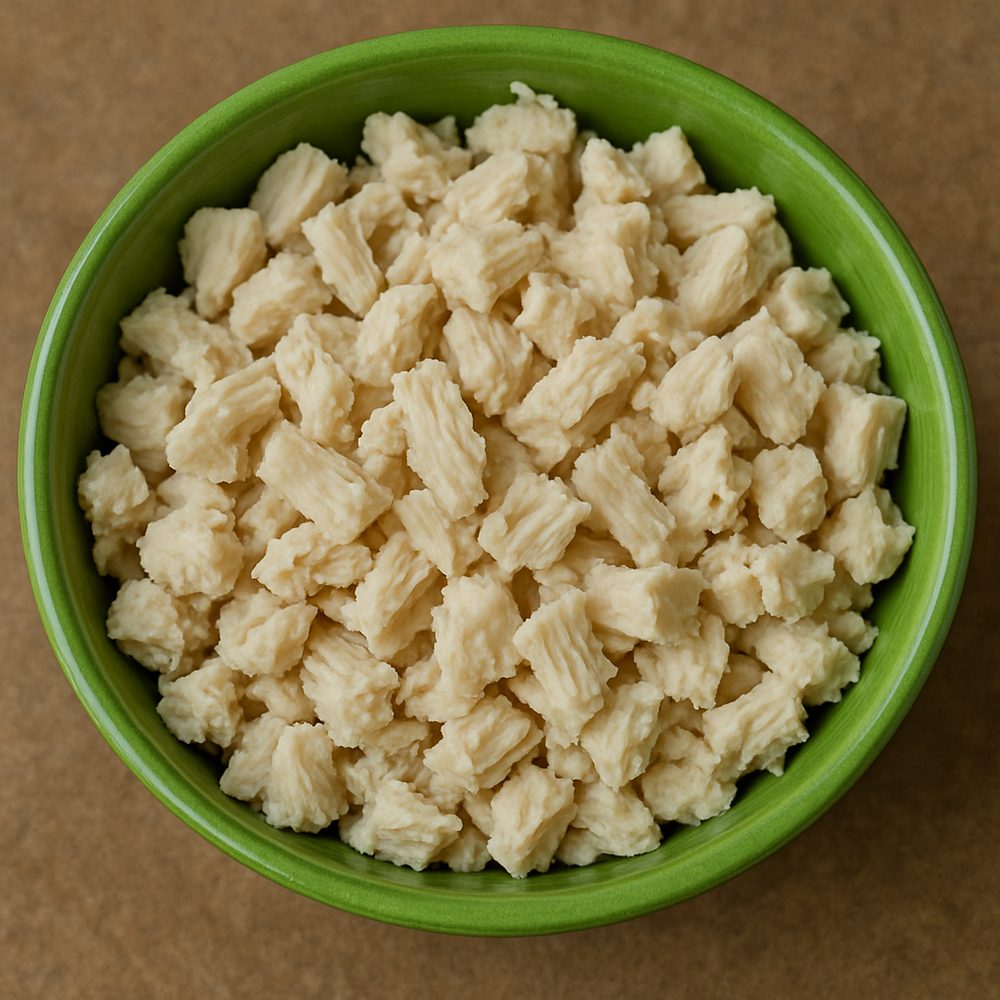
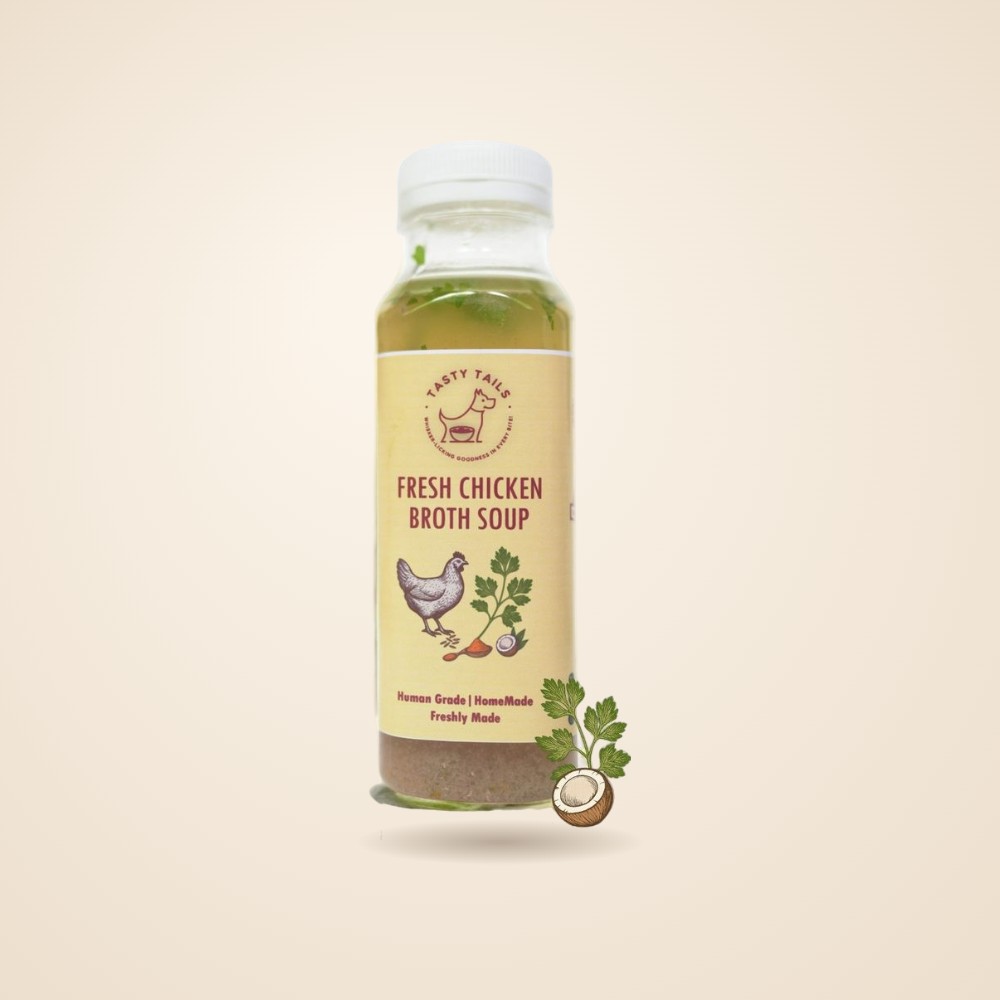
If you don't have time to boil and shred at 6 a.m., our Classic Combo is boiled chicken with your choice of white or brown rice (choose white for a sensitive tummy). Boiled Chicken Keema is plain boiled chicken mince with nothing else added, ready to stir into your own soft rice when your vet suggests a bland diet. Boiled Chicken (Boneless) saves you the deboning, and a little Fresh Chicken Broth, made with no salt, onion or garlic, can tempt a dog who is off his food.
Questions about chicken and rice for dogs
Can I give my dog chicken and rice every day?
Not as the whole diet. Chicken and rice alone lacks calcium, vitamins and essential fats, so it is meant for a few days. For daily feeding, your dog needs a complete and balanced diet planned by a vet or pet nutritionist.
Is brown rice or white rice better for an upset stomach?
White rice. It is lower in fibre and easier to digest, which is what a sore gut needs. Brown rice is fine for healthy dogs in a balanced meal.
Can I add curd or pumpkin to chicken and rice?
A spoon of plain cooked pumpkin is a common addition and many dogs tolerate it well. Hold back on curd until stools are normal, and never use sweetened or flavoured curd.
How soon should my dog's stool return to normal on a bland diet?
Usually within one to two days. Stools may not appear at all for a day, which is normal on low-fibre food. If diarrhoea continues past two days, see your vet.
Is chicken and rice safe for puppies with diarrhoea?
Call your vet first. Puppies dehydrate quickly and diarrhoea in an unvaccinated puppy can be a sign of parvovirus, which needs urgent treatment.
Sources
Gentle chicken meals from our kitchen
Plain boiled chicken, with or without rice, cooked fresh for days when you can't stand at the stove.
Main Meals For dogs & cats
Classic Combo


- Protein
- Healthy fats
- Slow-release energy
₹350 Medium · 350 g 2 sizes
Main Meals For dogs & cats
Boiled Chicken (Boneless)
- Protein
- Healthy fats
₹400 Small · 250 g 3 sizes
See the full menu or ask our nutritionist what suits your pet.
Was this helpful?
Share with a pet parent