What to feed a 2-month-old puppy in India: a first-month menu and sample day
Your new puppy is 8 weeks old and everyone has advice. Here's what to feed: a complete puppy food, served soft, four times a day, plus a sample day and the foods to skip.
The puppy came home on Sunday. By Monday morning someone in the family has suggested warm milk with roti, someone else has bought a box of baby cereal, and the breeder's half-empty bag of food is sitting by the door. So what should you actually feed a 2-month-old puppy?
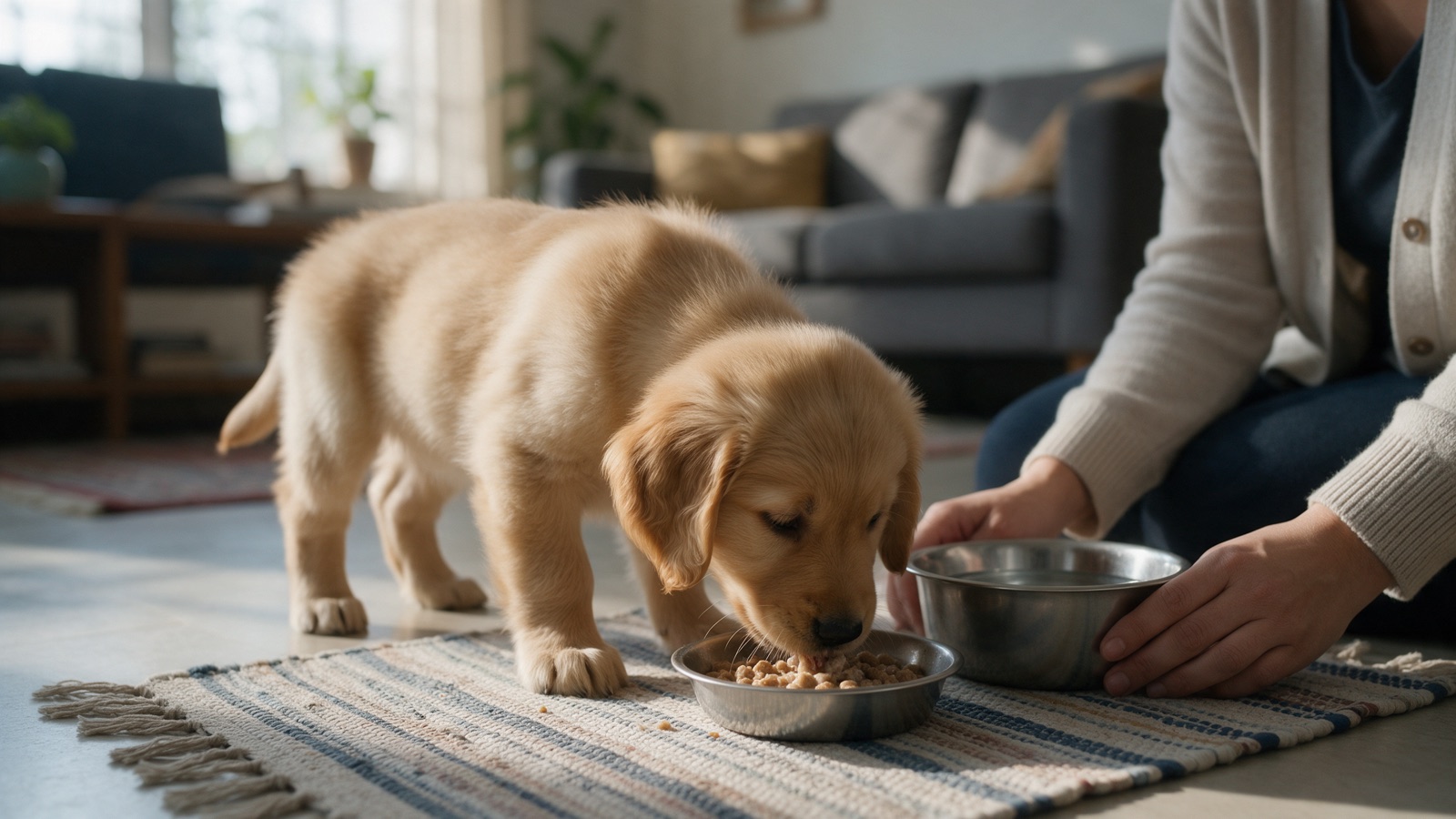
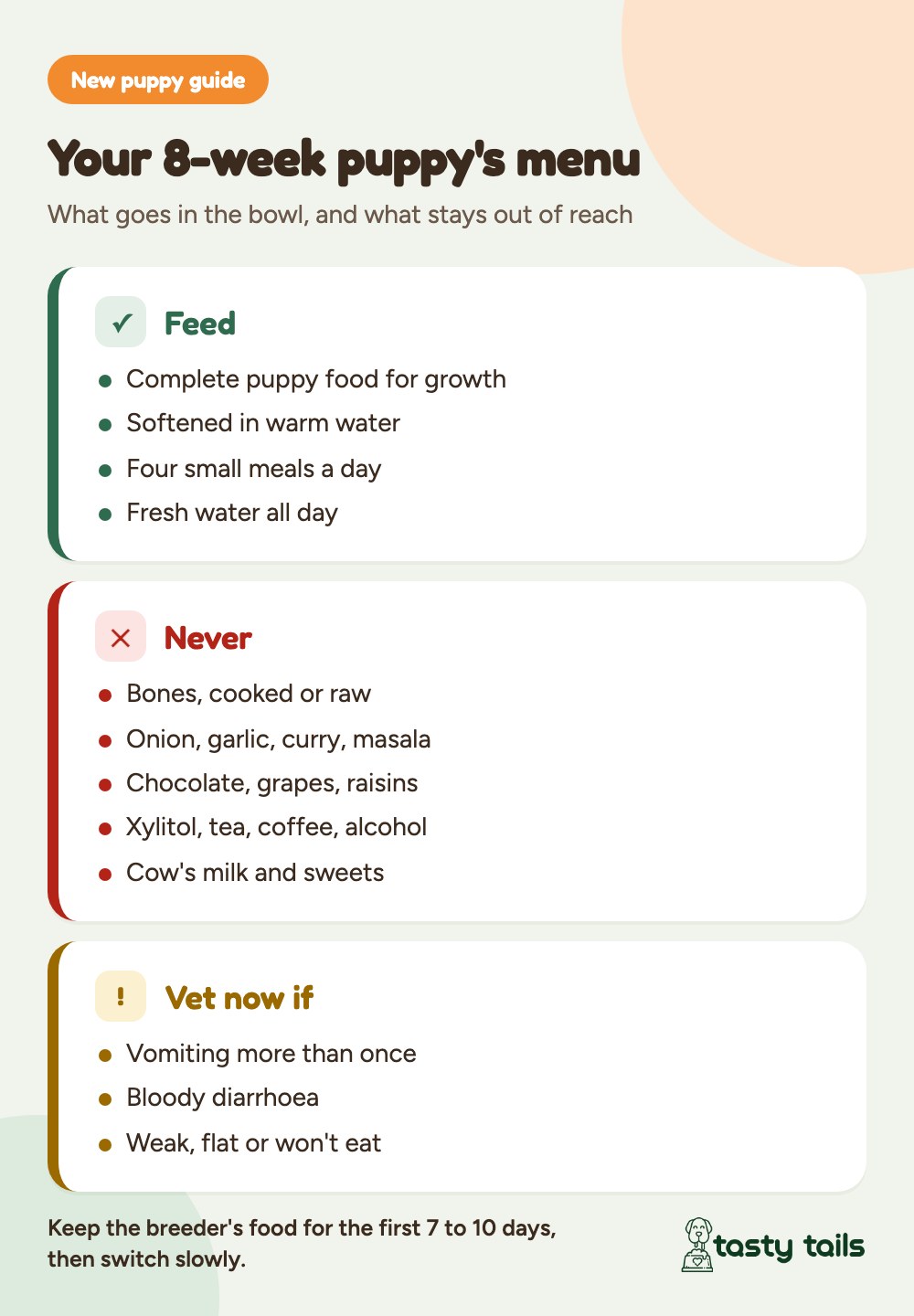
The plain answer: a complete and balanced puppy food, served soft, in four small meals a day. "Complete and balanced for growth" (or "for all life stages, including growth") on the label means the food alone covers everything a fast-growing puppy needs. At 8 weeks your puppy is newly weaned, so moisten dry food with warm water or use a soft food, keep it the same for the first week or two, and skip cow's milk, bones and spicy home food entirely. Below is a first-month menu, a sample day, and the foods to keep out of reach.
At 8 weeks, the best meal is the boring one: a complete puppy food, softened, four times a day.
What to feed a 2-month-old puppy: the basics
At around 8 weeks a puppy grows so fast that small gaps in nutrition show up quickly, especially in calcium, phosphorus and protein. That is why the base of the diet matters more than any treat or topper.
- A puppy food that is complete and balanced for growth. If you have a large-breed puppy (Labrador, Golden Retriever, German Shepherd), choose one made for large-breed puppies, which controls calories and calcium.
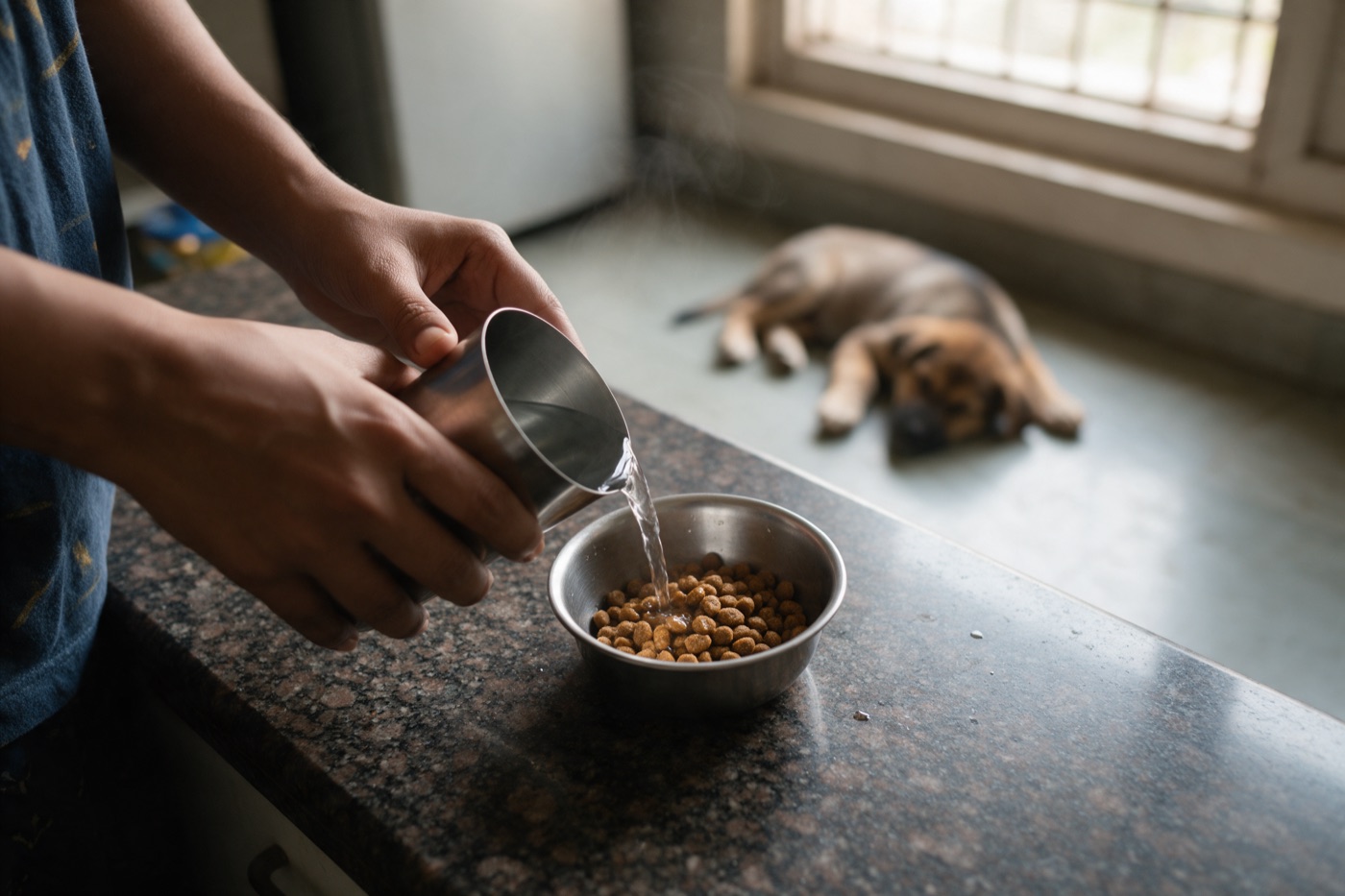
- Soft texture. Soak dry kibble in warm water (not hot) for 10 to 15 minutes until it mashes easily, or use a complete wet or fresh puppy food. Tiny breeds may need it softened until 10 or 12 weeks.
- The breeder's or shelter's food first. Keep feeding whatever your puppy ate before for the first 7 to 10 days. A new home is stressful enough without a new menu.
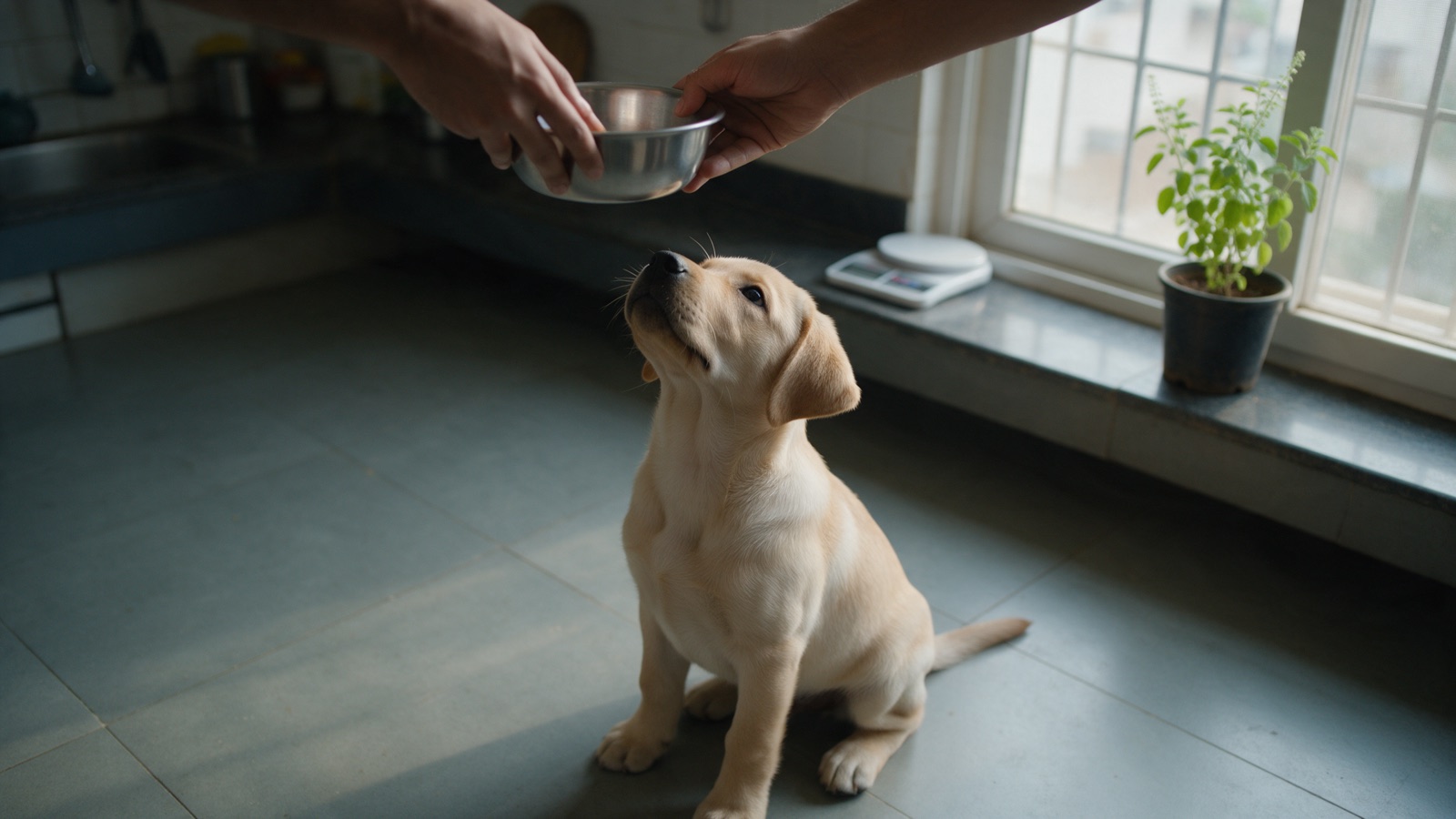
- Clean water at all times, in a heavy steel bowl he can't tip.
Can I cook at home for a 2-month-old puppy?
You can, but only with a recipe written for growing puppies by a vet or veterinary nutritionist, with the right calcium and vitamin supplements. When US researchers checked 200 home-made dog recipes, 95 percent were short of at least one essential nutrient, and that was for adult dogs. A puppy's needs are tighter still. Plain chicken and rice, or roti and dal, is not a puppy diet.
How much and how often: four meals a day
At 2 months, feed four meals a day, roughly every 3 to 4 hours while the house is awake. The daily amount comes from the calories on your food's label and your puppy's weight. As a rough example, a 3 kg puppy needs about 450 to 500 kcal a day; on a dry food with 380 kcal per 100 g, that is about 120 to 130 g a day, or a little over 30 g per meal. Our puppy feeding chart shows how to do this calculation for your own puppy and how meals drop to three at 3 months.
Weigh him once a week. A healthy 2-month-old should gain steadily, feel solid, and still have a visible waist from above. A round, drum-tight belly is more likely to mean worms or overfeeding than a happy, well-fed puppy.
A sample day for an 8-week-old puppy
- 7 am: toilet break outside or on the pad, then breakfast: a quarter of the day's food, softened. Toilet again 10 to 15 minutes later.
- 11 am: second meal, then a nap. Puppies this age sleep 18 hours or more a day.
- 3 pm: third meal, followed by a short play session indoors.
- 7 pm: last meal of the day, at least two hours before bedtime so he can empty his bladder before sleeping.
- Through the day: a few tiny training rewards (taken from his daily food or a treat broken to the size of a pea), and a water bowl that is always topped up.
Take the bowl away after 15 to 20 minutes, even if food is left. Set meals make toilet training easier and help you notice straight away if his appetite drops.
Why no cow's milk (and no doodh-roti)
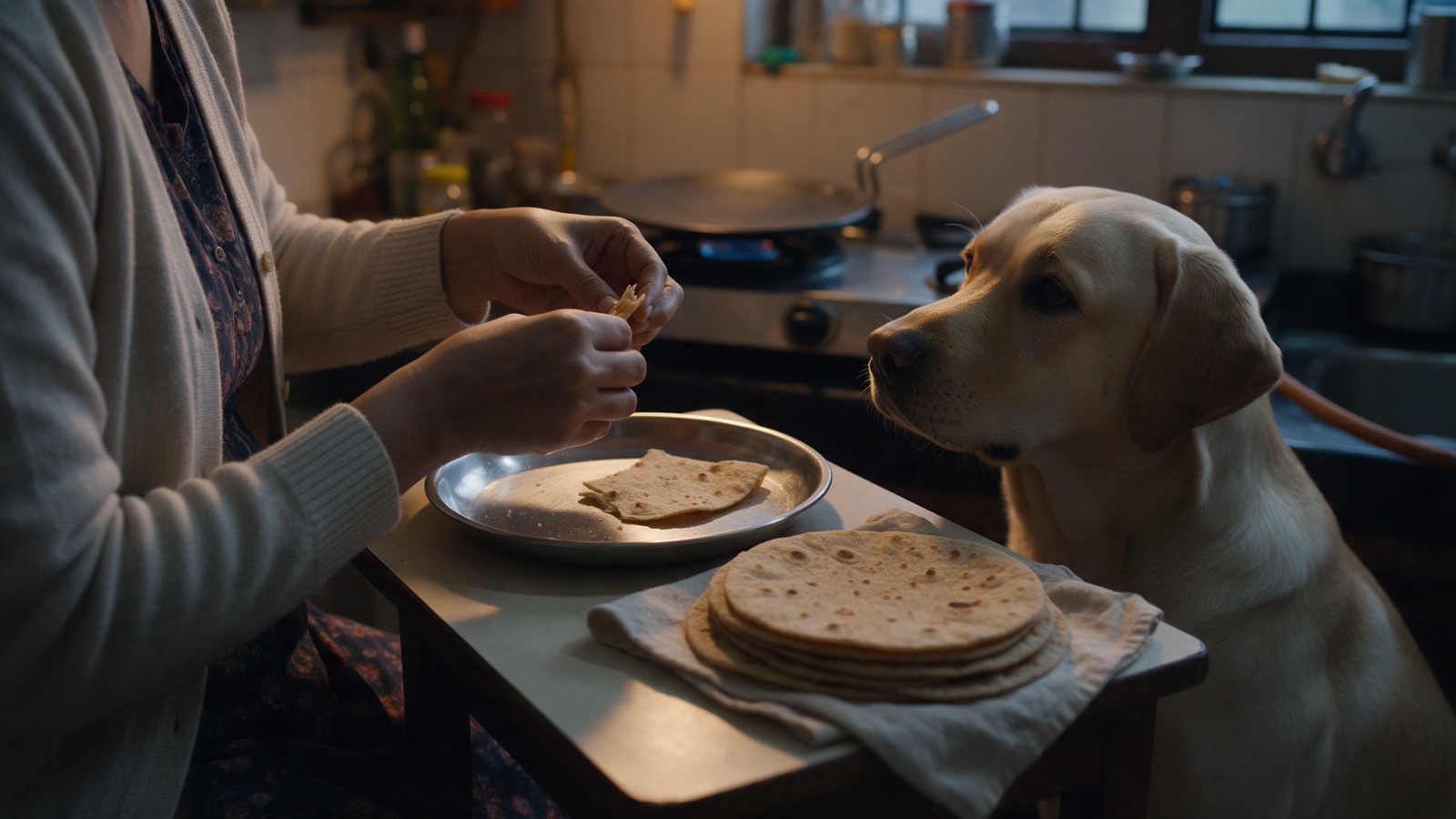
Milk-soaked roti is a kind gesture handed down through generations of Indian homes, but it doesn't suit a puppy. After weaning, most puppies make much less lactase, the enzyme that digests milk sugar, so cow's or buffalo milk often causes gas and loose stools. Roti fills a small stomach with wheat while leaving out the protein, calcium and vitamins he needs for bones and muscle. Our post on whether dogs can eat roti explains where a small piece of plain chapati can fit for older dogs.
Human baby cereals and infant formula are made for human babies, not puppies. If a puppy is under 6 weeks or not yet weaned, ask your vet about a puppy milk replacer instead.
Milk-soaked roti is a kind gesture handed down through generations, but it leaves out what a growing puppy needs.
Foods a 2-month-old puppy should never eat
Puppies explore with their mouths, and a small body means a small amount can cause big trouble. Keep these out of reach:
- Bones of any kind, especially cooked chicken or mutton bones, which splinter. Rawhide and hard chews are also too much for baby teeth.
- Onion, garlic, chives and anything cooked in masala, including leftover curry, biryani and gravy.
- Chocolate, grapes and raisins, and xylitol (a sweetener in some sugar-free gum and peanut butters).
- Salty and fried snacks: namkeen, chips, pakoras.
- Tea, coffee and alcohol.
- Sweets, including mithai and anything with ghee and sugar.
Our full list of foods dogs should never eat is worth sticking on the fridge. If your puppy swallows something toxic, call your vet or the nearest 24-hour animal hospital at once (the ASPCA Animal Poison Control Center can also advise), and don't try to make him vomit unless a vet tells you to.
Changing food without an upset tummy
Once your puppy has settled in, you may want to move to a different food. Do it over 7 to 10 days, mixing a little more of the new food into the old each day. If stools turn soft, hold at that mix for a couple of days before going on. Our dog poop chart will help you tell normal changes from worrying ones.
Go to the vet now if your puppy
- vomits more than once, or has diarrhoea with blood or a very bad smell
- refuses food for more than a few hours and seems flat or weak (toy-breed puppies can get dangerously low blood sugar)
- has a swollen, painful belly, or is straining without passing stool
Vomiting and bloody diarrhoea in an unvaccinated puppy can be parvovirus, which needs urgent treatment.
Gentle extras from our kitchen
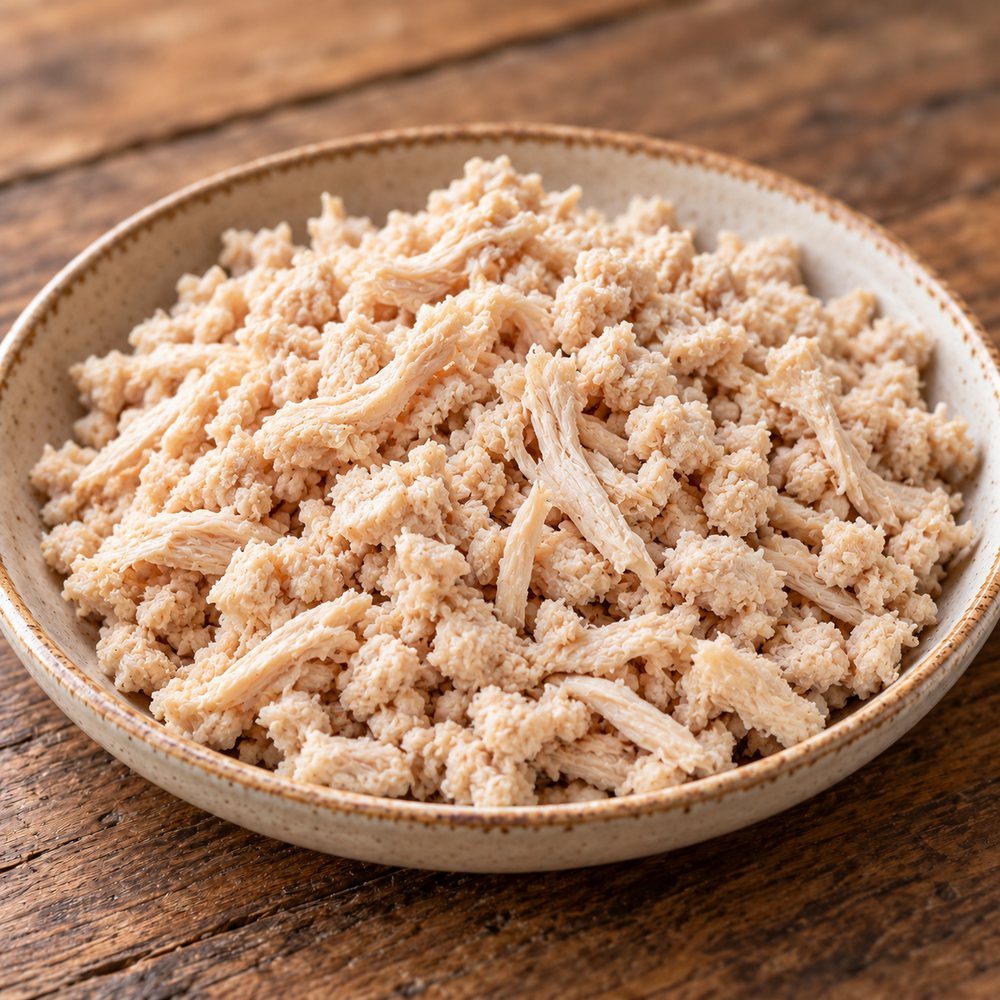
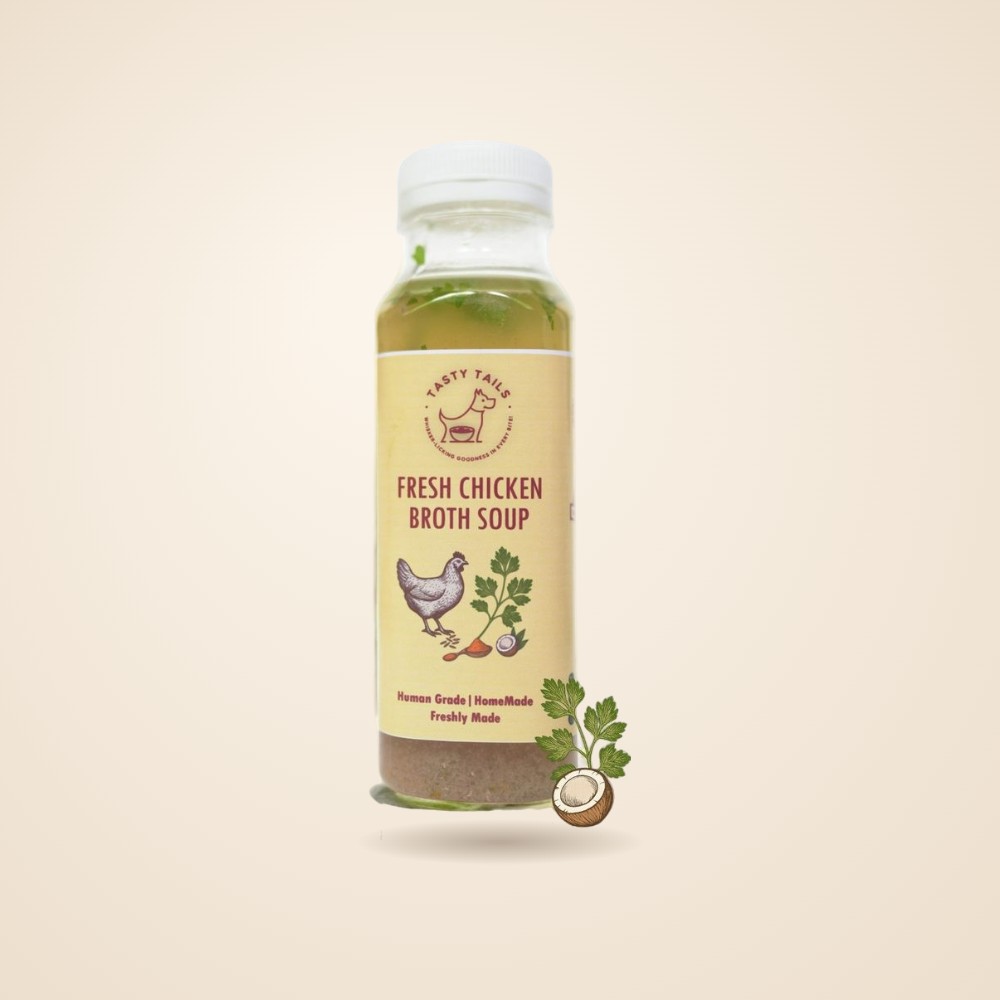
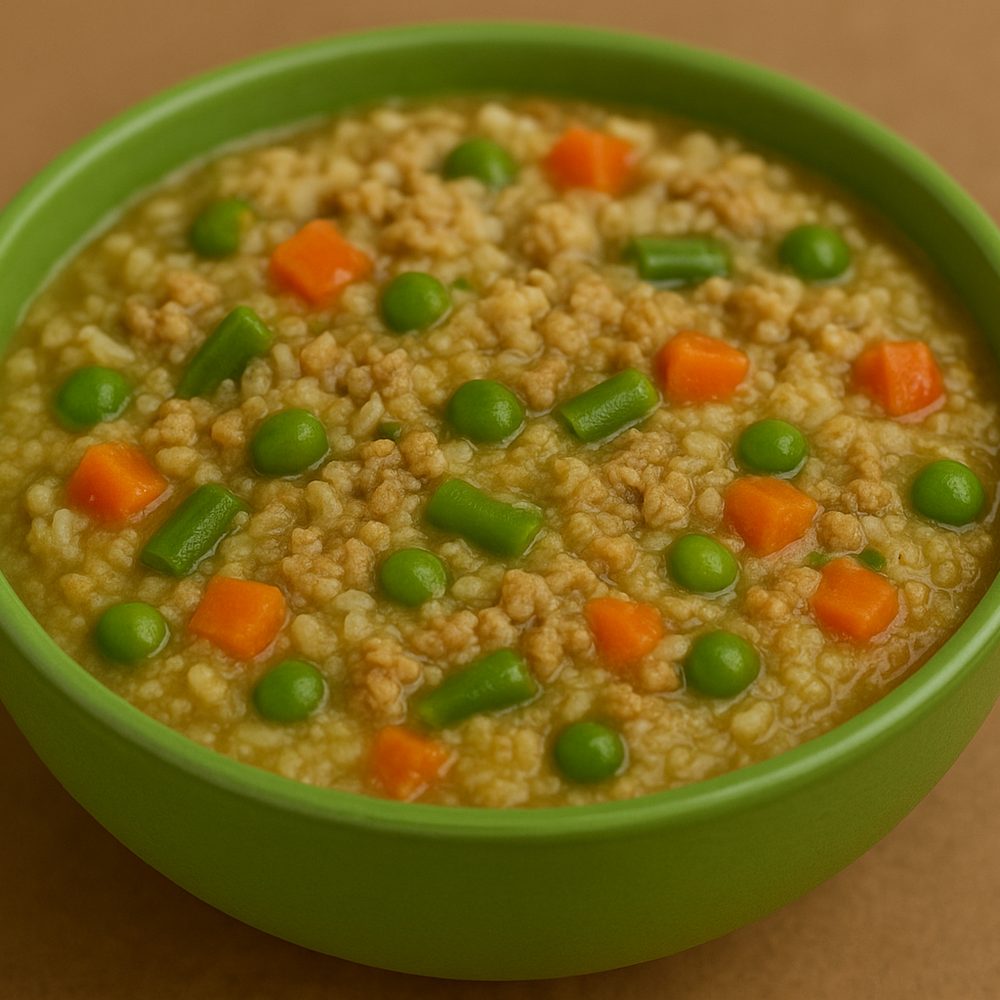
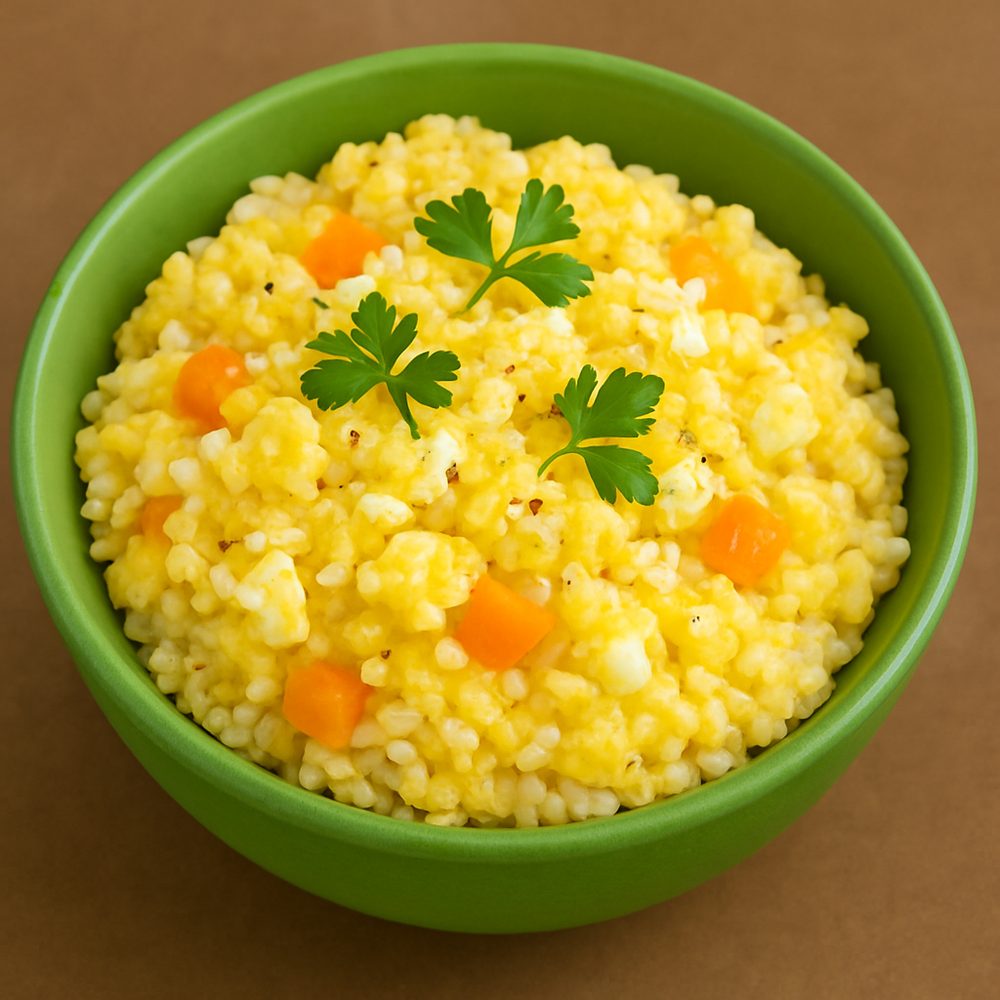
Once your puppy is settled on a complete puppy food, a spoonful of something fresh on top can tempt a slow eater. Count it towards the day's calories and keep it to a small share of the bowl. Plain Boiled Chicken Keema, with nothing else added, mixes easily into softened kibble. A little Fresh Chicken Broth, made with no salt, onion or garlic, is a tasty way to soak dry food. Our soft Chicken Keema Mix and the Egg Roster (mashed egg with sweet potato and rice) suit small mouths too. Add one new food at a time and watch his stools for a day or two.
Questions about what to feed a 2-month-old puppy
Can a 2-month-old puppy drink milk?
Not cow's or buffalo milk. Most puppies digest it poorly after weaning and get loose stools. Fresh water is all he needs to drink alongside a complete puppy food.
Can I give rice and curd to my 2-month-old puppy?
A small spoon of plain curd now and then is usually fine, but curd rice should not replace his puppy food. It doesn't have the protein, calcium and balance a growing puppy needs.
Can a 2-month-old puppy eat eggs?
A little well-cooked egg, mashed into his food, is fine for most puppies once settled. Never give raw egg, and keep it as an occasional extra rather than a meal.
How much water should a 2-month-old puppy drink?
Leave clean water out all day and let him drink as he likes. Puppies on dry food drink more. If he suddenly drinks far more or far less than usual, tell your vet.
When can my puppy eat dry kibble without soaking?
Most puppies can manage dry kibble at about 10 to 12 weeks, once their teeth are through. Mix soaked and dry for a week to make the change gradual.
Sources
- WSAVA Global Nutrition Guidelines and toolkit
- Stockman et al. (2013), Evaluation of recipes of home-prepared maintenance diets for dogs, JAVMA
- American Kennel Club: Puppy feeding fundamentals
- American Kennel Club: Can dogs drink milk?
- ASPCA: People foods to avoid feeding your pets
- Merck Veterinary Manual: Food hazards
Soft toppers for little mouths
Plain, gentle extras to spoon over a complete puppy food once your puppy has settled in.



Main Meals For dogs & cats
Egg Roster


- Protein
- Healthy fats
- Fibre
- Vitamins
₹250 Small · 250 g 3 sizes
See the full menu or ask our nutritionist what suits your pet.
Was this helpful?
Share with a pet parent