Dog dry skin in winter: dandruff, baths, food and when to see a vet
White flakes on the sofa every December? Why winter dries out your dog's skin, the bath and food changes that help, and the signs that it is not just dry air.
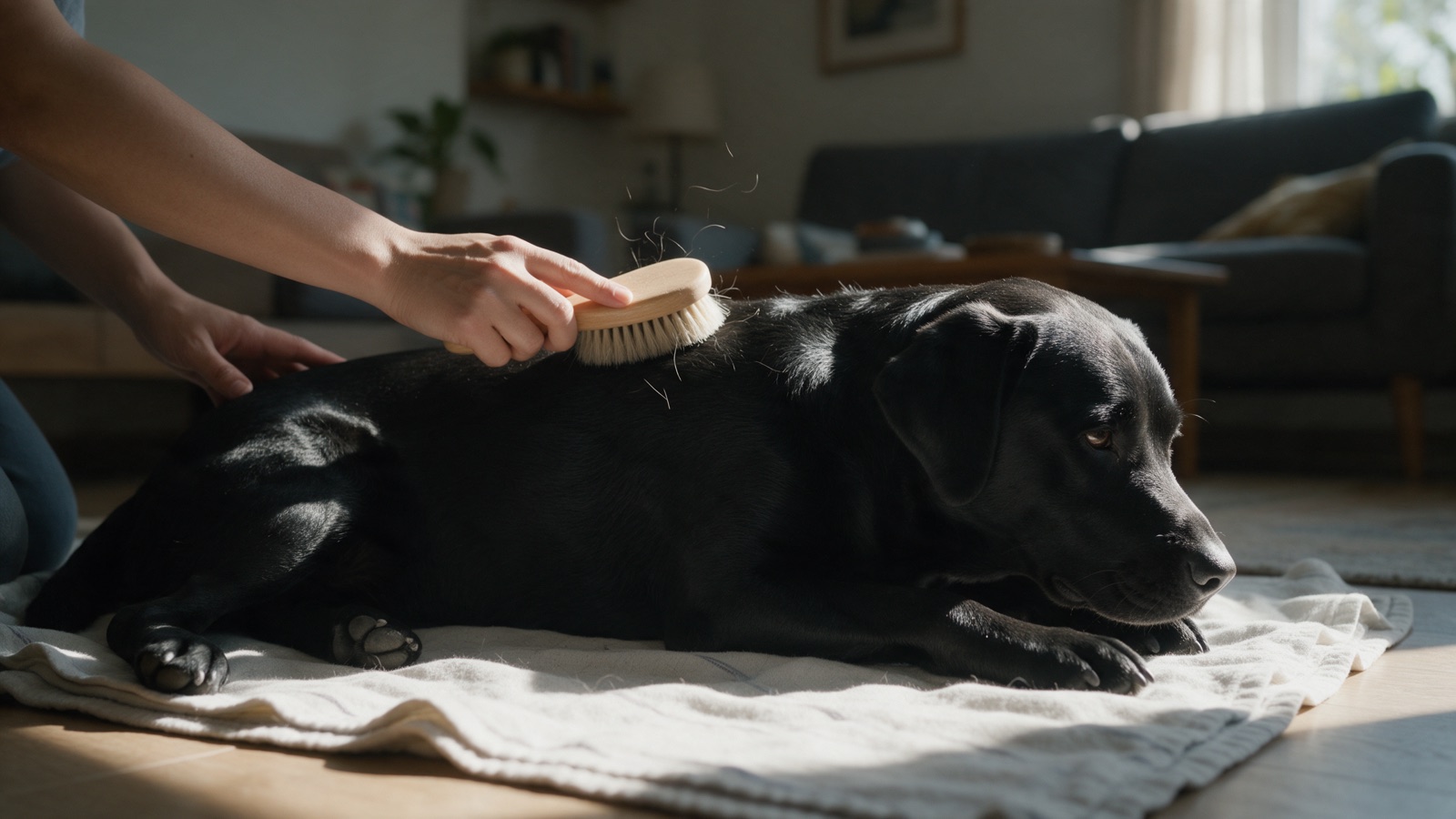
You pick your Labrador up off the black sofa and there it is: a sprinkle of white flakes, like someone shook salt across the cushion. Is dog dry skin in winter normal? Often, yes. Bangalore's cool months bring dry afternoon air, fewer walks in the sun and, in many homes, more frequent warm baths "because it's cold", and all three can leave a dog's skin tight, flaky and a little itchy.
Mild winter dandruff usually improves with fewer baths, gentle brushing, enough water and some omega-3 fats in the diet. But flakes can also be a sign of mites, allergies, infection or a hormone problem, so if the flaking comes with redness, hair loss, a smell or constant scratching, it is a job for your vet rather than a new shampoo.
White flakes on the sofa every December? Your dog's skin is feeling the dry air too.
Why dog dry skin gets worse in winter
A dog's skin is protected by a thin film of natural oils and a barrier of tightly packed cells. Anything that strips those oils or dries that barrier leads to flaking. In a Bangalore winter, the usual suspects are:
- Dry air. Relative humidity drops in the afternoons from December to February, and skin loses moisture faster.
- Bathing too often, or too hot. Warm water feels kind on a cold day but removes more oil. Human shampoos and soaps, which are made for a different skin pH, make it worse.
- Drinking less water. Dogs feel less thirsty in cool weather, and mild dehydration shows in the skin and coat.
- Heaters and warm corners. A dog who sleeps right next to a room heater or under a warm blanket for hours dries out quickly.
- Less brushing. Coats get ignored when walks are short, so dead hair and skin flakes build up.
If you read our earlier post on skin and coat health as the weather turns, think of this as the winter chapter: the same skin, a drier season.
Is it winter dandruff or something else?
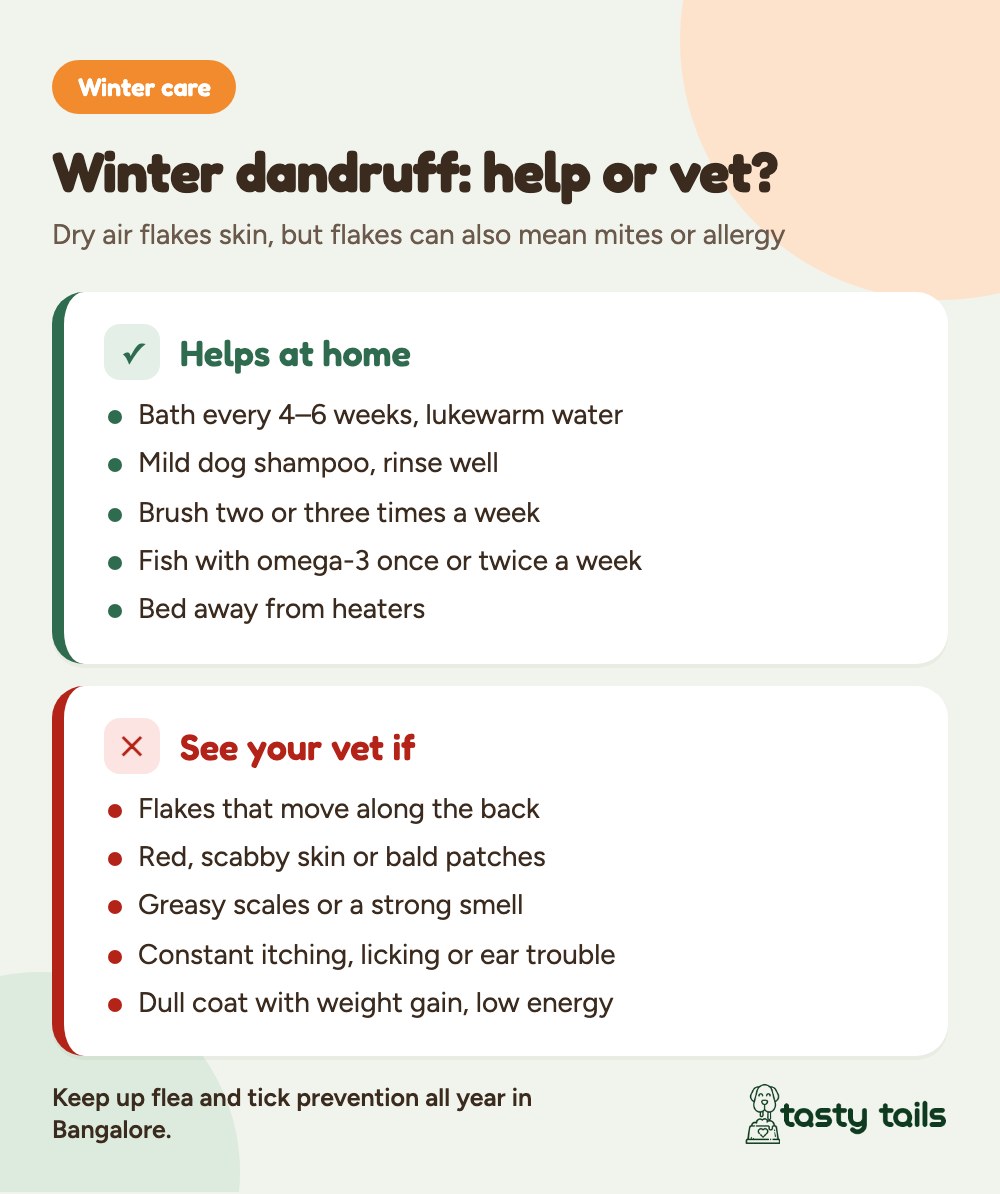
Plain winter dryness looks like small, white, dry flakes, mostly along the back, with a coat that may feel a little dull. The dog is otherwise happy and may scratch now and then. Book a vet visit if you see any of these, because they point to something more than dry air:
- Flakes that seem to move or a lot of dandruff along the spine. Cheyletiella mites, sometimes called "walking dandruff", look exactly like this and can cause itchy red bumps on people in the house too.
- Red, broken or scabby skin, bald patches, or circular areas of hair loss (mites, fungal infection or bacterial infection).
- Greasy, yellowish scales or a strong, rancid smell, which suggests seborrhoea or a yeast problem.
- Intense itching, licking paws or chewing, especially with ear infections, which often signals allergy. Food allergy is one possibility; see our guide to food allergies and elimination diets.
- Dry, thin coat with weight gain, low energy and seeking warmth, which can be a sign of an underactive thyroid in middle-aged dogs.
- Fleas or ticks. They do not vanish in a Bangalore winter, so keep up year-round prevention.
Your vet may do a skin scraping, tape test, fungal culture or blood test. That small step saves weeks of trying random oils and shampoos on a problem that needs a specific treatment.
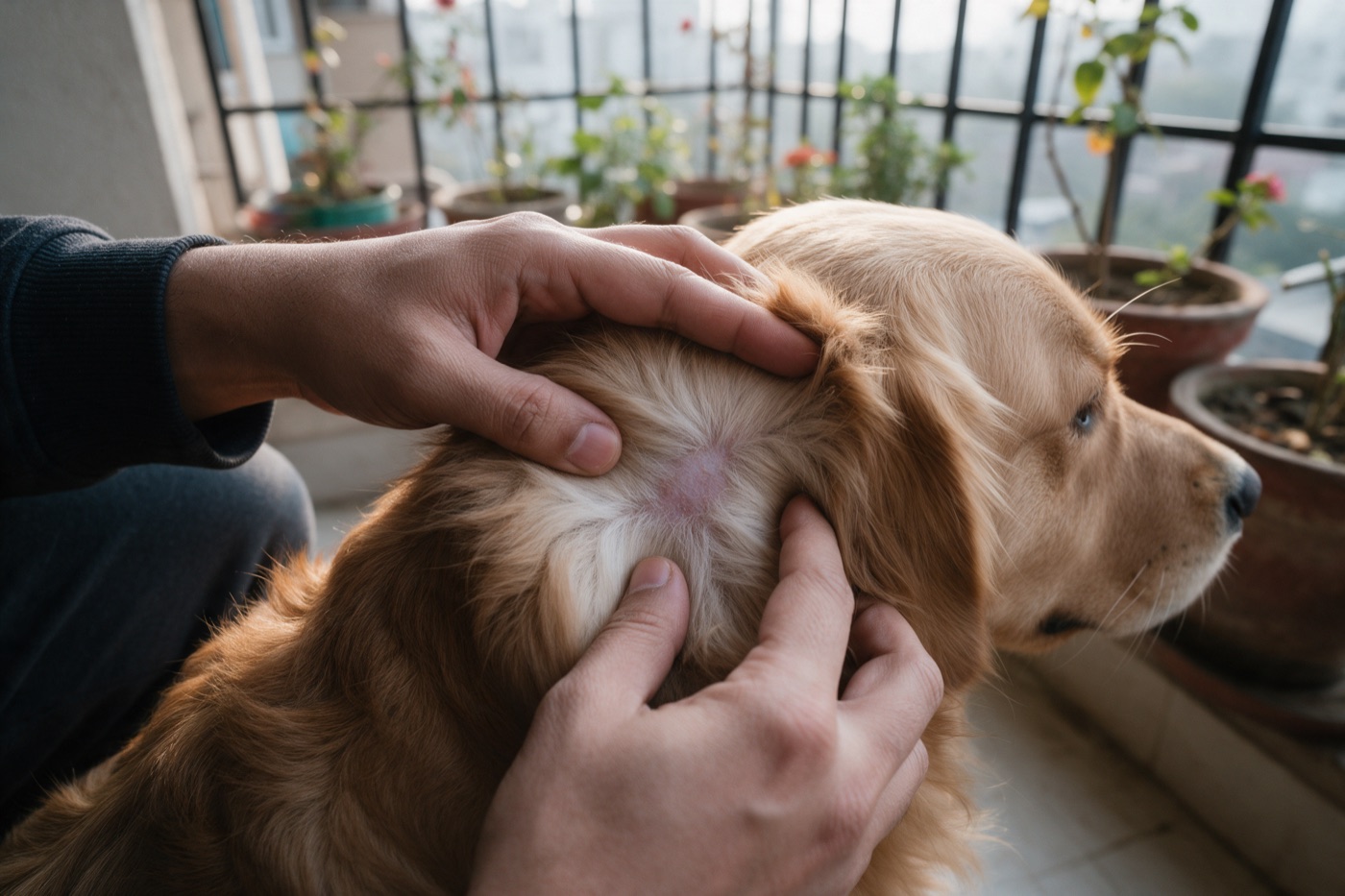
Bathing in winter: less is more
Most healthy dogs with normal skin need a bath only every four to six weeks, or when they have rolled in something. In winter, aim for the longer end of that range unless your vet has prescribed a medicated shampoo with its own schedule.
- Use lukewarm water, not hot. If it feels hot on your wrist, it is too hot for the dog.
- Use a mild dog shampoo, ideally a moisturising or oatmeal-based one. Skip human shampoo, bathing soap and dishwashing liquid.
- Rinse thoroughly. Leftover shampoo is a common cause of itching and flakes.
- Dry completely, especially thick or double coats, armpits and between the toes. Bathe in the late morning so the dog can finish drying in the sun, not on a damp evening.
- Brush between baths. Two or three short brushing sessions a week spread natural oils and lift out dead skin far better than another wash.
Many Indian homes do a weekly oil massage for children; please skip the mustard oil for dogs. Strong oils can irritate skin and get licked off. If you want something topical, ask your vet for a dog-safe moisturising spray or rinse.
Two or three short brushing sessions a week do more for winter skin than another bath.
Feeding for better skin in the dry months
Skin is one of the first places a diet shows. For winter skin, focus on:
- A complete, balanced diet with good-quality protein. Skin and hair are built from protein, and a large share of a dog's daily protein goes into maintaining them.
- Omega-3 fats from fish. EPA and DHA, found in oily fish such as salmon and sardines, support the skin barrier and help calm inflammation. Fish once or twice a week is an easy start.
- Omega-6 fats, which most cooked diets with chicken and some vegetable oil already provide.
- Water in the food. Fresh cooked meals carry a lot of moisture. Adding a little warm water or unsalted broth helps dogs who barely touch their bowl. Our winter diet guide has more on keeping dogs hydrated in the cool months.
Fish oil supplements can help some dogs, but doses vary with weight and health, and too much can upset the stomach or affect clotting. Ask your vet before starting one, and avoid giving cod liver oil without advice, as it also carries vitamins A and D.
Small home changes that help
- Move the dog bed away from heaters and direct hot air; a raised bed with a cotton sheet is ideal.
- If your home air is very dry, a humidifier in the room where the dog sleeps can help, or a few indoor plants and drying clothes indoors on a rack.
- Wash bedding weekly in a mild, fragrance-free detergent and rinse well.
- Choose soft cotton if your dog wears a sweater, and check the skin underneath for rubbing. Our sweater guide explains which dogs need one at all.
- Let your dog enjoy some morning sun on walks rather than spending the whole day indoors.
Skin-friendly meals from our kitchen
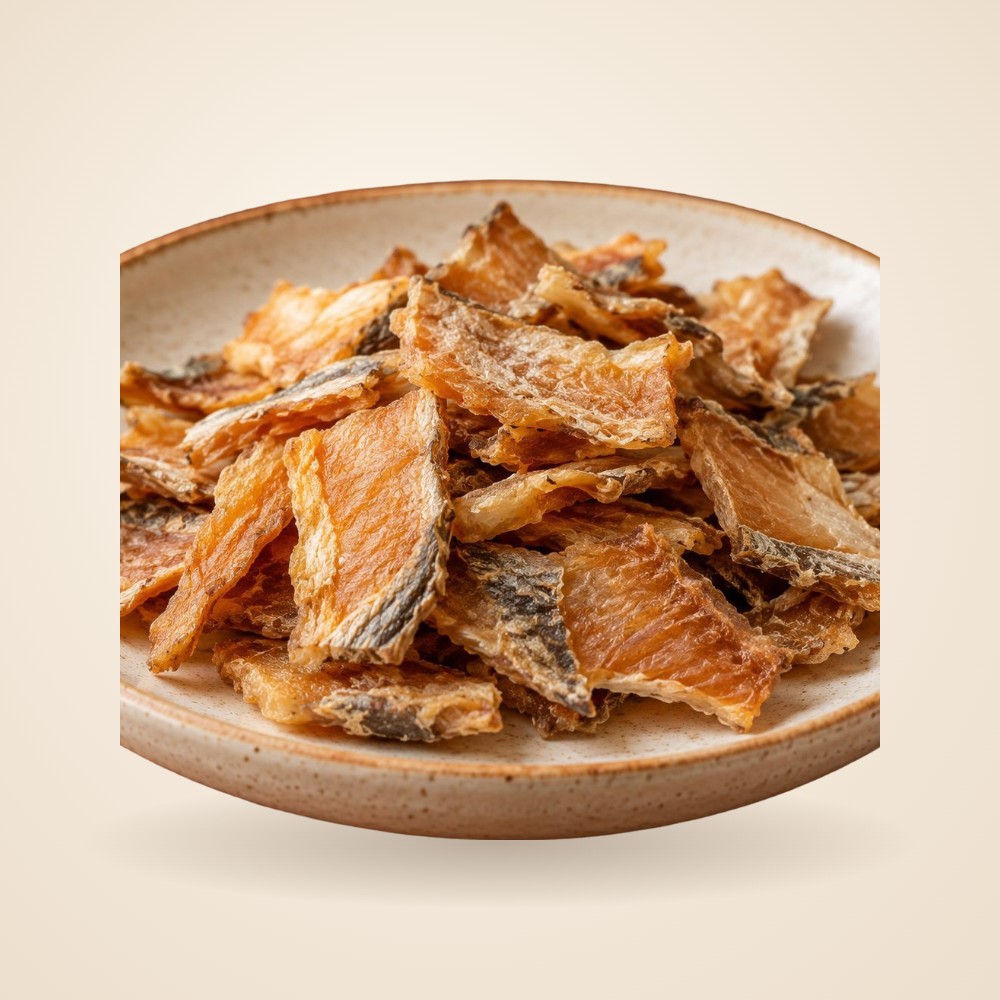
If you would like an easy way to add fish to your dog's week, our Salmon Fish Classic Bowl brings omega-3 fats from salmon, with rice, sweet potato, carrot, peas, zucchini and spinach. The Complete Day Bowl combines boiled egg, deboned sardines and chicken, with omega-3s from the sardines. For treats, Fish Bites are a single-ingredient fish treat, slowly dehydrated until crisp, and a good choice for dogs who cannot have chicken. If your vet suspects a food allergy, check the ingredients against their advice first.
Questions about dog dry skin in winter
Why does my dog get dandruff in winter?
Dry air, more frequent or hotter baths, drinking less water and sleeping near heaters can all dry out a dog's skin. If flakes come with redness, hair loss, smell or heavy itching, see your vet to rule out mites, infection or allergy.
How often should I bathe my dog in winter?
For most healthy dogs, every four to six weeks is plenty, with regular brushing in between. Use lukewarm water and a mild dog shampoo, and dry your dog fully.
Can I put coconut oil on my dog's dry skin?
A very thin layer is unlikely to harm most dogs, but the evidence that it helps is limited, and dogs lick it off, which can cause loose stools. A vet-recommended moisturising rinse or a diet with omega-3 fats is usually more useful.
Can winter dandruff spread to people?
Dry skin itself does not spread, but Cheyletiella mites, which look like dandruff, can cause itchy bumps on people. If you or your family get itchy after cuddling the dog, tell your vet.
Sources
Fish for winter skin and coat
Meals and a treat with fish, for an easy dose of omega-3 fats through the dry months.

Main Meals For dogs & cats
Salmon Fish Classic Bowl
-

-

-

-

-

- +3
- Protein
- Healthy fats
- Fibre
- Vitamins
₹950 Medium · 350 g




See the full menu or ask our nutritionist what suits your pet.
Was this helpful?
Share with a pet parent