Navratri fasting foods: what your dog can share and what to skip
A food-by-food guide to the Navratri vrat kitchen: which fasting staples your dog can have in tiny plain amounts, and which (raisins, fried snacks, salt, xylitol sweets) to keep away.
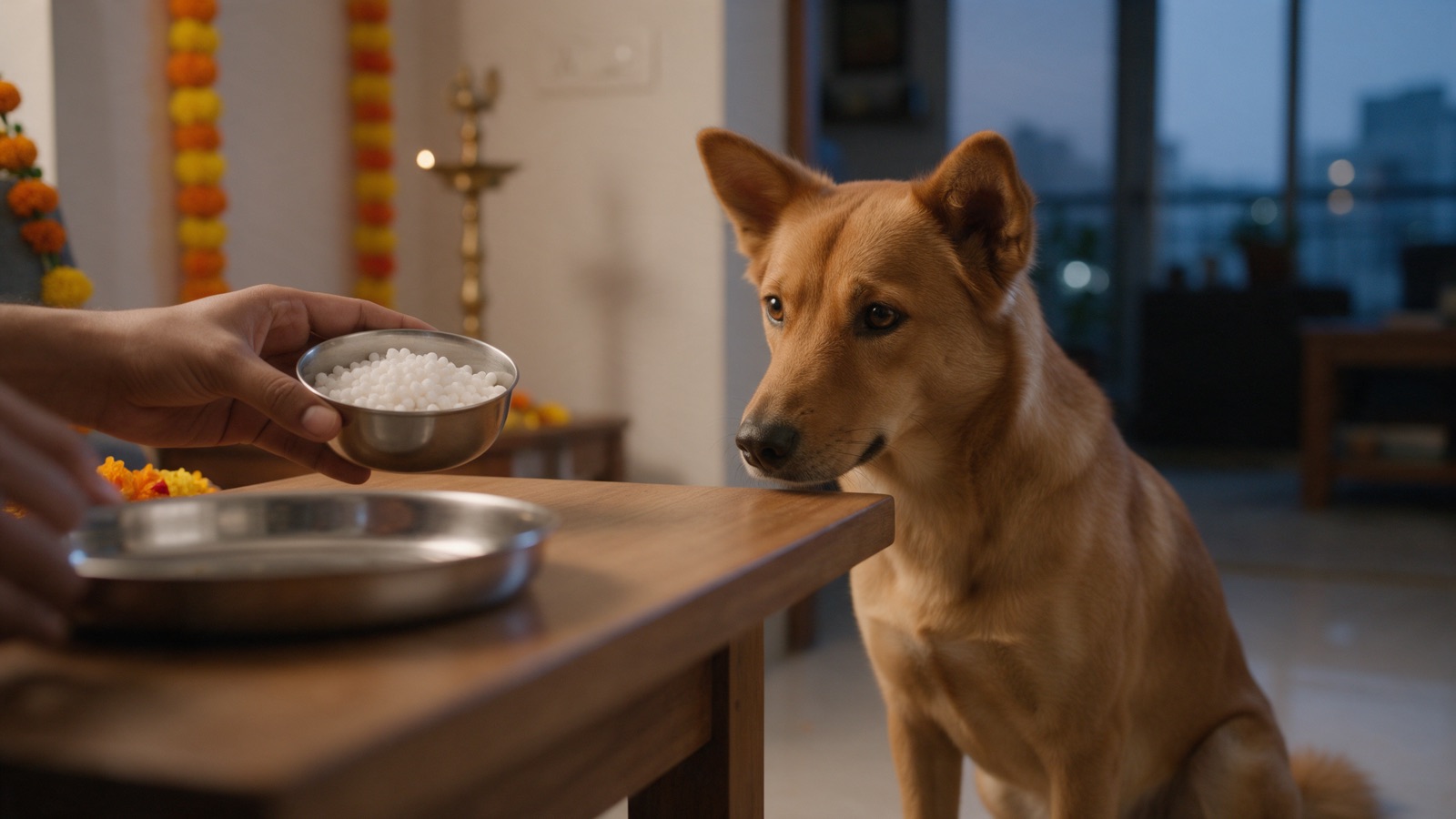
Navratri changes the whole kitchen. For nine days the onion and garlic disappear, sendha namak replaces regular salt, and the counter fills up with sabudana soaking in a bowl, kuttu atta, singhara flour, makhana and a steady supply of fried vrat snacks. Your dog notices every bit of it, and by day two there is usually a nose resting on the edge of the dining table during the evening meal.
A few vrat staples are fine for dogs in tiny, plain amounts. The catch is "plain": most of what makes fasting food tasty for us (ghee, sendha namak, chillies, sugar, deep frying, raisins) is exactly what upsets a dog's stomach, or worse.
Your dog does not need to fast, but they will certainly supervise the sabudana.
First, your dog does not need to fast
Vrat is a human practice. Dogs and cats should keep eating their normal, complete meals on schedule right through Navratri; skipped meals often mean acidity and a morning vomit of yellow bile.
If your kitchen goes vegetarian for these days, most dogs manage a balanced vegetarian bowl for a short spell, but switch gradually (our 7-day transition plan works here too). Cats are obligate carnivores and need animal protein every day, so keep them on their usual food.
The quick answer: what is OK and what to avoid
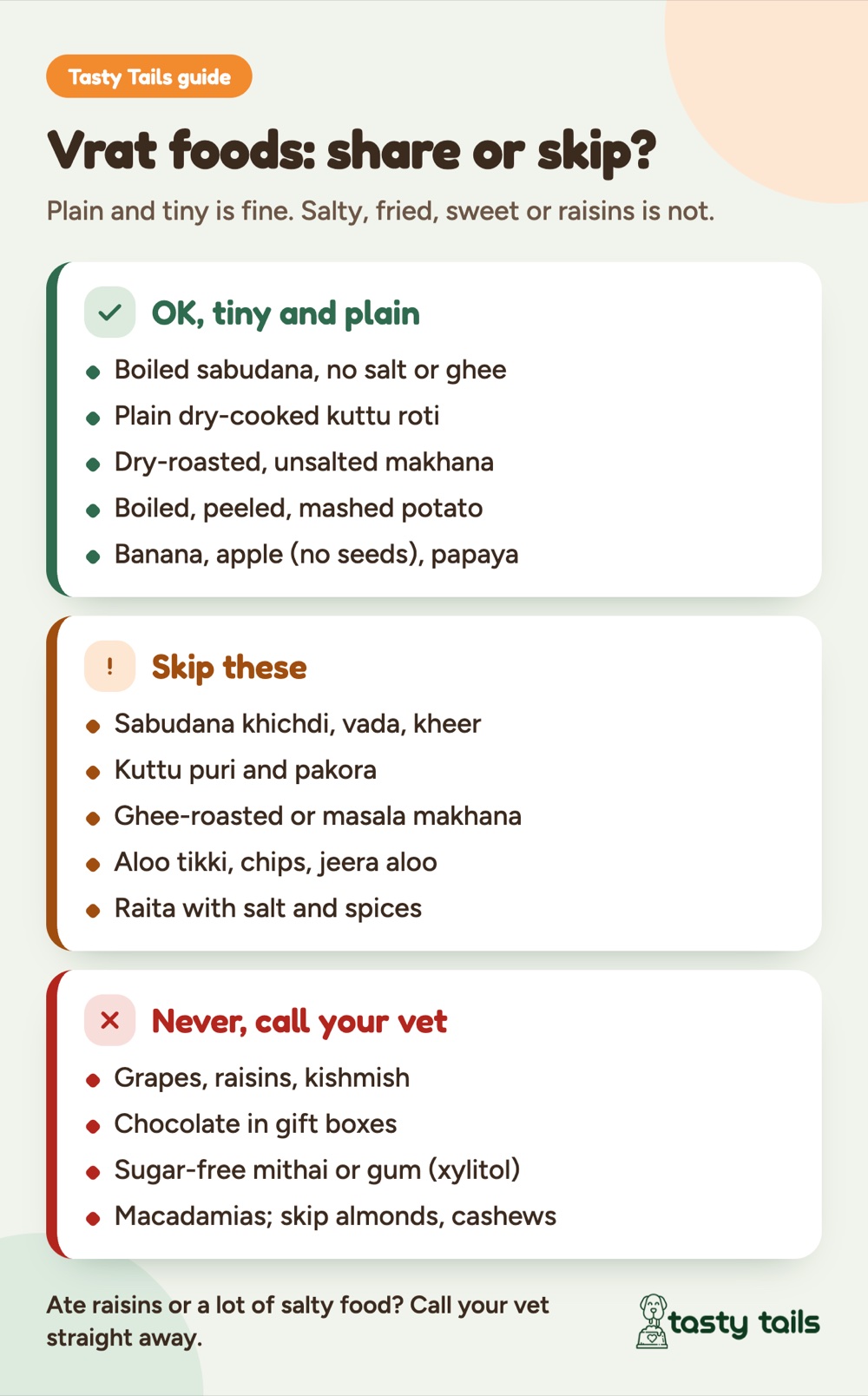
Vrat food OK in tiny plain amounts Avoid Sabudana A spoon of plain boiled pearls, no salt or ghee Sabudana khichdi, vada, kheer, raw soaked pearls Kuttu (buckwheat) A small piece of plain, dry-cooked kuttu roti Kuttu puri, pakora, anything with sendha namak Singhara A peeled, boiled water chestnut cut small Singhare ka halwa, fried singhara puri Makhana A few dry-roasted, unsalted pieces Ghee-roasted, masala, salted or caramel makhana Potato and sweet potato Boiled, peeled and mashed, no salt Aloo tikki, chips, jeera aloo, raw or green potatoes Samak rice, rajgira A spoon, plain cooked Samak khichdi with chillies and ghee Curd A spoon of plain, unsweetened curd if your dog tolerates dairy Raita with salt and spices, sweetened curd, shrikhand Fruit Banana, apple (no seeds or core), papaya, in small pieces Grapes and raisins, always"Tiny" means roughly a teaspoon for a small dog and a tablespoon for a large one. All extras together, including treats, should stay under about 10% of your dog's daily calories. If you are not sure what that looks like for your dog, see how much should my dog eat.
Sabudana, kuttu, singhara and makhana, one by one
Sabudana (tapioca pearls)
Sabudana is almost pure starch: harmless cooked soft and plain, but little more than calories. The problem is how we eat it. Khichdi carries ghee, sendha namak, green chilli and peanuts, and vada is deep fried. Raw soaked pearls are gluey and hard to digest. To share, set aside a spoon of boiled pearls before anything else goes in.
Kuttu atta (buckwheat flour)
Buckwheat is generally well tolerated by dogs in small amounts. A torn piece of plain kuttu roti from a dry tawa is fine; puris and pakoras, which soak up oil, are not. Most years there are also reports of people falling ill from stale or adulterated kuttu flour, so buy from a shop you trust. If the flour smells off, it is off for everyone.
Singhara (water chestnut)
Fresh singhara, boiled and peeled, can be offered in small pieces. Never give the hard, horned outer shell, which is a choking and gut-blockage risk. Singhare ka atta usually turns up as halwa (ghee and sugar) or fried puris, so those are a no.
Makhana (fox nuts)
A few pieces of plain, dry-roasted makhana make a reasonable occasional treat; break them up for small dogs. Shop-bought makhana is usually salted, flavoured, ghee-roasted or caramel-coated, so read the packet. Makhana kheer, with its milk, sugar and raisins, is off the list.
Sendha namak is still salt
For a dog, sendha namak is sodium chloride just like table salt. A balanced diet already contains the sodium your dog needs, small amounts in shared food add up over nine days, and a dog who gets into a salty snack bag can eat a lot very quickly.
Too much salt causes vomiting, diarrhoea, heavy thirst and urination, and in serious cases wobbliness, tremors or seizures. If your dog has eaten a large amount of something salty, call your vet rather than waiting to see.
Sendha namak is still salt, and ghee, chillies and raisins are where vrat food goes wrong for dogs.
Fried snacks, ghee and vrat sweets
The fasting snack tin is the real risk this week. Banana chips, potato chips, sabudana mixture, fried peanuts and kuttu pakoras are high in fat and salt and often contain green chilli or black pepper. A sudden fatty meal is one of the classic triggers for pancreatitis in dogs, a painful inflammation that can need hospital care. Small breeds, overweight dogs and dogs who have had pancreatitis before are most at risk.
Vrat sweets bring their own problems:
- Raisins and kishmish in sabudana kheer, makhana kheer and halwa. Grapes and raisins can cause kidney failure in dogs, and there is no known safe amount. Any raisin is a call to your vet.
- Sugar-free mithai and chewing gum. Some sugar-free products contain xylitol, which can drop a dog's blood sugar dangerously within minutes and damage the liver. Check labels and keep these well out of reach.
- Chocolate in festive gift boxes is toxic to dogs and cats.
- Nuts. Macadamias are toxic to dogs; almonds and cashews are fatty and a choking hazard. Skip them.
- Ghee-heavy halwas and laddoos, with lots of fat and sugar in one go.
For the full list of kitchen dangers, keep our Indian kitchen guide to foods pets should never eat bookmarked.
Potatoes and curd
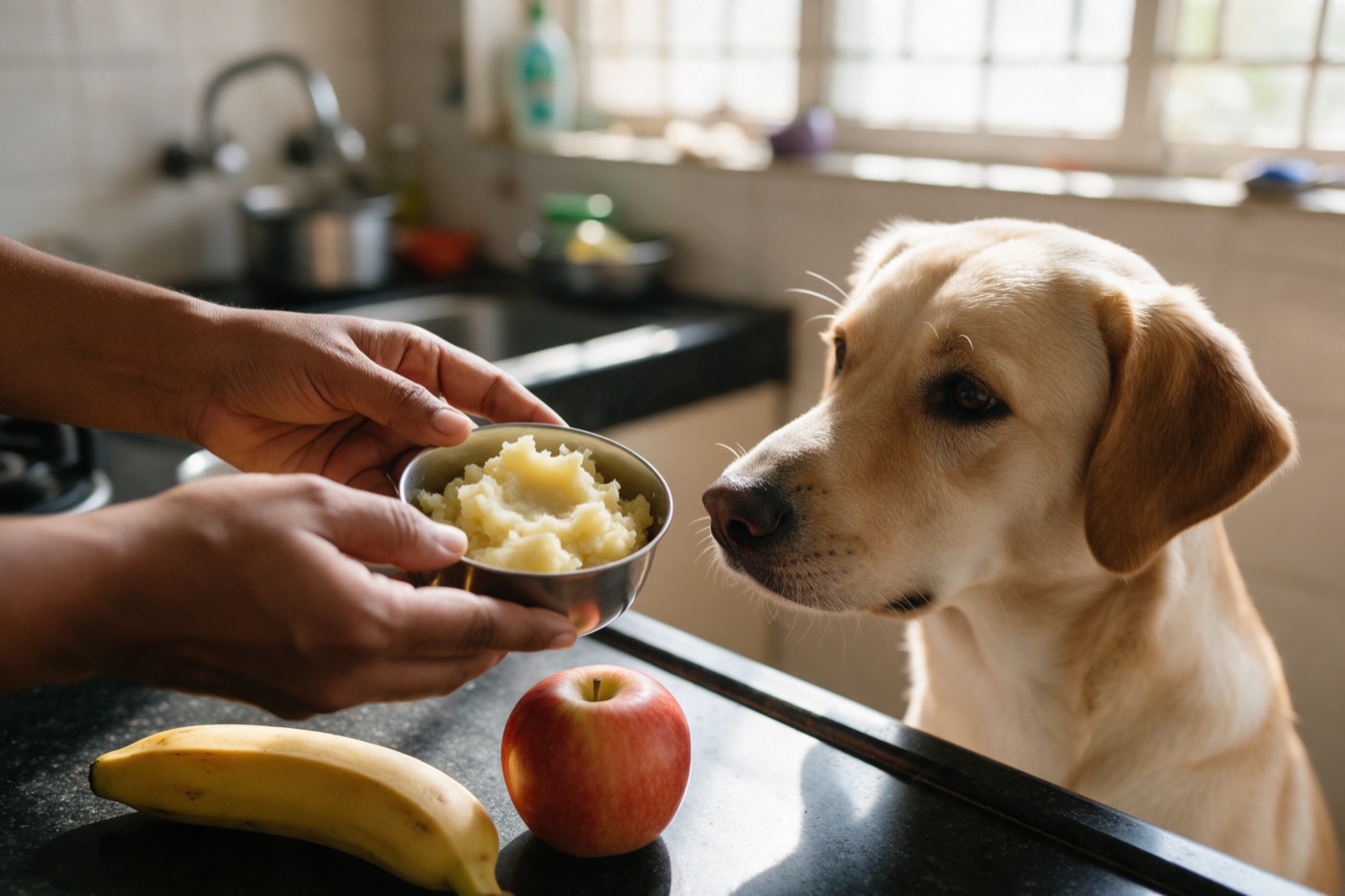
Potatoes are fine boiled, peeled and mashed with nothing added. Raw potatoes, green patches and sprouts contain solanine, so cook them through and cut green bits away. Sweet potato (shakarkandi), boiled plain, is an even better choice, and so is plain boiled kaddu (pumpkin) or lauki, which many homes cook during Navratri anyway.
Curd is a common question, and we have covered it in detail in is curd rice good for dogs. The short version: a spoon of plain, unsweetened curd is tolerated by many dogs, but some are lactose intolerant and will get gas or loose stools. Cats are more often lactose intolerant than dogs, so go very easy or skip it. Vrat raita with sendha namak, roasted jeera and chilli powder is not for pets.
Signs to watch for after a festive slip-up
Most dogs who steal one piece of plain makhana are fine. Call your vet the same day if you see:
- vomiting more than once or twice, or diarrhoea that lasts beyond a day
- a hunched "praying" posture, a tender or swollen belly, or refusal to eat (possible pancreatitis)
- unusual thirst, wobbliness or tremors after a salty snack
Go to the vet now if your dog has eaten any grapes or raisins, anything that might contain xylitol, chocolate, or a large amount of fried or salty food, or if they have a seizure or collapse. Do not try to make your dog vomit at home unless a vet tells you to. Your nearest 24-hour vet clinic is your first call; the ASPCA Animal Poison Control Center is a further source of advice.
Navratri-friendly bowls from our kitchen
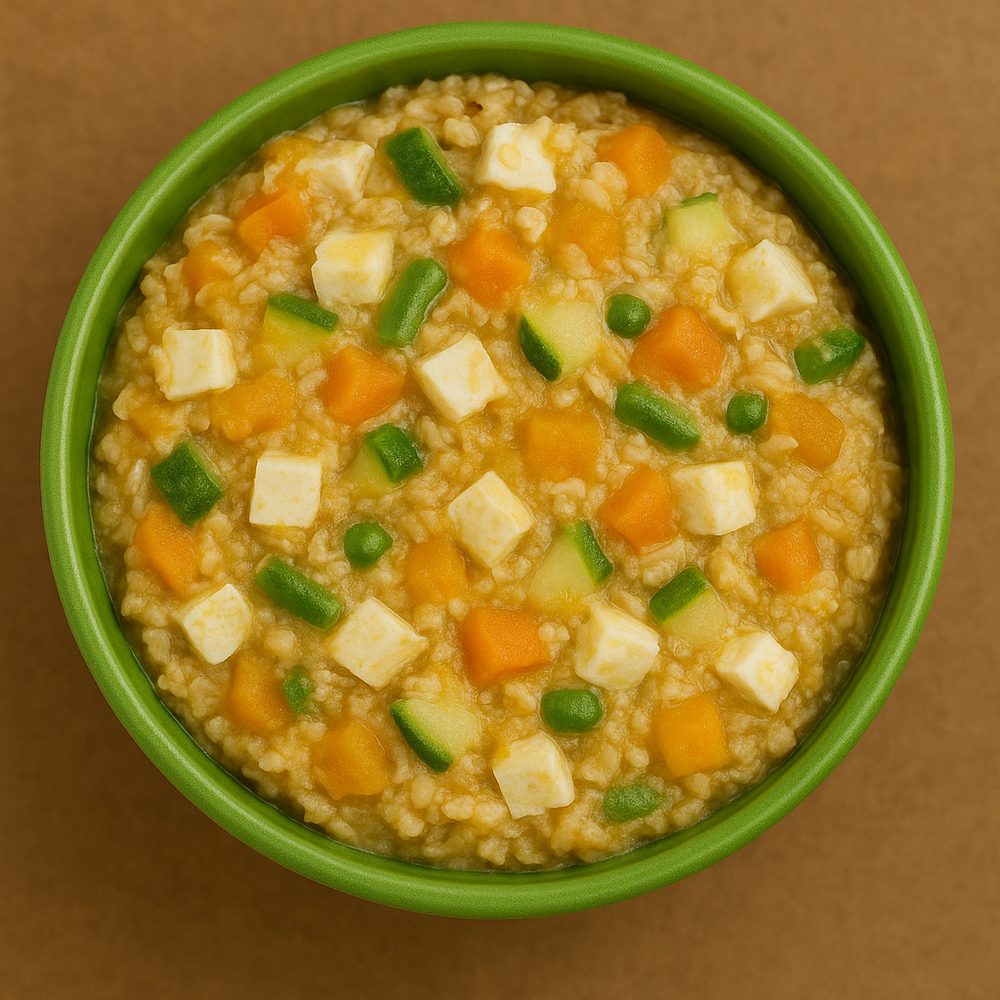
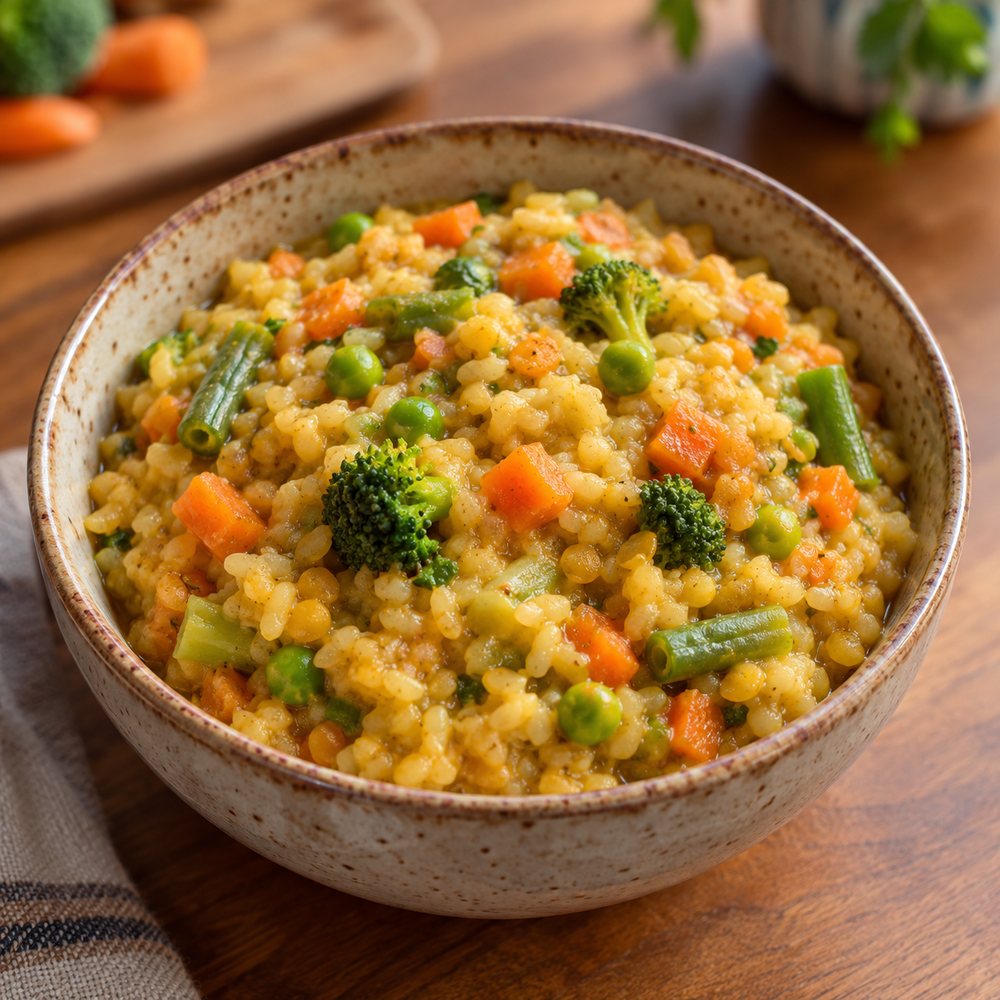
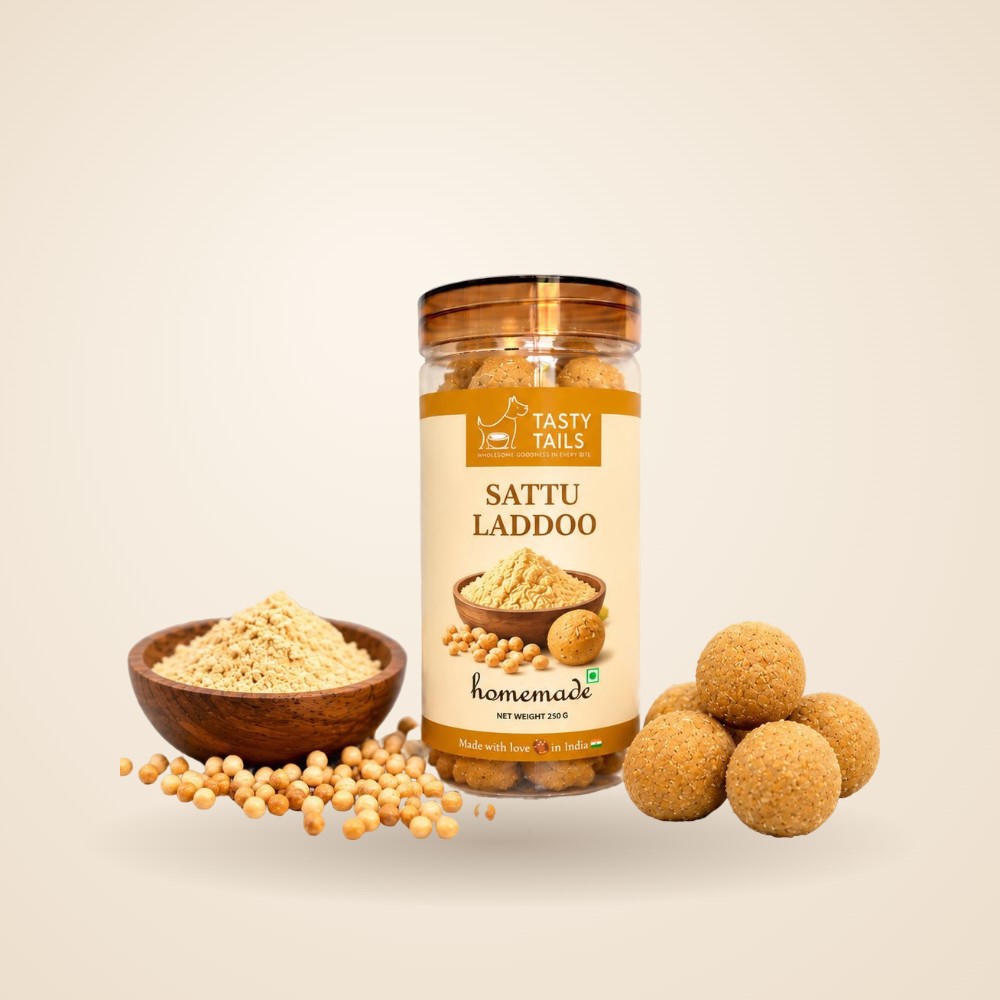
If your home goes vegetarian for these nine days and you want your dog's bowl to match, our Mash Mash (Veg) is oats with sweet potato, pumpkin, potato, carrot, French beans and raw paneer, all ingredients that will look familiar from your own vrat thali, minus the salt and ghee. Daal Delight is moong and masoor dal slow-cooked with rice and vegetables, finished with just a spoon of ghee across the bowl. For a small festive treat that is not fried, try our Sattu Laddoo, made from organic roasted gram flour, broken into small pieces.
Questions about sharing Navratri fasting food with dogs
Can dogs eat sabudana khichdi?
It is better not to. Sabudana khichdi usually contains ghee, sendha namak, green chilli and peanuts. A spoon of plain boiled sabudana set aside before cooking is fine as an occasional extra.
Is sendha namak safe for dogs?
Sendha namak is still salt, so it is no safer for dogs than table salt. Dogs get the sodium they need from a balanced diet, and extra salt can cause vomiting, thirst and, in large amounts, salt poisoning.
Can dogs eat makhana?
Yes, a few plain, dry-roasted, unsalted pieces are fine as an occasional treat. Avoid flavoured, salted, ghee-roasted or caramel makhana, and makhana kheer.
My dog ate kheer with raisins. What should I do?
Call your vet or nearest 24-hour clinic straight away, even if your dog seems fine. Raisins can cause kidney failure in dogs and early treatment matters.
Sources
Vegetarian bowls for Navratri
If your kitchen goes vegetarian for nine days, these bowls and treats keep your dog's food simple, balanced and free of salt and spice.






See the full menu or ask our nutritionist what suits your pet.
Was this helpful?
Share with a pet parent