Fresh vs Store-Bought Dog Food: Why a Real Kitchen Beats Factory Kibble
An honest side-by-side of fresh dog food and store-bought kibble: ingredients, freshness, nutrition, digestibility and cost, and how to choose for your dog.
Every dog parent has stood in that aisle, bag in hand, wondering the same thing: is this really the best I can do for the furry kid who greets me at the door like I'm the whole world? You want to feed them well, but the shelf is loud and the labels are louder. Fresh food for dogs sounds lovely in theory, but does it actually beat the convenience of store-bought kibble?
Let's be fair, honest, and a little bit scientific about it. This is a side-by-side, not a scare tactic. Here's what really changes when food comes from a kitchen instead of a factory.
What's actually inside the bowl
Start with the ingredient list, because it tells the whole story.
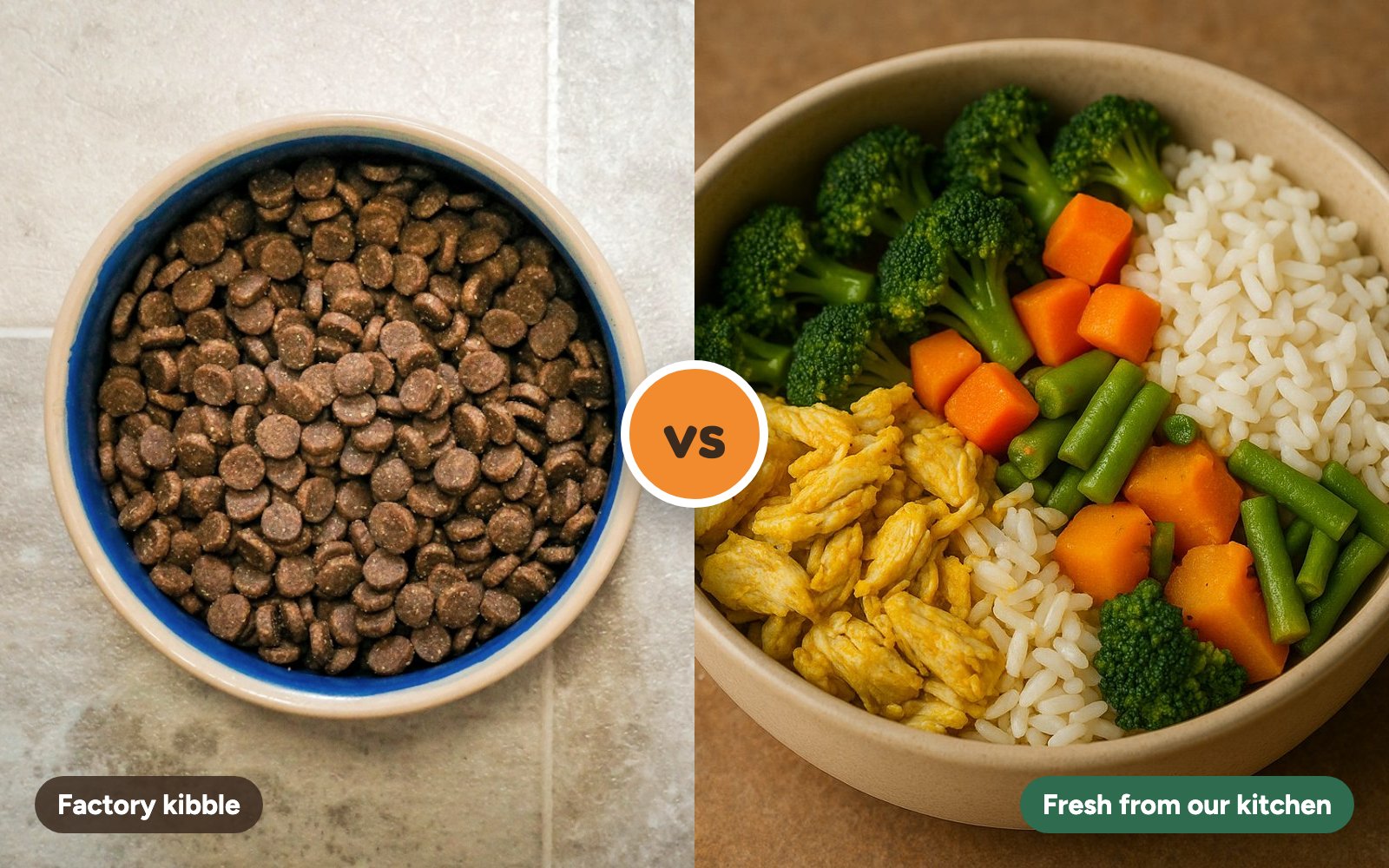
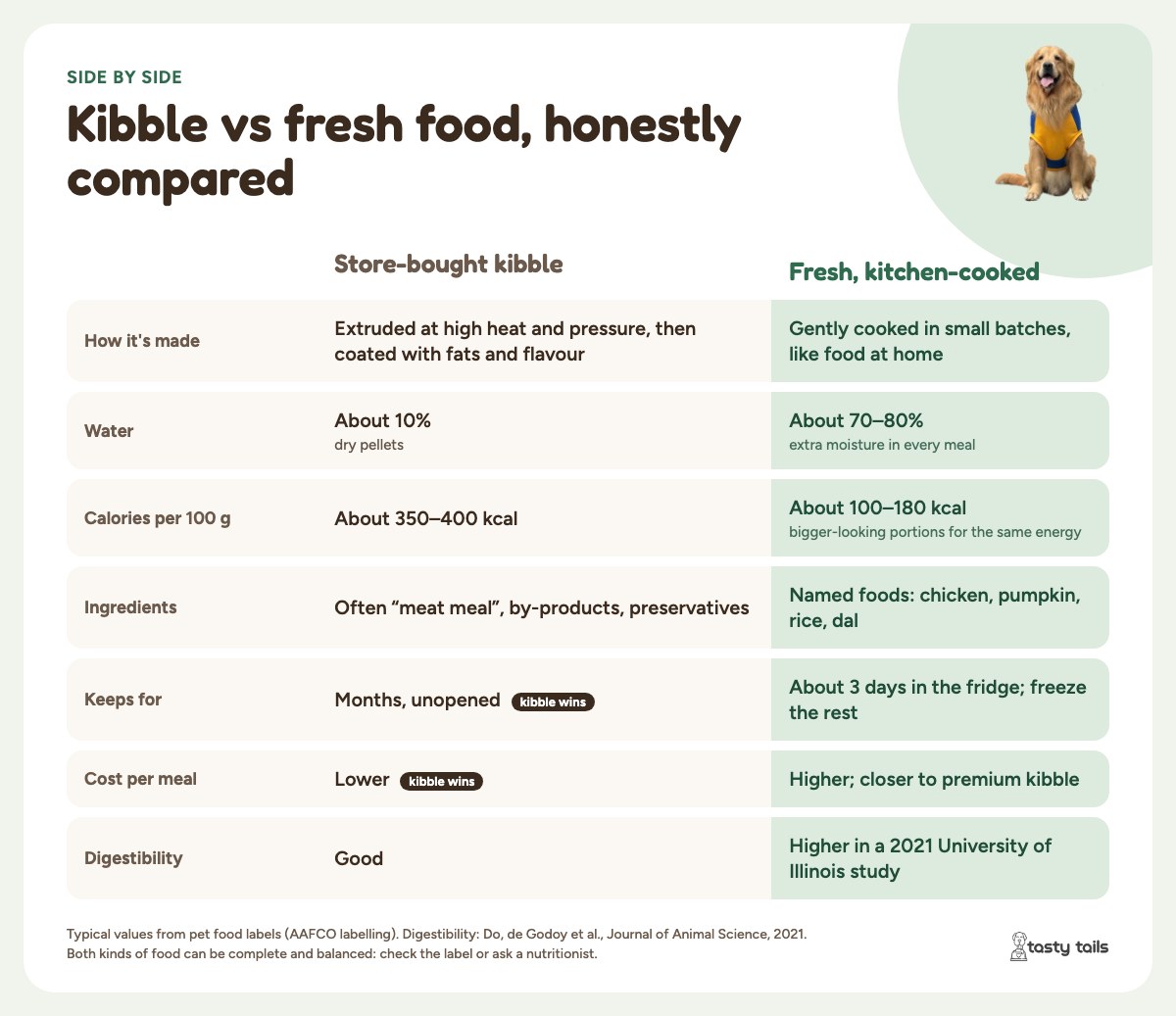
Store-bought kibble has to survive months on a shelf and a truck ride across the country. That reality shapes everything inside the bag. Kibble is typically made through extrusion: ingredients are blended, pushed through a machine at high heat and pressure, then sprayed with fats and flavourings so the final pellets taste like something a dog will eat. To stay stable, many formulas lean on preservatives, by-product meals, and unnamed "meat meal" sources.
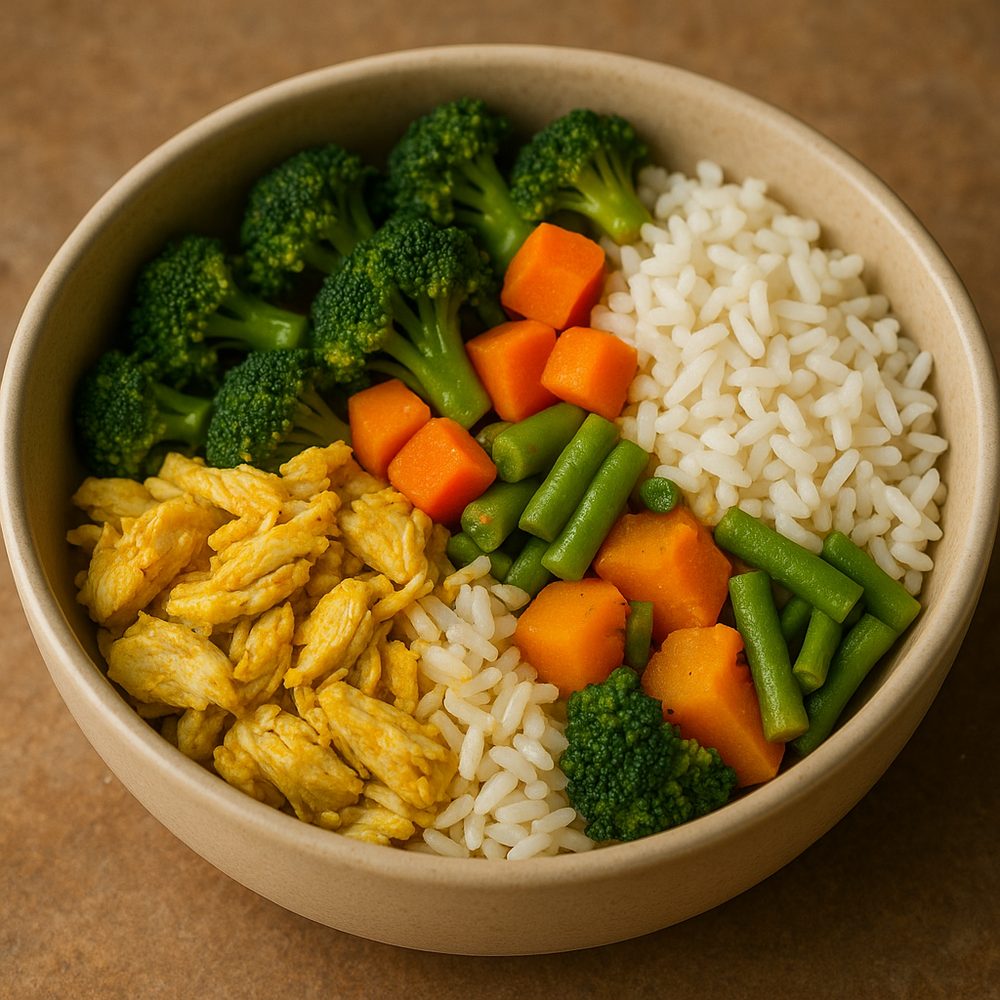
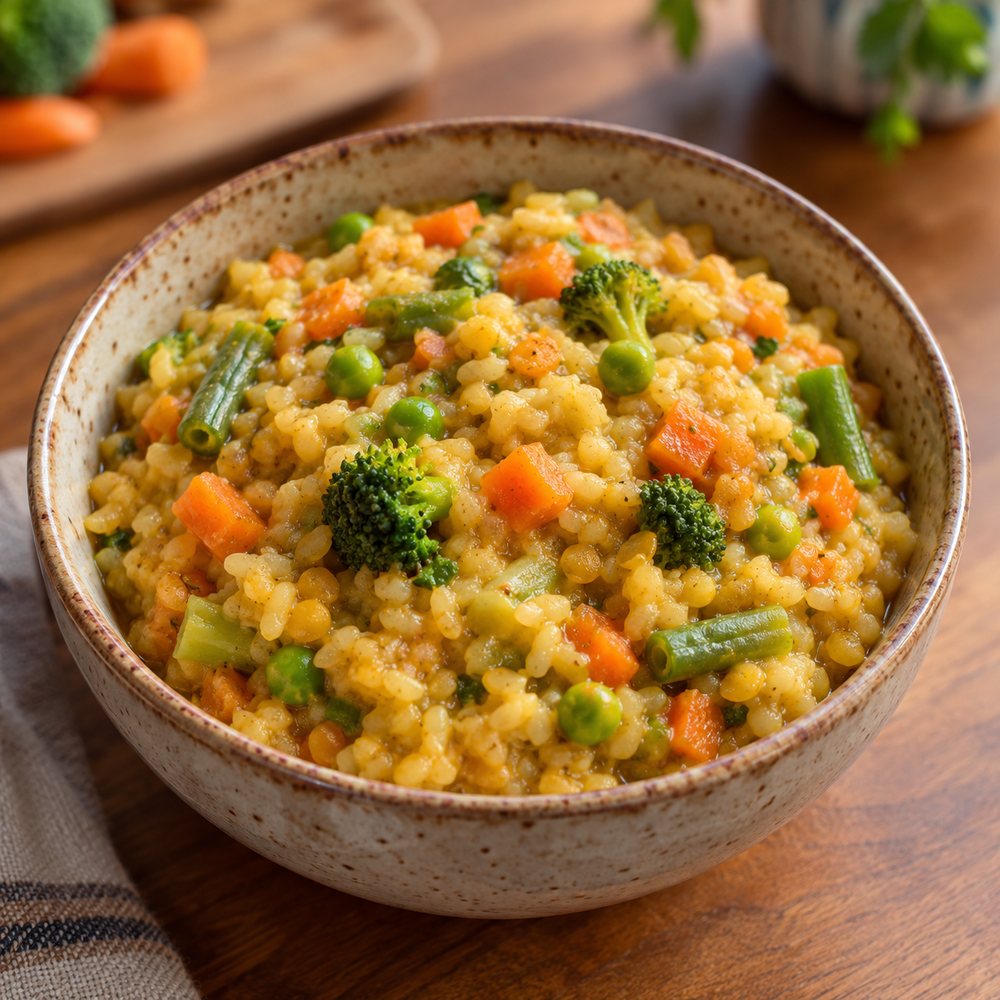
Fresh, kitchen-made meals work the other way around. You can read the ingredients like a recipe: chicken, pumpkin, carrots, green beans, broccoli, a little rice, a hint of coconut oil, a pinch of turmeric. Food that was cooked this week, for this bowl, not manufactured last season for a warehouse.
At Tasty Tails, Tummy Full is a good example: a wholesome blend of chicken, pumpkin, carrots, beans, broccoli and rice, infused with virgin coconut oil and enriched with turmeric and jeera. You know exactly what your dog is eating, because you can name every ingredient.
Freshness: this week vs last year
Freshness is where the comparison gets simple.
Kibble is built to last. That's not a flaw, it's a trade-off. Shelf stability is why you can buy a giant bag and forget about it for a month. But some nutrients, like certain vitamins and healthy fats, break down with heat, air and time, which is why manufacturers add extra vitamins and preservatives to keep the label true until the expiry date.
Fresh food flips the priority. It's made in small batches, chilled or frozen, and meant to be eaten soon: ours keeps about 3 days in the fridge. When your dog licks the bowl clean, and they will, it's not just flavour. It's food that still carries the freshness it was cooked with.
Nutrition: complete, balanced, and readable
Here's the fair point every honest comparison must make: a good store-bought diet is complete and balanced. Reputable kibble meets nutritional standards, and plenty of dogs live long, healthy lives on it. That deserves respect.
But "complete and balanced" on a bag and "complete and balanced" in a fresh bowl can look very different in practice.
- Protein you can see. Fresh meals feature recognisable protein, like real chicken, eggs or soya, rather than rendered meals of uncertain origin.
- Ingredient transparency. You can see the vegetables. You can see the grains. There's no mystery powder hiding behind a vague label.
- Digestibility. Gently cooked fresh food is often easier on the stomach than a hard, highly processed pellet. In a 2021 University of Illinois study, dogs digested fresh diets better than an extruded kibble.
- Hydration. Fresh food is mostly water, which helps dogs who don't drink much, especially in a Bangalore summer.
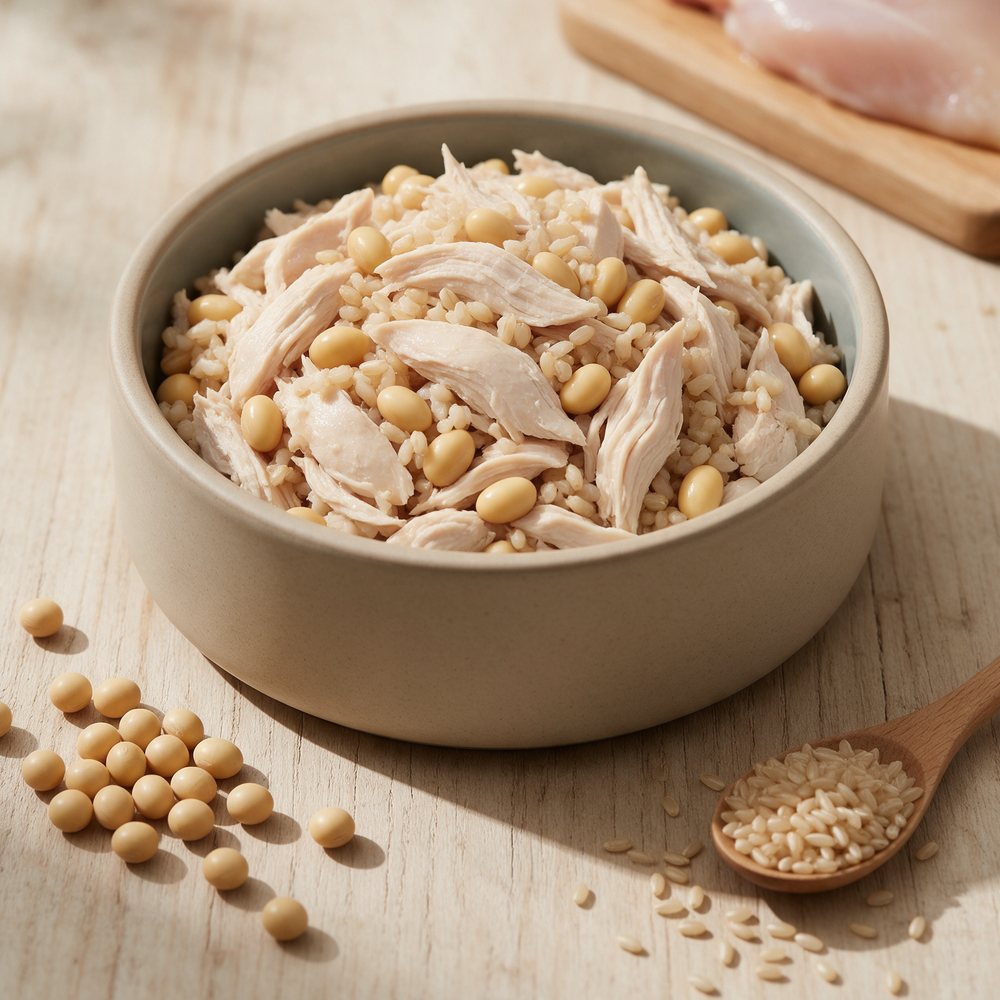
Take Power of Protein: a powerhouse blend of soya, chicken and rice built to support strength, vitality and overall well-being. That's nutrition you can point to on a plate, not decode from a footnote.
The cost question, answered honestly
Fresh food costs more per meal than a budget bag of kibble. Let's not pretend otherwise. Kibble wins on price per calorie, and it wins on shelf life.
So where does the math actually land for a real family?
Think of it the way you think about your own food. You could live on the cheapest shelf-stable option. But you don't, because you know what fresh ingredients do for how you feel. Fresh dog food sits in the same conversation: it costs more up front, and many families see it pay back in appetite, energy, coat and tidier digestion.
It's also worth comparing like for like. A premium grain-free or "holistic" kibble isn't cheap either. Once you're already paying a premium for a bag, the gap to freshly cooked meals narrows fast, and now you're getting actual fresh ingredients for the money, not just nicer packaging. Not ready for a full switch? Fresh meals on a few days a week, or as a topper, are a good middle path.
Why a real kitchen beats factory kibble
The difference isn't only a nutrition label. It's a philosophy.
A factory asks, "how do we make this last and cost less?" A real kitchen asks, "how do we make this good?" That single question changes the ingredients, the batch size, the freshness, and the care in every bowl.
Tasty Tails is built as that real kitchen: the one where your pet is the guest of honour. Fresh food, made with love and a working understanding of nutrition, with a nutritionist to help you get portions right, so you never have to guilt-trip yourself over what's in the bowl. You just get to enjoy the zoomies, the tail wags, and the clean-lick finish.
How to choose for your dog
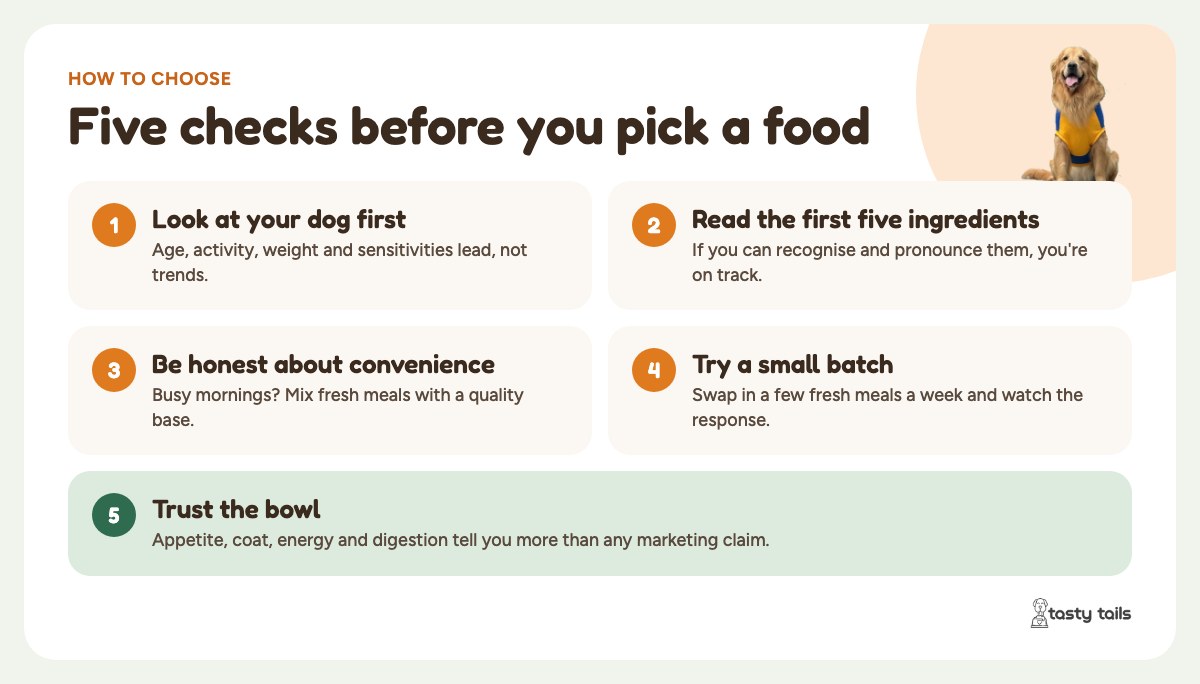
There's no single right answer for every household, so here's a practical way to decide:
- Look at your dog first. Age, activity, weight, and any sensitivities should lead the decision, not the trend.
- Read the first five ingredients. If you can recognise and pronounce them, you're on the right track.
- Weigh convenience honestly. If mornings are chaos, a mix of fresh meals and quality treats can bridge the gap.
- Try a small batch. Fresh food for dogs doesn't have to be all-or-nothing. Swap in a few meals a week and watch how your dog responds. Our 7-day transition plan shows how to switch gently.
- Trust the bowl. Appetite, coat, energy, and digestion will tell you more than any marketing claim.
The bottom line
Store-bought kibble isn't the villain: it's convenient, affordable, and nutritionally serious. But when you compare ingredients, freshness, digestibility and what you're really paying for, a fresh kitchen wins on the things that matter most to a dog who loves you without conditions.
Real food. Real love. Real wags. That's the whole idea.
From our kitchen to your bowl.
Wondering whether the switch is worth it for your dog? Read our honest, guilt-free take on fresh dog food vs packaged kibble.
Questions pet parents ask
Is fresh dog food better than kibble?
Both can be complete and balanced. Fresh food is gently cooked from ingredients you can see, has far more moisture, and was more digestible than kibble in a 2021 University of Illinois study. Kibble is cheaper and keeps for months. The right choice depends on your dog and your budget.
Can I mix fresh food with kibble?
Yes. Many families use fresh food as a topper or for some meals. Reduce the kibble by the calories the fresh food adds so your dog doesn't gain weight.
Why does fresh food look like a bigger portion?
Fresh food is mostly water, so it has fewer calories per gram than dry kibble. A fair portion looks bigger in the bowl for the same energy.
Sources
- Do S, Phungviwatnikul T, de Godoy MRC, Swanson KS. Nutrient digestibility and fecal characteristics, microbiota, and metabolites in dogs fed human-grade foods. Journal of Animal Science, 2021.
- WSAVA Global Nutrition Committee: Global Nutrition Guidelines
- AAFCO: understanding pet food labels
Fresh meals from our kitchen
Every ingredient listed, cooked to order in Bangalore. Not ready for a full switch? Start with a few fresh meals a week.







See the full menu or ask our nutritionist what suits your pet.
Was this helpful?
Share with a pet parent