How to switch your dog from kibble to fresh food in 7 days
A calm, day-by-day plan for moving your dog from kibble to fresh, home-cooked food without an upset tummy: how to mix, how much to feed, what to watch and when to slow down.
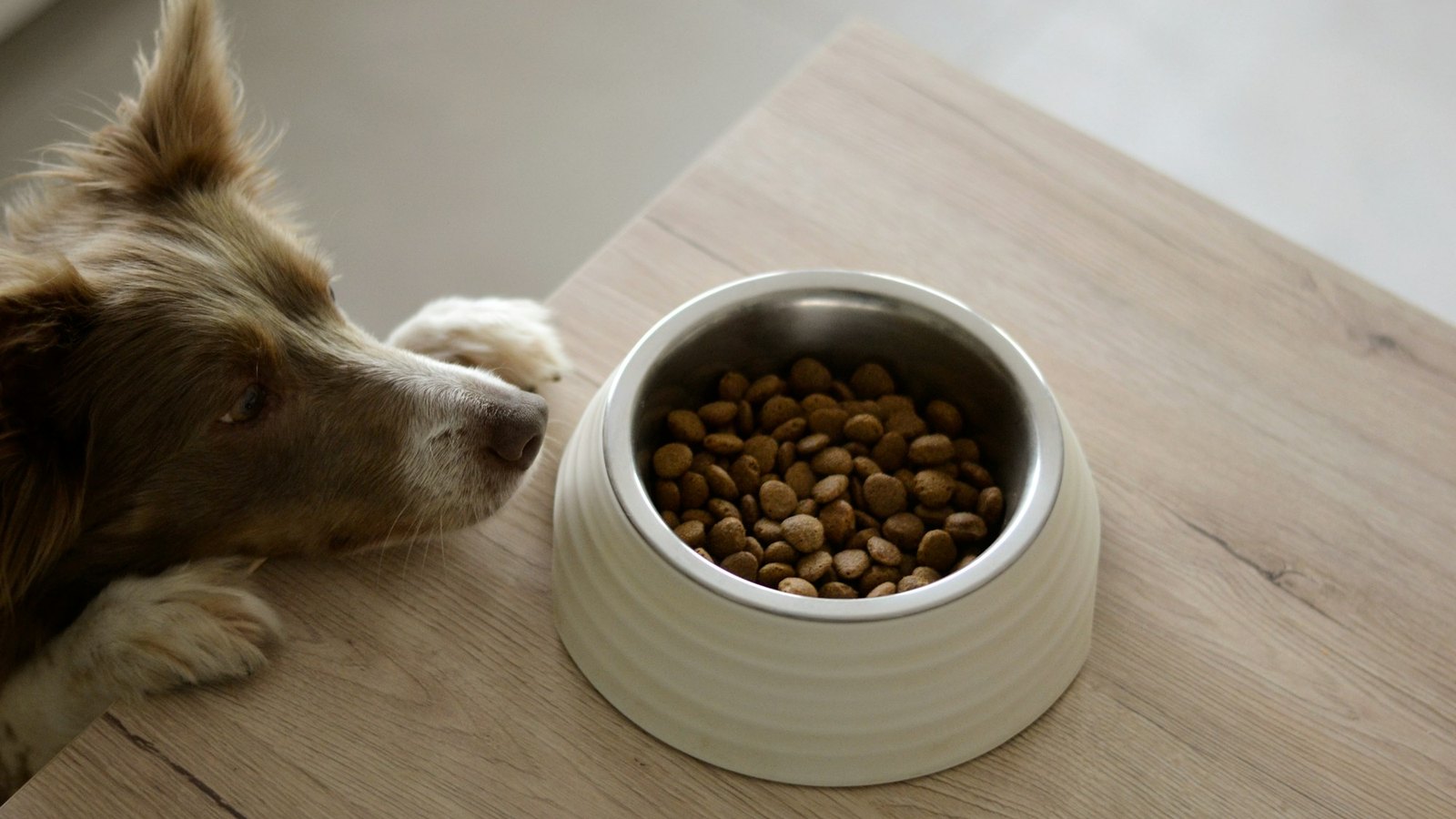
Your dog has eaten the same brown biscuits every day for years, and now you want to give them real food: meat, vegetables and grains you can see. Most dogs fall in love with fresh food from the first sniff. Their tummies are a little slower to agree. The good bacteria in the gut are used to one diet, and a sudden change can mean loose stools, gas or a skipped meal. The fix is simple: switch slowly, over about a week, and watch how your dog is doing.
Here is the plan we give every Tasty Tails family, step by step.
Why switch from kibble to fresh food?
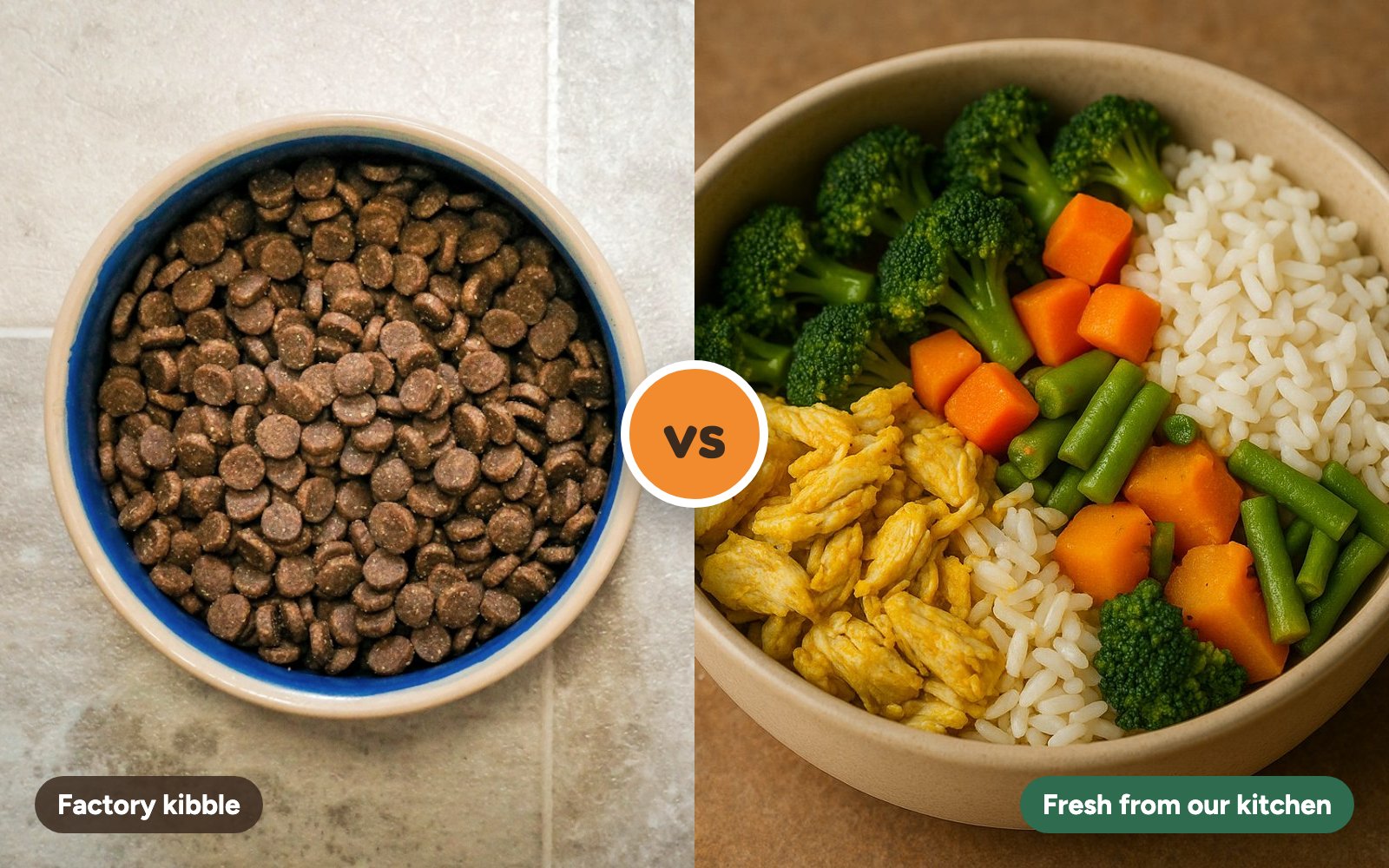
Kibble is convenient, but it is cooked at very high heat, pressed into shape and dried so it can sit in a bag for months. Fresh food is cooked gently in small batches, like food at home. Pet parents who switch often tell us about:
- Excited mealtimes. Real meat and vegetables smell like food, so fussy eaters often clean the bowl.
- More water in every meal. Fresh food is mostly moisture, which helps dogs who don't drink much, especially in a Bangalore summer.
- Ingredients you can read. Chicken, rice, pumpkin, egg. No mystery "meal" or "by-products", and easy to avoid what your dog is allergic to.
- Smaller, firmer poops once they've settled in, for many dogs.
Every dog is different, so think of these as things to look out for, not promises. If your dog has a health condition, talk to your vet before you change their food.
Before you start
- Weigh your dog. Step on the scale holding them, then subtract your own weight. You need this for portions.
- Write down what they eat now: the brand, how much, how often, plus treats and chews.
- Pick a calm week when you're at home to watch, not just before travel or a festival weekend.
- Check with your vet first if your dog has pancreatitis, kidney disease, diabetes, a sensitive gut, a diagnosed allergy, or eats a prescription diet.
The 7-day switch, step by step
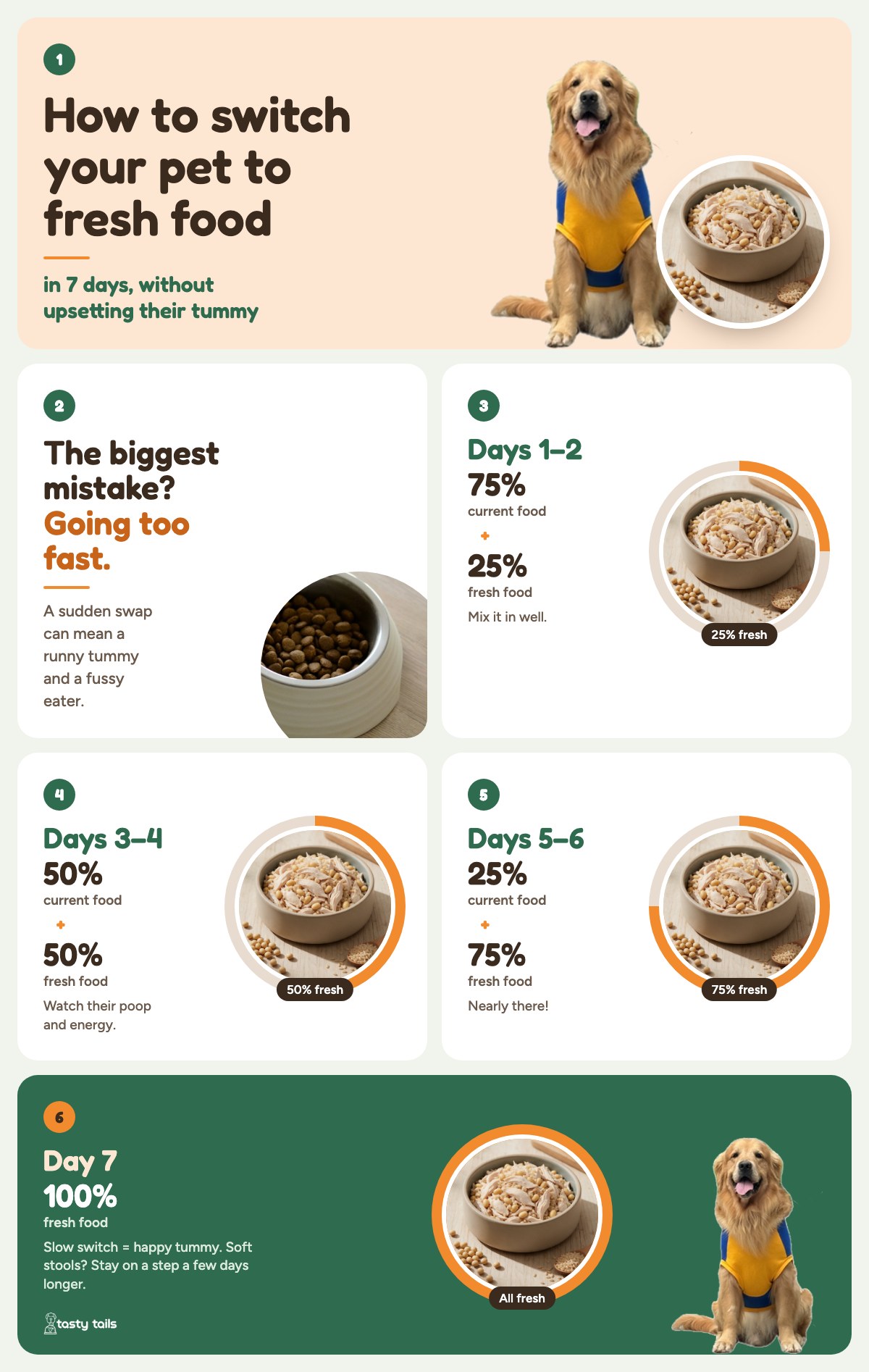
Mix the fresh food into the current food in growing amounts. Measure by calories, not by bowl size (more on that below).
- Days 1 and 2: 25% fresh, 75% current food. Mix it in well so your dog can't pick out the new food and leave the rest.
- Days 3 and 4: 50% fresh, 50% current food. This is where a soft stool is most likely. Watch their poop and energy.
- Days 5 and 6: 75% fresh, 25% current food. Most dogs are loving it by now.
- Day 7: 100% fresh food. Done. Keep portions steady and weigh your dog again in two weeks.
Go at your dog's pace, not the calendar's. If a step doesn't suit them, stay on it for two or three more days before moving on.
Sensitive tummy, senior dog or a small breed? Take 10 to 14 days instead, moving about 10% at a time. Slower is always safe.
Can you mix fresh food with kibble?
Yes. Mixing is exactly how the switch works, and some families keep a mix for good: kibble in the morning and a fresh meal in the evening, or a few spoons of fresh food on top of every bowl as a "topper". That's a great way to start if a full switch doesn't fit your budget yet.
Two things matter when you mix for the long term:
- Reduce the kibble by the calories the fresh food adds, or your dog will slowly gain weight.
- Keep it consistent day to day, so their tummy knows what to expect.
Compare calories, not cups
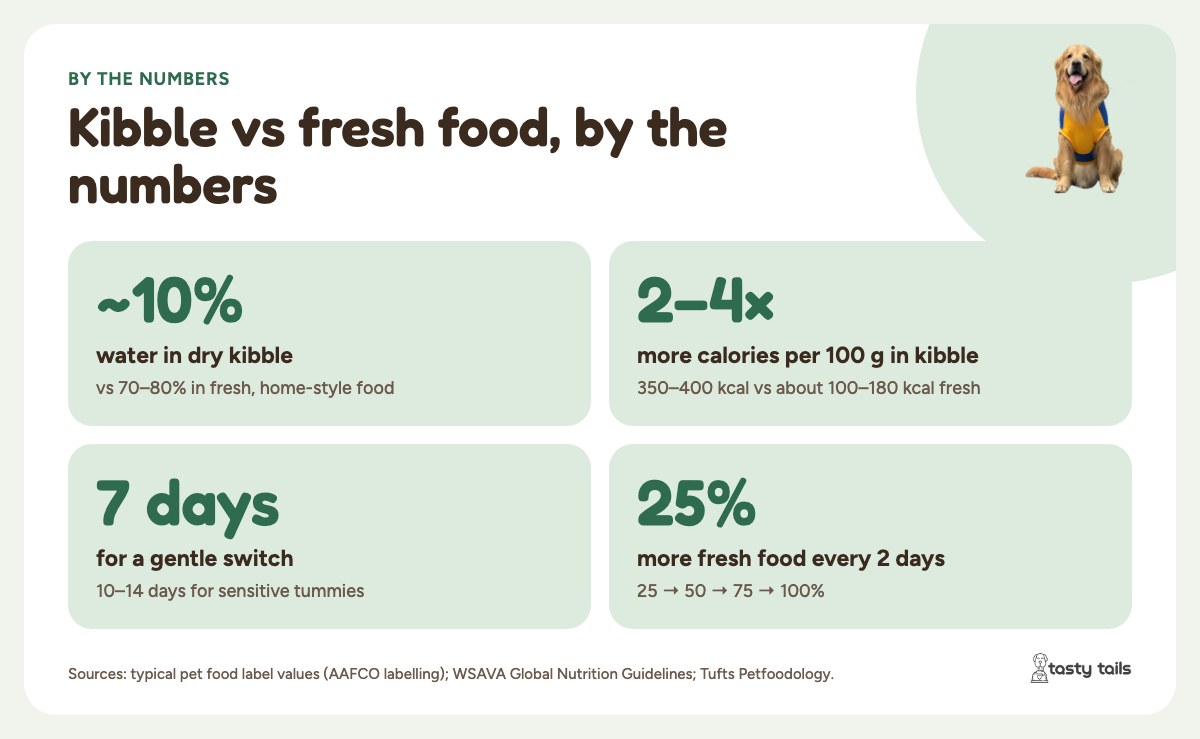
Fresh food is mostly water, so a fair portion looks much bigger than the kibble it replaces. Dry food usually has about 350 to 400 kcal in 100 g. Fresh home-style food usually has 100 to 180 kcal in 100 g. Swap cup for cup and your dog will get far fewer calories and seem hungry. Work out how many calories your dog needs (our calorie guide shows how), then use the calories printed on each food.
What to watch during the switch
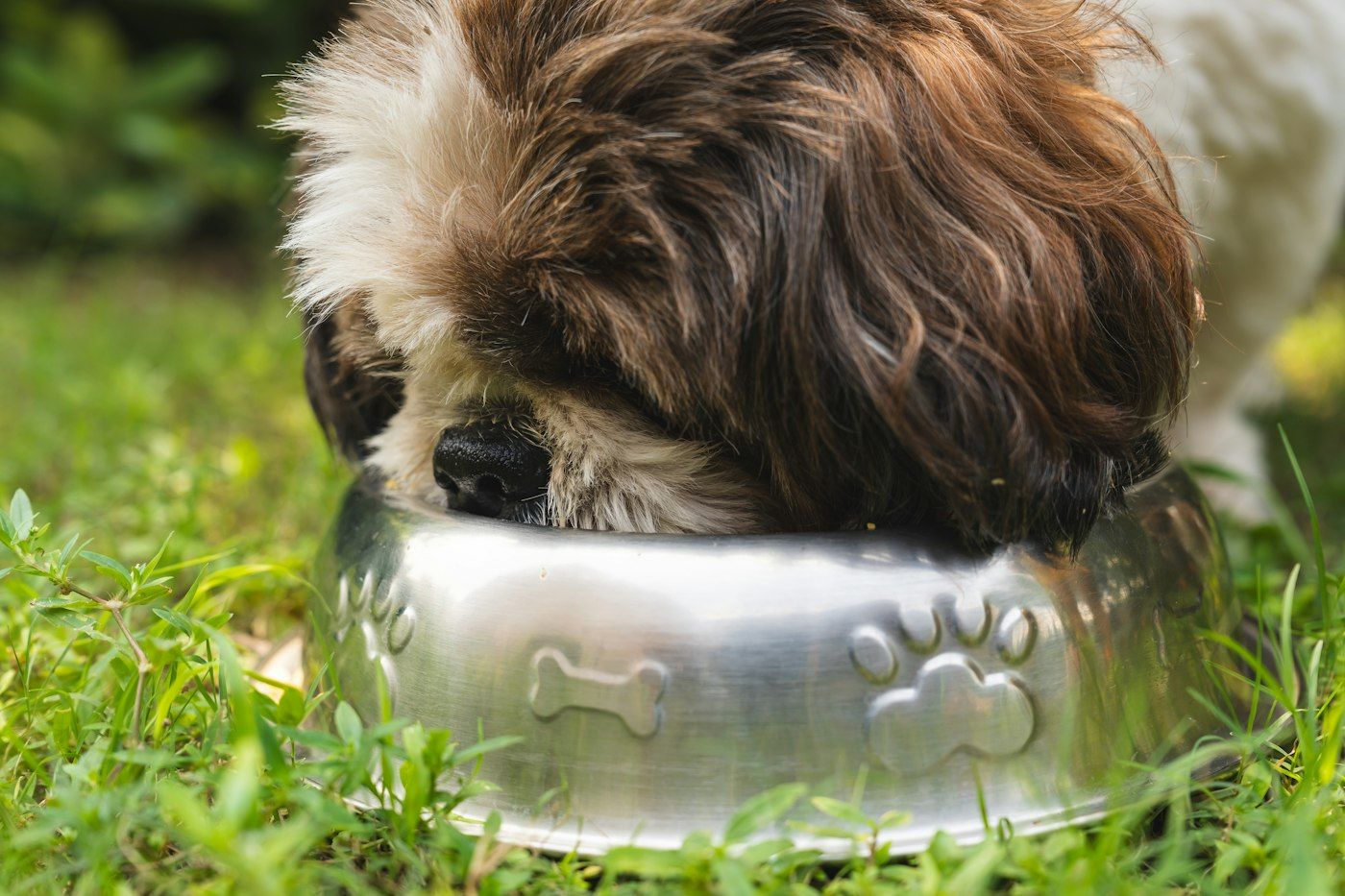
- Poop. Slightly softer stools for a day or two are normal, especially at the 50% step. Watery stools are not.
- Appetite. Most dogs eat faster and beg more. Don't let those eyes push you into bigger portions.
- Energy. Your dog should be their usual self: playful, curious, keen on walks.
- Water. Dogs on fresh food often drink a little less, because the food has more water in it. That's fine.
- Skin and itching. If your dog starts scratching, note which ingredients are new. It helps you and your vet find the cause.
When to slow down, and when to call the vet
If stools turn soft, go back to the previous step for two or three days, then try again. Call your vet if your dog vomits more than once, has diarrhoea for more than a day or two, has blood in their stool, seems tired or in pain, or won't eat for more than a day. Call sooner for puppies, seniors and small breeds.
Tips to make the switch easier
- Serve it cool or at room temperature, never hot. Straight from the fridge? Let it sit 10 to 15 minutes, or stir in a spoon of warm water.
- Keep everything else the same. No new treats, chews or table food during the switch, so you know what caused any change.
- Feed at fixed times and pick the bowl up after 15 to 20 minutes. Free-feeding teaches dogs to wait for something better.
- Hold back on treats for a few days. A dog full of biscuits isn't hungry at dinner.
- Store it like your own food. Fridge at 4°C or colder, used by the date on the pack. Freeze what you won't use in time and thaw it overnight in the fridge, not on the counter. Don't leave a bowl out for more than two hours (one hour on a hot day).
The Tasty Tails way
Every recipe we cook passes the Dodo test first: our Golden Retriever, chief taster and the reason Tasty Tails exists. Meals are cooked fresh in small batches in our Bangalore kitchen, with ingredients you can see and name, and we can leave out whatever doesn't suit your pet.
Not sure where to start?
Tell us your dog's weight, age and current food, and we'll suggest a dish and the portion for each step of the switch.
Sensitive tummy or allergies?
Our nutritionist, Sarika, plans meals around what your dog can and can't eat, and reads their reports before the call.
Ready for the first bowl?
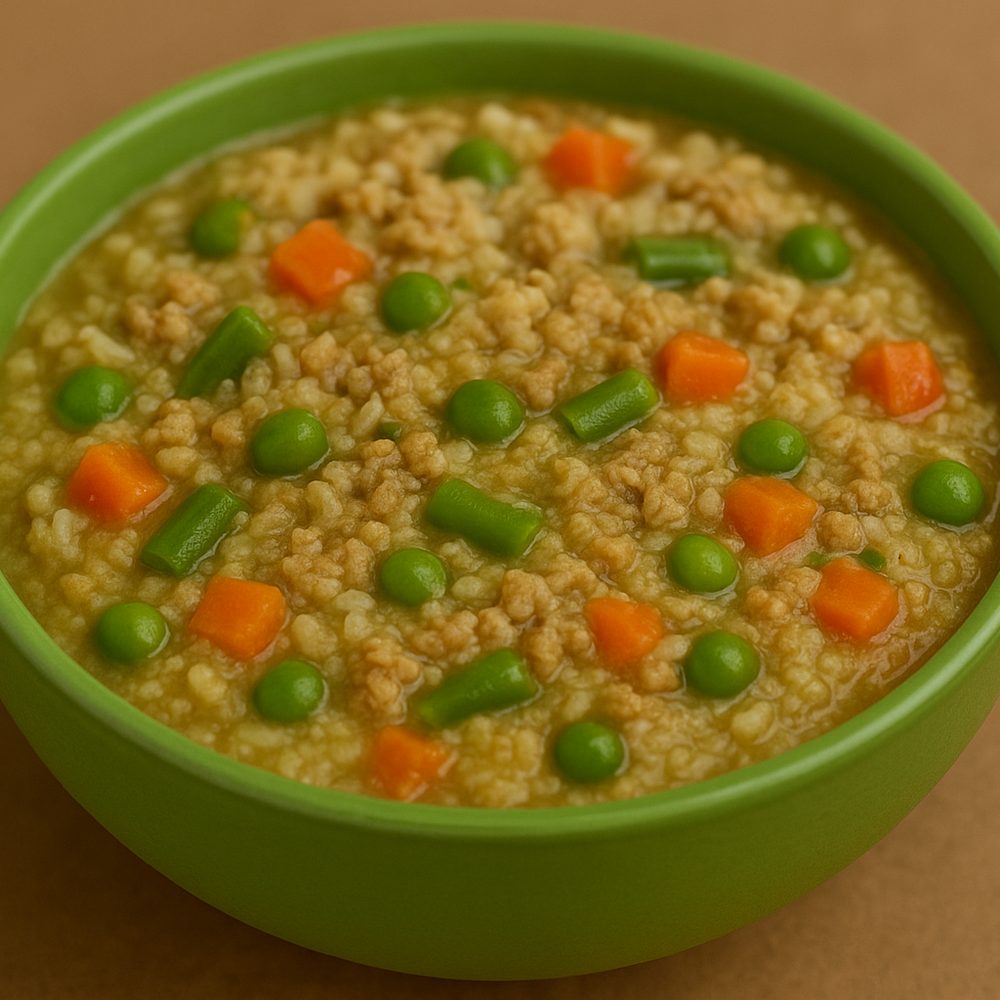
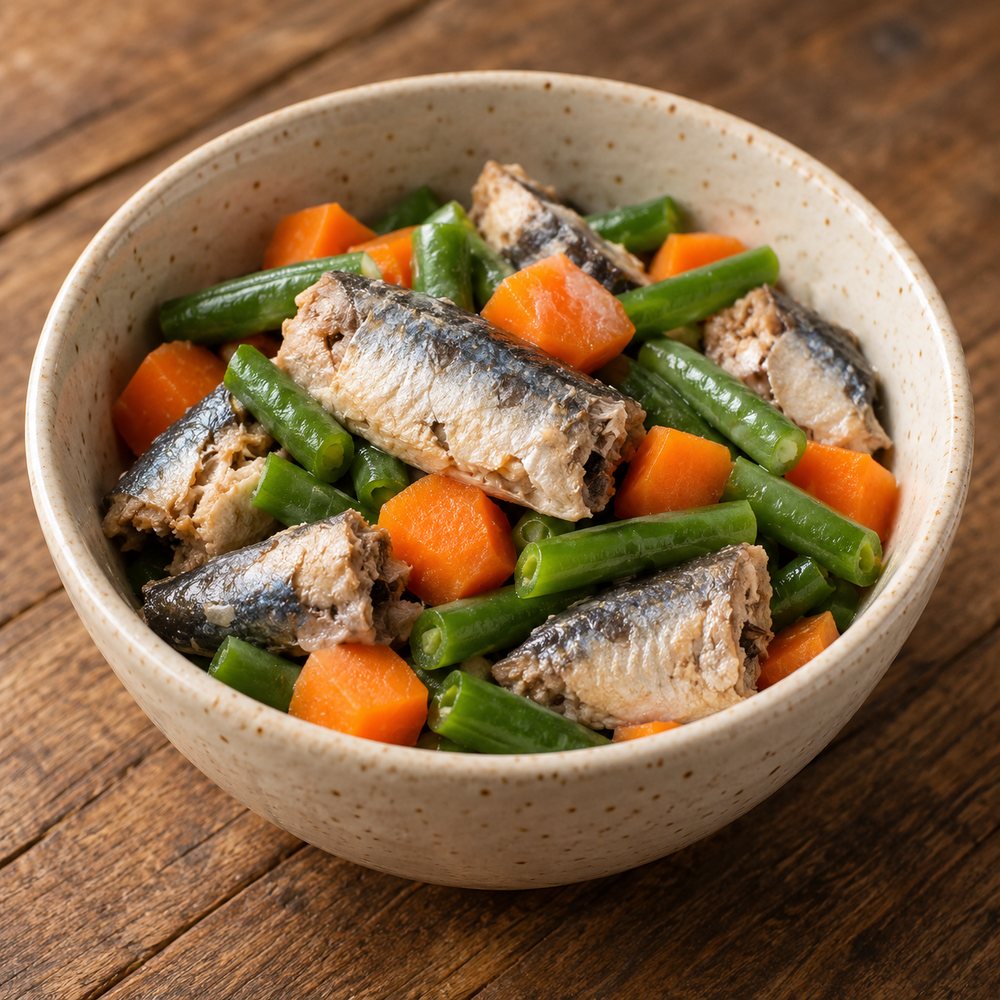
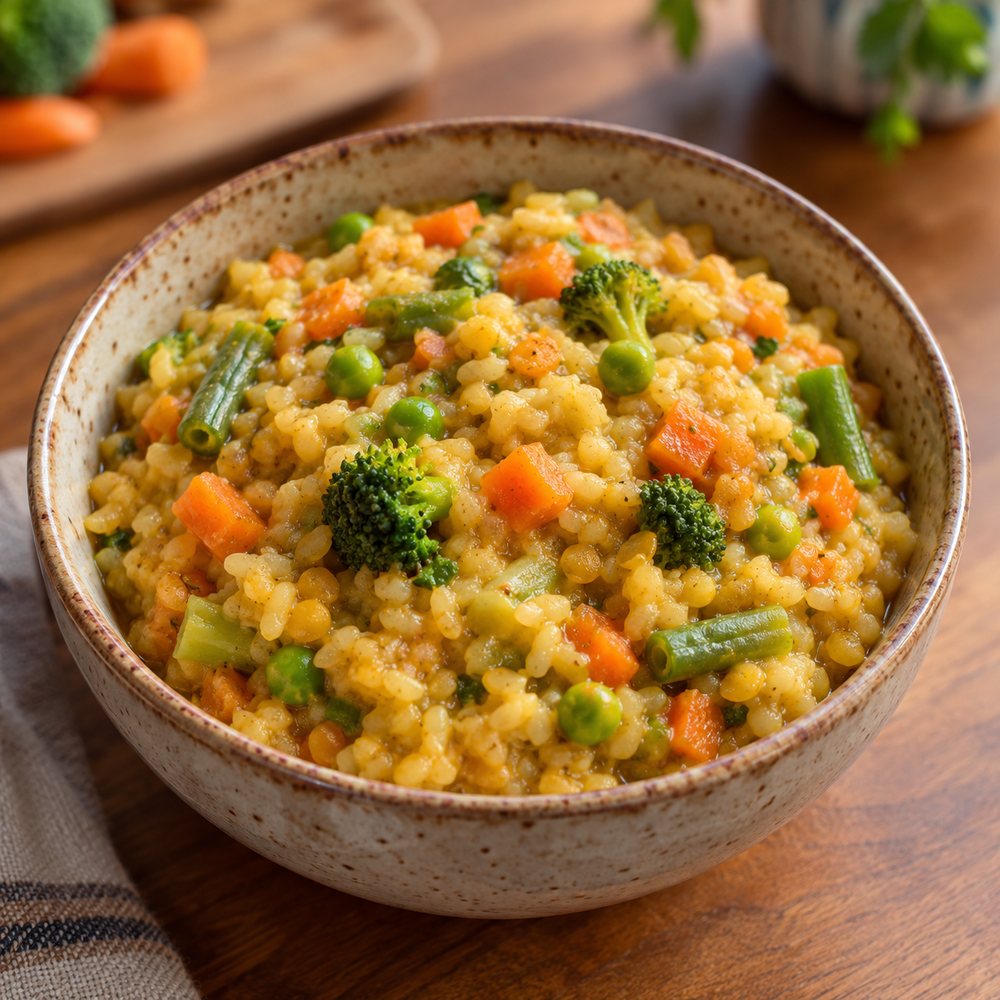
Chicken, mutton, fish and veggie meals, cooked to order and delivered fresh on the day you choose.
Switching a cat?
Cats need a slower, gentler switch, and should never be left hungry to "encourage" them to try something new. Read fresh food for cats: what's different first.
Questions pet parents ask
How long does it take to switch to fresh food?
About 7 days for most dogs. Sensitive dogs, seniors and small breeds often do better over 10 to 14 days.
Can I switch straight away, without mixing?
Some dogs cope, but many get an upset tummy. A gradual switch costs you nothing but a week and saves a lot of cleaning up.
My dog has loose stools. Should I stop?
Don't stop: go back one step for two or three days, then move forward more slowly. If it's watery, has blood in it, or lasts more than a day or two, call your vet.
Will fresh food cost more than kibble?
Usually, yes. If a full switch doesn't fit your budget, mixing fresh food with kibble still adds real food and moisture to every bowl. Just reduce the kibble so the calories stay the same.
Does my dog need supplements on fresh food?
A complete, balanced recipe shouldn't need extras. Don't add calcium, vitamins or oils on your own: too much can be as harmful as too little. Ask your vet or our nutritionist.
Sources
Good first bowls for the switch
Simple, gently cooked recipes to mix in from day one. Tell us your dog’s weight and we’ll suggest the portion for each step.
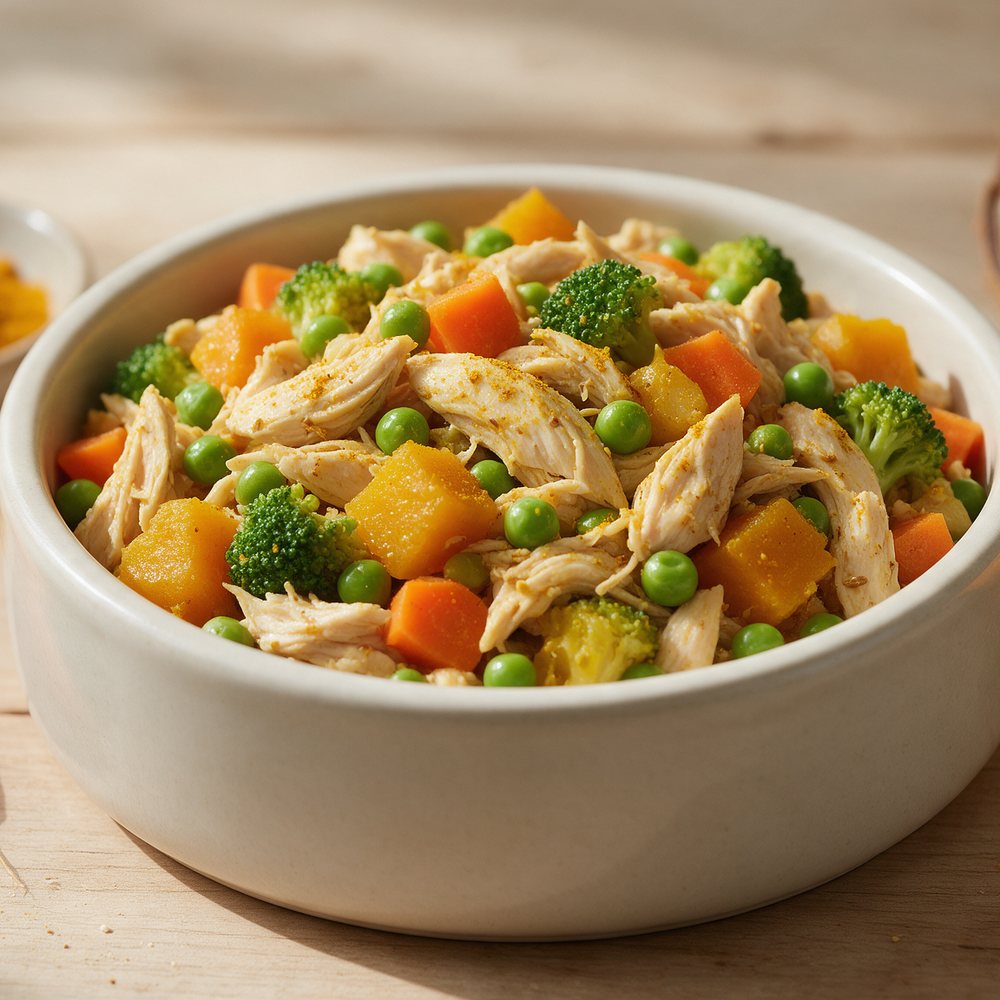
Main Meals
Chicken & Veggies Blast
-

-

-

-

-

- +5
- Protein
- Healthy fats
- Fibre
- Vitamins
₹325 Small · 250 g 3 sizes





See the full menu or ask our nutritionist what suits your pet.
Was this helpful?
Share with a pet parent